Passages: Is. 36:1-9; 1 Thess. 1:1-10; Lk. 12:13-31
Ընթերցուածքներ՝ Եսայ. ԼԶ 1-9; Ա Թեսաղ. Ա 1-10; Ղկ. ԺԲ 13-31
In the name of the Father, Son and Holy Spirit, Amen!
Happy and Blessed Thanksgiving to each and every one of you and your families. This year as I was calling and wishing Happy Thanksgiving to everyone I could, a thought came to me. How strange Thanksgiving is as a holiday. What makes it so strange to me is because it really only exists in the United States and Canada. Perhaps this is because of the stories we hear from childhood of the pilgrims and the indigenous natives who sat down around a table and celebrated the first thanksgiving near Plymouth Rock in the 17th century. Regardless of the historical circumstances, the story was beautiful because at its core, it emphasized a coming together, a celebration of thanksgiving with those around. Yet, what do we know about the those who gathered around the Thanksgiving table on Plymouth Rock?
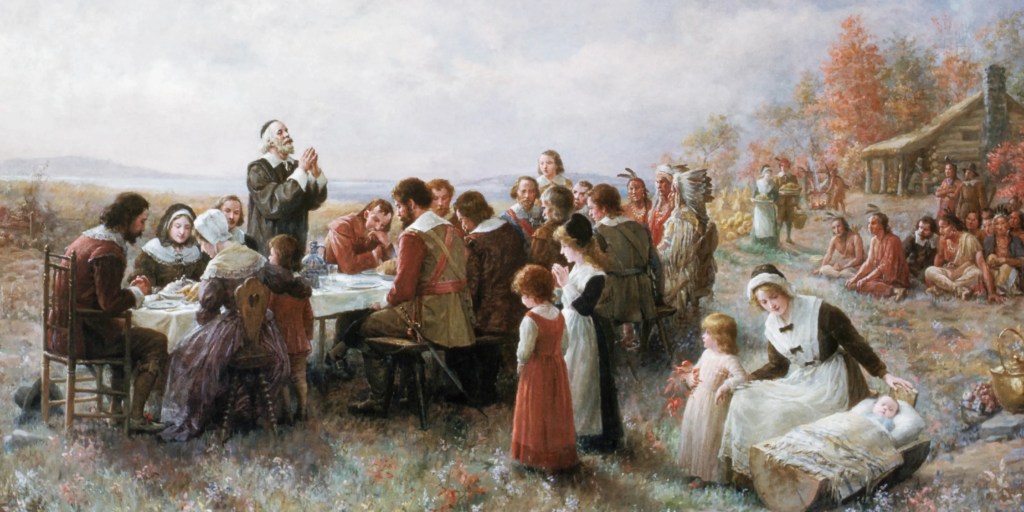
(Here is a bit of history) The story of the celebration which we associate as Thanksgiving comes to us from a letter written in December 1621 by Edward Winslow, one of the people who sailed from England aboard the Mayflower in 1620. And in his letter, this feast didn’t happen on the fourth Thursday in November, nor was it about Thanksgiving. In fact, it took place over several days sometime between late September and mid-November and was considered a celebration of ending a successful harvest. And those who attended were about 50 colonists, men, women, and children, and some 90 native men from the tribe of Pokanoket Wampanoag, including their king or chief Ousemequin. This celebration eventually became known as Thanksgiving because both for the Native’s and for the settlers, while celebrating a successful harvest, they also expressed thankfulness. They were thankful for the harvest, for the food on the table, for having survived the trip over from England. The day had no special meaning but rather showing gratitude and being thankful was very normal and a daily practice both for the settlers and the natives. This is the reason why Thanksgiving Day seems so strange.
My dears, like the first settlers and the Natives, as Armenians, and more so as Christian’s, coming together for dinner with loved ones and giving thanks is not a once-a-year celebration. We don’t need a set date to gather, to reflect on all we are blessed with. If you’ve ever been overseas and had dinner with Armenians in Armenia or Middle East, we raise our glasses toast after toast, we drink to life – genats, and remember all that we are grateful for. Thankful for our children, our parents, our soldiers, our health, etc. And most importantly, something we often forget, as Christian’s our first celebration of Thanksgiving is here, the Divine Liturgy, the Badarak, which we call the Eucharist – the Greek word for Thanksgiving. Not once a year, but always. Not just for the harvest but for all life. If around our dinner tables we are lifting our cups and toasting by saying genats- to life, what about when we lift up the Holy Chalice, and the eternal life we are being offered here in Christ Jesus. This is real Thanksgiving and in fact, this is how the first Thanksgiving in the New World was celebrated.
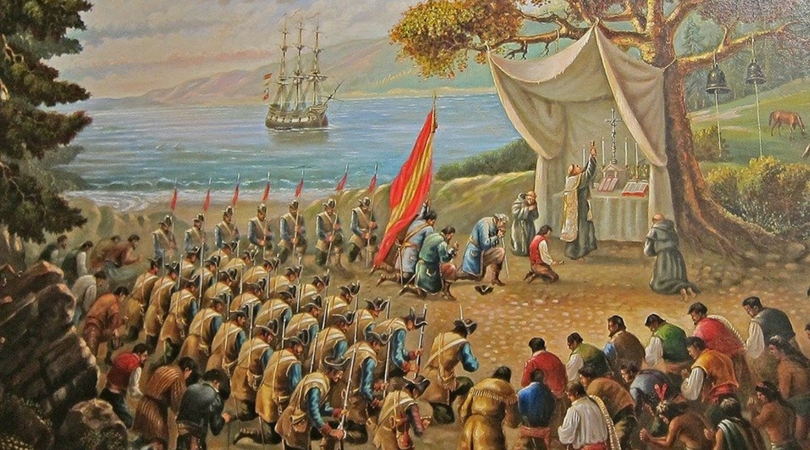
Perhaps many of us may not know but, in 1565, the Spanish Catholics, celebrated their first Thanksgiving dinner in the colonial town of St. Augustine, Florida. When the Spaniards came over to the new world over 50 years before the Mayflower, they also tried bringing their Christian faith. Sadly, this was marred first by warfare. However, on Sept. 8, 1565, a Catholic Mass, Badarak, was celebrated, and historical evidence says that all who were present, including the curious natives, adored and kissed the Cross. And in an attempt to create a new relationship, the natives of the area brought out and shared their food and thus the Spanish Catholics and Florida Indians held a great banquet of thanksgiving – to God and each other. So my dears, let me ask what does the banquet at Plymouth Rock, the Spanish Catholic Mass and banquet, and our celebration of Badarak – the Eucharist, have in common? To answer this, we need to look back and apply at what I asked earlier, what do we know about the those who gathered around?
Some were Indigenous Natives while others were settlers. There was a mix of men, women and children of all classes and skin colors. People that didn’t necessary speak the same language, eat the same food, agree on politics, or even dress the same. Yet, we know that every one of them, just like every one of us is different. Like them we each have our own personalities, our own ambitions, our own thoughts, and goals, hope and desires. We each vote differently, eat differently, dress differently, laugh or cry differently. But we also, all struggle differently. We each have our own doubts, and fears. We have our own demons and skeletons, shortcomings, and weaknesses. What unites us, what gathers and brings us together my dears, is that as different as we are, we all are invited by God our Heavenly Father to gather together in celebration at His banquet table. This real celebration of Thanksgiving, that doesn’t look to what we have, what we struggle with, or what makes us different, greater or lesser, but who we are called to be.
In the Gospel today, Christ warns about those who only care about the material goods, titles or distinctions. “Take heed, and beware of all covetousness; for a man’s life does not consist in the abundance of his possessions….Therefore I tell you, do not be anxious about your life, what you shall eat, nor about your body, what you shall put on. For life is more than food, and the body more than clothing.” Life is more than age, skin color, job title or money. Life is a gift of God. And God calls all of us equally to share and gather. God’s love for all of us equally calls us to Him to be sharers of His blessings, of new life which we receive through the Holy Communion – the Holy Eucharist, which is the body and blood of our Lord and Savior Christ Jesus. And we approach that Eucharist, the Holy Communion, we gather here not because we are perfect, but because through the grace of the Holy Spirit, we recognize through prayer and repentance, God is our hope, love, renewal and life. We celebrate not a physical harvest but Divine harvest, of faith planted in our hearts and when combined with a desire to learn and grow that faith blossoms and strengthens feeding us and those around us. Holy Communion becomes the source of our virtues, of our strength to overcome darkness not just in our life but in the lives of other. Holy Communion becomes new life as the priest says every Badarak, “this is life, hope, resurrection, and forgiveness of sins”, and through it we become a witness to others of God’s love.
Yet too many people, too many of us, even if we are in Church, don’t have this desire to be in Communion with God, don’t have this desire of that new life. St. basil the Great says, “If in Church every Sunday, gold was given out, everyone would attend, but to receive life, too few.” We are content with being “nice” and only gathering around our tables at home with the people who make us comfortable. We give more importance to the physical and material joys in life, then to our spiritual life. We think that God will be pleased with us when we put a check mark on our own ideas of what a “good Christian” is. Thus, we don’t repent, don’t come to Church or come for the wrong reasons, reject Holy Communion from our lips and our hearts, and reject that life, that faith that is given to us through the Church. We don’t participate in the real celebration of Thanksgiving.
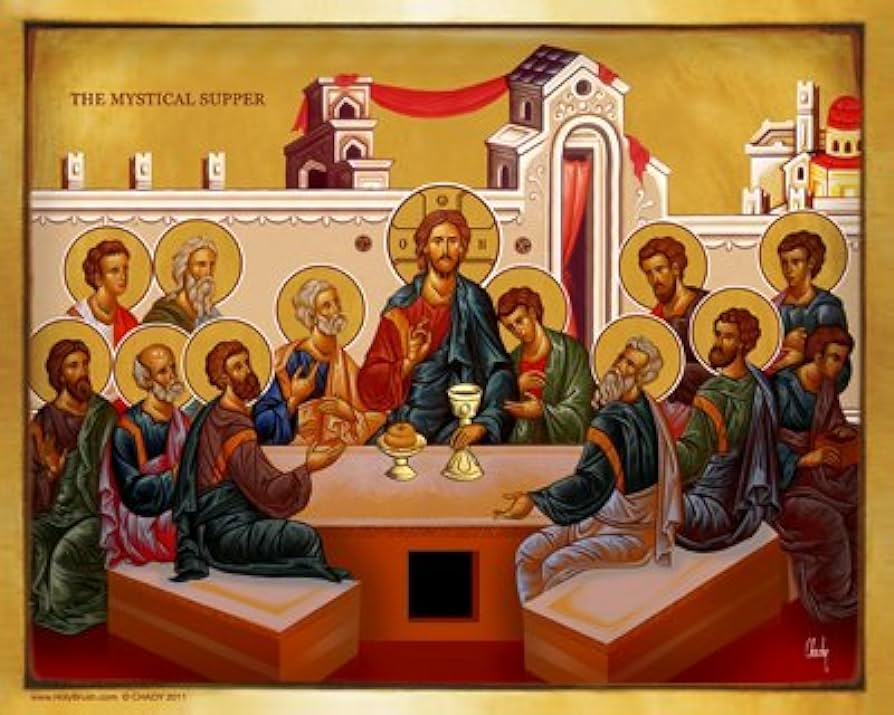
My dears, if those on Plymouth were honored by the presence of the Native King, we have Christ our King with us. If those who celebrated the harvest were grateful for all they had accumulated, think of the blessings we have that God fills our life with. If the Spanish, after warfare desired to heal the brokenness they had caused, and to preach their Christian faith, think about our own battles we are fighting, our broken relationships which we can heal in faith by the power of God. My dears, regardless of historical circumstances and the first Thanksgiving dinners, or even the dinners we gather around with our loved ones at home, this celebration, this relationship, and communion we have is the greatest celebration and remembrance of Thanksgiving. This is life.
And so, it is strange for me to only give thanks once a year because I am thankful to God every day. I am thankful for my joys, I am thankful for my pain that I entrust to God to teach me through. As St. Paul writes to Timothy and says, “We give thanks to God always for you all, constantly mentioning you in our prayers, remembering before our God and Father your work of faith and labor of love and steadfastness of hope in our Lord Jesus Christ.” Likewise, I am thankful for each of you, remembering you in my prayers for your work of faith and labor of love; I am thankful for my Church and for this Holy Table from where all of us are invited to feast from and receive life. My dears, pray for one another, and let us not wait once a year to be grateful. Let us not wait once a year to gather and show affection to those who matter in our life. Let us not wait for once a year to help those in need. Let us not wait once a year to come to Badarak. Happy Thanksgiving no matter where we are, who we are, for God in His mercy and love invites us all to come, pray, turn to Him, learn and grow in Holy Communion, so that through us, darkness will be filled with light, the blind will see, the deaf will hear, and new life will be given to all who seek Him. By the grace and love of our Lord Jesus Christ, may we gather in Thanksgivings always, Amen.
 St. Gregory the Illuminator Armenian Church