Passages: Is. 56:1-57:20; Eph. 4:17-5:14; Lk. 16:1-31
Ընթերցուածքներ՝ Եսայ. ԾԶ 1- ԾԷ 20; Եփես. Դ 17- Ե 14; Ղկ. ԺԶ 1-31
In the name of the Father, Son and Holy Spirit, Amen!
In the Orthodox Church, when a child is baptized they receive their name. Tradition has been created that a child will often receive a 2nd name, or middle name, often chosen by or in conjunction with the priests suggestion. That name is a name of a saint and we refer to those names as our patron saints. In Orthodox and Catholic Churches, we pray for intercession from our saints. As I said in the past, we don’t pray to saints but with the saints. We learn from the lives of the saints, not because they are superhuman or sinless but because the faithful life they lived serves as a place to learn from, to understand and see if their experiences are something we are going through as well and how we can stay faithful. We also believe, that because those individuals lived faithfully even in the constant battle against sin, they are in the living presence of our eternal God. That is why we ask them to pray for us, in the same way we ask one another to pray for us. Apart from baptism, during the Ordination of a priest, the Bishop consecrates and bestows a new name on the priest. In the same way, Levi became Peter, Saul became Paul, Abram became Abraham, Jacob became Israel, I became Andreas or Andrew – one of the 12 disciples, in fact the first disciple of Christ. Yet, in that moment, when Bishop Daniel prayed the words, “Blessed and Sanctified be the forehead of Fr. Andreas…” the very first thought that went through my mind, apart from relief that it was an easy name to say, was who is Andreas? Who was St. Andreas?
Our beautiful Church is filled with countless saints, and we could never remember all their names or all their lives. Yet, we need to learn who our saints are, and how they lived, what temptations they faced; how they overcame depression, fear, anxiety, loss, anger, and pain, all things we face in our daily life, all the questions we ask when we are searching for God. Today in the Armenian Church, this Sunday is known as the Sunday of the Dishonest Steward. And in the parable of the Dishonest Steward, we read Christ telling his disciples a very strange line that perhaps raises questions for us, “And I tell you, make friends for yourselves by means of unrighteous mammon, so that when it fails they may receive you into the eternal habitations. ‘He who is faithful in a very little is faithful also in much; and he who is dishonest in a very little is dishonest also in much. If then you have not been faithful in the unrighteous mammon, who will entrust to you the true riches?’” What is strange about this passages is that it sounds like Christ is saying take advantage of mammon, money, in order to make yourself friends, to win people over. Isn’t money the root of all evil? Aren’t we taught that the material world is not meaningful but it is the spiritual life we must focus on?
First, no my dear, money is not the root of all evil; it is the love of money that is the root of evil. In fact that passage is from today’s reading as well. The love of money is the same as the love or praise or worship of all idols. Meaning if we put money, phones, cars, clothes, political viewpoints, national identity, skin color, gender, language, our age, our job titles or career choice, our families, in other words anything and everything in this world – if we love those above God, if we put more importance into those things above God’s love, His commandments, His Church, His Holy Word, than we in the love of mammon are rooted in evil. Yet, Christ here is teaching us that instead of loving those things, use those things. Take advantage of those things, such as language, technology, money, age, career, etc. use those to make friends, gain favor and then use that friendship to teach and be an example of faithfulness. So going back to our saints, every Sunday, in the Badarak we remember, in what are known as the diptychs, a set of prayers by the deacons from the altar before the singing of the Lord’s Prayer, 32 individual saints and 6 groups of saints are mentioned by name. We remember those who used this life in various ways to be an example of faith. The first set is arakelots srpots (holy apostles), markareyits (prophets), vartabedats (doctors or teachers), mardirosats (martyrs), yev amenayn hayrapedats srpots (all the Holy Patriarchs). Arakelakordz (those who do the work as the apostles), yepiskobosats (bishops), yeritsants (elders), ooghapar sargavakats (orthodox deacons), yev amenayn srpots (all other saints). So who are we remembering and why? The 12 Disciples and 72 apostles, the Old Testament Prophets, the Teachers, Martyrs, those who did are like the disciples in work, the Bishops, the elders, the Orthodox deacons and in fact all saints. Yet, apart from some the titles by which we identify the saints, what is missing? We haven’t names anyone yet, we do that later on in there other litanies.
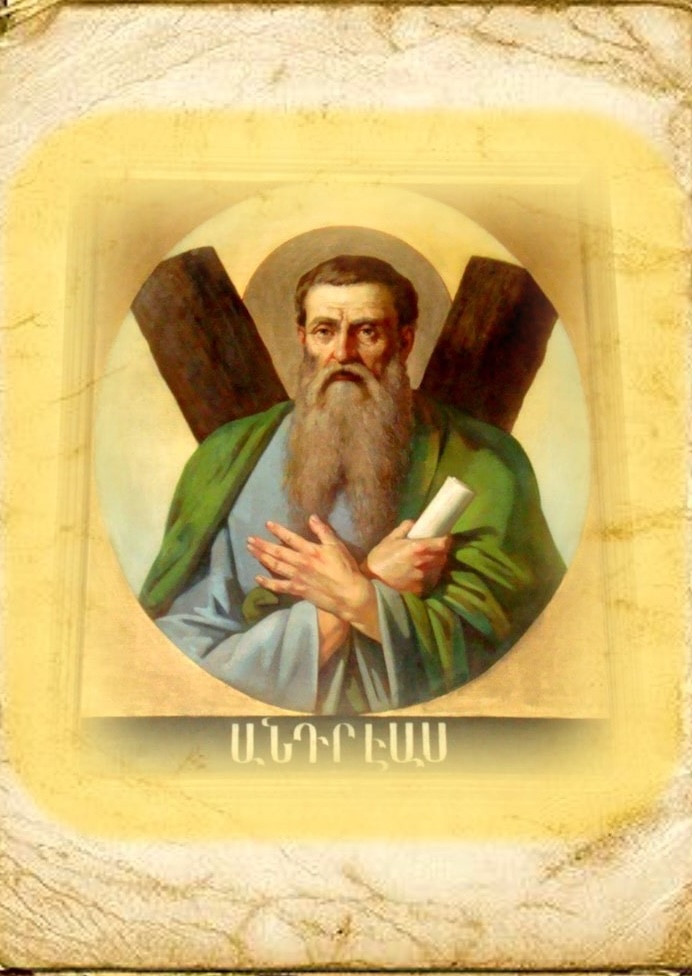
My dears, we are not remembering them by gender, by age, by social class, financial abilities, culture, etc. These saints, are those individuals who used the material world to make friends, share the love and forgiveness of God our Heavenly Father and bring the message of Christ to everyone through the life they lived regardless of this materialistic world. We are remember those who loved God above all! The Disciples like Andreas – who was the First-Called of the the Apostles to follow Christ, and he later brought his own brother, the holy Apostle Peter(John 1:35-42). When the holy Prophet, Forerunner and Baptist John began to preach, St. Andrew became his closest disciple and declared Christ to be the Lamb of God when St. John the Baptist himself sent to Christ his own two disciples. On his journey he endured many sufferings and torments from pagans: they cast him out of their cities and they beat him, they pelted him with stones, yet, the persistent disciple of Christ continued to preach to people about the Savior. Saint Andreas with prayer to the Lord willingly went to the place of execution. Or what about St. Stephen, who is described as a man full of grace and the Holy Spirit, and he performed great wonders and miraculous signs among the people., (Acts 6:5-8) St. Stephen was martyred in Jerusalem with the approval of Saul (who later became the apostle Paul), and is revered throughout Christendom as the First Martyr.
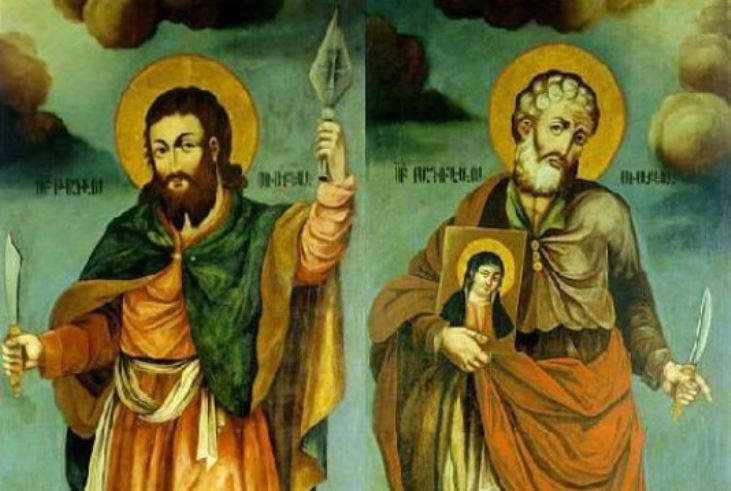
As proud Armenian, who claim to be the first Christian nation in the world, we received our faith and we always remember, Sts. Thaddeus and Bartholomew, two of Jesus’ twelve disciples, who brought Christianity to Armenia shortly after the resurrection. St. Thaddeus reportedly responded to the letter from King Abgar to Christ with a visit to Edessa, bringing with him the spear that pierced Christ’s side, the Holy Geghard (lance) which is now kept at Holy Etchmiadzin. He was a bold missionary, converting St. Sandukht, the daughter of the pagan Armenian King Sanatruk, until he was martyred in present-day northern Iran, near Maku. And St. Bartholomew following in the apostle Thaddeus’ footsteps, arriving in Armenia converted King Sanatruk’s sister, St. Volouhi leading them both to be martyred in Armenia. Why do we remember them? Because they died? No, my dears, but because even though they physically died, they live.
Jesus said “I am the resurrection and the life. He who believes in Me, though he may die, he shall live. (John 11:25) We live, our saints live. They lived in the same world we live in; they laughed, loved, created, ate, drunk, celebrated, cried and used this material world as blessing from God. That is why when someone new comes to Church and they are not yet baptized, that person or people go through catechism which is a period of learning. As a priest I am teaching faith to them, as to all of us. We are learning faith. But what are we learning? Doctrine, worship or history? Language, sacred artwork, tradition and music? These are all beautiful but they compliment our faith. We teach how to live, how to be imitators of Christ, as St. Paul says. In fact, in the early Church, one of the earliest writings that we have is not the Holy Bible but rather a book known as the Didache. The teaching of the 12, which is a manual on how to live faith. That is why the words of the book of the Didache begin with – there are 2 paths, one of life and one of death. There are 2 paths to live, which do we choose? Where do we learn how to live? From our saints my dears.
Because they did not love this world, they did not love the material above God. They did not serve 2 masters, as Christ says. Therefore, my dears, as we continue to go through and learn who these saints are, let us ask ourselves, in this season of Lent, in our every day life, what life are we living? Do we bring glory to God, do we honor our bodies, love and pray for one another? When we struggle do we learn from our saints, do we ask for their prayers? Let us use this Lenten period not for “personal gain” but for the glory of God, who sees us suffering, who willingly in the person of Christ Jesus came and suffered with us, to free us from sin. Use this life to make friends, share the Word of God, the love and hope of God and we will be regarded as honest Stewards, saints of God, called to be disciples, teachers, prophets and vessels of Gods glory in this world. By the grace of the Holy Spirit and through the intercession of our saints, may our prayers be heard and may our minds be illuminated to the love and wisdom our Lord Jesus Christ, Amen!
 St. Gregory the Illuminator Armenian Church