Passages: Isaiah 1:2-15; Rom 6:12-23, Mt. 12:1-8
Ընթերցուածքներ՝ Եսայ. Ա 2-15; Հռոմ. Զ 12-23; Մատ. ԺԲ 1-8
In the name of the Father, Son and Holy Spirit, Amen!
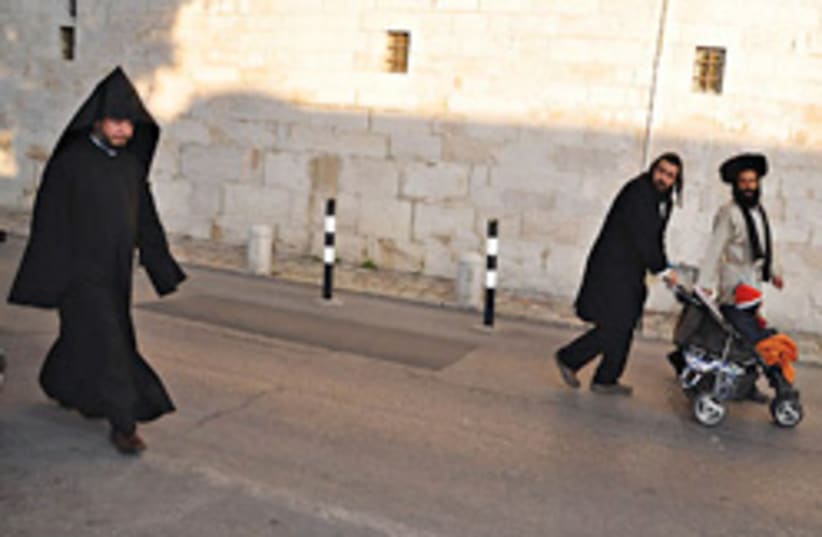
Back when I lived in Jerusalem, as some of you may know from my stories or from the news, as a Christian we experienced a reality of persecution that we don’t see living in North America. Orthodox Jews when they would see a cross or see us clergy walking down the street in our cassocks (black robes) or in procession going to the Holy Sepulcher for example, they would either vocally or quietly spit on the ground, in our direction or on us directly. As a result, we could either ignore them or more often a fight would break out, resulting in both parties being arrested for assault. To help show some hospitality and that this is not all Jews living in Jerusalem, one day a synagogue in the new city of Jerusalem extended an olive branch to us and invited us to their Friday evening Sabbath service. Following the service, we split up in groups of 2 and were invited to the homes of some of the Jewish families to share in a Sabbath dinner. Just like Armenian’s, for Jews and all Middle Eastern cultures, sharing bread is a sacred act not done with enemies. As me and my fellow seminarian walked with the Jewish family, to whose home we were invited, I noticed that the street we turned on was pitch black. As we approached the apartment building where they lived, we noticed that there was no power; the entire building was dark, while a group of men gathered on the outside. Before climbing the stairs, the Jewish man of the family asked me to flip the switch on the breaker for the entire building. As I did, the building lit up and we walked up and into their home for a pleasant evening of fellowship. I couldn’t help in that moment but to ask the man, if I had not been there, what would they have done? Why couldn’t they just flip the switch? The man replied, we would have sat in the dark until the Sabbath was over or asked one of the children who had not been Bar Mitzvahed or Bat Mitzvahed (in case of a girl) to flip the switch as the older one’s would not be allowed according to their laws.
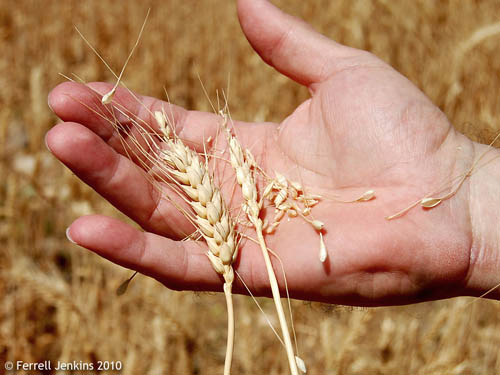
For us hearing this, it feels strange to imagine that even their modern interpretation of the mosaic laws forbids them from flipping a switch. Yet, we read from Scripture, that even in the times of Christ this same argument existed for the Jewish people. “At that time Jesus went through the grainfields on the Sabbath. And His disciples were hungry, and began to pluck heads of grain and to eat. And when the Pharisees saw it, they said to Him, ‘Look, Your disciples are doing what is not lawful to do on the Sabbath!’” (Mt. 12:1-2) The disciples are being criticized as unlawful, disobedient not to mere earthly laws but to the laws of God because they “plucked grain and ate.” This commandment comes to us from the Laws of Moses, specifically the 4th commandment of the 10 Commandments, “Remember the Sabbath day, to keep it holy.” (Exodus 20:8) Over the last several weeks, in our weekly Bible Studies we have been dissecting the 10 Commandments because for many of us some of the commandments are misunderstood, and Christ tells the Pharisees who are criticizing his disciples that they don’t really understand this commandment either. Elsewhere in the Gospel’s, only a few verses later, in Mt. 12 Jesus is again chastised for healing a man on the Sabbath, because again the Pharisees and Jewish people do not understand what the commandment of the Sabbath is about.
My dears, how many of us have full-time jobs here? Only a few years ago, before cellphones especially, we would go to work 9-5 and then come home. Work would not follow us home; we wouldn’t be bothered by our boss or clients to check emails and respond immediately. Apart from certain profession’s, most people would work 5 days a week and enjoy the weekend. Even in communities where agriculture was the way of life, when your animals slept, when the sun went down, work stopped. Yet, in today’s society, we are non-stop; there are a number of us who work multiple jobs to feed our families and pay our bills. As a result, what happens? Our families suffer; we focus on making money at the risk of our mental and physical health, and even more so our faith. Only a few short years ago, Sunday was when the family came to Church, prayed together; yet, today, so many times I hear from faithful, Der Hayr Sunday is our only day off to relax, to do laundry or clean the house. Compounded by with sports, extracurricular activities and such, we don’t have time for God. That my dears is what this commandment is about!
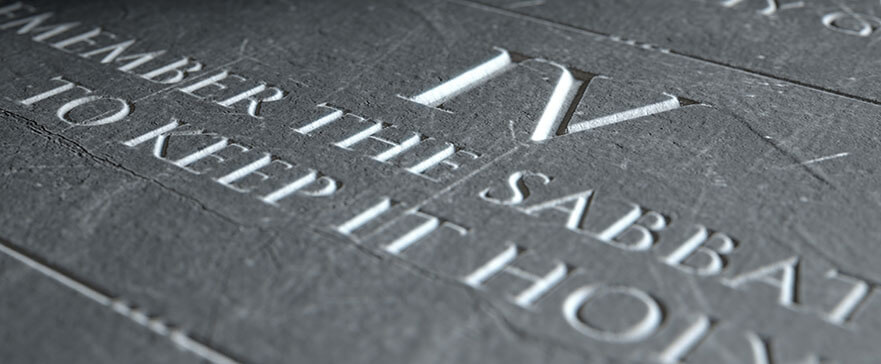
Yes, in 1st century Palestine, there was no NFL or playoffs, and the Jewish people did stop work on Saturday’s and go to the temple yet, today just like back then the purpose of that commandment was missed. The remembering of the Sabbath, to keep the Sabbath Holy was not about light switches or work, in the same way our Christian faith is not merely about going to Church on Sunday. This commandment is a reminder to all of us to make time for God in our life; to stop, slow down and work on our faith. To use that time, Saturday or Sunday (or any day of the week), to build up the relationships with each other by also building our relationship with God. St. Paul in 2 Thessalonians 3:10-13 says that “those who don’t work shall not eat.” In other words, work is good and necessary, but what about God? What about our Lord who created this world and called us to work it, be stewards and caretakers of it? My dears, this is so important because it is only by being with God do we find faith, healing, strength, hope and forgiveness for our sins. When we neglect our faith, our relationship with God, and when we fall into hard times, we blame God; we feel lost and ashamed; we are filled with fear, anxiety and we begin to fall even further away from God. We begin to think that either we are beyond redemption, that God has turned away from us, God doesn’t exist, or that if we fulfill some sort of obligation like coming to Church once a week, writing a check, singing in the choir, volunteering at a soup kitchen or lighting a candle, than through that act, we have pleased God.
Yet, that is not faith; those rules are not to gain favor with God. Which is why Christ says, that “I say to you that in this place there is One greater than the temple. But if you had known what this means, ‘I desire mercy and not sacrifice,’ you would not have condemned the guiltless. For the Son of Man is Lord even of the Sabbath.’” God is the purpose of the Sabbath, not the “rules” we follow or don’t follow. Christ Jesus is our Lord whom we remember by coming to Church through repentance, through prayer, through love. A love that removes the stain of sin from our life, Rom. 6:12 “For sin shall not have dominion over you, for you are not under law but under grace.” Christ is the reason we choose to follow the rules, come to Church, pray, etc. St. Eusebius of Caesarea says, The day of his [Christ’s] light . . . was the day of his resurrection from the dead, which they say, as being the one and only truly holy day and the Lord’s day, is better than any number of days as we ordinarily understand them, and better than the days set apart by the Mosaic law for feasts, new moons, and Sabbaths, which the apostle [Paul] teaches are the shadow of days and not days in reality” (Proof of the Gospel 4:16:186 [A.D. 319]).) In other words, through the death and glorious resurrection of Christ Jesus, by which we are saved from our sin, also the days of the week, celebrations, feast days, etc. they received meaning and purpose, through Christ. Even this today, Sunday. What does it mean? In Armenian today is what day of the week? Kiraki, from the Greek word, Κύριος (Kyrios, Lord) – the Lord’s day.
My dears, whether it is Sunday, Saturday, Christmas, Easter, morning, evening, alone, with friends and family, driving, sitting in Church or at home, how many of us truly remember the Lord? How many of us take time to stop, calm ourselves, turn to God and open ourselves to understand how much our Lord loves us, desires us and has given us the tools by which we are called to know Him? vs. how many of us live out of obligation, put more emphasis and importance on baseless actions, and in the effect forget God and His love which is what gives us healing, freedom and hope. That is what this commandment, and all the commandments are about. They are tools by which we are taught how to draw closer to God.
Therefore, I invite each one of us to take a moment, 1 minute each day, (if you have to put it in to your phone calendars as a reminder), to stop, force ourselves to pause and either read scripture or say a small prayer. Actively plan on attending Sunday Badarak, or if you need to, call your priest and come during the week alone or with your family. Come and remember the Lord your God, remember not the Sabbath as an obligation but as an opportunity to ask for God’s healing love in our lives. Because one day the street we turn on, the home we are in, the community we live in may spit at us, may persecute us and reject us; and the room may feel dark. If we are with Christ than perhaps, we will be the one called on to flip the switch, illuminate the room, heal this world with the same love God has loved us with. Our lives will be filled, we will grow stronger; if we are in the dark, the light switch will be turned on and through us, our families, our communities and our Churches will be healed, will be fed, will be protected, illuminated and all will see His light and glorify of God our Father, the Son and Holy Spirit, now and always, Amen!
 St. Gregory the Illuminator Armenian Church