Passages: Is. 37:14-38; 2 Thess. 1:1-12; Lk. 14:12-24
Ընթերցուածքներ՝ Եսայ. ԼԷ 14-38; Բ Թեսաղ. Ա 1-12; Ղկ. ԺԴ 12-24
In the Name of the Father, Son and Holy Spirit, Amen!
Money is the most important thing you can have because money helps you prepare for life. Money helps you make friends; money helps you buy things, fill your life with valuable treasures. Afterall, that is the season we’re in right? We’re in the season of buying as we prepare for Christmas! My dears, the Church is in the season of Advent, of preparation, but not in the way that the world tells us to prepare.
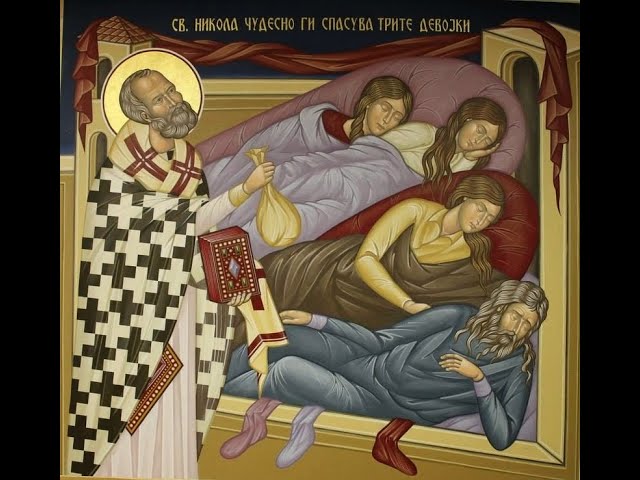
There once was this very rich man, who had inherited wealth from his parents. They were rich and so of course he was rich, and as he grew up he became very respected and liked in his community. One day, this rich man walking down the street overheard another seemingly poor man praying by his open window, “Dear God, I have three daughters, I don’t have enough money to wed them. Help me at least wed my oldest one.” The rich man walked past after hearing this prayer and thought to himself perhaps, I can help but I don’t want any reward, I don’t want recognition. And so, in the middle of the night, the rich man came and threw money through the window of the house. In the morning, when they woke up, they found this bag of gold, enough to wed the older daughter, sitting by their shoes. Unsure where this came from the man prayed “thank you God, that through this money I am able to wed my daughter. That through this money I’m able to provide. But Lord, I ask that you please also help me with my second daughter.” Again, the rich man overhearing this prayer does the same thing; throws in the money and the next day again the money is discovered. Confused not knowing where this money is from the man prays again thanking God, prays again for help but this time decides “I’m going to stay awake to see where this money comes from.” In the middle of the night, the bag of gold is thrown through the window again and this time he runs out to stop whoever threw the money. “Sir, why are you helping me?” and the man responds because “where your heart is, there your treasure will be.”
This rich man’s name is Santa Claus, St. Nicholas. Not the Coca-Cola, European red suit, white beard but the real St. Nicholas. This is one of the stories of the real Saint Nicholas which we in the Armenian Church and much of Christendom celebrated as the Bishop of Myra. He who was from a wealthy family, who gave up that wealth to be a priest, becoming a Bishop, serving God, becoming a teacher of the Church, a Holy Father, who participated in the great Council of Nicaea, which 1700 years ago defined our faith. The life of Saint Nicholas, and truthfully, the life of all our Saints especially of those who’ve sacrificed riches, wealth and royalty, their examples begs the question from all of us – with the life we have, with our riches, our successes, our bodies, and minds, regardless of how the world defines or values us, with what God has given us, how do we respond to God?
In the Gospel today, Christ gives us the example of 2 grand banquets. In the first, He tells us to be inviting, to be helpful to those whom we have nothing to gain from. In other words, help without seeking reward or recognition. But the Gospel also continues with a banquet story of someone who does help, who does invite and yet, those who are invited make every excuse as not to attend. This is what it means when I say, who are we. The God invites us to His banquet, but also reminds us, our participation in that banquet begins with who we invite to our banquets. When we are kind, loving, merciful, when we forgive others and live out the commandments of God as the Christian’s we are – do we do so because we want something in return? When God calls us, gives us opportunities to help, to learn His commandments, to respond to our Christian faith – do we make excuses why we can’t. It’s cold, it’s too hot, our team is playing, I have laundry, I have homework, I was out late and am too tired, too much to do, I have x, y, z?
Ultimately my dears, the core and foundational answer is the same. Who we are is a child of God; who we are is a Christian. To be a Christian is to respond to God and to one another. Which is why St. Paul says, “your faith is growing more and more, and the love all of you have for one another is increasing.” Our faith grows by how much we love one another in addition to how much we love God. Yet, if our faith is merely a belief in Jesus as a teacher, another guru among the plethora of other religions of this world, then of course, we can find any excuse to pick and choose when and what we believe. When and if we want to attend the banquet table. If our Christian faith is merely about being a nice person, so that we can “go to Heaven”, in the same way we are only friends and kind to those we have something to gain from, then yes, our faith and our relationships are merely transactional and commercial.
I’m sorry if this offends but neither of those are Christianity. One is a buffet, and the other is business. Yet, to be a child of God, our Christian faith – is Communion with God, which extends to others. It is a recognition that when we do good, we do because God is good and God does good through us. When we come to Church, read our Scriptures and pray, when we attend Bible Studies, and through repentance confess our sinfulness, we do because our Heavenly Father invites us to sit at His banquet table where He reveals to us our true purpose and value. In other words, my dears, our Christian faith is realized when we approach the Holy Altar, participate in this banquet, and then extend that love to one another, by giving with as Christ gives, out expectation of reward. To love without return. To care and understand without a desire to be cared for our understood. That is what it means to love one another, to love our enemies and to pray for those who persecute us. I don’t imagine Christ liked the Pharisees and those who persecuted his disciples very much. And yet, Divine love poured out of Him on the Cross to look at those who crucified him and say, “Father, forgive them for they not what they do.” And my dears, we are called to be likewise. To look to the world not with an expectation of what we can gain but with hope, compassion and love – to look and see goodness and light by being goodness and light where there is darkness and say God, Abba, forgive this world who knows not what it does and illuminate my mind so that I learn what it is that you want me to do. That is our Christian faith, a responding to God our Heavenly Father.

How? Through this banquet table which we than extend to all others who are hungry and know not what they do. Respond my dears. Pray. Love. Come and eat from this Holy Table, be filled through the Word and take what God has given us, as His children, take and give to others. Be fed and feed. And thereby, this response, our lives, and the lives of St. Nicholas and all our saints, will be an example for others to see and follow. A life that gives glory and honor to our Heavenly Father, the Son and Holy Spirit, Amen!

