Passages: Is. 40:18-31; Heb. 4:16-5:10; Lk. 18:9-14
Ընթերցուածքներ՝ Եսայ. Խ 18-31; Եբր. Դ 16 – Ե 10; Ղկ. ԺԸ 9-14
In the Name of the Father, Son and Holy Spirit, Amen!

There are students in a classroom of all different levels. In one classroom, there was a student who was very dedicated to his schoolwork. He is what you would call a perfect student; He was involved in extracurricular activities, he has the 4.0 GPA and so he’s doing everything proper and what is expected for a high achieving student. In that same class, there is another student who couldn’t care less. He doesn’t study and does with an attitude of carlessness. One day, his teachers came up to him and warned him, that “you’re not going to graduate, you’re not going to get anywhere in life, if you don’t apply yourself.” The lazy student heeded his teachers warning and with tutoring and extra help at the end of the year, as accolades were being given out the students, the one student with the 4.0 GPA, with the guaranteed college and full ride scholarship received all that he worked for. Yet, what did he not receive? To the surprise of many, the student who could barely get through class received the award for “Student of the Year.”
Perhaps we may think how is that fair? Why does he get “student of the year” and the one that truly was an exemplary student does not? Today my dears, Christ presents to us, the parable of the Pharisee and the Tax Collector. On one had, someone of the law, someone who is the ideal member of the Jewish community. The Pharisees are the ones that are learned; they’re the ones that people are going to for advice. The Pharisee is the exemplary one. But we also have another person, a tax collector. Well that’s his job but why does Christ use the example of a tax-collector? Because the tax collector, just like today the IRS or whatever, whoever is collecting our taxes, they’re not really liked. A Jewish tax-collector lives well but in their community, they are the bottom of society because while both Pharisees and the Tax-collectors were both Jews, one is a leader, a teacher of his people, the other one is an enemy of his people because he works for the Romans; he gets rich at the expense of his people. Yet, it is he that Jesus says will be justified, he who will receive a blessing, not the Pharisee.
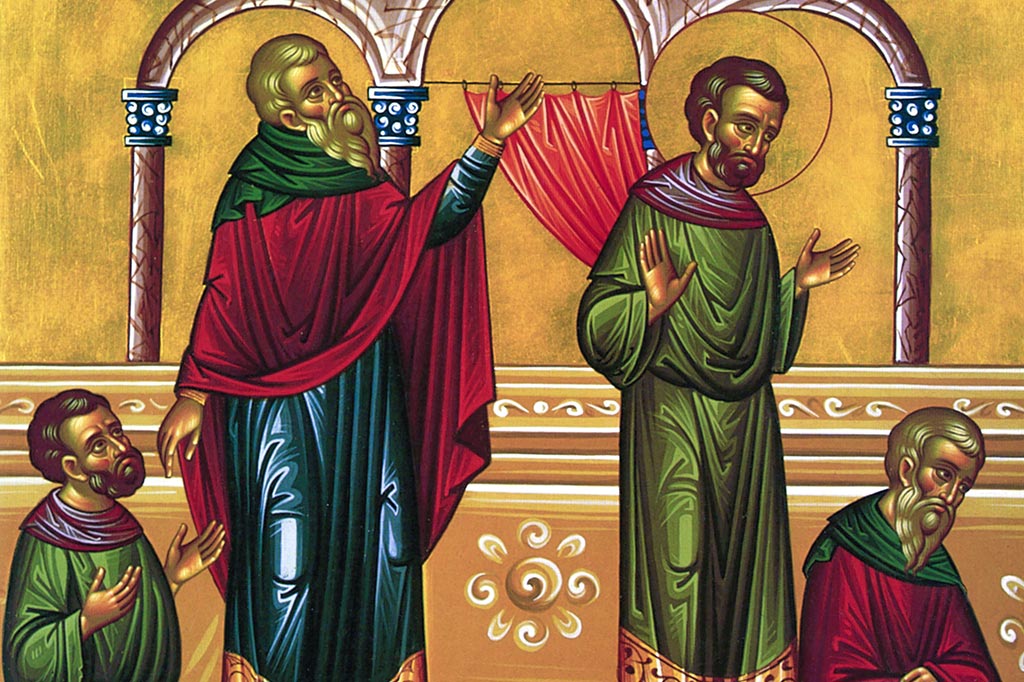
Contrary to what some might believe, the Pharisees were not rejected by Jesus my dears. In fact, Christ said “I did not come to abolish the law, but to fulfill it” and the Pharisees are the teachers of that law. Elsewhere Jesus says, when speaking about the Pharisees, “do as they say, not as they do.” Rather, Christ rejected the idea that just because we think we are doing the things, just because we dress nicely, because we have the material wealth, the diplomas, and all these things, than we are someone exemplary, and blessed. However, when God created humanity, how did He create humanity? From the dirt? What else do we read? In his image and likeness and, my dears, when humanity was created and after sin came into our lives Adam and Eve did not approach God because they were naked and ashamed. Meaning, God created us naked! That nakedness, whether was physical or not, reveals to us that God created us with no diplomas, with no accolades. with no scholarships, with no cars, no cell phones, nothing material. God created the matieral world, and used the material to create us. God took matter and made it matter! But what matters most is not the matter, but the Creator in which image and likeness we are created in.
That is why the it was not the Pharisee, the good student that was exemplary, who put value in the external but in the tax-collector who was justified because regardless of job, regardless of accolade, regardless of how society will accept or reject us, for God the only thing that truly gives us value is humility. Humility doesn’t mean we feel bad or beat our chest saying, woe is me. Humility is not what in today’s society we call victim mentality. Humility is recognizing that no matter what we achieve or fail, all of us need God’s love and mercy. Humility is recognizing the person in front of me is equally in need of God’s love and mercy. Humility is knowing that regardless of the material in my life, unless I have God in my life, unless I have His presence, none of it matters. Beauty fades, clothes get holes, money runs out!
Humility and the grace of God is eternal when He is present. The grace of God is eternal; recognized in the act of love that brought Christ into the Manger, which we will be celebrating either in a few days on December 24-25 or in a few weeks on January 5-6. In reality, we don’t celebrate on a date, but every day because it is in that Manger from which Christ began his earthly ministry up to the Holy Cross, and from the Cross He returned back a manger, a tomb. The was born in swaddling cloth and He died and was wrapped back in swaddling cloth. But He rose from that tomb and in His humility as God, coming down into our lives raises us up. He repurposes us, transforms us declaring I don’t care about your language, or skill, skin color, your hair length, or anything else. None of those things matter, if there is no humility in us.

Today in Armenia for those who may be following, we see how clergy are against clergy, of how politicians are against the people, where is the humility? Yes perhaps some of the criticism against the clergy and the criticism against the politicians is correct but where is the humility? Where is the mercy? Where is the value that God has created us in, His image and likeness? Unless there is humility, unless there is an understanding that who we are, our value, is in the love of God, unless we understand that whether priest or popper, child or adult, pharisee or tax collector, unless there is the humility of God to recognize our need for Him and His love not just for me but for all of us, than we will remain in darkness. Nothing will transform us.
However, the love and grace of God, in Christ has come to transform us – if only we begin with humility. For when we have the humility and love God calls us to have, then like the tax collector we will grow, we will be lifted up, we will be justified, and our true value will shine forth and our lives will give glory to our Heavenly Father, Son and Holy Spirit, whether it’s Christmas, Easter or any day of the year, now and always, Amen!
 St. Gregory the Illuminator Armenian Church