Forgetfulness

Passages: Is. 17:7-14; 2 Corinth. 13:5-13; Mk. 11:27-33
Ընթերցուածքներ՝ Եսայ. ԺԷ 7-14; Բ Կորնց. ԺԳ 5-13; Մկ. ԺԱ 27-33

In the name of the Father, Son and Holy Spirit, Amen!

In life we often forget things! We forget appointments, we forget dates from the past and we especially try to forget any embarrassing moments we have experienced. It is quite normal to be forgetful. On occasion, if I’m really tired or my mind is elsewhere, I will forget to plug my phone in overnight to charge. When I awake and realize I have no battery I become frustrated, “how could have I forgotten?” What is most frustrating is that all my contacts, my schedule and all the little important things I have to remember to do, are now forgotten because I forgot to charge my phone. But being forgetful is natural especially with how busy our lives can get nowadays. We forget to sleep, exercise, eat properly; we forget to pray, slow down and think; we are forgetful. This becomes especially dangerous and painful when we forget those around us. Not just literally forget due to some illness like dementia, but forget to care for, spend time with, and make a priority in our life. Whether this means our friends, our kids, our parents, our spouse, or even ourselves, what happens when we begin to forget? There is some consequence in forgetting a date, an event or even forgetting to charge your phone, but what about when we forget our loved ones? What about when we forget God? To be forgetful is normal, we are all forgetful at times however, this really only applies to the mundane and small things.

Why do we forget people and especially God? Forgetting friends or family is not about forgetting who they are, nor is forgetting God about not believing in God. Rather, forgetting is a symptom of something greater- indifference and pride. Last week during Bible Study as we have began looking at the book of Genesis, we read that St. John Chrysostom teaches us that Adam and Eve sinned not merely by eating of a forbidden fruit but by having grown indifferent and prideful towards God’s love and commandments. They sinned because they didn’t care about what God had to offer or taught; they became prideful and arrogant that they knew what was best, they had their priorities in order. And this indifference and forgetfulness continues throughout the Old Testament. The Israelites became indifferent to what God was offering as we read in Isaiah today, “For you have forgotten the God of your salvation and have not remembered the Rock of your refuge;” (17:10).

My dears, likewise, we, society, our homes, our communities, each one of us have grown indifferent to God and so we have forgotten God in our lives. We believe and know God is there, perhaps we have questions and uncertainties, but we don’t ask, we don’t seek, we don’t make time for and prioritize our faith and Communion with God in the same way, we don’t seek out, make time or make our loved ones a priority in our lives until all too often it’s too late. Isaiah continues, “therefore, though you plant pleasant plants and set out slips of an alien god,though you make them grow on the day that you plant them, and make them blossom in the morning that you sow; yet the harvest will flee away in a day of grief and incurable pain.” Though God you do all these things for us, we still think we know best. That is why in today’s Gospel we read of the Pharisees asking Christ, what authority he has to do and teach all that he is doing? “And as he was walking in the temple, the chief priests and the scribes and the elders came to him, and they said to him, ‘By what authority are you doing these things, or who gave you this authority to do them?’”(vv.27-28) They are not asking because they genuinely care and want to know about Jesus’s authority rather, they are mocking and asking, how would you know, who made you boss? They are asking this because they have forgotten the commandments of God, they have forgotten the prophesies, and teachings that is why they did not recognize who Christ Jesus is.

That is what it means my dears, to forget God. It means to not recognize all the blessings God has given us, not recognize His love and sacrifice on the Cross. To forget God’s love my dears, ultimately reflects in us forgetting the love of all those around us as well. 1 John 4:20 “If any one says, “’I love God,’” and hates his brother, he is a liar; for he who does not love his brother whom he has seen, cannot love God whom he has not seen.” He who forgets God, forgets everyone else. Why? Because we have grown indifferent and prideful. Forgetting to charge your phone might be normal, but we must never forget to charge and be energized in our relationships with each other and especially with God. Forgetting a date might not be dire, but we must not forget that Christ Jesus, God the Son, died for us upon the Cross because His love could not bear to see us perish. Forgetting to say thank you might be rude, but we must not forget to love one another and make time for each other because God commands it. And the best way to remember and love one another is to pray for each other as God commands us.
That is why, in the Armenian Church we have a prayer of remembrance “Heeshya Der” where we list teachers, parents, leaders, caregivers, friends, those who feed us, pilgrims, those who hate us and who despise us. We pray God have mercy on them, remember them even if we forget. Remember to love them in the same way you remember us. And, my dears, we must always remember God, remember His love, remember each other in prayer, in love and mercy, we must no grow indifferent towards Him. And rest assured, God never forgets us, will not turn away, will continue to bless and give us strength. God will never grow indifferent to us. May we grow in our love for Him, Amen!
The Cross

Passages: Prov. 3:18-26; Is. 65:22-25; Gal. 6:14-18; Matt. 24:30-36
Ընթերցուածքներ՝ Առակ. Գ 18-26; Եսայ. ԿԵ 22-25; Գաղ. Զ 14-18; Մատթ. ԻԴ 30-36

In the name of the Father, Son and Holy Spirit, Amen!

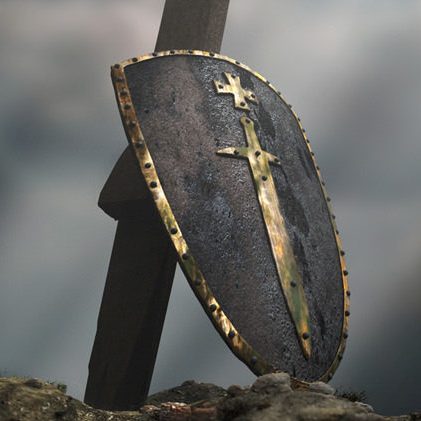
A few weeks ago, during our Little Saints program, we explored the importance of the Holy Cross for us Christians. We learned why we cross ourselves before we do anything in our daily life and one of the children said “oh so like when you hold up a shield and your hand come across you.” Yes, the children learned that the Holy Cross is a shield, it is a weapon, it is a tool; as St. Paul says, “the cross is foolishness to those who are perishing, but to us who are being saved it is the power of God.” (1 Corinthians 1:18) Multiple times a year we as Armenian Christian’s celebrate and emphasize the importance of the Holy Cross. We are, in fact, in the season of the Cross, where we have multiple feast days dedicated to the Holy Cross. For example, today the Armenian Church celebrates the feast of the Holy Cross of Varak. This feast exists only in the Armenian Church and if you want to learn more about this feast specifically, make sure to read our newsletter from last week. But being in this season, there is an important question, why and what is so important about the Cross?

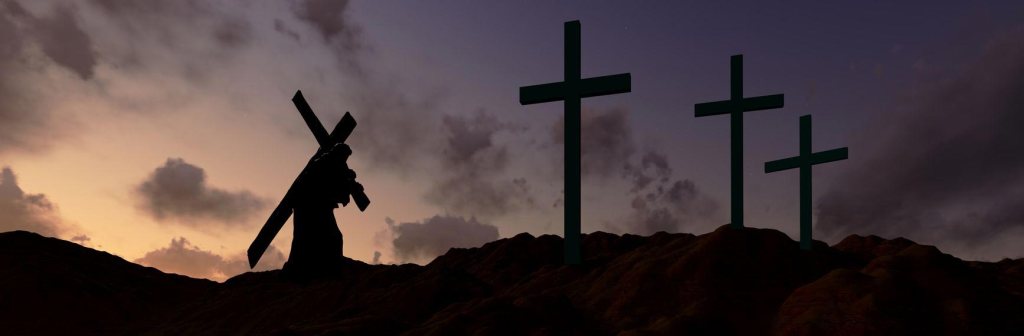
There are many Christians in the world who do not use or emphasize the Cross yet, we as Orthodox and especially Armenian Christians use the cross in so many ways. Even St. Paul emphasizes not just Christ but the crucified Christ Jesus (1 Cor. 2:1-2) – meaning the Cross is very important in the life of the Christian. Christ Himself tells us to, “pick up your cross and follow Him.” (Matt. 16:24) But why? Over the past several weeks, we have witnessed again how Armenia is being barbarically attacked by Azerbaijan, while the world sits in silence. Over the last few years, we witnessed sickness and pandemic strike fear in the hearts and minds of so many of our loved ones and us to a point where our Churches are still empty, and we have only a tiny glimmer of hope for the future. Every day, each one of us struggles with questions of faith, morality, mortality, sickness, hatred, anger, anxiety, fear, addiction, arrogance, ignorance, and so much more. My dears, each one of these are crosses. We each have a personal cross we carry; we have a cross for the different roles we have in life, whether as a parent, teacher, clergymen, etc.; we have community crosses as a parish, as a society, as neighbors; our nation has a cross of its own carried by its citizens. We all have multiple crosses we carry, the question is what is that Cross? Is it a punishment or a tool? Is it a weapon to strike us down or a shield and sword to protect and strengthen us?

To answer this and better understand our cross, we need to understand what the cross is for the Church because it is through the Church that God teaches us our faith. Understanding the Cross is extremely important because by understanding the importance of the Cross in the Churches consciousness, we begin to unfold and understand our own crosses – ultimately leading us to understand the power of the Cross of Christ. Some of you might think this sermon is too deep, and inapplicable to our daily life. But think about the cross around your neck, or the one at home; how much more unnecessary and inapplicable are two pieces of wood that were used to kill criminals in the Roman Empire? How unnecessary is all this around us? The icons, the hymns, the vestments. If we ignore or begrudgingly look at what all this is, then of course it seems unnecessary and extra. But everything God has given us, from the Words of the Holy Scripture to the Church and all we do and live within it is ultimately a tool to guide us, our physical, emotion, psychological selves to be in Communion with Him. That is why it is so important to learn and understand what the Holy Cross is and how it applies to me and you in our life.

Look around you, our Church is full of Crosses. Where do we see them? On the Holy Altar, in the hand of the priest, on the doors, around our necks. On the sides of the pews, and on books. We see them carved in stones either as memorials, tombstones, or decorations. Some of are very simple and plain, while other’s are intertwined with leaves, fruits, and jewels. Imagine if we took a cross and made it bigger, 20 feet long and 15 feet wide and as tall as 10 feet with a door at the foot of the cross, what would we have? The ancient architectural designs of the Armenian Church. Because as Armenian Christian’s, the Cross is not merely a symbol of Christ’s death but of His resurrection, of renewed life. Each place we see a cross in the Armenian tradition it reminds us of that new life, of the victorious life over death as described by scripture itself. For example, the cross in the hand of the priest is the staff of the Shepherd, from the Psalm 23 which we recite, “your rod and your staff they comfort me…”; the cross on the door of the Church is a reminder that Christ is the gate by which we enter into the presence of God the Father; the cross on the tombstones is the blossoming tree of life that was planted in the garden of Eden; the Cross-like architecture of the Church is the very Throne room, the Kingdom of Heaven where we pray and commune directly with God.

And so my dears, if the Holy Cross which is the staff, the doorway, the tree of life, the very Kingdom of God, which St. Paul teaches us is the only thing we take glory in, what about the Crosses we carry in our daily lives? Are they also the same Cross? For this, we must look at ourselves. Do we trust God to help us when we are carrying our cross or do we become haughty, arrogant and boastful? In Proverbs we read, “My son, keep sound wisdom and discretion; let them not escape from your sight, and they will be life for your soul and adornment for your neck… for the Lord will be your confidence and will keep your foot from being caught.” When we are carrying our cross, when we are facing difficulties, fear, doubt, pain, hurt and darkness keep sound wisdom, meaning trust in the commandments of God and live them, so that by carrying our Cross we come into deeper communion with God. Or else, if we are overcome with pride, anger, hatred, bigotry, lust, and fall deeper and deeper into sin, then not only will the cross we carry crush us but we will abandon it all together. We will look at the staff of our shepherd and see it as pointless device used for controlling of society; we will look at the gate by which we enter and see it as a prison; we will look at the tree of life and like Adam and Eve, choose death rather than life; we will look at the Church and say this is all useless, pointless and unnecessary. We, my dears, will look at the Holy Cross of Christ and see 2 pieces of wood, a weapon of Roman execution and fear.

What is the Holy Cross to you? What is the Cross in your life and how are you carrying it? To pick up our Cross and carry it is not meant to be an easy commandment. Remember Christ carried His Cross where? Up to Golgotha. Meaning not only is the weight of the Cross difficult but so too is the journey. A journey, which if it is in Holy Communion with God will lead us up to God, will lead us up to life and victory over suffering, pain and death because the Cross is also a ladder, a crutch to lean on and climb upwards. But this can only be done when we trust in God, follow His commandments, love and forgive, have compassion and mercy. Break our egos down and be rebuilt into the likeness and image of God. That is why Christ Jesus, God the Son became man and took up His Cross. In order to make us into who God created us to be. An heir of the Kingdom of God, a child and servant. A living witness, an incarnation of the Cross, a tool by which other’s likewise come into Communion with God.

Let us pray, that we will find our Cross, carry our Cross, enter through the Cross into life and communion with God. Let us pray that God make us into the means by which the entire world will see the hope, love and life of God when it feels it is lost in darkness. Let us with the Heavenly angels, the saints and martyrs of the Holy Church, take glory in the Holy Cross of Jesus Christ by which the world has been Crucified to us and we have been Crucified to the world. Glory to God, the Father, Son and Holy Spirit, Amen!

True Peace and Strength

Passages: Is. 14:3-17; 2 Corinthians 10:18-11:10; Mark 10:1-12
Ընթերցուածքներ՝ Եսայ. ԺԳ 3-17; Բ Կորնց Ժ 18-ԺԱ 10; Մարկ. Ժ 1-10

In the name of the Father, Son and Holy Spirit, Amen!

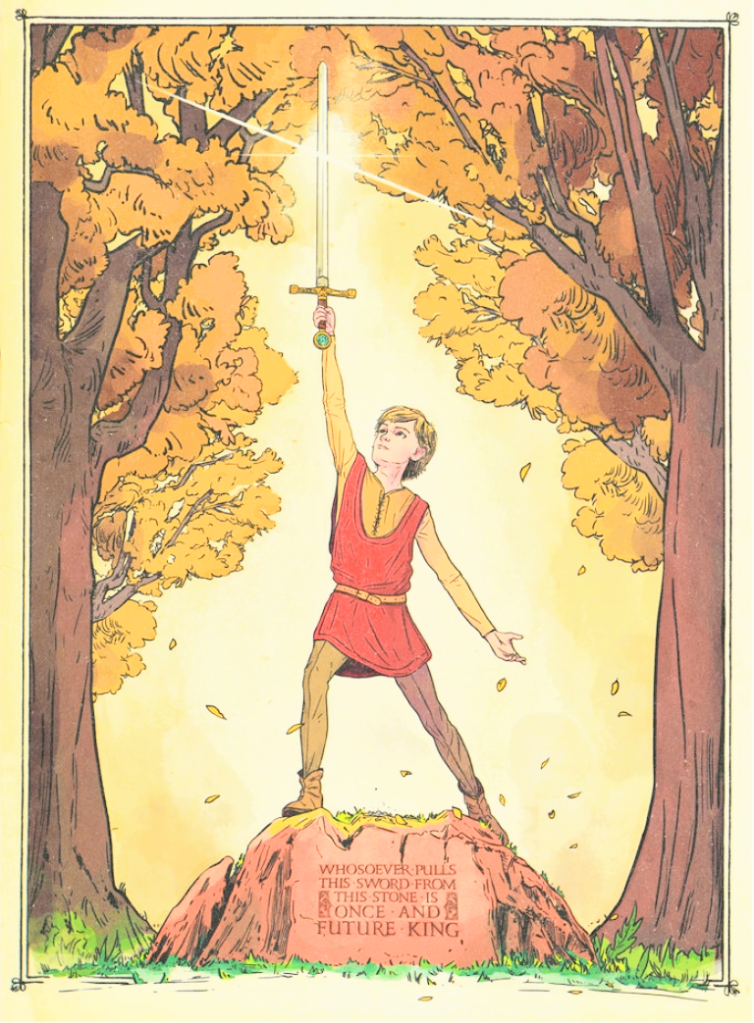
In English folklore and legend there is a story about a young King; A boy, who though was born of royal lineage, was raised by a commoner and was unaware of who he truly was. As the legend goes, the son of King Uther pulled the mighty sword Excalibur from the stone and was hence forth known as King Arthur. Though the historical King Arthur is often argued about, the legend holds a place of great importance. Arthur became King Arthur when he found strength in himself and lifted Excalibur out of the stone. Though many of great strength attempted this feat, only this young boy was able to do so not because of his physical strength but rather the strength that was in his heart.

What is strength my dears? Today as Armenian’s we are once again forced to ask ourselves what and where is our strength, as Azerbaijan once again attacks, kills, and decimates our homeland. Where and what is our strength if something we ask even if we set political hardships aside, and look into our lives, and the struggles we face daily. Broken families and friendships, shattered communities, and deception. Skeletons in our closet, addictions and darkness we wrestle with, the lies we tell ourselves to justify the wrongs and evils in our lives; how do we overcome all this? Where and what is our strength?

One of the Fathers of the early Church, St. Justin Martyr tells us, that the author of all war is the devil. War is not merely what is in the battlefields my dears; nor is war limited to firing weapons at each other or killing each other through other means. War is evil that we do to each other, to the environment around us and to ourselves. And the only way to overcome  and fight this war is by finding out strength. Karekin the I, Catholicos of All Armenian’s taught that nations do not survive merely with economics and with foreign policies but with all that God commands. These words reflect to Christ’s words in the dessert, who tells the devil, “It is written: ‘Man shall not live on bread alone, but on every word that comes from the mouth of God.’” (Matt. 4:4) Does this mean if we merely come to Church, fast, and pray that we will have strength to overcome war and all the darkness in our lives? Or that if we believe in God, than war does not happen? No, my dears. Evil is real and war is real.

Rather, when we come to Church, fast and pray and live our Christian life with a heart open and trusting God than God will transform us and reveal to us the strength we have through Him within us. And God does this by equipping us with what we need to overcome those wars in our lives. Patience, hope, fortitude, love, compassion, mercy, etc. tools by which we grow into who God created us to be. But this only happens when we begin trusting in God more than in our own abilities, trusting God more than in other worldly leaders or any other thing. Not world economics, not foreign policy, not bread alone but everything God gives us. God gives us the strength and God is our strength to overcome evil and find peace. Because if the author of war is the devil, then know that the author of peace is God alone and peace does not mean weak. And peace is not just the absence of warfare and conflict, but is an active state of harmony and well-being that applies to all relations, to each other and to the relationship of God and man

Every Sunday, the priest repeatedly says, «Խաղաղություն ամենեցուն», “peace unto all”. In fact, it is the very first words out of a newly ordained priest, his first blessing is peace unto all. But what peace is he talking about? Peace from earthly wars? Peace in our communities, in our governments? No, my dears, peace and strength as given by God is greater than what this world defines, and this peace is given as a blessing that we take with us as strength to fight and bring harmony in our relationships. Because when things go bad, when we struggle, when we see real war or personal battles, our first instinct should be to fight! We must fight to bring peace. Sometimes this is hard, especially after we’ve been fighting for a long time. But we fight not with the swinging of the sword to strike each other down and we fight not with our own strength which may fail us but with the humility and trust in God. Fighting for peace means working for peace, living our faith. As St. Paul says, “I have fought the good fight, I have finished the race, I have kept the faith.” (2 Tim. 4:7-8)

Our strength my dears, to keep fighting, like that of the legendary King Arthur’s comes from recognizing who we are through God. We are a child of God, loved and cared for no matter what scars we have, no matter what wars we have fought, no matter how dirty and vile we think we are or how cruel the world has been to us, we are loved by God. And we need to recognize this in us and in others as well because when we recognize this then we understand what God’s peace is, then we can understand what it means to live by God’s commandments. A peace that fights not to kill but to overcome and lift up; A peace that comes from Christ Jesus, who came and suffered just like us, who died just like we do but we who overcame death, just like we will through Him. This is our strength and peace, this is our faith – no matter who we are Christ comes for us and loves us. If only we would trust in Him to help us pull the sword out of the stone, to arm us with everything we need to fight and overcome the evils in our lives. Let us pray for each other, pray for our soldiers, for our homeland, our leaders, our Church so that through her we will learn how to trust in God, who will equip us with everything we need to overcome war and bring peace into this world.

Opened

Passages: Is. 13:2-11; 2 Corinth. 7:4-16; Mk. 7:31-37
Ընթերցուածքներ՝ Եսայ. ԺԳ 2-11; Բ Կորնց. Է 4-16; Մկ. Է 31-37 

In the name of the Father, Son and Holy Spirit, Amen!

What is faith? Whatever it may be or however, we define faith, faith is not learned here in Church! This might be a startling or even upsetting revelation, but coming to Church on Sunday is not where we learn what faith is. Throughout the Gospels we read about how Christ taught in synagogues, and yet, he mainly taught on the hills, by the water, in the towns and in homes. We might argue that there was no formal Church back then, that is why Christ taught in all those places. Though this is true, what we see, not just from Christ, but also the Apostles in the New Testament, the Prophets in the Old Testament and even many of the Church Father’s and Mother’s, is that faith was taught out there in the streets, in homes, in conversations. This isn’t to say, stand out in the streets and yell about the end times, like we see in movies. But rather, when we want to learn something and have an impactful dialogue, we do it one on one, dedicating time and effort. Similarly, today, deep conversations and understanding of our Christian faith begins when we sit down and ask questions from our priests; when we read the Holy Scriptures, learn the traditions of the Church and invite the priest into our homes in order to be able to ask those personal questions, share our ideas and struggles about our Christian faith. When we dedicate time and effort. Then we come to Church to strengthen that faith we’ve learned, glorify and give thanks to God, acknowledge God’s presence in our lives by coming into Holy Communion with Him through the Body and Blood of Christ Jesus.

In fact, in Armenian the word Badarak means what? If we say Divine Liturgy, that would be short of its true definition. Divine Liturgy is the Roman Latin definition – divine meaning Holy and liturgy, meaning work of the people. So, the Holy work of the people. But what makes it Holy, and who are the people that do this work? The priest? The choir? The greeters? Majority of us sit at home and watch Badarak on a screen today therefore, what work is being done apart from a click of a mouse? In the Armenian mindset, Badarak is not only Holy but it is an acknowledgement of sacrifice – Holy Sacrifice, Soorp Badarak. But what sacrifice? Whose sacrifice? In Greek, what we do here is known as Eucharist, ευχαριστία – which means thanksgiving. But who are we giving thanks to and for what? The answers to these questions, therefore, needs to be learned before coming here, so that when we come to Church we understand why we are here, what is so important about coming to Church and praying together.

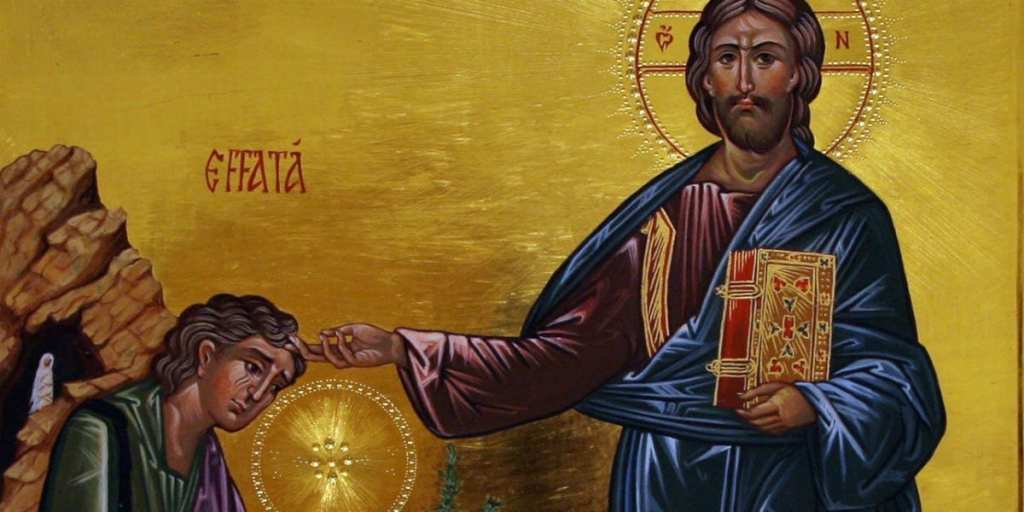
In the Gospel today, we read about “a man who was deaf and had an impediment in his speech…” We’ve all heard or read this story, about how Christ heals the man, saying “‘Eph′phatha,’ that is, ‘Be opened.’ And his ears were opened, his tongue was released, and he spoke plainly.” What is opened? His ears and tongue? Perhaps physically. However, God is not a magician nor a voodoo healer to only heal the physical ailments we have. Hearing aids can help a deaf man hear and speech therapy can bring an end to speech impediments. God’s healing, when God opens our ears and tongue means much more than physical limitations being lifted. My dears, when we read this story look at what Christ does, “and looking up to heaven, he sighed, and said…” When else do we see that Christ, looks up to Heaven and sighs, groans or cries? At his crucifixion, “With a loud cry, Jesus breathed his last.” (15:37) The Greek word used at the Crucifixion afeis which means to let go is rooted in the word aphesis which means pardon, forgive, released. This means that when we read about Christ Jesus letting go or opening the ears and tongue of this man, and when we ask God to heal us, God’s healing is not merely physical or superficial healing but it is a pardoning of us, a breaking of the power of sin in our life. When Christ healed this man, it was a foreshadowing, a revelation that Christ’s healing that is beyond the cures of this world and it is our spiritual eyes, ears and our tongue that is opened. Opened to what? Opened to begin understanding who God truly is, what is God’s love and why He desires communion with us. With this understanding, my dears, we learn what faith is and how we can grow in faith.

What is faith? A feeling? Perhaps a belief? No, my dears, faith means being open. Open to God, who knows us and seeks us; open to grow; open to be healed. And this is not done by our own efforts, but God is the one who heals us to be opened. What we must do is be willing to be opened. Opened to being opened. Because being open to being opened by God means learning and living His Commandments; being open to God means hearing and recognizing our sinfulness and trusting God to heal us; being open to God means trusting God. However, my dears, we will not learn how to trust God, what His commandments are, nor have a desire to be healed of our sinfulness unless we invite God into our lives, into our homes. We do this by opening up the Holy Scriptures, opening our homes, our hearts and minds to ask questions, face the fears of doubt, allow ourselves to shed tears and repent of our sin. Only then will we be healed, opened and begin to understand that through the grace of God that it is Christ who is being sacrificed in Holy Badarak, it is God the Father whom we are giving thanks to and we are the people, each one of us who through the Holy Spirit must do the Holy work of God. A work that is not merely limited to 2 hours in this building but grows from here into the streets, into the workplace and into our everyday life.

St. Mark the Ascetic teaches us, “Faith consists not only of being baptized in Christ, but also in fulfilling His commandments.” Meaning, it’s not enough to come to Church and do all this, but we must also live what God teaches us. We live by learning, we learn by opening our homes, our lives, ourselves up to being opened by God, who loves us and desires to be in Communion with each one of us. Therefore, ask questions, read, thirst and desire to be opened by God, to be healed. Thereby, we too will be the voice, the hands, the feet that bring God’s work, news of God’s sacrifice through Christ Jesus, the good news of eternal life to the whole world. Through us, will healing come into this world and together we will give thanks and glorify God the Father, Son and Holy Spirit, now and always, Amen!

God’s Anger

Passages: Is. 9:8-19; 2 Corinth. 1:1-11; Mk. 4:35-41
Ընթերցուածքներ՝ Եսայ. Թ 8-19; Բ Կորնց. Ա 1-11; Մկ. Դ:35-41

In the name of the Father, Son and Holy Spirit, Amen!

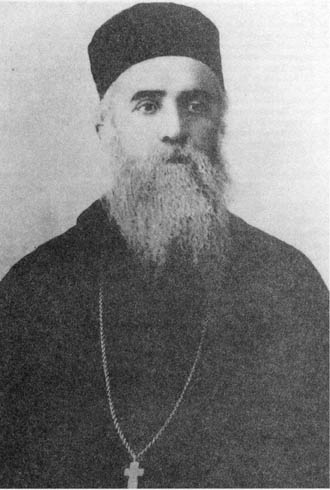
Liar; cheater; arrogant; prideful; vindictive; manipulative and ignorant. One by one, all he heard was insults and lies directed to him by those he had once trusted, those who he had cared for. False claims and fabricated stories accusing him of horrible crimes. How would we feel if those who we loved and cared for acted this way with us? How would we feel seeing our own family, our parent, or friend stand before us and make false claims? We would feel upset and hurt but most of all angry. Angry as to why all these wrongs are being done towards us; angry that those whom we trusted and loved, now accuse us of evils which we never did. In the 19th century, St. Nectarios, a Greek Orthodox Bishop and monk was a victim of such a crime. This monastic teacher and priest, who dedicated his life to serving his community, his flock, his faithful, stood by and heard countless false accusations by other clergy and so called faithful who acted out of jealousy and spite. And though St. Nectarios was later exonerated and recognized as a saint, in that moment as a person, I cannot image how hurt, how angry he felt listening to those words of insult. Anger towards those people, and perhaps even anger towards God. Yet, when we read the life of St. Nectarios and many of the other saints in the Church, we see that though they felt anger and many of the same emotions we feel daily, they never lashed out, they never sought revenge and they never held a grudge towards those who hurt them. After all, as Christian’s we are called to be forgiving even in the face of hate and anger.

So how do we understand when we read, in the Holy Scripture’s about God’s anger? What is God’s anger, or His wrath? In Isaiah today we read, “For all this his anger is not turned away and his hand is stretched out still… Through the wrath of the Lord of hosts the land is burned…” If we merely read those words, we would conclude that something made God angry and that God is not only angered but that He is also vengeful, “his anger is not turned away.” The wrath or anger of God is always an interesting topic when it comes to our understanding of faith. Many people read Isaiah or other such passages and find it difficult to understand how God, who is loving and compassionate in the New Testament and calls us to forgive, is so equally angry and wrathful in the Old Testament. However, my dears, our understanding of such passages and images starts by how we comprehend anger – what is anger? Is anger an emotion? Is anger a reaction? Can anger be justified? Is anger only destructive or can it be constructive? If we look at ourselves in the mirror and think back to when we are angry, for whatever reason, what are we like? We are not rational most of the time and if we act out of anger, we are most definitely emotional. We might be right to be angry because we are hurt. Anger is a response therefore it is not wrong to feel angry but what is it that we do with our anger? Some use their anger to destroy and seek vengeance while other’s focus their anger and emotion and rise above the situation to be stronger or better. What about God’s anger? Is it emotional? Is it reactionary? Is it justified and is it constructive or destructive?

When we read all of Isaiah and other such passages in scripture where we see God’s wrath, it is clear to see that God’s anger is never random or petty. Nor is the wrath of God an emotional reaction by Him towards us. Rather, for example, in Ch. 9 we read of how again Israel is disobedient to God and therefore, the consequence of Israel’s disobedience is God’s anger – that they will fall to their enemy. And rather than trust in God and turn back to Him in times of suffering, they continued to deny God ultimately being led astray and into chaos; And that’s just in this chapter of Isaiah. Through the disobedience of Israel, God is insulted. Those He loves and cares for, reject Him and tell lies about Him. However, we see that God’s wrath or anger is not what causes the Israelites to stray. Though God is angry, that those whom He loves have turned away by their own actions, it is ultimately their destructive choices that brings destruction to them. Therefore, the punishments from God, God’s wrath, which we read about is not a reaction of God’s anger but a consequence of Israel’s actions, of our own actions. God is not punishing us with sickness, pain, or even death – those are all consequences of the sinful life we have lived and choose. And yet, there is more because we read that “his hand is stretched out still”. What does this mean? What is this image? A hand that is closed like a fist to strike or a hand that is open.

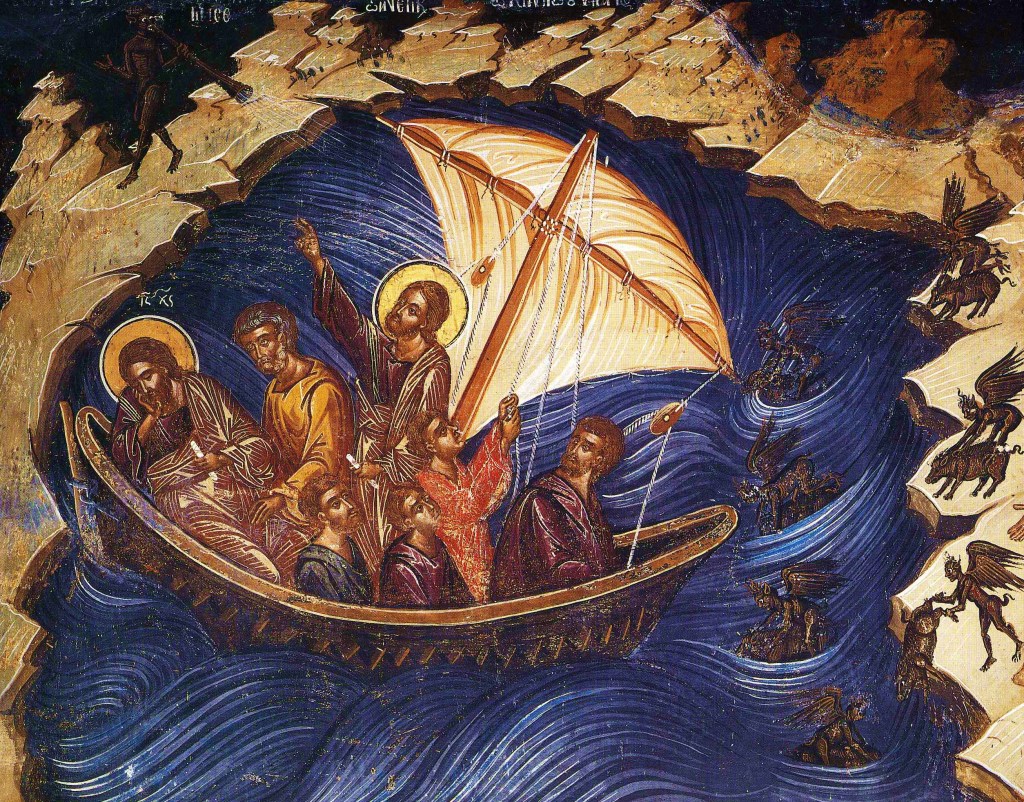
In the Gospel today we read of the Christ calming the storm. We all know this story very well. We’ve seen the icons or seen the movies. What do we often see in the icon of this story? A boat, the storm, the disciples being tossed back and forth. What about Jesus, what is he doing? Often times, we see him standing on the boat and he has his hand outstretched over the storm. Yet, in none of the accounts of the Gospel stories do we read that Christ stretched out his hand and calmed the storm. Rather, we read, “And he awoke and rebuked the wind and the raging waves; and they ceased, and there was a calm.” (Luke) “Then he rose and rebuked the winds and the sea; and there was a great calm.” (Matthew) “And he awoke and rebuked the wind, and said to the sea, “Peace! Be still!” And the wind ceased, and there was a great calm.” (Mark) (Matthew 8:23-27, Luke 8:22-25) And yet, all of us know this story from seeing Jesus standing on the boat, stretching out his hand to calm the storm. My dears, Christ rebuked the storm, meaning Christ Jesus, God the Son, showed anger towards to the storm in the same way God the Father, rebukes us, shows anger towards us when we are disobedient.

God’s anger is not vindictive or spiteful nor is it pleasureful. Rather, when God is angry or we read of God’s wrath, it is His love that is present, a love that sees how hurt we are, how lost we are because of our own choices that He stretches out His hand to rebuke. What does rebuke mean? The simple definition means to criticize. But looking deeper, when God rebukes us, it means He reveals and makes known to us our sinfulness, our consequences, and our weakness. That is what rebuking means – to diagnose and make known our sinfulness and the resulting consequences that will happen if we continue on that path. Unlike false accusation that other’s may make towards us which is done to hurt us, God’s rebuke and accusation is spot on and shows us our sickness. Why? Is God trying to insult us or hurt our feelings, or to force us into submitting to Him? No. Rather, by knowing our sinfulness, ultimately, we are given control over how we react and given the option to turn to God to be healed. In the same way, when a doctor diagnoses a sickness and tells us the course of treatment, we choose to reject or accept that path. What do we do, when God rebukes us my dears? Do we turn further away, or do we seek healing, love, compassion and peace? Do we humbly recognize our brokenness, our choices that give rise to storms in our life or do we react out of anger?

St. Nectarios knew the false accusations against him had no power over him, because he recognizes that as sinful as he is, his true peace and healing comes from God. God, who knows our sinfulness and yet, because of His love for us is present to heal us, strengthen us and lead us out of the storms we are surrounded by. His hand is outstretched over us in compassion and care not retribution. Is our anger therefore, the same as God’s anger? No, my dears, for in the anger of God is also the love of God and it is not the anger of God that punishes us for our sin, but it is we who punish ourselves by choosing sin as we reject God’s love and instruction.

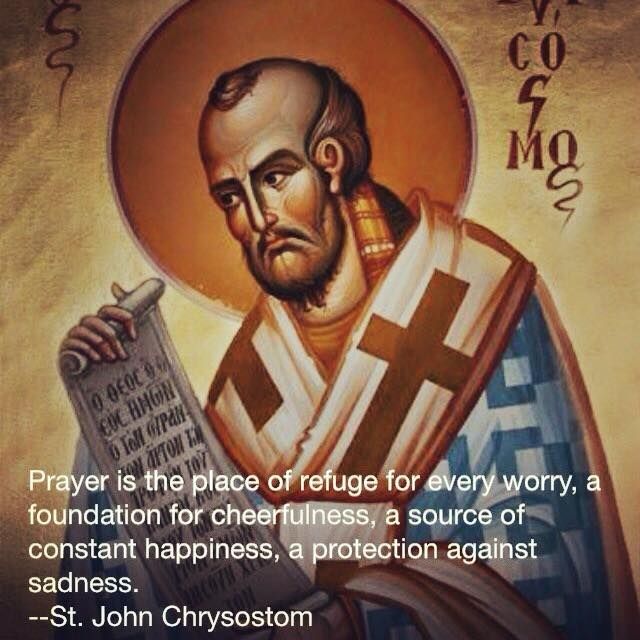
Come to God my dears, even if we have given Him cause for anger. Come to God even if we think we are so lost that there is no redemption for us. God, our Heavenly Father, calls us and beckons us with an outstretched hand that is open to bless us and not closed to strike us. Our Lord God reveals to us that no matter how much we have sinned, or how this world hurts us, no matter how angry we feel, no matter who or what tries to define our worth based on lies, arbitrary concepts or anything else, no matter the storms in our lives, He loves us, He wants us, He will heal us and reveal to us who we truly are. May we turn to Him and call upon His Holy Name in prayer, regardless of language or place. For it is prayer my dears, that St. John Chrysostom teaches, “prayer is a place of refuge for every worry, the foundation for every cheerfulness and a protection for all sadness. Pray, trust and love the Lord God for “God is our refuge and strength, a very present help in trouble.” (Psalm 46:1) now and always, Glory to God, Amen!

Wake Up and Rejoice

Passages: Zech. 2:10-13; 2 Corinth. 6:16-7:1; Lk. 1:39-56
Ընթերցուածքներ՝ Զաք. Բ 10-13; Բ Կորնց. Զ 16- Է 1; Ղուկ. Բ 39-56

In the name of the Father, Son and Holy Spirit, Amen!

It’s that time of year again, where students and teachers gather for a new school year. Excited to learn new things and create new experiences. Personally, I was not the most enthusiastic student. Without fail, within the first 15 minutes of my morning classes I would start falling asleep and lose focus on what was going on. Maybe it was because it was early in the morning, and I barely slept the night before, or maybe it was because the classroom was warm. But even classes after lunch or in the middle of winter when the weather was cold, without fail, I dozed off. This pattern continued to college and even into seminary life. While nestled in the cozy lecture halls, hearing about theology, history, and stories about what happened hundreds of years ago. If my class was any bigger and they didn’t take attendance, I’m sure I may have just slept in my bed altogether. Of course, now that I have grown up I have a sense of regret of the time lost. The amazing things I’ve learned pale in comparison to how much more I could have learned whether in seminary, college or High School. I am sure most of us have experienced this same scenario. And perhaps many of us feel some form of nostalgia, thinking back to our education years and perhaps the time, money and opportunities we wasted. Yet, this exact same experience is what many of us feel when it comes to our faith and Church attendance.

We fall asleep during the sermon, our attention is everywhere else but here. Church is too early, Church is long and feels like its unending and daunting. The warmth of the Church, the smells, the music accompanied by us being tired and uninterested. The result is a Christian faith that feels like being back in high school or college, pointless and boring. Sure we know we are Christian but we are void of any real knowledge, love, growth and especially personally connection to what is being offered through the services. It’s no wonder why our Churches are emptying, and people are looking for fulfillment elsewhere. It’s no wonder that we grow up thinking that Church is merely an institution that is trying to control our behavior or scare us with stories of heaven and hell. However, my dear, our Christian faith is not about controlling our behavior, nor is our faith, the teachings of the Church and the liturgy designed to bore us, put us to sleep or waste our time.

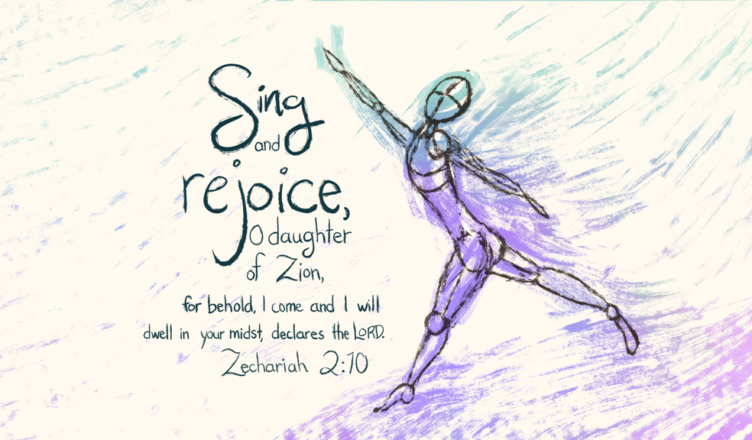
The prophet St. Zechariah writes, “Sing and rejoice, O daughter of Zion; for lo, I come, and I will dwell in the midst of you, says the Lord. And many nations shall join themselves to the Lord in that day, and shall be my people…” Sing and rejoice! Celebrate! Shout for joy, dance, and be ecstatic because God is with us, and we are with Him. How many of us see our Christian faith as a cause for celebration? How many of us recognize that the Badarak, the sermons, Bible Studies, the conversations with our priest are given to us by God as a means to rejoice, sing and see God’s presence in our daily life? vs. how many of us are falling asleep, wasting those opportunities, making excuses or completely ignoring there importance? To answer this question, we need to take time personally reflecting on these questions. But self-reflection can be difficult when we face the truth that perhaps we don’t care, faith is too hard, we come to Church for a different purpose, or we don’t want to change. Because my dears, though Christianity is not about controlling behavior, it is about Holy Communion, being one with God and when we are in Holy Communion, when we are truthfully children of God, then we cannot help but be changed and transformed into being God’s presence in this world. Whether that means by loving, caring for each other, being merciful or educating; whether this means as an individual, as a parent, a friend, stranger or spouse; each one of us is called uniquely to bring God’s presence into this world.

Remember last week when we spoke about why St. Mary is so beloved by the Church; she became the willing example through whom God took on flesh in the same way we are called to bring God into the flesh willingly. Each one of us will do this differently, beautifully, and magnificently. If only we don’t fall asleep, take care of those opportunities we have, to learn, ask questions, and live. That is why we pray not for material wealth but spiritual clarify, that is why we examine our conscience not to see if we are nice people or if we know theology but rather if we truly love God and desire to know Him. Doing so we will see how truly rejoicing and celebratory our Christian faith is even in hardship, pain or difficulty. We rejoice knowing that God is in our midst, God is with us, renewing, transforming, and strengthening us even when the world says we are worthless, we have failed, we mean nothing or when we are surrounded by darkness.

Therefore, sing, rejoice, dance, jump up and down, raise the roof and raise each other up. Be awakened and know that God is with us, God is in us, and we are called to bring God to others, bring healing, laughter, love, hope and resurrection to others. Come to Church and sing praise and thanksgiving to God. Rejoice not because Der Hayr might take attendance in Church, or he can see you yawning; nor because the choir sounds nice but rejoice because of the love of God. A love that God, Christ Jesus came by and defeated the only power that chained us down. A love in our life that when we truly know and believe in Him, entrust our life to Him, follow Him, then picking up our cross, magnifying Him as St. Mary says, and giving glory to Him will always be a joyful celebration. Glory be to You o` Lord our God, glory be to you, for everything O Lord we give you glory, now and forever, Amen!

Become the Theotokos

Passages: Is. 7:10-16; Gal. 3:29-4:7; Lk 2:1-7
Ընթերցուածքներ՝ Եսայ. Է 10-16; Գաղ. Գ 29 – Դ 7; Ղուկ. Բ 1-7

In the name of the Father, Son and Holy Spirit, Amen!

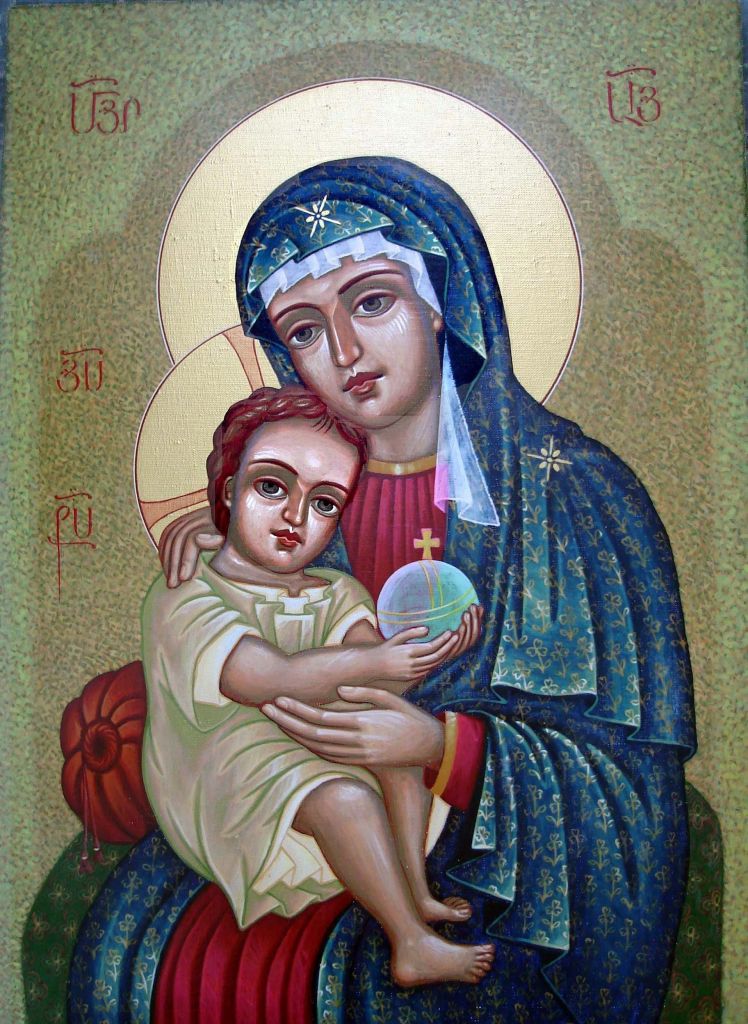
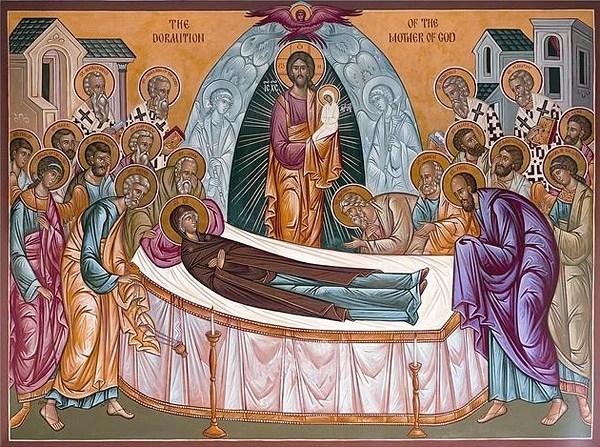
If there is one woman, apart from my wife, that I love more than anyone in this world it’s my mother. She knows everything about me and no matter how much someone cares for me, no one cares for me more than her. This is true about most mothers. As loving as father’s are, there is something different about the love of a mother. It is no wonder that the Church has a deep love and devotion towards her mother, the Virgin Mary – the mother of Jesus Christ. To say, we love St. Mary is merely an understatement. For the Church she is known as the “Theotokos” – “Mother of God” or in Armenian “Astvadzadzin”. This is because she willingly provided the physical means for God to become man – God was born from her. As we read in John 1, “The Word became flesh” or in the words of St. Athanasius, “God became a man.” Our love for the Virgin Mary is also evident in our sharagans, hymns: Antaram Dzakhik – Everlasting flower or Khnki Dzarin – Flower of incense. Yet, as important as the Holy Virgin Mary is, she doesn’t appear too many times in the Holy Scriptures. In fact, what we know and believe about who St. Mary was is found outside of the Holy Scriptures, within Holy Traditions and other teachings of the early Church. Such is today’s celebration, the Feast of Holy Assumption.

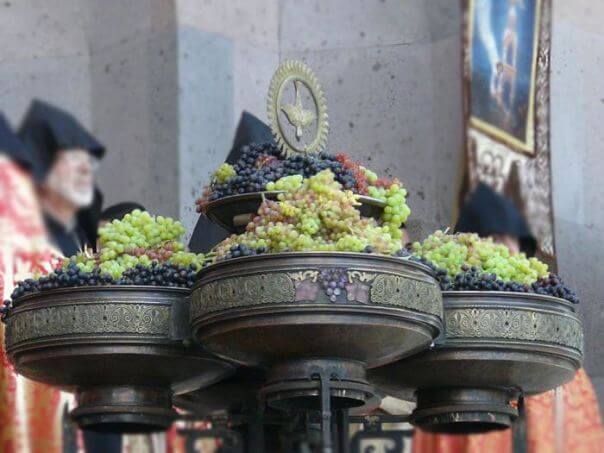
It is believed that after Christ’s Holy Ascension, the Virgin Mary lived another 10-15 years with the disciples, before she passed. She was the mother of all the Apostles and so when she was buried in her family tomb in the garden of Gethsemane, all mourned her passing. St. Bartholomew was not present, as he was away preaching the Gospel and so, when he returned a few days late and desired to pay respect to his Lord’s mother, the disciples opened her tomb but did not find her body. Angels’ voices were heard for three days and nights after St. Mary fell asleep and the apostles interpreted the angels’ singing as a sign that our Lord Christ Jesus had assumed, or taken up, his mother into heaven as he had promised her. And when they found the empty tomb this was a confirmation of that promise. So we love St. Mary, understandably. However, on this feast day according to the Armenian tradition, we bless grapes. Why? What does this feast day, the tradition of grapes and our own Christian faith have to do with each other?

Traditionally, at this time of the year our ancestors had a blessing whenever grapes were ripe and harvested in Armenia and so it is not originally or directly associated with the veneration of the Mother of God. In fact, in places where there may not be grapes, other fruits can be blessed as a reminder of the harvest. But in the highlands of Armenia, Grapes are considered a sacred fruit as they symbolize the entire harvest. They provide nutrition but also a means to get wine and spirits. They are plentiful as a symbol of fertility and fruitfulness. Grapes don’t grow individually but as a group and so therefore, the blessing of grapes is a reminder to us of God’s presence in our lives. Grapes remind us of how God gives plentifully and that our Christian faith grows when we grow together. Yes, grapes are the fruit that is used to make wine, the blood of Christ Jesus in Holy Communion, but communion is not done individually but as a family as the body, which is the Church. So, if the grapes are the wine which is the blood, what about the body, the bread, the flesh of Christ?

Here is why St. Mary is so important my dears. The Holy Theotokos humbly accepted to be the vessel through which God took on flesh. She became the example of the Church. What about us? Our humility, love, devotion and trust in God? Everything we have in life, from the harvest to the countless blessings we enjoy daily from God. The flesh of Holy Communion is not merely limited to the bread we use in Badarak but it is also present with us. Meaning faith and Holy Communion is when we become “Astvadzadzin’s” – givers of birth to God. When we receive Holy Communion and we too become Holy Communion to others. Remember the words of Christ Jesus, “Whoever eats my flesh and drinks my blood remains in me, and I in them.” (John 6:56) To be that Communion my dears, to give birth to God is through our actions, our thoughts, our words, our comments, and through our treatment of others. Therefore, when we celebrate and speak about our love for the Virgin Mary, when we are offering up the blessings of grapes as a reminder of the blessings from God, remember she matters because she brought God into this world through the life she lived. The grapes matter, because they are a reminder of everything God gives us. We matter my dears, because we have God in us and when we live faithfully God is born and revealed through us. The Theotokos is the first example of being a bearer of Christ, first to be sanctified by Christ. The grapes are an example of the first fruits of the harvest, a reminder that God is always with us. Are we likewise, an example of the presence of God’s love to those around us, whether in the Church or outside the Church?

“Honor the Lord with your substance and with the first fruits of all your produce.” (Proverbs 3:9) Honor the Lord with who you are; with everything you have and do because we are part of the flesh and blood of Holy Communion. The world will find God through us but they will also deny God because of us. Live faithfully, humbly, and trusting the Lord God. The Lord will see our love, our hope, our compassion, our mercy and He will lift us up, He will assume us and be merciful towards us when we need Him. Let us also be Astvadzadin’s and remember the love that God has for each one of us, no matter who we are. And know that God will be revealed through us, always, Amen!

More Than We Believe

Passages: Is. 3:16-4:1; 1 Corinth. 1:25-30; Matt. 18:10-14
Ընթերցուածքներ՝ Եսայ. Գ 16-Դ 1; Ա Կորնց. Ա 25-30; Մատ. ԺԸ 10-14

In the name of the Father, Son and Holy Spirit, Amen!

Top – Matilda, Bottom – (L) Hobbits (R) Katniss Everdeen

How many of us have read the children’s book by Roald Dahl Matilda? Or perhaps the classic JRR Tolkien’s The Lord of the Rings? How many of us have watched the movie series, The Hunger Games and know the protagonist Katniss Everdeen? For those of us who have read or seen the movies, what do Matilda, the Hobbit’s from The Lord of the Rings or Katniss Everdeen have in common? For a little bit context especially for those who may never have read or seen these characters, let me gives brief description. Matilda is a little girl who is repeatedly patronized and under-estimated. She is ridiculed for her love of books and learning by her family and is harassed as a useless, stupid, child by her ogerly principal Ms. Trunchbull. The hobbits of The Lord of the Rings are mild mannered, self-sufficient, quiet folk. They are 2-3 feet tall, hairy but no beards; they wear bright colors and love to laugh and sing. Katniss Everdeen from The Hunger Games is a hardworking, determined girl who is up against enormous odds as she takes on death-defying challenges. She comes from a poor family and community and is not highly educated. So, what do these three protagonists have in common? They’re not what we would necessarily define as heroes from the outside. These 3 have very little to no physical strengths; They are innocent, kind, hard workers but from the outset, they don’t have the qualities most of us would look for when choosing a hero. In other words, in a schoolyard game of dodge-ball or any physical activity, they would most likely be picked last. And yet, all three of them go on to not only survive but thrive; they grow and mature throughout their stories as they also set examples for us to learn from.

Underrated heroes and heroines from literature and movies like them connect to us the most because we relate to them. They’re characters like us and they inspire us and make us feel it’s possible to do anything even when the rest of the world says it’s not impossible. In fact, from a very young age we learn the contrary, that it is always survival of the fittest; you must be the strongest, smartest, prettiest, with titles, experience and money. To be successful in this life and to have an impact we need to be better than everyone else. And this reality impacts all of us in very negative ways because anytime we fail, mess up or don’t meet a goal we’ve set out for ourselves, we are left hopeless, diminished, and fragile. This is true about our school life, careers, relationships, health, and even our faith. So many of us believe that we’re too sinful, we’ve messed up too many times or that our Christian faith is just too difficult to learn and live by. We think that because we’ve come from brokenness, or because we have demons in our past, that there is no point is trying to learn or change. No one is going to love us, want us, pray for us; we’re not worthy of forgiveness or we’re to hurt to forgive others. In other words, my dears, too many of us believe that in the game of life, love and faith we’d be picked last and we’re no example for others to follow.

Yet, look at the words of St. Paul, “For consider your call, brethren; not many of you were wise according to worldly standards, not many were powerful, not many were of noble birth; but God chose what is foolish in the world to shame the wise, God chose what is weak in the world to shame the strong, God chose what is low and despised in the world, even things that are not, to bring to nothing things that are, so that no human being might boast in the presence of God.” For consider your call – meaning, think about the your lives; think about how the world defines success, smarts, power, importance. And once you’ve thought about it, throw it out the window because the worldly standards mean nothing to God. God has chosen me and you, each one of us regardless of all those faults and weaknesses – God’s love has chosen what is low and despised, what is rejected; in other words God has chosen first those who would have been last for a purpose that is revealed to us over time. But for us to see this revelation we need to first recognize our worth and for this Christ gives us two examples for us to ponder. First, he says, “See that you do not despise one of these little ones.” Christ Jesus calls us to recognize children, the most helpless, and inexperienced. For, He says that, their angels are always with God the Father. Next, Christ gives an example of lost sheep. I’m not sure how many of us have had an opportunity to herd sheep, but sheep are dumb animals. They are naïve as they are pure. They have no natural defense and yet, Christ gives such great value to them. Such value, that if one is lost, the shepherd will leave the other 99 and look for the lost one.

My dears, we are the children and sheep of God. We each face challenges in life, we each strive to grow and learn, to love and hope even in the face of adversity. And it is our angels that are with God the Father and it is we who are so valuable that God, our true shepherd looks for us when we are lost and defenseless. Because we are each a hero and heroine, and we are more valuable than any title, experience, wealth, or success that this world would define or give us. Just like the true value of the protagonist in the stories over time was exposed to be who they are, so too is our value exposed over time as to who we are. We are a beloved, child of God created in His divine image and likeness, and it is for us that God the Son Christ Jesus defeated death and this world. What we need to do is recognize this as a truth and reality and not merely as a fictional story. Those works of literature like Matilda, The Lord of the Rings and The Hunger Games are fantasy, but they all hold a teaching that we connect with. The Word of God, the Holy Scripture is reality and yet, we believe it less than we do fiction, why? Because we’ve believed the lies of the world that we are worthless unless we have money, beauty, and smarts. What’s more we’ve believed the lies and cheats of the devil who says because we doubt and sin, God does not love us and we have no hope.

No, my dears. The teachings that those fictional stories teach us is that we have great value in us, and the truth as revealed through the Word of God is that this value is equally given to all of us as children of God. A value, a richness that nothing and no one can take away if we hope, live and trust in our Heavenly Father. A love that is beyond our limits, understanding, doubts and feast that comes from God alone. Therefore, pray, reflect, value who you are as a child of God. And if along the way, you feel lost, pray that our shepherd will guide us and protect us. See the greatness in you and remember to value it by also valuing that same greatness and value in other’s around you. Because if yesterday we felt broken and today we are safe, perhaps someone else today we meet feels broken and by us recognizing their value tomorrow they will feel loved and safe. Meaning my dears, that we each will become a hero for someone else. Not a fictional hero in story books or movies but a true hero and champion of faith in Christ Jesus. Who is our protector and God, to whom is befitting glory, dominion and honor, now and unto ages of ages Amen!

To Be Transfigured

Passages: Wis. 7:25-8:4; Zech. 14:16-21; 1 John 1:1-7; Matt. 16:13-17:13
Ընթերցուածքներ՝ Իմաստ. Է 25-Ը 4; Զաք. ԺԴ 16-21; Ա Յով. Ա 1-7; Մատ. ԺԶ 13- ԺԷ 13

In the name of the Father, Son and Holy Spirit, Amen!

“Beauty is in the eye of the beholder.” What does this mean? It means in essence that each one of us has a different taste or we each have a different idea of what is beautiful. For some roses are beautiful, for others lilies; for some nature is beautiful, for others the architecture of a city. For a parent, no one is as beautiful as their child; for a husband, no woman is as beautiful as his wife. Beauty is different for each one of us. Not only is beauty different but the description of beauty is also different. Some would say a beautiful flower is one that is fully blooming, for someone else the newly budding flower is beautiful because it has so much potential. And though we all have different descriptions and ideas of what is beautiful – there is one thing we can all agree on, beauty is good. In fact, beauty and beautiful is always understood as good because we use it when we describe something positive and virtuous. “This person has a beautiful approach to life,” or “it’s beautiful to see so many smiling faces.” And when someone is negative or something is bad we say the “they have an ugly outlook on life” or “the ugly truth.” Beauty is good!

In the book of Wisdom of Solomon, Solomon describes wisdom by saying that wisdom is beautiful like God. Solomon uses different adjectives, descriptions to say who God is. “God is love, is beauty, is Mercy, is Peace, is Wisdom.” But he does not say God is all these things as if God possesses them and can change later on. But rather, that God is love, God is mercy, God is peace, God is wisdom and God is beauty. God is good. God is not God can be, because God does not change the way we would change. So love, mercy, peace, wisdom – all positive attributes – all that is good is a reflection of God. God’s beauty. God cannot not be any one of these things. As Christians, we understand of course that when Solomon is describing wisdom and saying that wisdom is God, he is directly speaking about Christ. Christ is the Wisdom of the Father, Christ is the reflection of light meaning that observable beauty of God. Christ is the revelation of God.

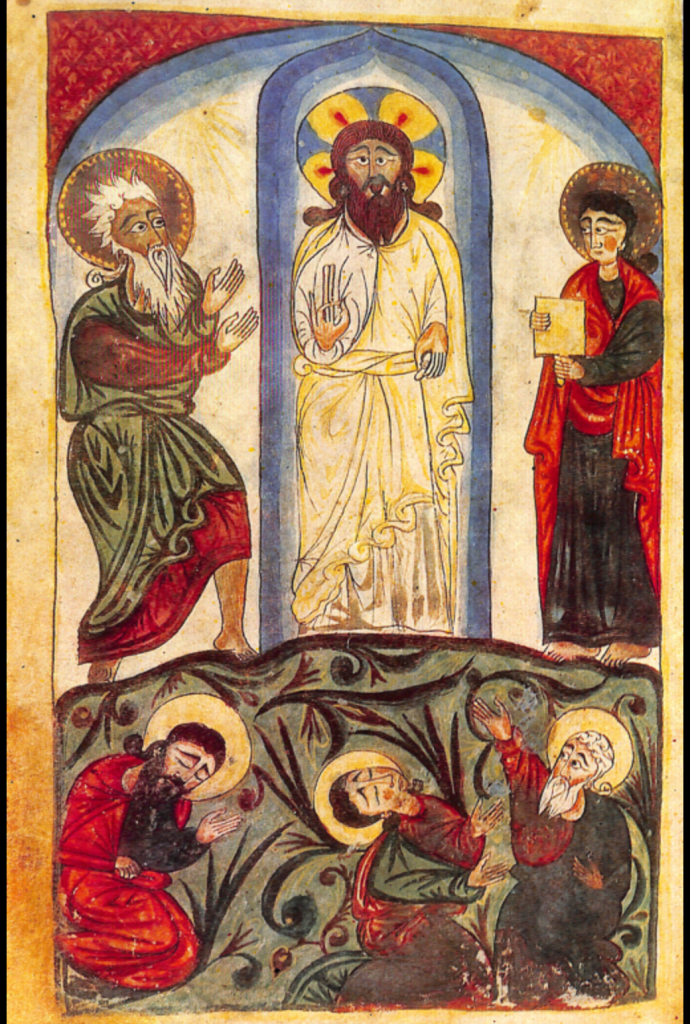
Today is the feast of the Transfiguration of our Lord Jesus Christ. Christ Jesus was transfigured and shining bright like light, “he shone like the sun, and his garments became white as light.” In Armenian, this feast is known as Baydsaragerbutyun – which roughly translates to “to appear brightly.” It is also known as Vartavar. Some of our Church Father’s say that the name for this feast Vartavar comes from the word – rose and bright. Because like a blossoming rose, it reveals its beauty, Christ revealed himself, Gods beauty, his light in the same manner. However, everything that Holy Scripture teaches us is what? A reality and an applicable part of our life. Meaning that last week when we read about the Feeding of the 5,000 we understand that God is also feeding us. When we read about the Lost Sheep, we understand that we are also the Lost Sheep and God is our Shepherd. And when we read of Christ’s transfiguration, we need to understand that we are also called to be transfigured. We are also a revelation of Gods beauty. How? Are we all of a sudden going to turn white like snow and shine brightly?

Yes my dears, but only when we become like God. What does this mean? St. John writes in his letter, “that God is light and in him is no darkness at all. If we say we have fellowship with him while we walk in darkness, we lie and do not live according to the truth; but if we walk in the light, as he is in the light, we have fellowship with one another, and the blood of Jesus his Son cleanses us from all sin.” All those attributes that Solomon wrote about God, we must also reflect; we must be a reflection of God’s light and not walk in darkness. This begins how? “fellowship with one another, and the blood of Jesus his Son cleanses us from all sin.” St. John doesn’t say, first the blood of Jesus than fellowship, rather he begins with fellowship with one another. Because my dears, in order to truly be in the wisdom of God, to be the light, the love, the hope, the peace of God we must start by being those things to each other and with each other. This means that our spiritual eye must see the beauty that each person is – the beauty of the image of God in which we are created in. And this doesn’t mean only the priest, the children or those in our families. This means everybody – whether we agree with them, whether we like them, whether they speak our language or even if they don’t believe in our God. Nowhere in scripture do we ever read love your Christian neighbor or love your faithful neighbor as yourself. No! Rather, love everyone, care and tend to everyone, have fellowship with one another, then come to the blood of Jesus Christ, Holy Communion, who cleanses us from all sin. That is how we too become transfigured. That is how we too become a beautiful, blossoming rose in the garden of our Lord. That is how we become a revelation of God to others.

What can we do, to be more loving of our neighbor? What can we do to reflect God in the same way Christ is the wisdom of God? Remember my dears, when we are baptized, we too become Christ through our Holy anointing. As we read in Ephesians 2:10 “For we are his workmanship, created in Christ Jesus for good works, which God prepared beforehand, that we should walk in them.” We too are called to be transfigured and shine bright. The choice to do so is ultimately our own. God has given us the tools by which we can. And when we walk in the light, when we are transfigured and cleansed of our sins, we too will be beautiful and good. For we are fearfully and wonderfully made (Psalm 139:14) for this purpose. Beauty is in the eye of the beholder – We are all beautiful in the eyes of God, for God is good and we are called to be like God. And though each one of us can be described differently just as we each might describe beauty in a different way, when we are in God we are good. We are in the light and we become the light that shines brightly in a world full of darkness. By the grace of our Lord Jesus Christ, let us be transfigured through the Holy Spirit to be the reflection of our Heavenly Father through our faith and works. Glory to God, Amen!

Food For Faith

Passages: Is. 3:1-11; Rom. 11:13-24; Matt. 14:13-21
Ընթերցուածքներ՝ Եսայ. Գ 1-11;  Հռոմ. ԺԱ 13-24; Մատ. ԺԴ 13-21

In the name of the Father, Son and Holy Spirit, Amen!

How many of us like sweets? Candy, ice cream, baked desserts, etc.? I love a good chocolate chip cookie. Hard on the outside but soft, rich and chocolatey on the inside. The truth is most of us like something a little sweet, a sugary treat from time to time. From time to time, it’s not too bad! But when we have an excess amount of sugar, processed sugar especially, then it leads to many other health issues. Because do you know what else loves sugary treats? Cancer cells. Whether we ourselves have suffered through the diagnosis of cancer or we know of a loved one who has, cancer is a horrible, deadly foreign invader that poisons not just one organ of our body but spreads and kills healthy cells all throughout. Now whether we should have sugar or not and in what quantities is between us and our doctors however, all of us know the horrific reality of cancer. And cancer cells, through a long and complicated process of metabolizing sugar feeds off and grows from sugar far more than any other food we put into our bodies.  And so doctors are looking at certain therapies to understand why this is, why does cancer feed off of sugar and if possible to find a way to prevent cancer by removing sugar. A form of therapy to starve cancer by cutting sugar, especially glucose and other processed sugars from our diets.

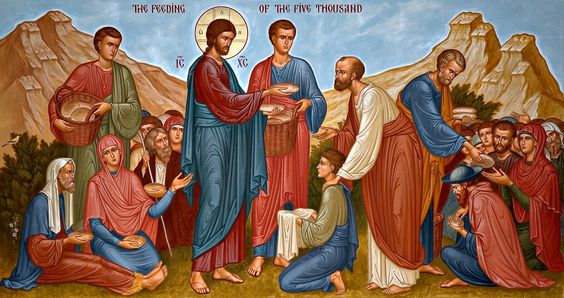
In today’s Gospel, we read the story of the feeding of the 5,000. From this event, we know of how Christ feeds multitudes of people through 2 fish and 5 loaves of bread. The feeding of the 5,000 shows a deeper reality of our Christian faith which is that God will always feed us and keep us satisfied when we come to Him and trust in His word. Feeding us with more than just 2 fish and 5 loaves of bread; and not merely with physical food but with everything that we need as His children to grow, learn, and be strengthened. In the same way when we pray in the Lord’s Prayer, Hayr Mer – “Give us this day our daily bread” «Զհաց մեր հանապազորդ տուր մեզ այսօր» does not mean we are praying only for physical bread or sustenance. Rather, we are asking God to give us, to feed us, to cloth us and fill our lives with all that we need to help our faith grow. However, sadly all of us more often choose to be fed not by God and our “daily bread” which strengthens our faith. But rather, we choose to feed off of that which feeds the sin within us.

My dears, sin is a cancer; a foreign invasion in us, meaning God did not create it for us. And as deadly as cancer is to our physical bodies, sin is even deadlier to our souls. When we hear our doctor gives us the diagnosis of cancer, we try everything in our power to change our lifestyle in order to get better; we stop smoking, cut our sugar and red meat, exercise more, etc. My dears, a sinful life is like that sugar that feeds our cancer. Each time we reject God, we choose to live in an ungodly manner, we justify evil we feed the cancerous sin that not only kills the body but also send our soul to hell. Remember the words of Christ, “do not fear those who kill the body but cannot kill the soul; rather fear him who can destroy both soul and body in hell.” (Matt. 10:28 RSV) And yet, when we are confronted about the sinful life we live, rather than choose to change, find ways to better ourselves in order to rid ourselves of sin, we choose to blame everyone else in the same way Adam and Eve blamed God.

My dears, when we hate, when we lie, when we cheat, when we act mercilessly or when we look down on others and even down on ourselves, we feed sin. When we comment out loud or in our hearts in a negative manner about those around us, whether in Church or outside, we feed sin. When we think we are immune to sin, or think we are not as bad as the rapist, the bigot, the gambler or alcoholic, we feed sin. We’ve all heard the motivational rhetoric, that if you tell a lie long enough, you’ll start to believe it yourself. The same is with sin; the longer we deprive our faith from God, the longer we feed off evil the more we become sinful and ungodly – the more our body is consumed by that cancer. Therefore, like doctors who are looking to starve cancer by depriving it of sugar, we must examine our life what can we do to starve the sin in our life? How are we feeding our sin and how can we be fed from Christ instead?

Can cancer and many other sicknesses still happen in our bodies even if we don’t eat sugar or never smoke? Yes, because cancer does not discriminate with age or gender, nor does it care how healthy we try to live or not. There are things we can do to help avoid cancer, such as not eat excess sugar, not smoke, have a healthy diet, etc. but we still might get sick. Likewise, we are all sinners; sin does not discriminate, and all humanity is susceptible to it. However, with God we can do things that can help us strengthen our faith. By starving sin, by entrusting God to feed us our daily bread than even when sin does appear, our faith will remain strong, and we can overcome that sin through the grace of Christ Jesus, who is the only sinless one.

My dears, trust God to feed us. Come to His Holy Altar, read His Holy Word, pray to Him and He will feed us. Starve the sin in you by choosing to only be fed by God. And know that even if we sin, God, the true physician of souls and bodies will help remove it from us, cleanse us and heal us in ways we could never imagine. We will be fed, we will be made stronger and we will overcome the sin in our life and in this world through the grace of God, our Heavenly Father, the Son, and the Holy Spirit, to whom is befitting glory forever, Amen!