It’s All A Cliché…

Passages: Isaiah 61:10-62:9; 2 Tim. 2:15-26; John 6:15-21
Ընթերցուածքներ՝ Եսայ. ԿԱ 10 ԿԲ 1-11; Բ Տիմոթ. Բ 15-26; Հով. Զ 15-21

In the name of the Father, Son and Holy Spirit, Amen!

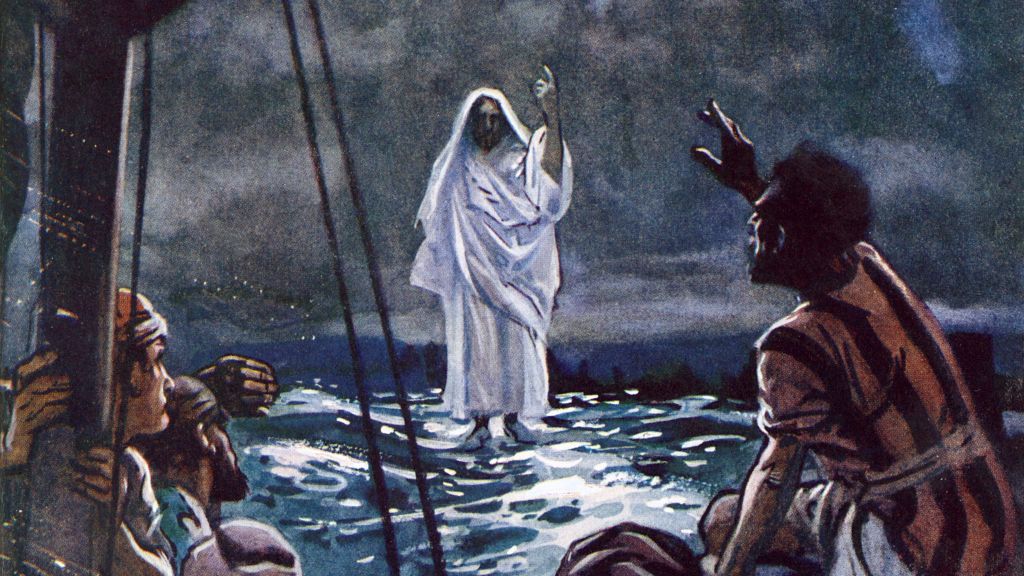
Christianity is a cliché! Christianity today, for various reasons has been reduced to slogans, quotes, memes, and many other sayings without the much practice or application of. Quotes such as “God is love; Judge not yet yea be judged; Only God can judge me;” or as we read in today’s Gospel – “Do not be afraid!” All of us have heard, read and even used these and many others like these. Quotes or sayings from the Scripture passages, yet, for too many of us these words have remained nothing more than motivational slogans which though they may help make us feel strong or good, there is no power behind them without faith. “Do not be afraid, it is I” seems like such a simple message of Christ assuring His disciples who we read are caught in the middle of a storm – don’t be afraid. However, in reality as much as we believe God is with us in times of trouble, when the words of scripture merely remain words, it feels difficult and impossible to not be afraid, anxious, worried or lost when we are in the middle of a storm in our life.
Therefore, my dears how do we go from words on paper, from cliché to actual reality? To say with faith is not often clear enough. Therefore, through education, example and discernment. In order to first know what God is teaching us, commanding of us and how He is guiding us, for us to grow in faith, we need to read, ask and study the Word of God – Holy Scripture from where out faith and wisdom comes from. Knowledge of scripture is not enough unless is it also internalized and applied. In the Orthodox Church, we learn how to apply our knowledge of God to the life we live by learning from the example of others; seeing faith in action. But who? The priest, my neighbor, our parents, friends and colleagues? Perhaps! St. Paul says, we are surrounded by such a great cloud of witnesses (Heb. 12:1). My dears, it is the saints, prophets, and teachers that we are surrounded by who are witnesses to living faithfully. Much like the words of scripture have become cliché for us, the saints have become pictures, the icons have become decorations and we have forgotten to learn from them.

For example tomorrow the Armenian Church begins its first fasting period of the year known as Fast of Catechumens. This fasting period, which was established by St. Gregory the Illuminator himself, is a preparatory fast before Great Lent and leads us towards the remembrance of the prophet and saint Jonah. Who is Jonah? We know from Veggie Tales and children’s books that Jonah was a prophet who was swallowed by a big fish when he tried to run away from God.
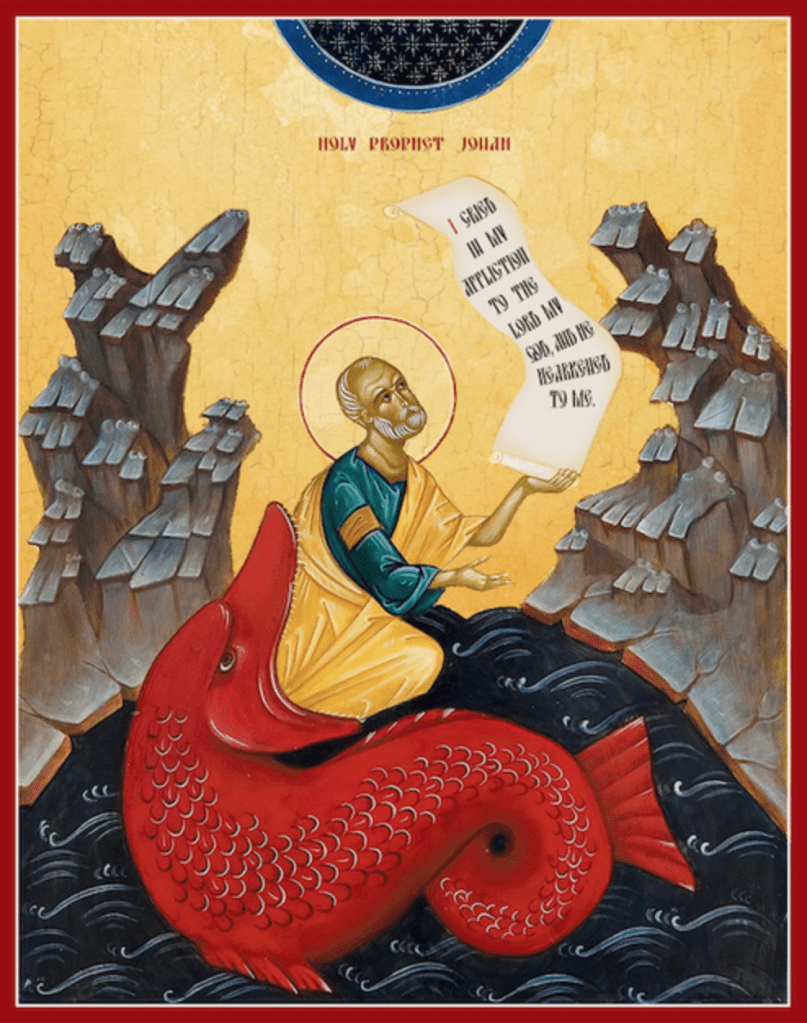
Though this story is fun to tell children, scripture tells us a much deeper example of who Jonah is and of what Christ is teaching us today – how not to be afraid when we are in a storm. When Jonah trusted in his own abilities, he realized that he was unable, too weak and afraid to take on the tasks and responsibilities that God had given him. This caused him to become anxious, worried and afraid. Rather than trust God, he again trusted his own ability to steer his boat away from those worries and concerns by running away. Only when Jonah prayed, fasted and trusted God fully was he free of fear, anxiety and confusion. But when did he do all this? In the belly of the whale. When he was rock bottom and had nowhere else to go.

My dears, learn from Jonah’s examples. Why do we wait until we are rock bottom, broken, lost in darkness to finally turn to God and pray? Our Christian faith, the teachings of the Church, the Holy Scriptures themselves never negate the storms we will face in life. They never say that we as Christian’s we must be stoic and unshaken by the difficulties of the life. However, we are called to face those and all difficulties with God. So rather then come to God last, why not begin with God first? The early 20th century Baptist teacher Oswald Chambers beautifully says, “We tend to use prayer as a last resort, but God wants it to be our first line of defense. We pray when there’s nothing else we can do, but God wants us to pray before we do anything at all. Most of us would prefer, however, to spend our time doing something that will get immediate results. We don’t want to wait for God to resolve matters in His good time because His idea of ‘good time’ is seldom in sync with ours.” Today the world is in disorder. Families are broken, individuals polluted and corrupted, communities shattered; All these even before any pandemic. And yet how often in our lives and within our parish communities do we insist on being the captain of our own boat, the lord of our own disorder. Rather than allowing the Word to reveal his presence in the situation, we insist on our own words. We keep Jesus from getting into the boat.” We keep Jesus from our life and so we remain afraid and broken.

My dears, God has given us the tools, the instructions, and the guides by which we should learn how to come to Him and how He comes to us. Whether it is the Word of God Himself in the Holy Scriptures, or the saints, prophets, priests and teachers we learn from through the icons and other means, we must use them. As St. Paul teaches us “In a great house there are not only vessels of gold and silver but also of wood and earthenware, and some for noble use, some for ignoble. If any one purifies himself from what is ignoble, then he will be a vessel for noble use, consecrated and useful to the master of the house, ready for any good work.” (vv.20-22) Use all that is in the great house of God, to purify and become a vessel for noble use, to do God’s work in this world, so that the words we quote from scripture become more than just cliché but rather they become the embodiment, the living example of Christ, God in the flesh, through us to this world. Pray always, keep the fast, read and learn and ask questions with a thirst to grow. Only then will we be able to join the chorus of angels in heaven and with the saints and prophets of old “…greatly rejoice in the Lord, my soul shall exult in my God; for he has clothed me with the garments of salvation, he has covered me with the robe of righteousness” (Is. 61:10)

“If you patiently accept what comes, you will always pray with joy.” – Evagrius Ponticus (Psalm 37:7-9)

My dears, our Christian faith is not a cliché. It is the living incarnation, the real presence of God in this world. Through the life we, who claim to be Christian, live we become Christ to this world and to all those who are sinking in the waves of the storm. We must therefore, live and be imitators of Christ by beginning each day with prayer. We must use the tools that we have been given such as fasting, reading of scripture, looking to the saints so that when we face the storms in our life, we can discern, see and hear Christ calling to us to say, “Do not be afraid, it is I.” Accepting Christ in our boat, into our storm, into our life, may we reach the harbor of peace, the safe haven prepared for us by our loving Lord, and may we through the grace of the Holy Spirit remain unshaken as we learn to give glory to our Heavenly Father, Amen!
What Do You Want from Me?

Passages: Is. 62: 1-11; 2 Tim. 2:15-19; Jn. 6:39-47
Ընթերցուածքներ՝ Եսայ. ԿԲ 1-11; Բ Տիմոթ Բ 15-19; Հով Զ 39-47

In the name of the Father, Son and Holy Spirit, Amen!

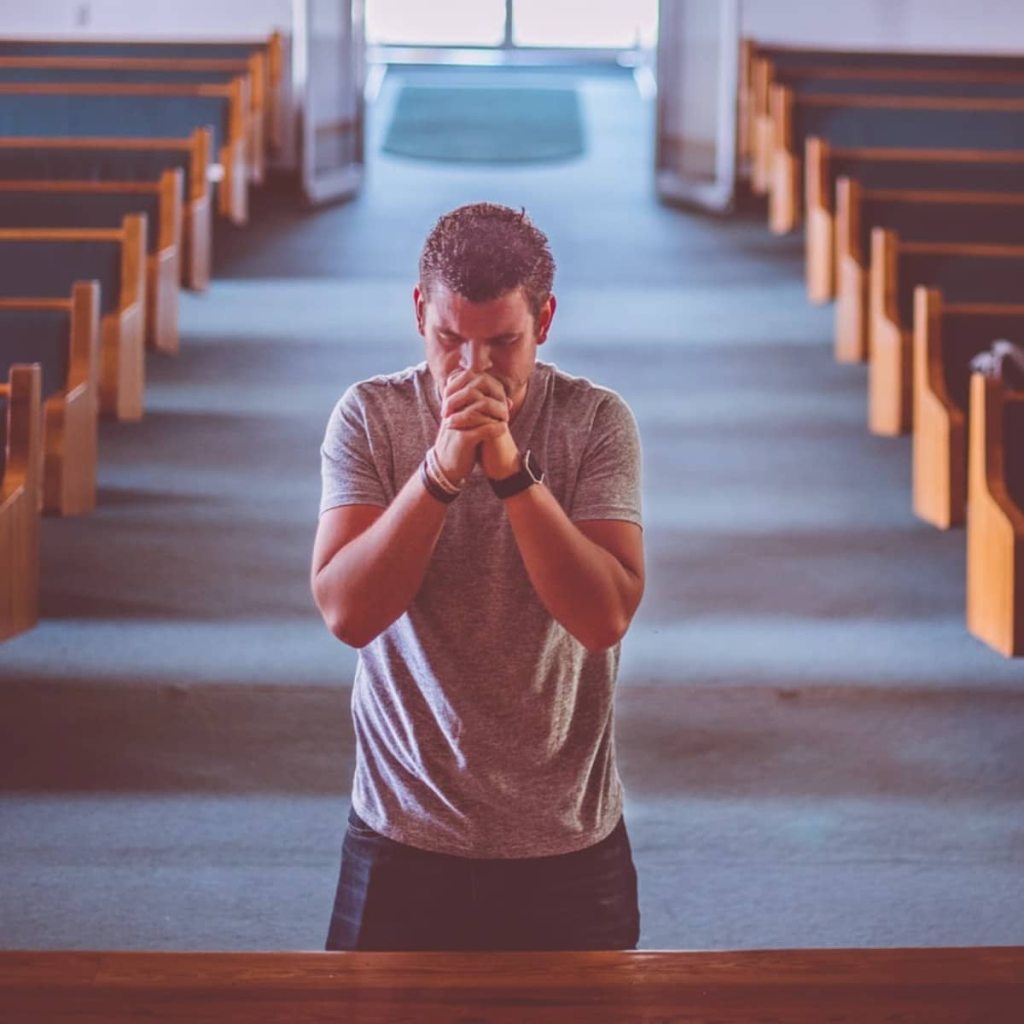
What do you want from me? From us? This is a question that too often we struggle with when it comes to God, in our daily lives, especially in times of difficulty and failure. We also see it in movies and literature where the protagonist, the main character or hero, walks into a Church looks up to a cross and prays those words, “what do you want from me?” Perhaps we too have had moments like this where we ask the same question during Badarak, Holy Week services, during a sermon, maybe in an empty, looking up to a cross or perhaps when we get lost in our thoughts at home.

When we are smiling to the rest of the world, being the strong person, yet, internally we struggle and ask “God what do you want from me?” Regardless of our knowledge of God or belief, in times of crisis even many who claim there is no God as a last resort pray, utter words that resemble this question because they want to make sense of what they are going through.

Knowing what God wants for us or even from us is a natural response. Many of us have heard several sermons perhaps over the years stating that God doesn’t need anything from us. It is true, God doesn’t need anything from us. There is nothing we can do to gain favor, salvation, grace, or anything else from God. Badarak, the Church icons, architecture, symbols, etc. are not because God needs or wants these from us, rather it is our response to God. We believe that for us God desires one thing – Holy Communion. Communion in love, hope, life, resurrection and in Him. We know this through as revealed to us through Holy Scripture and through God the Son, Christ Jesus who came a died for our sins in order for us to be in communion and no longer separated from Him. Therefore, are we wrong to ask what does God from us? No, my dears because the question of what God wants for us and from us ultimately asks a much deeper and universal question, “what is God’s will?”

Every day and every Sunday we pray the Lord’s Prayer saying, “Your kingdom come, your will be done, on Earth and in Heaven…” (Matthew 6:9-13) Yet, do we know that the Will of God is? In today’s Gospel we read, “and this is the will of him who sent me, that I should lose nothing of all that he has given me, but raise it up at the last day. For this is the will of my Father, that every one who sees the Son and believes in him should have eternal life; and I will raise him up at the last day.” (vv. 39-40) Well, this seems simple enough, God wants us to believe that Jesus came to save us, and if we believe in Him, we will have eternal life and be raised up. Though this seems simple enough to understand, nevertheless, there is more we need to dissect because if all God wanted was for us to believe in Jesus and have eternal life, than He could have done so with a snap of a finger. My dears, what God wants is not for us merely to have eternal life. Rather, God wants us – you and me.

“For Zion’s sake I will not keep silent, and for Jerusalem’s sake I will not rest, until her vindication goes forth as brightness, and her salvation as a burning torch. The nations shall see your vindication, and all the kings your glory; and you shall be called by a new name which the mouth of the Lord will give. You shall be a crown of beauty in the hand of the Lord, and a royal diadem in the hand of your God. You shall no more be termed Forsaken, and your land shall no more be termed Desolate; but you shall be called My delight is in her, and your land Married; for the Lord delights in you…” (Is. 62:1-4) Who is Zion and Jerusalem for whose sake, the prophet Isaiah writes I will not keep silent nor rest? It is we, my dear brothers and sisters. In the Old Testament, Zion and Jerusalem are the Holy places where God resides. And when we are baptized and born anew, we are born in Christ Jesus, freed from sin and in holiness and God resides in us. Therefore, we become the New Zion and New Jerusalem and it is for us that God will not rest until we are a burning torch, a crown of beauty and the Lord’s delight.

We know that God loves us, as He loves all creation. Regardless of how broken, desolate, forsaken, failed, unwilling, hopeless, arrogant, in pain, persecuted, etc. (the list can go on) we feel or are convinced we are by the world; the only thing God wants is us. But He will not force us to be His. The prophet uses the image of marriage in verse 5 to show that just as a man and woman, willingly and in love come to each other to be married, God wants us to choose to come willing and in love. What does this look like? This is where the original question shifts from what does God want from us to what do we want for ourselves? Do we want healing, wisdom, love, hope, forgiveness, compassion, patience, fortitude, steadfastness, and much-much more? Then as St. Paul teaches us, “Do your best to present yourself to God as one approved, a workman who has no need to be ashamed, rightly handling the word of truth.” (2 Tim. 2:15) Handling the word of truth means to live according to God’s commandments.

This doesn’t mean to not sin, fall down or fail because we are human and will always sin in this life. Rather, it means that we “may be filled with the knowledge of his will in all spiritual wisdom and understanding…” (Col. 1:9) My dear brothers and sisters, God needs nothing from us. As St. Augustine says in his Homily on 1 John “He is the true Lord, who seeks nothing from us; and woe to us if we seek not Him! He seeks nothing from us: yet He sought us, when we did not seek Him.”[1] God wants us; God wants us to ask what is it that we want for ourselves and though God will never force us, He will also never give up pursuing us, just as a man pursues the woman he loves. Why? Because as St. Paul states, “The Lord is not slow about his promise as some count slowness, but is forbearing toward you, not wishing that any should perish, but that all should reach repentance.” (2 Peter 3:9)

God pursues all of us in love because He does not want even the greatest sinner to perish but to repent and turn to Him. Will we accept that love, turn to Him, come into Communion or will we keep rejecting and turning away until it is too late? Will we willingly repent and seek Him out? God’s love is extended to all of us, Armenian or not, black or white, tall or short, ugly or pretty, broken or whole. Accept that love, live in that love, and through the grace of our Lord Jesus Christ, and the Holy Spirit will the Will of God be ever more revealed to us for a life in Him, Amen!


[1] Translated by H. Browne. From Nicene and Post-Nicene Fathers, First Series, Vol. 7. Edited by Philip Schaff. (Buffalo, NY: Christian Literature Publishing Co., 1888.) Revised and edited for New Advent by Kevin Knight. <http://www.newadvent.org/fathers/170208.htm&gt;.

Birthday or Revelation?

Passages: Galatians 4:1-7; Luke 1:26-38
Ընթերցուածք՝ Գաղ. Դ 1-7; Ղկ. Ա 26-38

In the name of the Father, Son and Holy Spirit, Amen!
Krisdos Dznav Yev Haytnetsav! Christ is Born and Revealed!

This past week the Armenian Church celebrated what? Not Christmas but rather, the birth or Nativity and Baptism or Revelation of Christ Jesus, the Son of God. Now you might say, well isn’t Christmas the same thing? And yes, linguistically for the majority of us, Christmas is about the birth of Jesus Christ. After all that’s what the old Christmas carols teach us. However, do we know what the difference is between what we as Orthodox Christian’s use vs. what the rest of the world uses? Do we know what the word Christmas means, or even where it comes from? Christmas is made up of two words – Christ and Mass. Christ meaning anointed one, or Messiah and Mass is the Latin term for the “Eucharistic service” – Badarak. In other words, it is Badarak in remembrance of Christ’s birth. However, the term “Christmas” began being used quite late in the Church, only after the c. 14th century. Yet, in Armenian we have from the very beginning used, Soorp Dznunt yev Astvadzahaytnutyun (Սուրբ Ծնունդ եւ Աստուածայայնութիւն) – Holy Birth and Revelation of God.

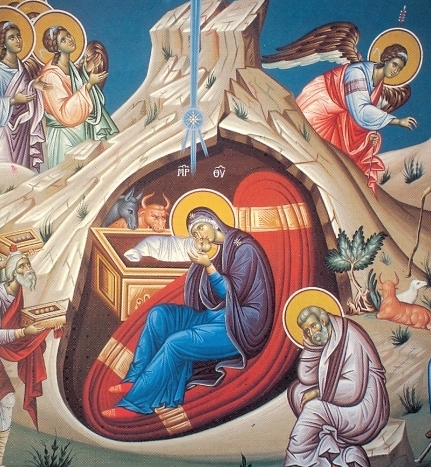
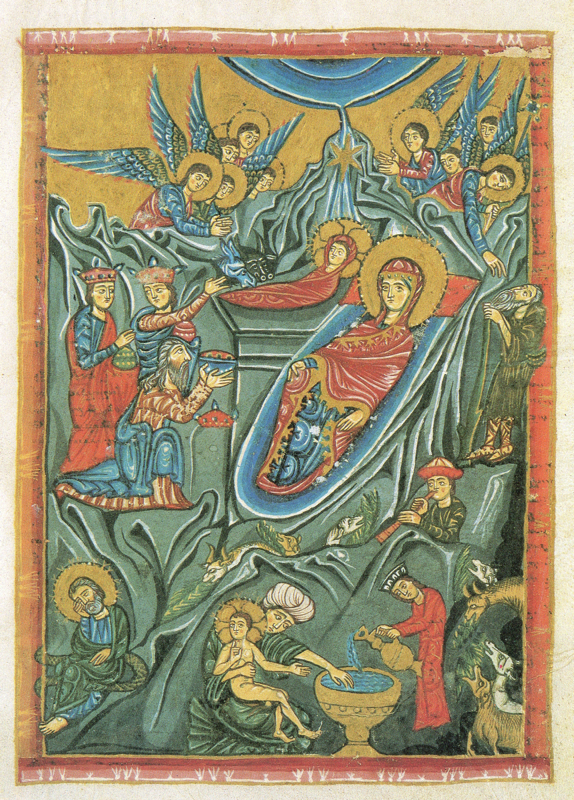
It might surprise all of you to know that the early Church did not celebrate the Nativity or Birth of Christ, because for the early Church, just as today in Armenian Church, the birth is not as important as the revelation of who is being born. In other words, the Revelation of Christ Jesus, God the Son, who became flesh to die for our sins. That is why if we look at an Orthodox icon of the Nativity, we see Jesus laying not in what we would say is a manger, but rather what looks strangely like a coffin, and Christ is not in a stable but a cave, like the tomb He would be placed in. Why? Because for the early Church,

just as for the ancient Churches today, Christ birth was not a matter of Dec. 25 or Jan. 6 but rather Christ revealed to us and what He did upon cross is what truly matters. And continuing from that the question is asked, what action is therefore required from us, having had God revealed to us?

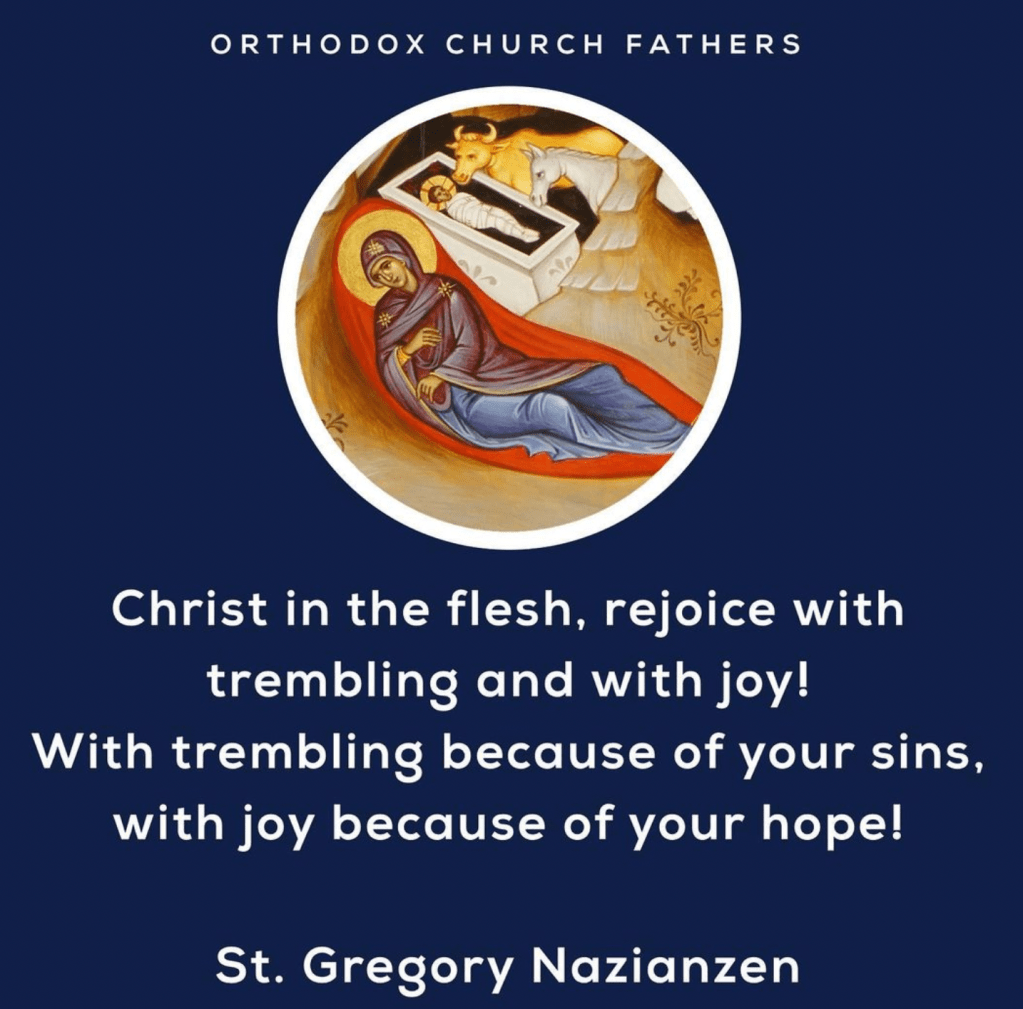
In other words, my dear brothers and sisters, what is our Christian response to God being revealed to us? St. Gregory of Nazianzen teaches us that our response to the knowledge of who God the Son, “Christ in the flesh”…should be to “rejoice with trembling and with joy! With trembling because of your sins, with joy because of your hope!” Meaning we as children of God, who God has been revealed to, our response requires repentance for our sins and hopefulness for our life, because though we have fallen, we are raised back up. Yes, life gets difficult, we face failure, we sin, we are tempted, we feel broken internally and we see the world broken externally. Therefore, we repent, but where and how do we remain hopeful? Our hope comes from our continued growth in the knowledge, wisdom and understanding of who God is and His will in our life. This comes through reading Holy Scripture daily, attending Badarak and liturgy regularly, participating in Bible Studies, asking the priest questions, praying daily, having a genuine thirst and hunger to increase our faith, and applying those things to our life.

Our Church Father’s teach us to pray at least 5 times a day; But if we cannot then 4, or 3, or 2, or even 1; How often do we set time in our daily life to pray my dears? And what is that prayer like? It is interesting that in Armenian we rarely use this term, but in rest of the Orthodox word there is a term known as “prayer life.” In other words, prayer as a regular part of our life, just as eating, drinking, working out, getting dressed, etc.. Do we have a prayer life? This is important because through prayer, reading, and everything I listed earlier, what we learn from there ultimately is what leads us to repentance, confession, rehabilitation, and Communion. Only than are we truly in Communion with God, and we begin to grow deeper in our faith as more of God is revealed to us and we reveal God to the rest of the world through charity, mercy, forgiveness, and love.

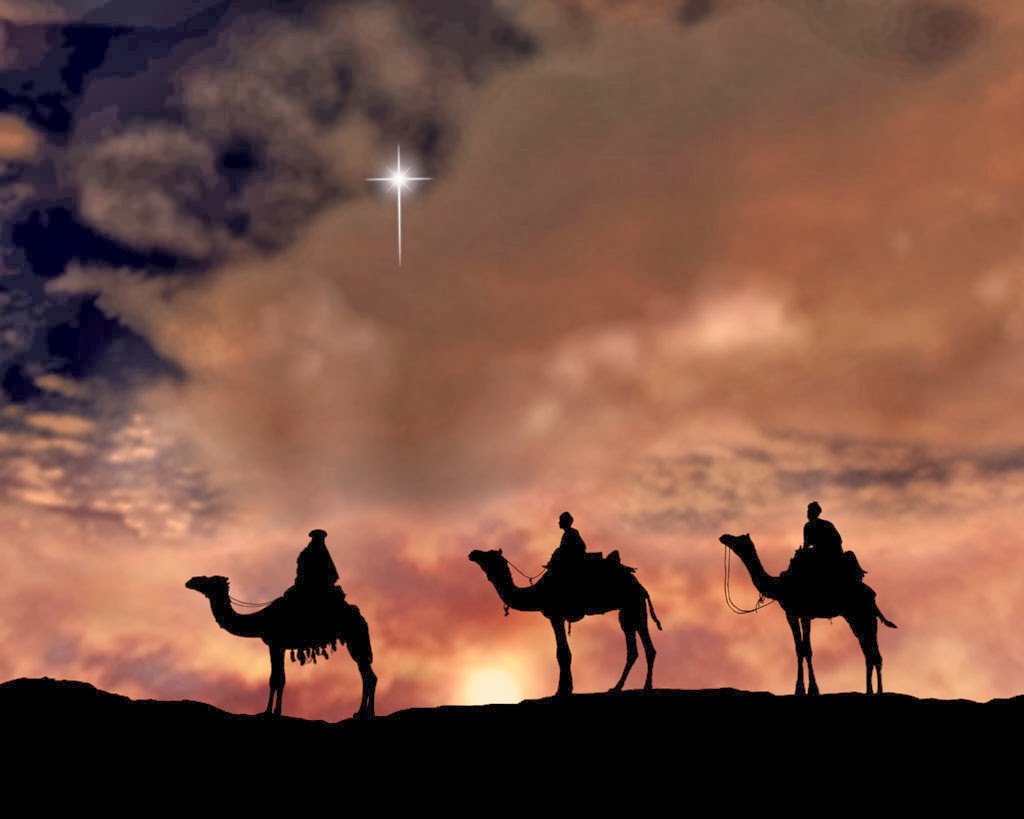
It is all connected, my dears, because we are all connected in Christ from the manger to the Cross. Christianity is not about a half hazard crossing of ourselves; Christianity is not coming for Baptism, Wedding and Funerals, or only attending Christmas and Easter Badarak; Christianity is not motivational slogans or a feeling; Christianity is Christ Jesus. Christ Jesus is the Son of God revealed to us through the prophets, His Baptism, ministry, Passion, Crucifixion, Death and Resurrection – which we are taught through the Holy Church by means of the Holy Scriptures, the Father, the Priests, etc. And all of this demands a daily response from each of us. The angels brought the Good News to the Shepherds, who responded by coming to the manger. The Magi saw the star in the East and responded by coming and worshipping the newborn King. How will you and I respond to the same Christ Jesus, to the same light, to the same Good News which has been revealed and declared to us all? We who consume the Body and Blood of Christ, the Holy Communion, how shall we live? As St. Paul writes, before this knowledge, we were like slaves or like children under guardianship who do not know, understand, or have any authority. But now we are no longer slaves, and we are children, who have been giving a responsibility because we are under the direct care of our Heavenly Father. We have received knowledge and authority; we have been given something that is beyond any earthly value and a power that is greater than any other. Yet, my dears, let us look at our life and ask, do we care? Do we want our faith to grow?

As Armenian’s when we bless the water each Jan. 6, we remember what passage of the Gospel? What story? The baptism of Christ Jesus, because Christ was revealed to us then when the Heaven’s opened up and the voice of God said, “this is my Son, with whom I am well pleased.” Reading the Gospel account of Christ’s baptism we know that apart from regular people, there were Pharisees also present. The Pharisees knew the prophets, knew about the Messiah, yet, they did not recognize Christ because they did not want to. St. James in His letter says that even the demons know of God’s existence and they tremble. My dears, coming to Church, singing the hymns, volunteering, signing a check, and having knowledge means nothing unless we respond accordingly in the life we live. Therefore, let all of us pray, attend with a desire to grow. Let all of us together repent of our sins, not by turning away from the world but by turning to God. Turning to God let us rejoice for the Good News of God having been revealed to us daily. May this revelation foster and bring out a response of hope, love, and yearning. For Christ has been Born and Revealed, Krisdos Dznav yev Haytnetsav. Orhnial e Haytnutyune, Blessed is the Revelation of Christ the King to us all, Amen!

Have We Decided Who We are?

Passages: Is. 41:4-14; Heb. 7:11-25; Lk. 19:12-28
Ընթերցուածքներ՝ Եսայ. ԽԱ 4-14; Եբրայ. Է 11-25; Ղուկ.  ԺԹ 12-28

In the name of the Father, Son and Holy Spirit, Amen!

Who are you today? Who shall we be from this moment on? We who declare the Risen Lord, we who proclaim Christ the savior every Sunday as we sing Krisdos I mej mer Haytnetsav. Are we changed, renewed, or are we the same as the lame, blind, deaf and mute? Who are we today and who shall we be from this moment on? Another year comes rolling to an end, what has changed in us? Sure, there is the pandemic, economic unrest, uncertainty of the future and what lies ahead. It isn’t easy with all the uncertainty and yet, it is easy to point and say, look at the others, look at the world and at those who are on the outside. Yet, Christ message has never been to reflect against the world but to be a reflection of Him. For this reason, St. Ignatius of Antioch teaches us, “do not have Jesus on your lips, and the world in your heart.” It is easy to condemn that which is different, yet, Christ’s Gospel, whether we celebrate Dec. 25 or Jan. 6 has never been about condemning the evils, but rather about being the good, the light and hope. For Christ’s message of peace, hope and love is about victory over our own sin, over our own hatred, our own pain. Christ came into this world to declare a victorious Gospel over my demons, your demons, and the death which like a veil covered our eyes from God’s love. Therefore, who are we today when we declare Christ with our lips, through our prayers and hymns?

Are we like the Wise Magi, who come seeking Christ in wisdom? Are we like King Herod, who looked to hurt and kill the child of God? Are we the shepherds, who received the herald of the King of David being born in Bethlehem, and who ran seeking this gift of mercy? Are we like the Pharisees, who looked only to their understanding to make sense of God’s plan? Are we like so many others, who ran in fear the moment they faced pain and trouble? My dears the question remains, who are we when we declare to believe in Christ Jesus?

Because to each of us God has given wisdom, understanding, a calling, peace, love, hope and blessing. As the Parable teaches us in the Gospel, to each of us something have been given that we are called to use. Regardless, to whom how much has been given the underlying message that Christ is asking us through the parable is, what did we do with what God gave us? Did we change? Did we build? Did we repent? Did we humble ourselves, our egos, our understanding in order to be lifted up to God’s wisdom? Did we change using that which God gave us?

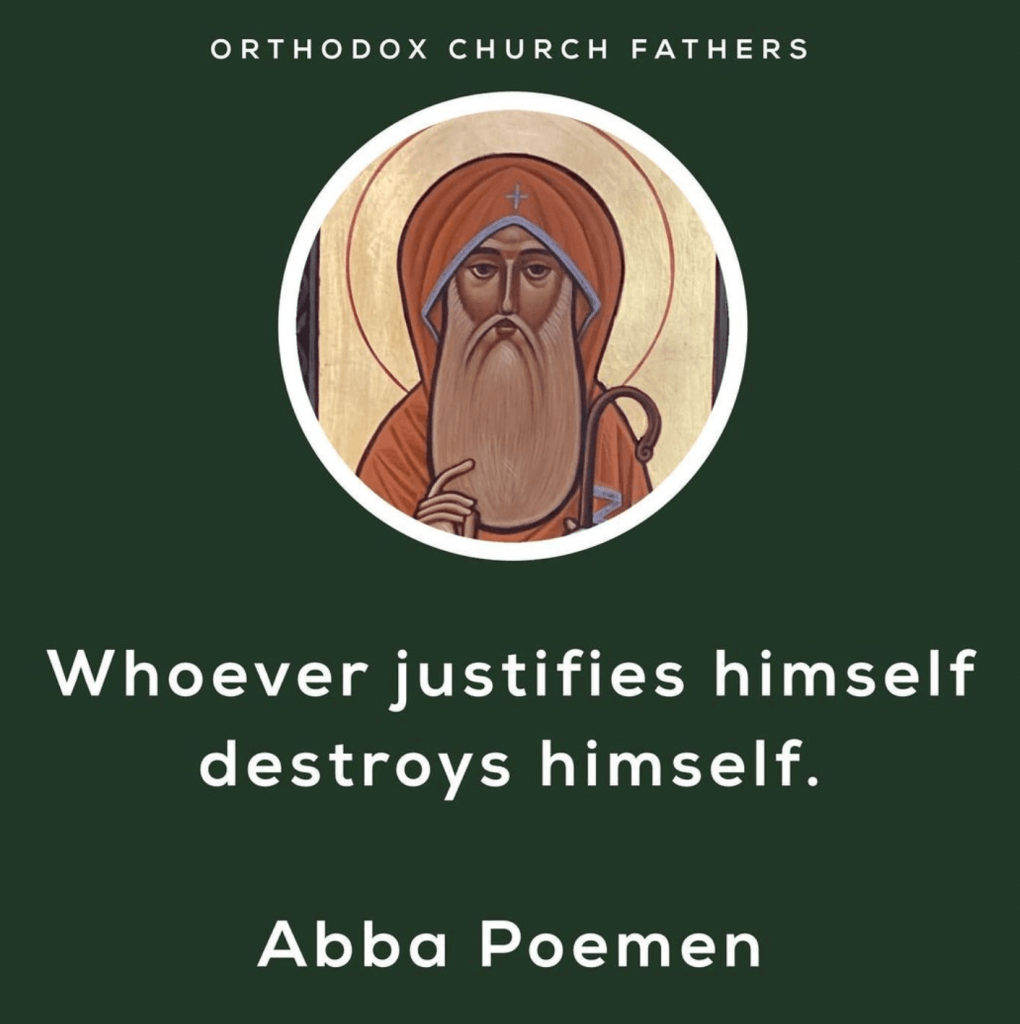
If we only justified our actions, just as we saw the last individual in today’s parable, rather than live in humility, then we only brought pain and damage to our soul as Abba Poemen teaches. But if we rely on God and not on our abilities, God will come to our aid. (Abba Ammanos) My dears, we all want to see the world change, we want to see evil disappear, we want to see healing take place, our Churches full, our homes only filled with love.

However, our faith is not like today’s modern Christmas season, commercial and tangible; an Amazon 2 day delivery click away. God’s love and healing is a path in Christ Jesus that will take a lifetime to understand. Christ’s message, the Gospel is not a moment, it is not an idea, it is not a product we order customized to our needs. We are called to be changed, through the life we live, the choices we make, the cross we carry everyday – at Church, at home, in the workplace, with our friends, etc.

From our baptism we are equipped with the talents, the light, wisdom, love, peace and hope that strengthens and builds us up into who we are supposed to be in Christ Jesus. What will we do with what God has given us? Who will we be?

Therefore, as the year ends, as the days draw near and we make resolutions for what the next year will bring, let us ask, who are we in Christ Jesus today? Who will we remain to be knowing, hearing, listening and proclaiming with our lips Christ Jesus born and revealed to us today? Will we justify our actions and choices, or will we use this time to ask questions, learn, read Scripture, humble ourselves before the Lord in order to be made into who we are called to be, which is Christ Jesus.

Be Christ Jesus, my dears; Be Christ Jesus, my dears; Be Christ Jesus, my dears. For Christ came to renew us and make us a reflection of Him. His love, his healing, his justice, his forgiveness, his hope, etc. are the talents, by which we have been equipped to declare Christ the King not only with our lips but also with our hands, feet, thoughts, choices, and life we live. Only by being Christ will Christ be reflected into this world; only by being Christ will darkness disappear and truly together everyday we can declare Krisdos I mej mer Haytnetsav – Christ is revealed amongst us! May the grace and glory of Christ Jesus be with us all and may the Holy Spirit illuminate our hearts and minds to the Will of God the Father, Amen!

Product of Repentance

Passages: Is. 36:22-37:11; 1 Thess. 4:1-11; Lk. 13:1-9
Ընթերցուածքներ՝ Եսայ. ԼԶ 22 – ԼԷ 11; Ա Թեսաղ. Դ 1-11; Ղկ. ԺԳ 1-9

In the name of the Father, Son and Holy Spirit, Amen!

Der Hayr, we understand and accept that we and those around us are sinners, therefore, should we be receiving Holy Communion? Der Hayr, the Church doesn’t get involved in politics, in social movements, or it isn’t clear on many of the issues that are spoken about around the water cooler, on the news, or at the dinner table; issues like abortion, same-sex, BLM, left or right politics, vaccines, etc. Shouldn’t we address these issues?

Why are we not like some of the Roman Catholic Bishops who say that individuals like President Biden, speaker Pelosi, or others like them should be barred from receiving Communion because of their political convictions? Der Hayr, when will the Armenian Church be more vocal on the hot topic matters?

It has always intrigued me, my dears, that when people say they don’t come to Church or struggle to believe in God, it is usually fueled by one of two things above all else: the behavior of other in or out of Church, the Churches response to those people, or the Churches response to the hot topic issues. Whether it is the behavior of those here or the behavior of others out there, we tend to focus on those matters when it comes to our faith and communion with God. This is completely understandable because we generally surround ourselves with people like us, who think and act like us and who have things in common with us, and we disassociate, we don’t connect with almost everyone else. Although, it is not necessary to agree with everyone on everything, yet, when it comes to our relationships with one another and how we must look towards everyone, St. Paul makes it very clear, “For this is the will of God, your sanctification: that you abstain from unchastity; that each one of you know how to take a wife for himself in holiness and honor, not in the passion of lust like heathen who do not know God; that no man transgress, and wrong his brother in this matter, because the Lord is an avenger in all these things, as we solemnly forewarned you.” (vv. 3-6)

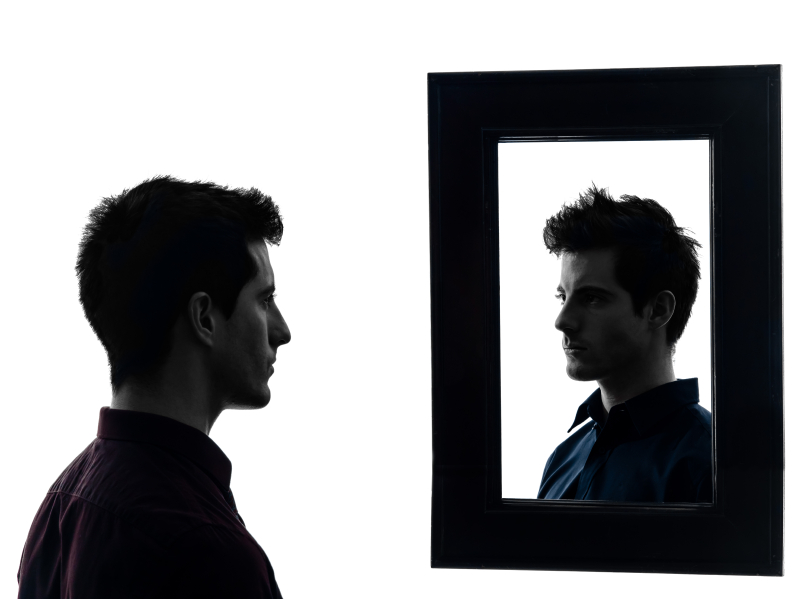
Look at the pronouns that St. Paul is emphasizing, “that each one of you know”, “that you abstain”, “your sanctification”. In other words, my dear brothers and sisters, St. Paul is saying, forget the hot topics, or the behavior of others and look at yourself first, look in the mirror, at the life you, we each, live, rather than focusing on the behavior, choices, decision or disagreements of others because there is noone without sin, and everyone needs God.

However, if we care about whether or not this or that politician should receive communion or if this or that individual in or outside the Church is the reason why I don’t believe in God, then we have become distracted by the same lies that distracted Adam and Eve from the Word and love of God. We have shifted the focus from us and God to the “them and the world”. That is why in the Gospel today, Christ asks about those whose blood is mixed with their sacrifice or of those who died in Siloam. Do they need God any more or less than us? “No; but unless you repent you will all likewise perish.” (vv. 3, 5)

My dears, the Church does not voice political views because the voice of the Church is the voice of God who calls us each to repentance not division. The calling of the Church is not to speak on how we must condemn the sin of others, but to call us to reflect and condemn the sin in us by repenting, meaning turning to God and coming into communion with Him. Everything else is a distraction. Are the issues of abortion, same-sex, left or right political leaders, medicine, vaccine, pronouns, gun-control, etc. are these important? Absolutely yes and these issues impact our lives daily. But Christ’s message, the Churches teaching regarding all of these begins with you, with me, with each of us individually. Meaning when we repent, confess, and live in Communion with God, then these issues and even the sins of others will not be a distraction for us but rather through our love and prayer, we will become a healing source and the presence of God to the world.

My dears, God loves us so deeply and cares for each of us, even the greatest sinner among us and God gives us time and time again the opportunity to repent and blossom in our communion and faith. That is why the Gospel message concludes with the parable of the fig tree. Christ is the vinedresser, who gives us the opportunity to produce fruit. “Let it alone, sir, this year also, till I dig about it and put on manure. And if it bears fruit next year, well and good; but if not, you can cut it down.” (vv. 8-9)

Christ is telling us, we still have a chance, an opportunity, to repent and produce fruit. What kind of fruit? “But the fruit of the Spirit is love, joy, peace, patience, kindness, goodness, faithfulness, gentleness, self-control.” (Gal. 5:22-23) When St. John Chrysostom teaches us that to find Christ here, we must find Christ even in the beggar in the street, this is exactly his point, we must see Christ’s love, light, care and compassion in others by also reflecting Christ’s love, peace, kindness, goodness, gentleness into the world. But be warned my dears, that it is a limited opportunity, it is this life, every day, every moment, every choice, every decision, every person we meet, each is an opportunity that we have been given in this finite life to repent and live a life of faithfulness through God or else, if we focus on others only, if we continue to live a life void of God, justifying sin, being distracted and turning away from God because of our own ambitions, shortcomings, or arrogance, then we will be cut down and thrown in the fire.

Take this opportunity, my dears, take every moment of this life, to love, forgive, reflect, seek His Kingdom first, as we read last week. Let us not be distracted by focusing on if others should receive sacraments or not, but rather, let us reflect how we each must live sacramentally. Only then can we truly understand our need to receive the precious body and blood of Christ Jesus – the Holy Communion by which we are rejuvenated and driven to Godliness and virtue. Only then will we hear the true voice of the Church, of God speaking directly to each one of us guiding our ways and helping us grow. Take this moment, pray, repent, and ask for clarity of heart, soul and mind so that by coming into communion with God we will begin to live a life that reflects His presence. We will live a repenting life that constantly turns to Him to help us produces real faithful fruit. Fruit of hope and love, forgiveness and joy that brings glory to our Heavenly Father, with the Son and Holy Spirit, Amen!

Indulging In God

Passages: Is. 36:1-9; 1 Thess. 1:1-10; Lk. 12:13-31
Ընթերցուածքներ՝ Եսայ ԼԶ 1-9; Ա Թեսաղ. Ա 1-10; Ղկ. ԺԲ 13-31

In the name of the Father, Son and Holy Spirit, Amen!

During the seasons of Thanksgiving to the New Years, from about mid-November to Mid-January, what is one thing that is common for almost all of us? We share in a life of indulging. Whether it’s food, food and more food, or it is spending money on gifts, decorations, vacations, etc. those of us living here in the United States, Canada and the parts of Europe indulge during the festivities of this season. To some, it may seem selfish, commercial, wasteful,

or otherwise negative, especially when the world is evidently sick, sinful and darkened. However, what is it that we are indulging in? Delicious food, entertainment, time with friends and family, material goods, etc. In other words, we indulge in the things we enjoy, buy the things that give us pleasure; Yes, perhaps we make purchases that spoil us, but we also spend more time with family, reevaluate health goals, make resolutions, etc. 

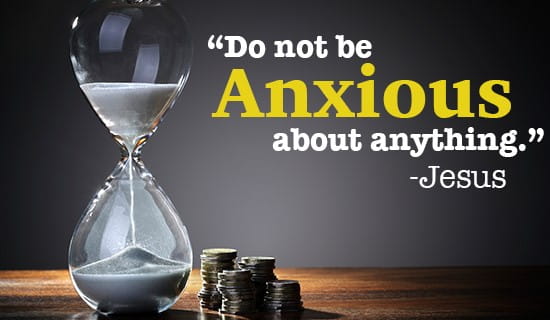
Certainly, there needs to be limits and boundaries placed on how much and in what we indulge in. After all Christ teaches us that it is not what we have or any other earthly titles, that define our true value, but, it feels good to give and get gifts, to share time together and be with one another. In today’s Gospel Christ teaches us, “Therefore I tell you, do not be anxious about your life, what you shall eat, nor about your body, what you shall put on. For life is more than food, and the body more than clothing.” (vv. 22-23) Many of us understand this passage as, don’t worry God will take care of us.  While this is true, St. Paul also teaches us in 2 Thessalonians, “If a man will not work, he shall not eat.” My dears, when Christ says do not worry, don’t be anxious, he never tells us to become lazy, to sit around and wait for God to do everything.  Nor does Christ tell us to not enjoy this world with all its blessings that God has created. Rather, Christ reminds us to not devalue who really cares for us and gives us worth, by above all remaining trusting that God is with us in all times.

This sounds difficult especially when the world around us seems to be falling apart. From home life to work life, school life, politics, health, personal struggles, etc. how do we remain trusting and hopeful and not fall into anxiety?  “Seek his kingdom, and these things shall be yours as well.” (v. 31) When an athlete is preparing for competition, he or she does not get up on the stage and automatically succeed.  Their confidence, their trust comes from years of dedicated work, effort, and care. An actor performs well and captivates the audience through the words they have learned after hours of practice and rehearsals. It is the same when it comes to our faith! Our trust in God, our knowledge and understanding comes from our time in Communion with Him. In this season yes, we indulge, we overindulge, we do things that bring us joy, make us well – yet, how much of it do we direct towards our faith in God? How much do we indulge in strengthening our faith so that we will remain confident in God when times get rough? When we are thrown in the furnace, face the lions or struggle under the weight of our cross? How much time to do spend seeking His kingdom, dedicating care, and effort, learning of who God is?

We renew gym memberships, plan out our vacations, schedule dinners and gatherings, spend time with each other – all well and good, yet, what about renewing our faith in God, planning out not only annual Christmas Badaraks but regular attendance of Church, Bible Studies, and faith education and purposefully scheduling time in our lives to spend with God. Why? Because those are the means by which we better prepare, we learn how to trust, how to face difficulties in life and how not to become anxious – we learn what it means to trust, have hope and faith in difficult times. Or else our faith in God becomes commercial and leaves us equally as unsatisfied overtime as the material goods we fill out lives with. Yes, my dears, we must be in communion with God to learn who God is and who we are with God. That is how we seek his Kingdom, build trust and remain in peace in times of anxiety and worry.

If we don’t spend time with loved ones, spend time on our hobbies and things we enjoy; if we don’t indulge in what brings us joy, if all we do is fill our lives with materials without true appreciation, whether it is people, food, exercise, travel, etc. we eventually burnout, feel unsatisfied, we become depressed, and depleted. It is the exact same with our faith – by not indulging, not spending time and learning, growing, understanding, asking questions, praying, fasting, our faith becomes a burden, a shiny toy which we eventually grow bored of; something we never learn to truly value or grow from, something that burns us out and depletes us no matter how much we say we believe in God.

The truth is, my dears, we don’t indulge in our faith because too many of us don’t find joy, we don’t trust God, nor do we truly understand our need for Him. Even for us here in Church, or following at home, our Christian faith, the teachings of the Church, and our communion with God has become like the material goods around us, a commodity we look to when it suits our needs. However, Christ calls us to a deeper reality and a life fully in the presence of God in all aspects of our life, material and eternal. But our understanding of that reality, of our Communion with God and the joy of life in Christ begins when each of us individually turn, repent, and purposefully indulge in knowing God. Whether that means we speak to the priest, or spend time in private prayer, these steps lead and pave the way to a better understanding of how God works with us in our life.

And that is my prayer and hope for all of us, as we prepare to close out 2021. Whether it is around a Turkey dinner, a Christmas tree, a potluck lunch, on the beaches of Florida, Mexico, or if it is in the cabin in the woods. Let us enjoy and indulge in the things that bring us joy in life and rejuvenate us. Let us also remember that this day God has given us is another opportunity for us to indulge and reach out to understand the joy of life in Christ Jesus, to be rejuvenated, and renewed both materially and eternally as we see that God is in all areas of our life, and has blessed us to enjoy this life. And when we live our lives in Communion with Him, that joy will help guide us in times of anxiety, struggle, and pain. Therefore, “seek his kingdom, and these things shall be yours as well.” (v. 31) Amen!

Be Made Well, Be God To Others

Passages: Is. 24:1-12; Eph. 5:15-33; Lk. 8:49-56
Ընթերցուածքներ՝ Եսայ. ԻԴ 1-12; Եփե. Ե 15-33; Ղկ. Է 49-56

In the name of the Father, Son and Holy Spirit, Amen!

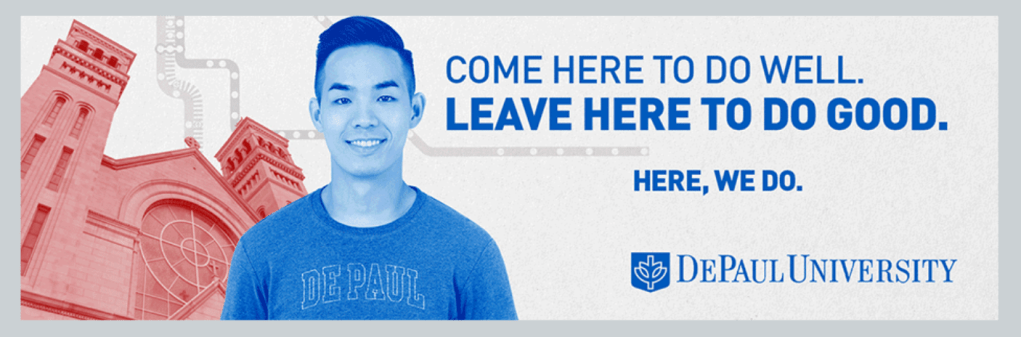
The other day, as I was driving downtown, stuck in traffic I saw a billboard with an advertisement by DePaul University stating: “Come here, do well. Leave here, do good!” It was a beautiful idea that as students who attend DePaul, through engagement and hard work, they would do well in school. Well in their grades, education, and relationships thereby doing well, it would ultimately lead to do good in this world. After all, is this not what we all want? By leaving High School and going to college or trade school, achieving high marks, and receiving a fulfilling education we hope to graduate and create an enjoyable life – a good life. Doing well in order to do good.

Perhaps not everyone has an opportunity to receive higher education, yet the sentiment remains – do well enough while we are young to reach higher and lead a good life when we are older. For a student, they want to do well in school in order to have good life after. A parent wants to do well by being a good example, so their children will lead a good life. A teacher wants to teach in a way that is good enough that it fosters the minds of his/her students towards doing good in the world with their ideas and imaginations. There are a multitude of examples of how we hope to do well enough that in the end we will be seen and remembered as good. Yet, when it comes to our faith, there is a nuance we need to understand. We who call ourselves Christian need to realize that there is no such thing as a good Christian, because there is nothing that we can do well enough that will give us or define us as good.

Does this mean Christian’s do not do good? No, however, we might think that if we go to Church, if we read our Bibles, attend Sunday School or Bible Studies, if we sing in the choir, follow the rules, etc. than these will add up towards being a good Christian. However, the purpose of our faith my dears is not about being a good Christian in the world. Rather the purpose of our faith is to be like God to the world. Only God is good, as Christ teaches us and Christ tells us to be like God. This teachings in the Church is known as theosis, and it is the fundamental purpose for our faith. Our Church Fathers, St. Athanasius teaches us, when he speaks about Christ, “God became man so that man would become like God.” And we become like God when we are in Communion with Him. What does this look like? Does this mean we eat the bread and wine, body and blood of Christ during Badarak and we are set? Only in part! This is only part of the journey towards becoming like God because Communion is much deeper. It is not only what we take in but what we produce, and in the Gospel reading today Christ tell us exactly where to begin.

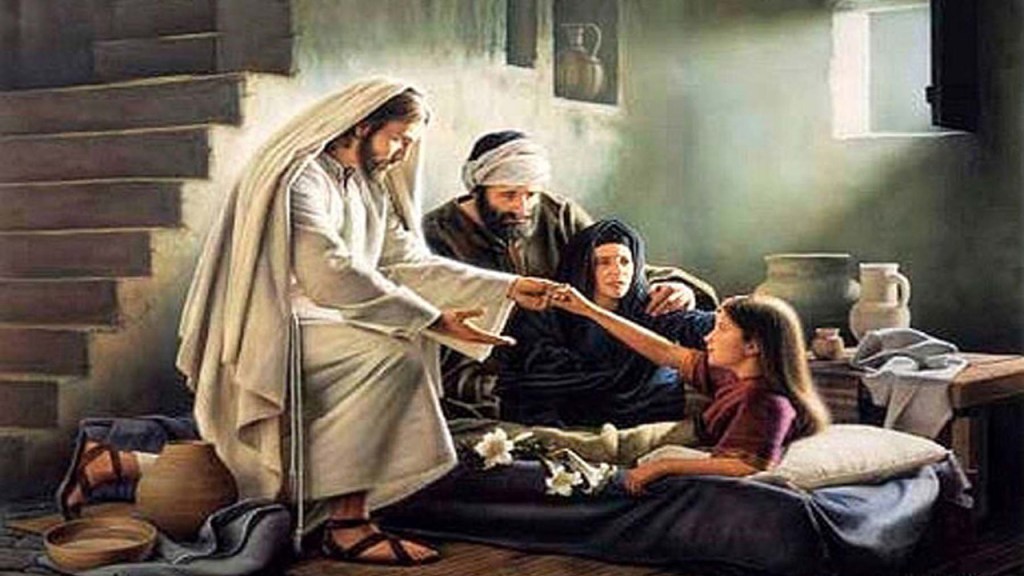
“While he was still speaking, a man from the ruler’s house came and said, ‘Your daughter is dead; do not trouble the Teacher anymore.’ But Jesus on hearing this answered him, ‘Do not fear; only believe, and she shall be well.’”  (v.49-50) “Do not fear, only believe…” In other words, my dears, Christ here is instructing not our hands and feet, meaning not our actions and the things we think or do, but rather our hearts and minds. Good is not something we do but reflect because there are plenty of people in the world that don’t believe in God but who can do good things as defined by societal rules. Therefore, our good whether in action, thoughts, etc. is a reflection of God. When others see us, they must see Christ reflected from us. For the past several weeks I have spoken about the importance of our actions in faithfulness. The root of our faithfulness, the driving force behind our actions, our desires, our goals must start from belief in Christ. For us Christian’s our hope is not to do well and leave here to do good – but rather, as children of God our Heavenly Father, what we are called to do is look at our brokenness, our shortcomings, our pains, addictions, darkness, struggles, and not lose hope, not fear but rather place them into the hands of God who will transform us, mold us and make us well, who will heal us, lift us up even from the depths of hell and bring us into communion with Him. And once we have been made well, God will send us out those doors to not do good but be the good, be God as an example for others.

St. Paul teaches us, “Look carefully then how you walk, not as unwise men but as wise, making the most of the time, because the days are evil. Therefore, do not be foolish, but understand what the will of the Lord is.” (vv. 15-17) Look carefully how you walk, meaning examine your choices and actions; make the most of your time, don’t be lazy and think you can repent and change later; understand what the will of the Lord is. This is the will of the Lord, which we pray for in the Lord’s Prayer – Thy will be done. In other words, to be healed and become well, to overcome the evil of the world and to be changed starts by understanding the will of the Lord. But for that will to be clear we must come into Communion with God, not lose hope in difficulties, we must ask questions, confess our sinfulness, repent of our darkness, turn to God and be healed so that we will bring healing to the world. The utilitarian philosopher John Stuart Mill in 1867 delivered the inaugural address to the University of St. Andrews where he is quoted to say, “The only thing necessary for the triumph of evil is for good men to do nothing.” And without disagreeing, as Christians, I would make one suggestion, that for evil to triumph it is necessary for the godly to do nothing.

For only God is good and therefore, to be the good in this world, to bring healing, compassion, empathy, hope and light into this darkened world we need to begin with reflecting God, Christ Jesus in our hearts. Col. 3:15 “Let the peace of Christ rule in your hearts…” Therefore, my dear brothers and sisters, let us pray that God our Heavenly Father will reveal His will to us, by healing us of our brokenness. Let us strive not to do well but to be made well in Him by coming into Communion with Him and when we do leave this place, when we step out into a world that is darkened by sin, we will be the light and healing that our Heavenly Father has created us to be: A witness of life even after death in Christ Jesus, our Lord and Savior who calls to us. May we accept Christ into our hearts, be cleansed by Him so that our lives will reflect His divine light. So that we continue to do His healing work in a world full of fear, whereby we will glorify Him, with our Heavenly Father and the Holy Spirit, now and forever, Amen!

God Spell

Passages: Is. 22:15-24; Eph. 1:1-14; Lk. 8:17-21
Ընթերցուածքներ՝ Եսայ. ԻԲ 15-24; Եփ. Ա 1-14; Ղուկ. Ը 17-21

In the name of the Father, Son and Holy Spirit, Amen!

In 1993, Bett Midler sang in the children’s Halloween movie Hocus Pocus, the famous words “I put a spell on you, and now you’re mine…” from the 1968 classic song. Today being Halloween, many of our kids will be out trick or treating, perhaps hearing this song, as countless dress in various costumes and participate in the festivities. Now there are plenty of arguments as to whether or not we as Christian’s should even celebrate Halloween.

For many it is deeply connected to satanic and demonic worship, witchcraft, and overall evil. For many others it is merely a secular celebration to dress up, watch scary movies and get free candy. Regardless of the roots and cultural practices that are associated with Halloween, and whether or not we as Christian’s should or should not participate in those practices, in North America majority of us already do. However, I wonder how many of us truly care to understand vs. how many of us merely go through the motions?

Truthfully too few of us care to learn the history or significance connect with this or many other celebrations. Whether Halloween, Mardi Gras, Christmas, Easter, both secular and Christian practices, how much of it is just going through the motions vs. understanding? Christmas has become an occasion for carols, gifts, trees and dinners rather than blessings and worship and celebration of Christ. Easter is about the bunnies, colored eggs, watching our kids get feet washed by Der Hayr, or listening to hymns like “Oor Es Mayr Eem”, rather than witnessing to the Passion, Crucifixion and empty Tomb of Christ. We bring our children to Church to be baptized without significant thought to what baptism means or requires of us. We send children to Sunday School, as if it was a day care service but as adults, we don’t come to Church nor even care to be schooled ourselves. Once we start dating and it is time to get married, we come to Church and ask Der Hayr for a good date for the wedding service and if he can do it in a barn or on the beach yet, have no idea what marriage means to our faith. We light candles in the back, cross ourselves occasionally, receive Holy Communion while remaining in the dark and disconnected from God. We only go through the motions.

My dears, while this may not be true for all of us, on some level it is the truth that all of us are guilty. Admittedly, there is a benefit to going through the motions however, if we remain only in motions and have no desire to learn, we are hurting ourselves only and not reaping the true benefits of our faith. This is evident from our Churches remaining empty, our Bibles being covered in dust; our mouths and hearts are closed off and our hands stuck in our pockets. Now of course it is unreasonable to expect us to know everything and to remember and in Armenian we have a beautiful saying, ամոթ չէ չգիտնալը – it is not wrong, or it is not something to be ashamed of if we don’t know. However, not having a desire to learn, to ask, to grow is not only shameful but it is destructive to us as humans and especially as Christians. St. Macarius the Great teaches, “Someone who is seriously troubled and seeks and asks of the Lord continually will soon find redemption and the heavenly riches.” Meaning my dears, that if we thirst for God, ask questions, seek out His Will, what we find is not merely answers to political questions, or answers in how we can bring more people to Church to volunteer for the festival, but rather we find redemption, we find healing and true riches.

But where do we begin to look, where do we ask? Our first place my dears, is by coming to Church and looking to our Holy Scriptures. Remember what I said, how we go through the motions but don’t really understand? Even the way we often read our Holy Bibles is done merely as a motion rather than a prayer and with understanding. How often is it that when we read the Holy Bible it is like reading any other book. However, the Bible, the Holy Scriptures is not a history or science textbook, it is not a self-help, motivational quote book we turn to when we feel anxious. It is not a legal document, fiction or entertainment. Rather, it is the living breathe of God which teaches us how to be in Communion with Him, how to live our life in Him, how to be a Christian not only in motions but in truth. For example, where do we learn about our Christian faith? The Gospel.

I wonder, how many of us know what the word Gospel means? We use it regularly and when we want to emphasis that something is truthful, even if has nothing to do with Christ, what do we say? “It’s the Gospel truth.” Gospel my dears, in Armenian is Աւետարան (pron. ave daran) meaning good news. It comes from the Greek evangelion, where we also receive the English word to evangelize. It is the victorious and good news of Christ Jesus, who is God the Son, who became man, who lived and suffered like us and who took on our sins, while remaining sinless, by dying on the Cross and after three days in the tomb was resurrected by the Father and gives us eternal life free from sin. This is our belief as Christian’s and if we don’t believe this then we are not a Christian, plain and simple. However, even if we verbally say we believe, we still have questions and want to learn. So forget for a moment the Greek or Armenian word, after all most of us speak English better.

What does the word Gospel mean? While English was not around when the Gospel was written, it has a significant lesson to teach us. The Old English/Germanic word is actually “God Spell” or “good spell.” While at its core it also means good news, today being Halloween if we hear “good spell” we might begin to think that the Gospel is some kind of magic. Yet, spell doesn’t mean some sort of incantation, but rather it means a story. A powerful story, a narrative of who Christ is and what He did and does for us. But it is also our story for the Gospel is the human narrative, a powerful, enchanting story or spell which calls and invite us to learn, to feed off of, to ask and seek out. The God spell is not like the Halloween song, “I put a spell on you…” because God has not cheated or manipulated us. However, the Words in the Gospel are powerful, healing, transformative, captivating, educational, and what is spelled out in these words is meant to educate us to know how to live our faith in a meaningful way, rather than merely motions that we go through.

My dears, we have questions. Good because answers are only as valuable as those who care to ask for them. God answers, God has spelled it out for us so that we can find redemption and healing. As the Gospel reading of today begins, “For nothing is hid that shall not be made manifest, nor anything secret that shall not be known and come to light.” (v. 17) Therefore, let us not be ashamed if we don’t know, let us not be afraid when we doubt or struggle. Let us celebrate by going through the motions but also remaining vigilant and attentive that we need to seek and ask, we need to learn and grow. So that the real evil of this world, will not cheat us, break us, lie, and manipulate us. For though God has not put a spell on us, we are His and He calls us back to Him in love and hope through Christ Jesus. As St. Paul teaches, “He destined us in love to be his [children] through Jesus Christ, according to the purpose of his will.” Let us therefore, ask and learn in order to understand how to truthfully glorify our Heavenly Father, the Son and Holy Spirit in our faith, through our actions in a meaningful and understandable way. Amen!

Our Cross In The Trash

Passages: Isaiah 33:22-34:1; 1 Corinthians 1:18-24; Matthew 24:27-36
Ընթերցուածքներ՝ Եսայ. ԼԳ 22 – ԼԴ 1; Ա Կորնթ. Ա 18-24; Մատթ. ԻԴ 27-36

In the name of the Father, Son and Holy Spirit, Amen!

A few years ago, while I was still a seminary student in Jerusalem, I traveled to Armenia on vacation and I took with me small crosses, which had been blessed at the birthplace of Christ and on the tomb of Christ, to give out as gifts to everyone I met. Anytime I attended Church, and the priest would mention that I had come from the Holy Land, faithful would flock to me when they heard that a student from the Holy Land had brought blessed crosses to give out. For them, and many faithful, this small wooden cross symbolized a direct blessing from God from the Holy Land. To them it was as if they were receiving a piece of the original cross of Christ to take home. I of course felt great about this because even though I was not a priest I was bringing a blessing to these people. Naivety set in when I believed that everyone would feel this way, as I began giving crosses out to anyone I met. One day, I saw a beggar in the street and after I gave them some money, I also gave them one of these small crosses and explained what it was. Yet, as I walked away, I heard him say, “what garbage” and I watched as he threw the cross into the trash. Again, while I was having lunch at a restaurant, the waitress, who was an acquaintance of my brothers, gave us the check and after I paid her, I also gave her a cross, which she returned and said, “I don’t want it, I am just going to throw it into the trash.”

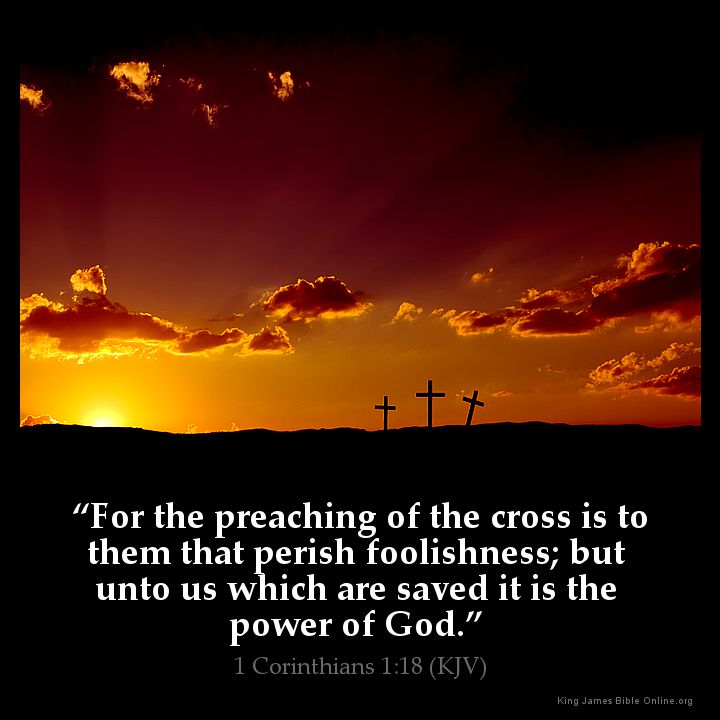
It is interesting to see how people reacted so differently to the cross and we truly see that words of St. Paul come alive, “For the word of the cross is folly to those who are perishing, but to us who are being saved it is the power of God.” (v.18) My dears, I don’t share this story for us to judge the beggar or the waitress, or anyone, as if they are fools or that we must determine that they are perishing, but rather, I share to ask, how often do we throw our cross into the garbage?

“Der Hayr, what are you saying, we don’t do such things.” And perhaps none of us here, or watching at home, literally throw our crosses into the trash, but how many of us do so emotionally, mentally, spiritually? We come to Church on Sunday’s, maybe we sing, serve, bring food, volunteer, give money, etc. yet, we don’t truly trust, or love fully the commandments of God. We judge those around us with our hearts, we lower ourselves, we give way to false belief and hope because it is easier then to take up our own cross. We may think we are better, or we think we are far worse than others; We are not sinners, or we are beyond saving. We act as though our dollars and diploma’s define us, or we are blinded to see that our addictions and pains are who we are. We are all guilty of throwing away our crosses at times, my dears.

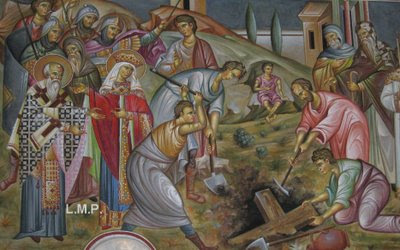
However, Christ Jesus calls us to Him again and again; Christ calls to us off that very cross to be in communion with Him. To repent, confess, pick up our cross and follow all His commandments. Today as the Armenian Church celebrates the Feast of the Discovery of the Cross, we don’t only remember the historical reality that St. Queen Helen came to Jerusalem and discovered the Lord’s Cross. What we are truly celebrating is that she remained faithful and trusted in the Lord and she in fact came and took her cross out of the garbage, the emptiness and she lifted it up as a witness. In fact, when we learn the story, we see she had to clear the rummage and trash away, because the place where Christ Cross was discarded was just a trash pile. Yet, she did so faithfully. She was the Queen, she had no needs, no human struggles we know of. Yet, she knew that the true king was her son Constantine, the King is not the one in the throne room here on earth, but is God in Heaven. As the prophet Isaiah teaches, “For the Lord is our judge, the Lord is our ruler, the Lord is our king; he will save us.” Yes, my dears, ask, does the life we live witness to the faith we say we have, do we truly believe in Christ the King who will save us, or do we throw our cross away through our choices, our actions, our heart and mind?

We are all sinful, we are all in need of God’s love and salvation. Regardless of our brokenness, our stature, our age, our experiences, our wealth or health, our knowledge or wisdom; no matter, if we are king, queen, priest, beggar, waitress or parishioner, Christ Jesus tells us all equally to pick up our Cross, to trust, to love, to feed, to clothe, to forgive, to come back, to bring back, to answer and hope in Holy Communion with Him. For as we know the Holy Cross is a witness to the transformative power of God; a testament to how God took a tool of death and made it a symbol of salvation. And the life we live my dears is equally a witness and testament to the power of God to others who look for hope in this darkened and broken world. Therefore, I pray, that today we take an opportunity to listen to God’s call to us, as we seek to discover our Cross. And if by chance, we have thrown or disregarded our cross, I invite us to rummage through the garbage in our life and pick up our cross, through the life we live daily, so that we will be a witness to God’s love and awesome healing power.

“For the Word of the Cross…to us who are being saved it is the power of God.” Amen!

Lemonade With God

Passages: Is. 20:2-21:6; Galatians 4:3-18; Luke 4:14-23
Ընթերցուածթներ՝ Եսայ. Ի 2 – ԻԱ 6; Գաղ. Դ 3-18; Ղուկ. Դ 14-23

In the name of the Father, Son and Holy Spirit, Amen!

“When life gives you lemons, make lemonade.” This proverbial phrase is often used to encourage optimism and a positive approach in the face of difficulties or misfortune. If I ask, how would we describe a lemon, what would we say? Firstly, the physical appearance is yellow, round, grooves, about the size of a small ball or a bit bigger, and of course its smell. How would we describe the taste of a lemon? Bitter, sour, and with an acidic sweetness. It is not easy to merely bite into a lemon and eat it like an orange or any other fruit.

Thus, the saying that if life gives you lemons – in other words if in life you face bitterness, or sour outcomes try to make something sweet and positive out of it.

The reality is in life all of us receive lemons in life. Once we grow to a certain age, when we “enter” the real world as it is said, life doesn’t just give us lemons, but throws them at us at a fast pace. Daily we face bitterness, sourness, frustration, anger, sickness, hurt and many other negatives that we try to navigate through. Whether we experience them firsthand, hear about it on the news or other outlets, it is undeniable that life hands each of us our share of lemons, to a point where we don’t know what to do, or how we can manage. Many times, I have heard the teaching, that God will not give you more than you can handle; God won’t allow more than your share of lemons. However, this is simply not true and is a misreading of a verse from 1 Corinthians. It is a misunderstanding because what it is saying in essence is that God is the one who gives us lemons, God along with the good and blessed, is also filling our lives with bitterness because He knows we can handle these things. This is not the loving God, a forgiving and healing God we believe in because God does no evil; God does not lead us to suffering.

Therefore, why does He allow it? Does God even see our pain and the difficulties we face in life? Absolutely! The question we must ask my dears, is when we face those difficulties, the bitterness and pain, do we face them with the tools the God has given us to overcome? St. Paul in his letter today tells us, that prior to knowing God we were slaves to the elemental spirits. What are these spirits? In the ancient world, these were philosophies, teaching, and or pagan gods or other such deceitful lies. Today we might describe these as “isms”, so called philosophies, theories, or beliefs that people use to navigate life. Slogans, political or pseudo-religious beliefs, crystals, tarot cards, coffee cups, blue eyes, individual people, the so called “4 steps to happiness self-help teachings”, etc. Things apart from God, which we believe can help us, aid us, to face the dangers and the bitterness and pains of life. Before knowing God, we were slaves to these, St. Paul is teaching, yet, “now that you have come to know God, or rather to be known by God, how can you turn back again to the weak and beggarly elemental spirits, whose slaves you want to be once more?” (v. 8)

We sitting here (or watching at home) confess that we believe in God, therefore, why do we put our trust in things apart from God. Now we may say, “no, I trust in God only but I still face bitterness.” Far be it for me to make any judgement however, for this St. Paul clearly tells us each to examine ourselves, test ourselves, is Christ truly in us? We ask does God see our pain, to which the answer is yes. But do we seek out God’s presence in our life and especially in our pain daily? Do we go to God only as a last resort or do we look to God through regular prayer, reading scriptures, attending Church, confession, repentance, and Holy Communion? Do we look to God when life gives us lemons or do we remain slaves to the elemental spirits which will leave us unfulfilled and thirsty? For us, as children of God, who are reborn through the baptismal font and freed from the lies and deceits of those spirits, we are washed and born of the spirit of God. The same spirit which Christ in today’s Gospel says, is upon Him. The spirit we are anointed by to do the work of God in this world, which is to preach the good news to the poor, proclaim release of the captives, give sight to the blind, hearing to the deaf, liberty to the oppressed and life to the dead. A life through Christ Jesus, who has overcome death not in terms or philosophies, but in truly and completely.

Yes, my dear brothers and sister, life gives us lemons and we should make lemonade with those lemons. We should do so by taking those bitter, sour, painful, hurtful, and dark moments in our life and trusting God alone to help us navigate through them. But we do so not blindly in words alone but by learning who God is and coming into communion with Him. A knowledge by which we likewise are called to do His divine work of healing, creating, loving, teaching and tending to each other. For we do as we have seen and heard, so that others will learn and do likewise. This doesn’t mean we will no longer suffer or that the world will no longer be in pain, but rather, we will no longer be slaves to the world by which we feel bombarded and overwhelmed. “Because [we] are [his children], God has sent the Spirit of his Son into our hearts, crying, “Abba! Father!” So through God [we] are no longer a slave but a [child], and if a [child] then an heir.” (vv. 6-7) As a trusting child of God we learn how to make lemonade with the lemons in life, so that when the heat of life gets too much to bear, we can all sip on some ice-cold lemonade together knowing we are free children of our loving Heavenly Father, who has already overcome this world and its lies. A Heavenly Father to whom with the Son and Holy Spirit is befitting glory, dominion, and honor, now and always forever, Amen!