Exclusively Inclusive

Passages: Isaiah 1:21-31; Romans 7:25-8:11; Matthew 12:38-45

In the name of the Father, Son and Holy Spirit, Amen!

What is the difference between the walls around us in the Church and the door at the back of the room? What is the difference between the walls around our home or a fence around our house and the gate in the yard? What is the difference between our home and the someone else’s home? We may not often give much thought to the differences these examples set in our lives yet, the distinction between a wall and a door, ours and theirs, are very important.

All of these things set physical boundaries, edges, limitations in our daily life. We have walls and doors in the physical spaces we live in, but also, we have them in our relationships, in our thoughts, in our likes and dislikes. Boundaries and limitations, barriers and fences are a very natural part of life. Yet, for some reason especially in the last several years, we have mistaken the need and of what a boundary, limitation, wall and door are used for. Perhaps we have mistaken it because we have not given much thought or perhaps we have mistaken it because our societal thinking today is only two ways, we are either inclusive or exclusive. If we are inclusive then there should be no walls, borders, limitations, definitions, or closed doors. If we are exclusive, then we should change and tear away those thoughts, ideas or physical attributes which exclude people. However, this cut and dry thinking is, itself, exclusive. Additionally, it does not help answer the question of natural boundaries and limitations which are in fact, beneficial to life.

Many of us would say the Church is inclusive and others would say exclusive. Some say the Church isn’t exclusive, but rather the people are exclusive. So which is it, and more importantly what should we be? In Isaiah today we read, “How the faithful city has become a harlot, she that was full of justice! Righteousness lodged in her, but now murderers… Therefore the Lord says, the Lord of hosts, the Mighty One of Israel: ‘Ah, I will vent my wrath on my enemies, and avenge myself on my foes.’” We see a very clear separation that the once faithful city which is now a home for harlots, murders, etc. and the Lord is going to bring His wrath against those evil doers. God is clearly excluding certain people! In St. Paul’s letter to the Romans, we clearly see a distinction between those who choose the flesh and the law rather than those who choose a life in Christ Jesus. Finally in the Gospel, Christ Jesus teaches the Pharisees about a man who has been cleansed of an evil spirit. Yet, that evil spirit roams everywhere until it comes back to that man and finds him in good order, therefore, brings 7 more evil spirits with him to torment this man.

My dear brothers and sisters, the Church is exclusive, in order for it, to be inclusive. And we are called to be the same in our life. What do I mean? Think about the walls or fences in our home, why do they exist? To protect us from the wind, rain, snow, heat, but also from thieves, murders, and all sorts of evil from the outside. Are the walls of our home a good thing? Yes, because they protect us and our loved ones. What about someone else’s home? Are we freely able to interfere with what goes on in their homes? No, because the walls keep us out. What about our relationships and people to associate with? We may not always agree on everything but we put up boundaries and limitations so that we are protected and so that we grow. It is the same way for the Church and also for our own personal faith.

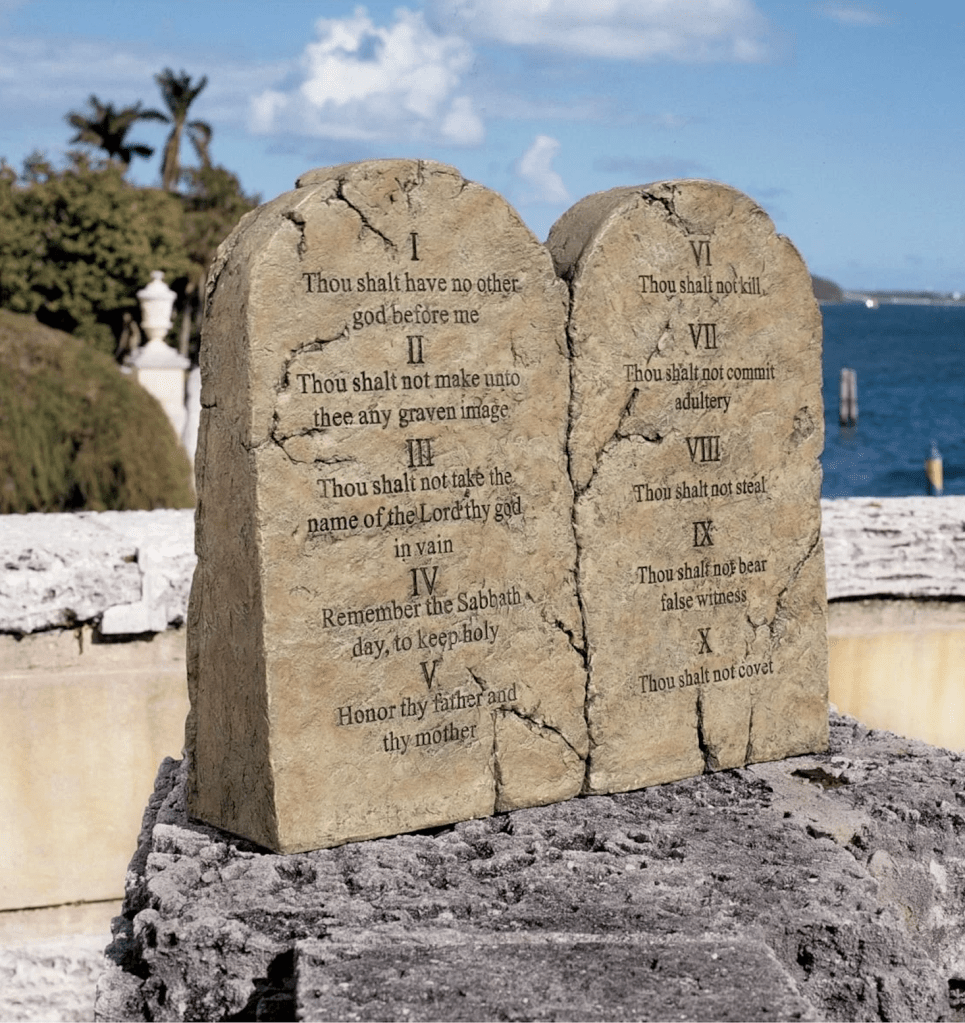
The walls we have around us, this physical space is here for all those who seek to come into communion with God. This sacred space is a place of rest, growth, healing and blessing. However, the walls of the Church, not physical but spiritual walls of the Church also protect us, the children of God from the evils of the world. What kind of evils? Anything and everything that cuts us off from Go and leads us into a life of sin. The spiritual walls of the Church are the commandments of God, the Word of Scripture, the practices of the Church – tools through which we are protected and grow. However, just as our home and our Churches have walls, what else do they have? A door. A door which is shut off and excludes evil from entering but which is open and inviting to all who come and seek the Lord our God. If we want, we can enter through those open doors and we would be welcomed. However, to those who try and break down the door, it will remain closed. To those who seek to hurt those on the inside, the doors will remain closed. Because the truth is, it is not God or the Church that is exclusive, but rather we, through the lives we live, we choose to exclude ourselves from God.

Light and Darkness cannot coexist – Sin and God cannot coexist

For this reason, the Church to be inclusive it must be exclusive. Exclusive of evil, hatred and anger; Exclusive of darkness, sin, and the celebration of sin. Yet, by being exclusive, the Church becomes inclusive of everyone who honestly seeks out God. This does not mean we all agree on everything but it means rather, we are all in communion together with God the Father, Son and Holy Spirit. Likewise, my dears, we must live our lives in such a way. We must put up spiritual walls to protect us and our loved one from sin. So that we will not remain unprotected when temptation, pain, addiction, suffering, and all sorts of evil try to penetrate into our live, just as the man was unprotected in today’s Gospel, when the evil spirits returned with more force. Yes we must be exclusive, not of each other but of evil; We must not exclude compassion, but indifference; We must not exclude love, but arrogance. We must be inclusive and open the doors to everyone seeking forgiveness, healing, rest and hope because God our Father, through Christ Jesus opened the door for us to enter, to come inside His Kingdom and find rest.

Therefore, my dears, let us pray for each other asking God to open the doors of our heart to allow love, hope, compassion, trust and healing to enter. Let us pray that those who remain on the outside, those who even if they are physically here, but spiritually they are excluding themselves for whatever reason, may they come seeking healing, and the inclusivity that is in Christ Jesus. May we, also, always remember to pray and follow the commandments of God, so that they will protect us and our loved one, like the walls around our home. And in this home, which is the Holy Church, may everyone gather to praise and worship God our Heavenly Father, the Son and the Holy Spirit Amen!
Reflect Mercy

Passages: Isaiah 1:2-15; Romans 6:12-23; Matthew 12:1-8 (Mark 2:23-28, Luke 6:1-5)

In the name of the Father, Son and Holy Spirit, Amen!

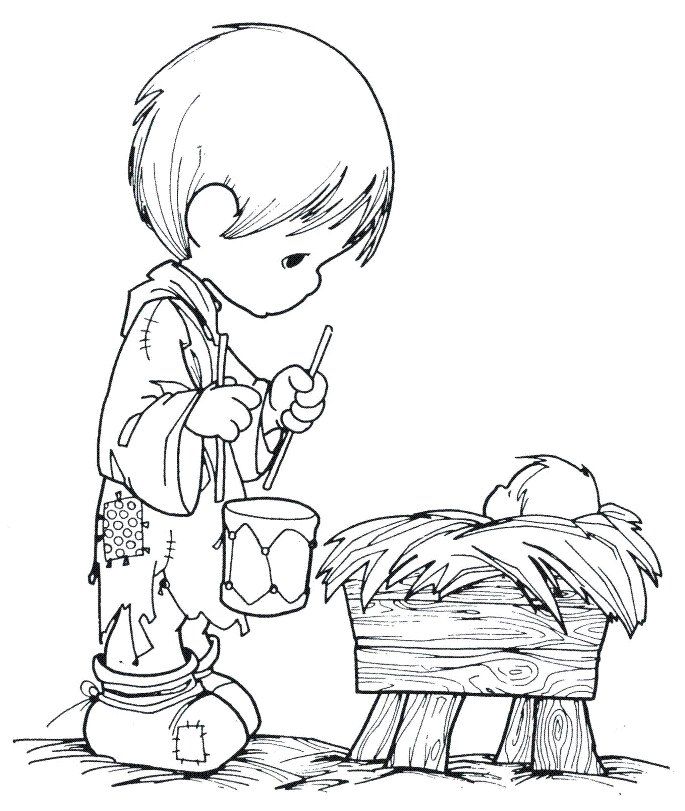
In 1941, an American classical music composer and teacher Katherine Kennicott Davis composed the now famous children’s Christmas carol, “Little Drummer Boy.” Loosely based off of other stories, in the lyrics, the singer relates how, as a poor young boy, he was summoned by the magi to the Nativity of Christ. Without a gift for the infant, the little drummer boy played his drum with approval from Jesus’s mother, Mary, recalling, “I played my best for him” and “He smiled at me”. This beautiful carol teaches us an important lesson, but also begs the question, what does God want from us?

In the Gospel of Matthew today, the famous words of Jesus are quoted often, “I desire mercy, and not sacrifice.” What is mercy? And what about this sacrifice? Back in Jewish practice, Israelites had to go to the temple and perform a sacrifice as atonement for their sins. We know as Christian’s that Christ Jesus was the last and greatest sacrifice for our sins. That is why He came to die upon the cross for our sins and free us from sin through his own death and resurrection. It is that sacrifice that we remember here every Sunday, especially during the Eucharist, Holy Communion, as the body and blood of Jesus Christ being offered up for us to consume and be cleansed of sins. Therefore, as Christians, we do not make new sacrifices. Yet, Christ here is not speaking to us about ancient Jewish practices.

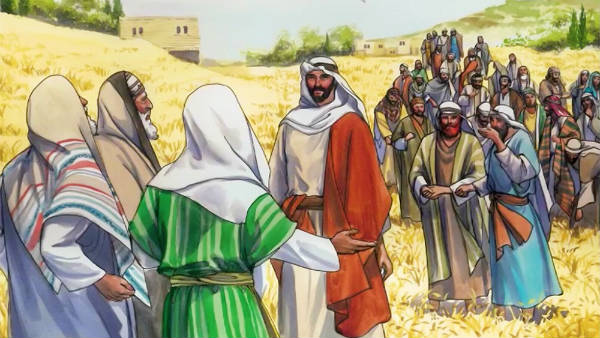
Perhaps the sacrifices that we must think about is what was happening a few verses back, when the Pharisees asked Jesus why his disciples are not fasting and are working on the Sabbath? This must be it! God does not need us to fast from foods or make other personal sacrifices. God is love and He accepts us as we are. Yet, again my dears, as we said last week, why we fast, why we come to Church and sacrifice ourselves by picking up our Cross, as Christ says, is not for God but it is for us. Christ teaches us to fast and come to Church and to.do these things for a reason: We do all this as a response to God’s love in order for us to grow in our communion with Him. So what is this sacrifice that God does not want but rather in its place desires mercy? For this we look to the passage from Isaiah today, “Hear the word of the Lord, you rulers of Sodom! Give ear to the teaching of our God, you people of Gomorrah! ‘What to me is the multitude of your sacrifices? says the Lord; I have had enough of burnt offerings of rams and the fat of fed beasts; I do not delight in the blood of bulls, or of lambs, or of he-goats.’” (vv.10-11)

My dear brothers and sisters, when we come to Church, when we fast, when we open our eyes in the morning or when we get ready to go to bed, do we take moment and pause to reflect on the life we lived that day? When we do community service, when we sign a check for a charity, when we come and volunteer our time, do we take a moment and pause to reflect on the decisions and thoughts we have had that day? When Christ Jesus here is teaching the Pharisees and us, that God desires mercy and not sacrifice, what he is emphasizing is the why and not the what of our faith. Why do we come to Church, why do we make sacrifices, why we volunteer, why we do all this, why do we lift up our cross? If it’s because we think God wants all of this, or if we think we are being good Christian’s and checking off the list of things we must do before we die, then we are missing the mark and to us God says, I don’t need it. I don’t need your superficial sacrifices.

As St. Paul says, in 1 Corinthians 13 “If I speak in the tongues of men and of angels, but have not love, I am a noisy gong or a clanging cymbal. And if I have prophetic powers, and understand all mysteries and all knowledge, and if I have all faith, so as to remove mountains, but have not love, I am nothing. If I give away all I have, and if I deliver my body to be burned, but have not love, I gain nothing.” (vv. 1-3) This is what mercy is my dears. When we describe God how often do we say God is love, merciful, compassionate, caring, vs. God is sacrificial? When Christ says he desires mercy, what he is directing us towards is, he desires us to be like God. To be compassionate, self-sacrificing out of love, merciful out of a desire to be like God our Heavenly Father. To have a heart after God and not after a goal. A deeper communion where we love the Lord God with all our heart, soul and mind and not just our hands and feet. A communion, as Psalm 50 (51) says, through which we are cleansed and made whiter than snow, we receive a new spirit, our lips are opened to speak praise always, for God is a merciful God and desires that mercy from us.

Should we fast, should we pray, should attend Badarak and receive Holy Communion? Should we volunteer, should we sign a check and pick up our cross? Yes, Yes and again Yes! But do it not out of obligation but out of love and mercy. The ultimate sacrifice to save us from our sins has already been made through Christ. All that God desires from us now, is that we be in communion with Him, imitate and be like Him. No matter how rich or poor we may be, whether we can sing solos in the Church, or if all we have is a tiny drum in our hands. When we play our best for him, when we love and care for each other, then just as the song says, He will smile at us!

May we always have a desire to grow and be like God our Father, the Son and Holy Spirit, not out of obligation or for some agenda, but out of love and mercy for one another. May we fast, pray, volunteer and imitate the works of God not out of hope of recognition or some other superficial idea that God needs any of this, but out of mercy and love for one another. Ultimately we do all this for us, to grow in our communion and faith. May our actions, decisions, choices, thoughts, purpose, all reflect a merciful God, to whom is due all glory, dominion and honor, now and forever Amen!

We Do It For Us!

Passages: Hebrews 9:1-10John 10:22-30

In the name of the Father, Son and Holy Spirit, Amen!

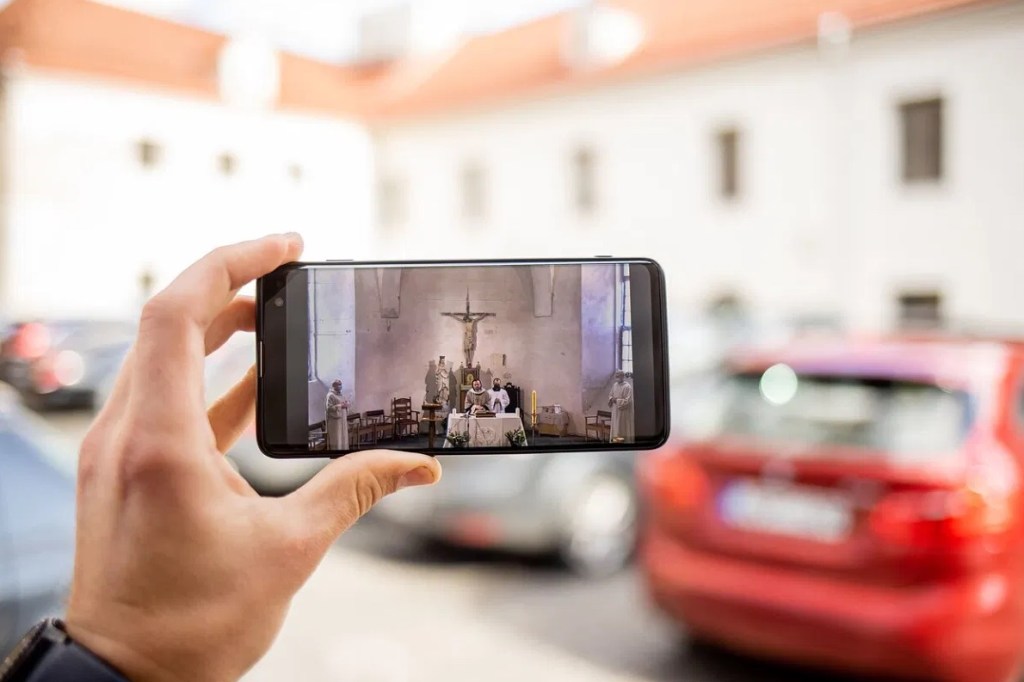
During the 2020 Covid19 pandemic, as our Churches were locked down and we were forced to stay at home, almost all Christian denominations and clergy quickly began to adapt and find modern solutions to reach their faithful flock. We began, for example, to live-stream everything. Church service, Bible Study classes, prayer sessions, counseling, all took on a virtual component and for many of us today our Christian religion is experienced behind a computer screen.

This “modern step” which solved one challenge, now brings about other challenges, such as how do we get faithful to understand that our Christian faith cannot be experienced from behind a smartphone or computer screen. And while this is one of the most important things we need to understand today yet, this new challenge also opened up a dialogue about how the ancient Orthodox and Catholic Churches (especially) must continue on this path and should look to be more modernized in other areas as well.

All of us have heard or asked these questions and others like them, such as why do we need a Badarak to be 2 hours long? Why all these icons, incense or all these decoration? The language, the elaborate celebrations, the royal vestments, it’s too much, why not have a short 15 minute service around noon with a motivational devotion/sermon to live by then we can go about our day? After all Christ spoke about humility, all he did was preach. Jesus didn’t do or teach us any elaborate services because God doesn’t really need any of these things anyway, so it’s time for the Church to become more modern. These are only a few of the suggestions made and asked about regarding how we can change the ancient Churches approach to worship. While there may be some argument to be made about the language because many of us do not understand the ancient Armenian text, however, to think that Christ himself did not establish all this or to say God does not need all this is to misunderstand what the Church is.

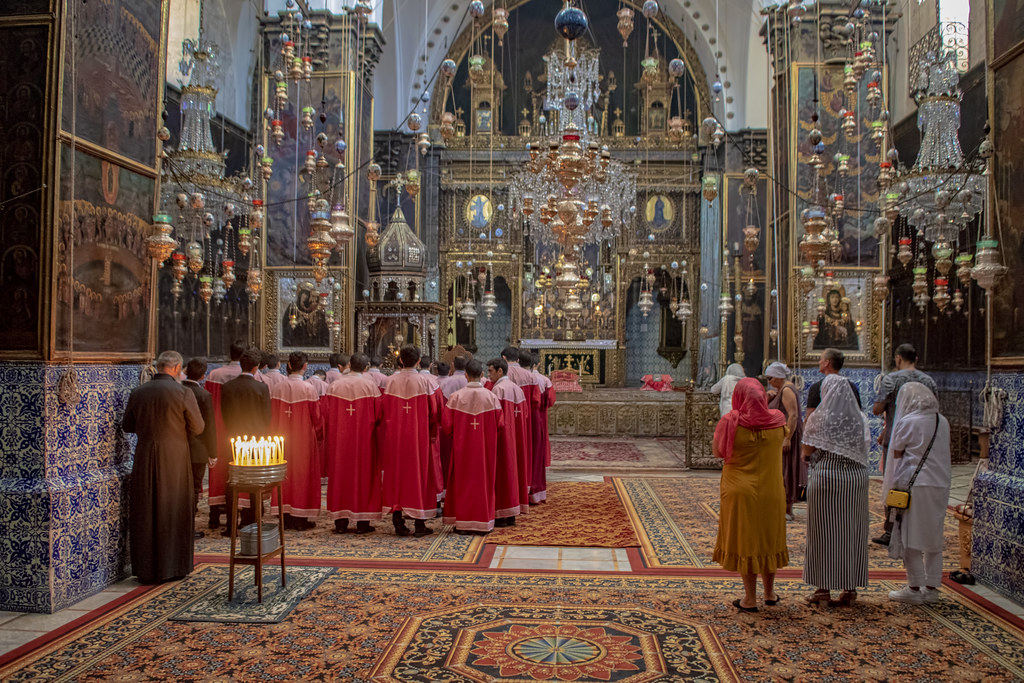
Sts. James’ Armenian Cathedral, Jerusalem

In Hebrews today we read St. Paul teaching us that from the very beginning God established a certain way, regulations, to how we must worship. To have this idea of a sacred space and a place to physically come together with incense, gold, etc. “Now even the first covenant had regulations for worship and an earthly sanctuary. For a tent was prepared, the outer one, in which were the lampstand and the table and the bread of the Presence; it is called the Holy Place, behind the second curtain stood a tent called the Holy of Holies, having the golden altar of incense and the ark of the covenant covered on all sides with gold, which contained a golden urn holding the manna, and Aaron’s rod that budded, and the tables of the covenant; above it were the cherubim of glory overshadowing the mercy seat...” (vv. 1-5) No, it doesn’t speak about language or length of service, but rather, it draws attention to our hearts and minds to understand that just as we have a physical home where we physically rest and work, hospitals and doctor’s offices as a physical space where we find healing for physical ailments, likewise, our souls, our faith needs a sacred physical space for us to physically gather into and express our faith by focusing on God. How we fill that sacred space is not about ancient or modern practice, but rather it is about our heart, mind and soul’s expression of love.

In May we celebrated Mother’s day, this month we will celebrate Father’s day, what do we do on these days? We buy flowers or maybe a nice whiskey and other gifts and cards, and spend time with our beloved parents in various activities and thank them for their love and support in our lives. We physically, if possible, spend time with them even if that means only holding their hands and thinking back over memories. And the older we get, the more we understand how precious a parent truly is in our lives. What if someone was to say we are doing too much or we don’t need to spend that much time with our parents, how would we react? We would probably be upset and say, “there is no limit in how much time or ways we want to express our love and appreciation. Nothing we do could ever repay or replace what they have done for us.” This is especially true when we’ve physically lost a parent. It is the same with our faith my dear brothers and sisters.

Everything we do in the Church, why we physically gather, why we sing, and adorn our walls with icons, and fill this sacred place with incense and music is because as ancient Armenian Christian’s we believe this is the minimum we could do to worship, praise and express love and thanksgiving to God our Heavenly Father, the Son and Holy Spirit for His love and blessings. We do all this as a minimum because we understand we could never fully express our love in the same way we could never pay back our earthly parents for their love and blessings. Therefore, no God doesn’t need all this, we need all this so that we will grow in our communion and love in God. When we begin to think that physically coming to Church is unnecessary, it is the same as saying we don’t physically need to spend time with our parents and those we love. When we begin to think this is all too much, it is the same as limiting in how much we think is necessary to express love for our parents. When we settle for the computer screen and do not come physically to this sacred space and into communion with God, it is the same as settling for a picture on our tv’s or computer rather than spending real time with our earthly parents.

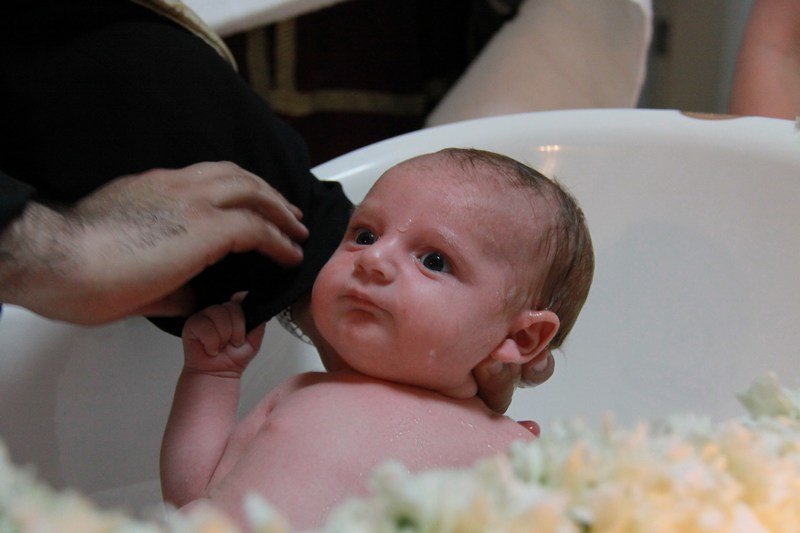
My dears, just as God has given us those earthly parents to teach, guide, instruct, love and even more likewise, our Heavenly Father and our Heavenly Mother, the Holy Church, bring us teaching, guidance, instruction, love and more. Our religion and its practice is about how we respond to that love, teaching, guidance and hope. But it is here where we learn how to respond; it is from here in the Holy Church beginning from our baptismal font, then each day we learn which then extends into those actions we live by, how we then treat ourselves, each other, and all creation. Because being a Christian means we like our Heavenly Father create not only consume. We express, respond, put into action our love because our actions and works bear witness to whose child we are – our Heavenly Fathers. That is why Christ Jesus tells the Pharisees that His works, his actions, bear witness to who He is. Therefore, how will we respond to our parents love, to God’s love?

Let us not allow ourselves to be deceived by modernity and its simplicity. Let us not think we do any of this for God but rather we do it for us in response to God’s love. Let us understand how blessed we are to recognize God as our Heavenly Father, the Church as our Mother in the same way we are blessed with our physical parents. May our response to love be a reflection of the love we have received, humble in our hearts and not expecting of blessings or rewards. For the greatest blessing and reward is the love we have already received from mom and dad, the Holy Church and from God our Father, who is worthy of all praise, thanksgiving and glory with the Son and Holy Spirit, Amen!

Saints and Hero’s

Passages: 1 Kings 18:29-46; 2 Kings 2:1-15; James 5:16-20; Luke 4:25-30

In the name of the Father, Son and Holy Spirit, Amen!

Gripped with fear, uncertain of what will happen next, there are two choices to be made: Get back up or stay down. Getting back up does not mean victory, success or even an end to all the pain. Yet, remaining down is accepting certain defeat.

If I were to ask, how we would describe someone heroic, what would we say? Brave, determined, strong-willed, faithful, perhaps evenly godly if not god-like. Stories of heroism have always enticed us as humans. Whether they be mythological, pagan, movies, literature or in real life, many of us look to heroic people for inspiration, guidance, and hope. As time goes on, many of the stories about such people become legends and sometimes those stories are exaggerated or deified. A strong individual might be likened to Hercules, a great thinker to Plato; someone who is wise and cunning to Solomon, someone who is a good and kind leader to King Arthur; someone who is resilient to Rosa Park, someone who is a good orator to Martin Luther King Jr. or someone who is faithful to the saints and angels of the Church. Regardless, in almost all the narratives of heroic people there is one truth, their battle and struggles did not guarantee a win but if they stayed down, their stories would die with them.

As much as we have heroic individuals that we celebrate and look to in our daily lives, our Church daily also celebrates heroic people. But for the Church heroism does not come from getting back up because of sheer will or a desire to succeed when the odds are against us. Rather, for the Church the true virtue of heroism comes from being lifted up by Christ even when the world would define us as defeated. As St. Paul teaches, “‘My grace is sufficient for you, for my power is made perfect in weakness.’ I will all the more gladly boast of my weaknesses, that the power of Christ may rest upon me.” (2 Corinthians 12:9) Therefore, a hero for the Church is what we call a saint, someone who has faced the same challenges we face, someone who has been broken and hurt but has been sanctified and made victorious through their belief in Christ Jesus.

Just as hero’s in movies, mythology and literature, saints come in all shapes and sizes, and each has their own journey which inspires us, guides us and teaches us how we are to live our lives. Sadly however, most of us know more about fictional hero’s like Hercules, Odysseys, Superman, Batman, Captain America and many others then we do about our saints – therefore, rarely do we draw examples from them.

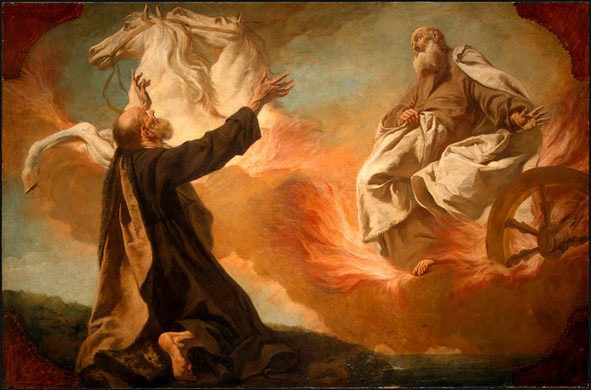
Following the 50 days of Christ’s Resurrection, Ascension and Pentecost, the Armenian Church begins to almost daily remember the saints who through Christ paved the way for us to also become saintly. Sts. Hripsime, Gayane, and Gregory the Illuminator or the saintly martyrs of the Armenian Genocide, names we know very closely, yet, rarely give any thought to the life they lived, the struggles they faced, and what we could learn from them. Today, we remember the prophet St. Elijah, who is the only saint that the Armenian Church remembers on a Sunday. Elijah’s heroism wasn’t that he slayed giants or wild beasts nor he did he fly through the air or wear a cool costume. Elijah’s true heroism and sainthood comes from his holiness and generosity to God in a time when all those around him lived a life of idolatry and godlessness. St. Elijah is also one of the few saints who, as ancient Armenian Orthodox Christians we believe, never died but was taken up to Heaven and reappears in the New Testament during the Transfiguration of Christ.

But what can we learn, what can I take away from Elijah to understand and use in my faith as a Christian, living in the 21st century that would make him a hero for me? Look around us, how different is society today, compared to back then? Today we have abandoned our faith, we make internal or external excuses when we are with friends as to why we don’t pray, we sleep in on Sunday for Church but are up before dawn if we are playing golf or going out with friends. We search for self-help, we buy what we can to fill out emptiness; we place more trust in blue eyes and horoscopes then we do in God. A recent article that was shared on social media says that almost 40% of today’s generation believes in horoscopes vs. under 30% who believe in a God. Today, we have again regressed in our faith and become idolaters. We may not worship a golden calf but we worship ourselves and make us in to “god” in the same way as during the time of the prophet Elijah, for the Israelites had abandoned their faith and fallen into the sin of idolatry.

Why? The reasons we give may be plentiful but again I ask, what is there difference from now and then? Nothing except for perhaps today we are far more polluted and perverted then even in Sodom and Gomorrah. Therefore, seeing all the similarities we look again to St. Elijah who saw the same idolatry and godlessness of today and so he went up to Mt. Sinai for solitude because he was being hunted by the pagan King and Queen. There on that Holy Mountain from which Moses had received the 10 Commandments, God asked him, “what are you doing here?” No matter Elijah’s answer, because this saintly hero trusted in the Lord God, even when we was broken and down, God lifted him up, and gave him the strength to bring faith and repentance to all. God made Elijah the difference in a broken world, which changed the hearts of all who listened because Elijah was not a prophet only to the Israelites but also to the strangers and non-Jews. And to learn more about this amazing hero, that I encourage all of us to go and read his life in the scriptures (Books of Kings (1 Kgs 17-2 Kgs 2), as I encourage all of us to learn about the lives of all our saints.

This weekend, we celebrate Memorial Weekend in the United States, a time dedicated to those true hero’s who paid the ultimate price for our freedom. Only 2 days ago we remembered the brave men and women who were ready to die for their freedom of faith and country during the battle of Sardarabad in Armenia. The saints of our Church, each likewise, are the true hero’s who teach us that true freedom, victory and success comes only from God. Because in this life, we will suffer, we will be persecuted, we will be ridiculed, knocked down, hurt, offended, and laughed at; We will face darkness, depression, anxiety, hatred, addiction and all other types of failure. Yet, gripped with fear, uncertain of what will happen next, there are two choices to be made: Deny God, stay down in defeat or trust God and even if we die, our weakness is made strong through Christ Jesus our Lord and savior, who died on the cross, but rose again from the dead raising us up with Him. For a true hero is not someone who is never knocked down, depressed or killed or someone who dresses in a spandex and flies through the air or carries a shield. A true hero is one who is ready to give their life for another, who loves and forgives, who lifts others up, who is compassionate and merciful, and willing to accept their shortcomings. A true hero and saint is one who prays and cares for others physically and spiritually.

As we read in James (5:16-20) “Therefore confess your sins to one another, and pray for one another, so that you may be healed. The prayer of the righteous is powerful and effective…My brothers and sisters, if anyone among you wanders from the truth and is brought back by another, you should know that whoever brings back a sinner from wandering will save the sinner’s soul from death and will cover a multitude of sins.” A true saint, my dears, is one who does all this because they ultimately trust that God will raise them up. We are all called to be saints – cleansed of our sins through baptism, washed by the blood of Christ Jesus, in communion with the Father, Son and Holy Spirit, created in His divine image – worshippers of the one true God only and not of the idols and mythological heroes of the pagans and movies.

Therefore, my dears, let us read and learn about our saints, the superhero’s of faith, the legends of Holy Scripture and the Holy Church. Let us learn and see how they, likewise, faced the struggles and darkness we face today. Even when they were knocked down, they were raised and when we trust God, even when we are knocked down, we will be raised. For our God is an awesome God, who heals the sick, forgives our transgressions and who gives life to the dead. Glory be to our God, the Father, Son and Holy Spirit, Amen!

Taking Back the Stone

Passages: Acts 23:12-35; 1 John 5:13-21; John 12:12-23

In the name of the Father, Son and Holy Spirit, Amen!

What is the earliest lesson that we learn in life? That our actions and decisions have consequences. Whether it is the people we spend time with, the diets we attempt to do, the schools we go to, our jobs, social lives, and our day to day will shape who we are and how we live. As we grow older, we look back upon some of our decisions and we think about how we wish we could have changed some of those choices. Studied a bit harder, listened to others a bit more

closely. Spent less time with certain people and more time with others. However, we know that we cannot go back in time and there are some actions we can never change. As the proverbial teaching states, “In life there are 4 things you can’t get back: The stone after it is thrown. The word after it is said. The occasion after it is missed. The time after it’s gone.

As Christian’s we know that a life of sin works in the same way. We think about our trespasses and sins and wish we could change what we have done. At times, many of us feel that there are some sin’s that we cannot take back or make amends, whether these are sins we have committed ourselves or sins committed against us. Yet, Scripture teaches us that through genuine and heartfelt repentance God will forgive all our sins. This is done through confession and repentance, where we learn to heal and receive the body and blood of Christ to be freed from our sins. We do this because without repentance, without Christ, sin and its consequence of death maintains hold of us. For the wage of sin is death, which Christ Jesus took upon himself to die on the Cross for us, as we read in Romans 6:23 “For the wages of sin is death, but the gift of God is eternal life in Christ Jesus our Lord.” Sin bringing death began from the very beginning, as we read from the book of Genesis, that God commanded Adam and Eve to not eat from the tree of knowledge or else they would die. Yet, Adam and Eve did eat and sin and death entered this world. So sin brings death, Christ brings healing from that death.

Yet, today’s reading of 1 John, we are told of sins which leads to death vs. sins that does not lead to death. Is not all sin the same? What is the difference? Each Sunday when we attend Holy Badarak, we read the general confession, where we emphasize 7 deadly sins – pride, envy, anger, laziness, covetousness, gluttony and lust. Perhaps these are the sins which lead to death, as their name implies. However, the title of “deadly sins” is a later development by the Roman Catholic Church and theses sins are rather, both in Catholic and Orthodox theology, not grave sins but rather they can potentially lead to worse sins therefore, deadly. So than how do we understand a grave sin or one which, as St. John writes, leads to death? If we think back my dears, to our past decisions, decisions that were not wise, or fruitful, choices that perhaps left scars rather than blessings, what is our initial thought? We regret and/or wish we had done better. We wish we could go back and change the past. Things such as wishing we had not eaten that one last slice of cake when we are on a diet; wishing we had not taken that one last drink before driving; we wish we had not said that one last word or perhaps we wish we did not post that one comment or picture on social media; perhaps we wish we had not runaway and shut the door or burned bridges; or maybe we wish we had left the situation we were in. We all have things in our past we wish we could go back and change.

After these feelings and thoughts, what is our next step? We acknowledged and if possible, we look to try and reverse, mend and heal the wounds and scars left behind from those choices. We stop drinking, we start dieting, we watch our mouths and pay closer attention to our surroundings. We say sorry in words and also in actions. I know that as I think back at my dumb decisions and the people I hurt as a hot-headed teenager, I have tried to reach back out to those people and acknowledge my wrongs and ask for forgiveness. Why? Not because my childhood mistakes or a comment, or momentary bad choice will necessarily bring me to the gates of hell. But rather, each of us in taking the step to mend a brokenness or fault, we are, in theological terms, seeking life and renewal. Yes, sometimes sorry just is not enough when we feel too deeply hurt. Yet, when we do not seek life, when we do not seek to right the wrongs in our lives, we in fact pursue death and we deny God and His act of love!

My dears, sin is not like a stone we’ve thrown away, a missed opportunity, or mistake we can’t take back; sin is much more, and its scars run much deeper. Sin is a breaking of communion with God and each other. Therefore, a sin which leads to death, as St. John writes, is a brokenness that we choose not to recognize and a sin we do not repent of. A sin that leads to death is a sin we refuse to apologize for regardless, of if we can mend what was broken or not. That is why my dear brothers and sisters, we are taught to come and confess our sins to the priest – regardless of how serious or menial we may think our sin is. By confessing privately, we are acknowledging our brokenness and God sees that we are seeking a way to be renewed – to take back the stone that was thrown, the word that was said and the wound that was created and is festering in our lives.

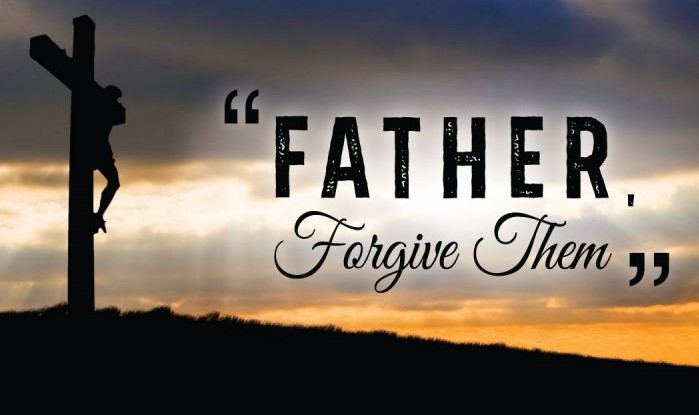
Yes, my dears in life we learn very quickly that our words and actions have consequences. Yes, when we have been hurt it is difficult to see a real change in the person who has hurt us. At times, when we hurt others and want to acknowledge it, it is difficult to see a possibility of healing even from God. In life we make choices sometimes we wish we could take back. Yet, in order for sin to not fester, become infected and lead to death, we must recognize and seek God’s healing power. As for the rest of us, we must pray for each other’s healing. We must pray especially for the healing and forgiveness for the ones who hurt us, lest we fall into sin as well which leads to our own death. Christ Jesus, God the Son called from the cross, “Father, forgive them for they know not what they do.” We pray in the Lord’s Prayer, “forgive us our trespasses, as we forgive…”

Yes, my dears, we sin, we throw stones, we say words, and we miss opportunities. Let us not miss the opportunity to pray for one another and to recognize our own hurt for which true healing comes from God alone. For when our time to repent is gone, then will we truly be at the doorsteps of hell, broken from the communion of God and out of time. Then will we truly not be able to turn back and change what was said and done. May we turn to God our Heavenly Father, who through God the Son, Christ Jesus will heal us and by God the Holy Spirit will illuminate our minds to seek life, renewal and peace, Amen!

Rules

Passages: Acts 17:1-15, I John 1:1-10, John 7:14-23

Kristos Haryav i merelots, Christ is Risen from the Dead!

In the name of the Father, Son and Holy Spirit, Amen!

Why does the Church say, we have to fast before Easter? Why does the Church teach woman must cover their heads in Church? Why does our priest say we should confess our sins to him? Many of us, my dears, have asked these simple questions and perhaps even others like them. If we haven’t asked them, perhaps we have heard others ask them or argue that these rules make no sense, and the Church is trying to control people. The misunderstanding and often times misrepresentation of these “rules” has deterred some of us from truly becoming members of our Church – we say the Church has too many rules!

Someone once told me, that if only the Armenian Church would be more modernized with its music, language and services, then more people would attend. Sadly, we know this is not true because there are plenty of “modern” Churches, whose services are more like concerts, about 20 mins. to an hour and the language is plain and simple for people to understand. Yet, increasingly their numbers are also in decline, as young and old turn away from God. So why does the Armenian Church even maintain these rules? And what is their purpose?

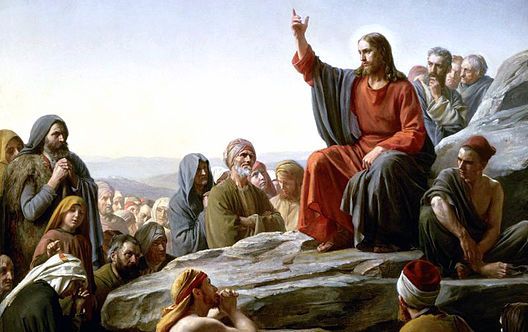
My dear brothers and sisters, every rule, teaching, practice, approach, service, language, scripture, sermon, etc. everything we do as a Church is based off of one rule, one barometer of measurement – Christ Jesus. Confession, covering up our heads, fasting, Badarak, all of it, as Orthodox Christian’s we believe guides us to Christ Jesus, God the Son and ultimately God the Father and Holy Spirit as well. In fact, Jesus himself was asked the same “why’s” we are asking of our Church? The Jews and Pharisees wondered by what authority Jesus did what he did and especially, where did he learn everything. “Then Jesus answered them, ‘My teaching is not mine but his who sent me.Anyone who resolves to do the will of God will know whether the teaching is from God or whether I am speaking on my own. Those who speak on their own seek their own glory; but the one who seeks the glory of him who sent him is true, and there is nothing false in him.’” (John 7:16-18) Christ Jesus teaches us that his teachings, his practice, which we as the Church live by today come directly from God and serve God, not personal glory. This of course is not to say that Jesus Christ has a separate will contrary to God the Father – No! Rather, Christ here is teaching us that what the Holy Scriptures teach us, from Moses, Daniel, David, Matthew, Mark, Luke and John, Paul and Peter – all of it is the teachings of God given to us for instruction and communion with Him. And everything else the Church teaches or our priests preach must and is founded in Christ Jesus because the Church is not here to enforce its agendas or seek personal glory.

When the priest tells us to fast he is not telling us to diet or when we are told to confess, its not so that he can hear the latest gossip. Nor are these rules made to control society or morality. The life we live through the Church is to bring us into communion with God the Father, Son and Holy Spirit; to cleanse us from our sins, to help heal us from our afflictions and to illuminate our hearts and minds to see God. For this reason, John writes in his letter today, “…that which we [the Church, priests, etc.] have seen and heard we proclaim also to you, so that you may have fellowship with us [the Church]; and our fellowship [or communion] is with the Father and with his Son Jesus Christ. And we so are writing this so that our joy may be complete. This is the message we [the Church, priests, etc.] have heard from him [Jesus] and proclaim to you, that God is light and in him is no darkness at all…If we confess our sins, he is faithful and just, and will forgive our sins and cleanse us from all unrighteousness.” (1 John 1)

Remember the words of Christ at His Ascension, we all are sent out in the same way Christ Jesus was sent out into the world. We are commissioned to preach, teach, heal and baptize in the name of the Father, Son and Holy Spirit. What we teach, how we heal comes not from personal opinions, current politics or culture, the latest and greatest, but rather from God Himself. And in order for us to know who God is, what His will is, we must first come to Him through the Church, which is His bride, our home, the temple, upper room, a hospital, a resting place, and much-much more.

Today, the Armenian Church celebrates the Apparition of the Holy Cross while the Eastern Orthodox celebrate Easter. In both cases, we are celebrating a vision we see with illuminated eyes, a victorious cross upon which Christ Jesus died and resurrecting giving us life. However, this vision will remain unattainable, misrepresented and opaque to us if we do not first come to God with reverence, love and humility. With a thirst and desire to learn and grow through the teachings of Holy Scripture, the words of the Church Fathers, the rules of the Church and the practice of our faith.

Therefore my dears, let us ask the “why’s” and “how’s” about our faith but with a desire to grow. Let us use the tools God has given us through His Church to approach Him and come into communion with Him. Let us do the will of God the Father, Son and Holy Spirit through love, humility and compassion. So that bringing glory to God, our eyes will be illuminated to see and declare, in all languages, the resurrected Christ Jesus upon this earth, through our words and actions.

Kristos Haryav i merelots; Քրիստոս Յարեաւ ի մեռելոց; Christ is Risen from the Dead; Christos Anesti (“Χριστός ἀνέστη”); Khristos voskrese! (Христос воскресе)…Blessed is the Resurrection of Christ, Օրհնեալ է Յարութիւնը Քրիստոսի:

Justice

Passages: Acts 13:16-43; 1 Peter 5:1-14; John 5:19-30

Kristos Haryav i merelots, Christ is Risen from the Dead!

“He who closes his ear to the cry of the poor will himself cry out and not be heard.” (Prov. 21:13)

This past week, a single voice echoed in all of our hearts and minds. This past week, a single voice was demanded by all. A voice that all people, everywhere seek and yet, fail to recognize. My dear brothers and sisters, the voice of justice. Look at the events that took place this past week: The verdict of Derek Chauvin for the death of George Floyd; the outspoken comments of people for the death of Adam Toledo; the controversy of the killing of Ma’khia Bryant; the brutal slaughtering of Nabil Habashi, a Coptic Christian who was executed by ISIS in north Sinai this past week; the continued persecution of all Christian’s in Asia, Africa and the Middle East; and finally, for us Armenian’s the remembrance of the Armenian Genocide. All this and who knows how much more, in only 7 days – voices calling for justice. However, my dear brothers and sisters, what is justice? To right a wrong? To acknowledge a negative act or decision? To give restitution?

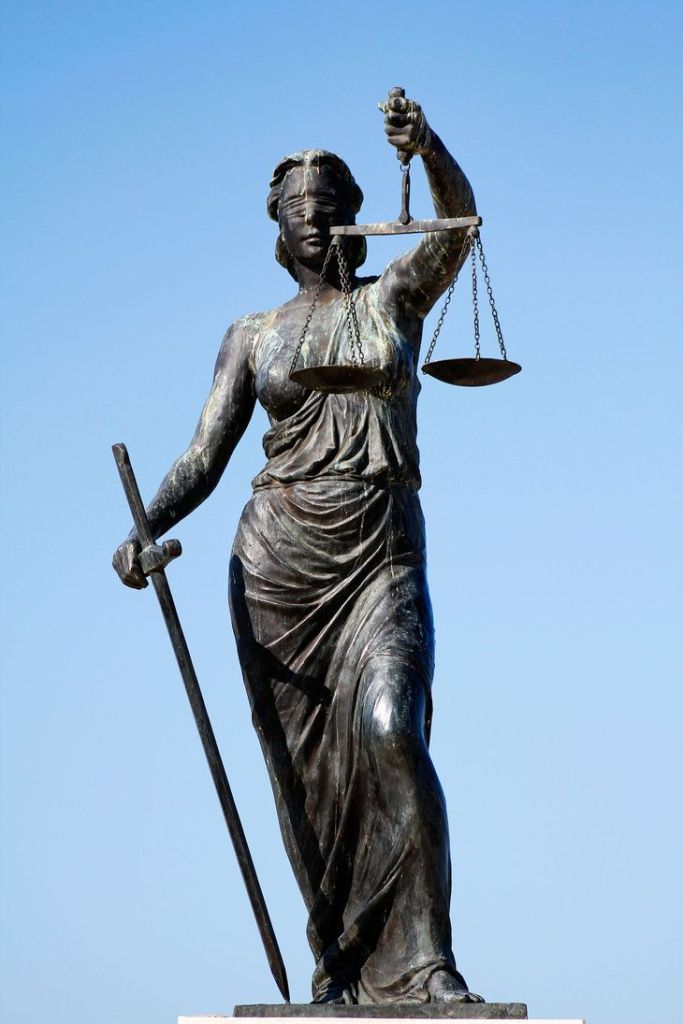
To many of us, justice is defined differently when we compare our opinions. Justice for some is eye for an eye yet, for other’s it is acknowledgement of wrong doing. For some justice is retribution and revenge; still for others, justice is the continued active work of preventing wrongful doing in the future. In Greek mythology, justice was personified as the goddess Themis, who was blindfolded and held a balance in one hand and a sword in the other. Justice legally is often defined as “The ideal of fairness, impartiality, etc., especially with regard to the punishment of wrongdoing.” Legally, justice, as a verb is defined as: “To show (a person, group) to have had a sufficient legal reason for an act that has been made the subject of a charge or accusation.”

In other words, justice is our idea that fairness or impartiality was practiced when a decision was made.  However, my dears, we know too well that this definition is quite weak, because through this definition any action can be justified and acceptable. Legally, when the United States was first created, slavery was justifiable. Legally, in 1915 in the Ottoman Empire, it was justified for Armenian, Greek, and other Christian’s to be slaughtered where they stood. Legally, in 1945 Germany, Jews were sent into death camps, and it was justified. Legally, only a number of years ago beating your wife or children was merely seen as discipline. Yet, the horrors and the most heinous crimes that were, and continue to be, perpetrated towards one another, can often be traced back and said, justice was upheld. Now that the rules have changed, legally, slavery is outlawed, and Turkey and Germany are not acting Genocidal. Domestic abuse is condemned because justice has changed because we are learning, and we are growing. Though yes, that may be true – but I can’t help but wonder what will the next change be? How will justice be defined in the future.

My dear brothers and sisters, this is not true justice. Yes, we live in a society that is governed by a legal system, which we must learn to honor and respect. However, true justice for us as Christian’s, as children of God, comes not from arbitrary societal rules but from God alone. Today, the world has forgotten God and has chosen to be ruled by injustice. To seek personal agendas rather than each other; to serve our own desires rather than bring healing; to fill our stomachs rather than feed each other. We have closed our ears to the cries of the poor, the oppressed, the weak, the needy, the hungry, the estranged. We, as St. Paul teaches, do not acknowledge God and so our minds go to debased things. (Rom. 1:28) We justify what we want but when evil and wrong is done to us, we cry out for justice. Yet, as the Proverbs teach, “He who closes his ear to the cry of the poor will himself cry out and not be heard.” (Prov. 21:13)

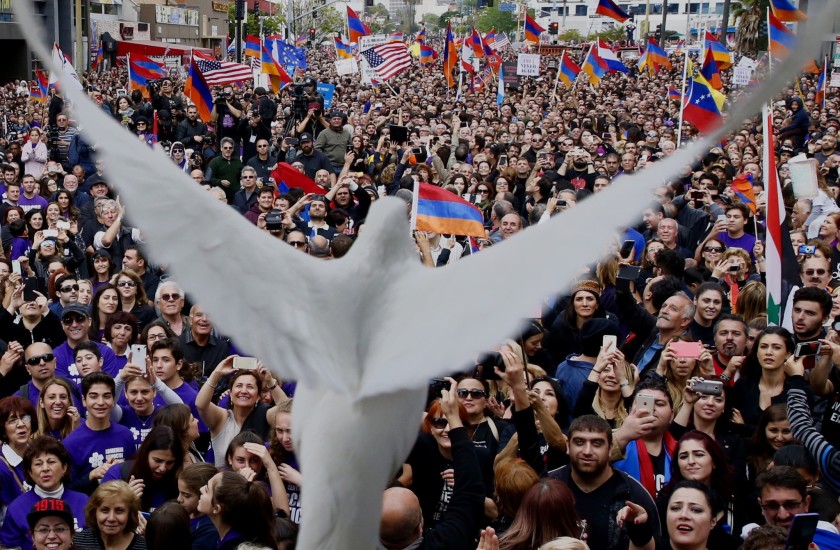
Justice happens by our own actions of mercy, forgiveness and love. Justice happens not through retribution but through strengthening each other and being strengthened in return. Justice happens not only through government or legal recognition on paper, but through action to rebuild. This week, the American people were divided over the verdict of Derek Chauvin – was it murder, was it manslaughter, was it racism, was it the negligence of the Police officer?  Regardless, a life was lost. In the shootings of the other two examples, I gave earlier from this past week, lives were destroyed and broken. The Christian man, who was martyred for his faith, had a family and was is child of God. Yesterday, the President of the United States, used the word “genocide” to describe the Armenian Genocide – and all Armenian’s were grateful that our cries were heard. Yet, I must ask, in all these cases was there real justice?  If justice is merely in the words said of acknowledgement, or a verdict being read, or social media posts, protests and riots demanding answer – then, has justice been served?

No, my dears, justice is served, justice is realized when we do better.  When we show compassion, fortitude, unity, mercy, love in the face of injustice. When we build each other up, when we come to each other’s aid, when we hear each other’s cries and answer. Not for personal agendas or for personal ideas of right and wrong but because as children of God we know that God helps build us up, comes to our aid, hears our cries and answers. For this reason, St. Peter in his letter today teaches all of us, “Tend the flock of God that is your charge, not by constraint but willingly, not for shameful gain but eagerly, not as domineering over those in your charge but being examples to the flock. And when the chief Shepherd is manifested you will obtain the unfading crown of glory.” (1 Peter 5) When Christ Jesus is returns we will find true justice who will justify our righteous actions towards one another.

Martin Luther King said, “There comes a time when one must take a position that is neither safe, nor political, nor popular; but he must take it because his conscience tells him it is right.” “Preserve mercy and justice, and ever draw near to God” (Hos. 12:6) Preserve mercy and justice by preserving each other in the same way Christ Jesus preserves us. Not merely in words or slogans shouted in the streets, but through real actions, where we put aside our disagreements, we put away our illusions of right and wrong and trusting God we work with each other. This does not mean do not call evil evil but it means do not repay evil with the same.

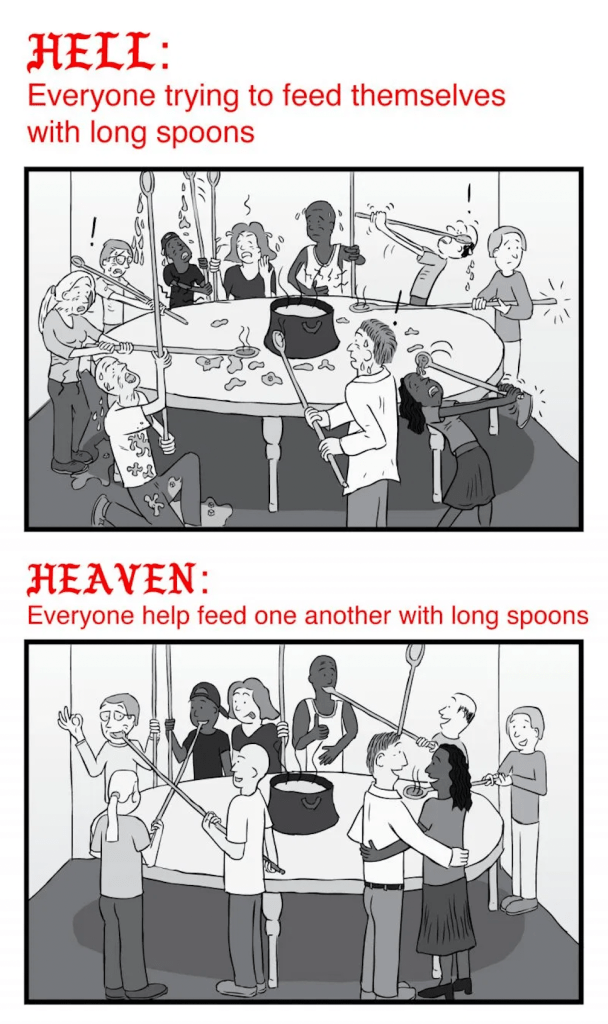
One day, a man kept praying to God to see what heaven and hell were like. In his dream, an angel came to him and said, I will show heaven and hell. Suddenly before the man were two great banquet tables full of food. On the one side, he saw well fed people, full of life. On the other side, he saw pain and misery for no one was eating. When he looked closely, he saw, that each person, on both sides, had a spoon that was almost half the size of their bodies. The ones who were well fed used their spoons to feed each other and so everyone was fed. The ones that looked starved, each tried to feed themselves and the food kept spilling. All you could hear was how those who were starving complain about how unfair it was.

My dears, let us feed one another, let us hear each other’s cries and be merciful and loving to all. Only that way will we find true justice, not only on paper but in reality. Only that way will justice not be a voice falling on deaf ears or a voice that remains in the streets as slogans but a resounding command and reality that is found everywhere. Justice is served when we learn to serve each other. Doing so we will bring true restitution, forgiveness, care, mercy, hope and love into this world. Through which we learn to glorify God the Father, the Son and the Holy Spirit, Amen!

Physical Blessing

Kristos Haryav i merelots, Christ is Risen from the Dead!

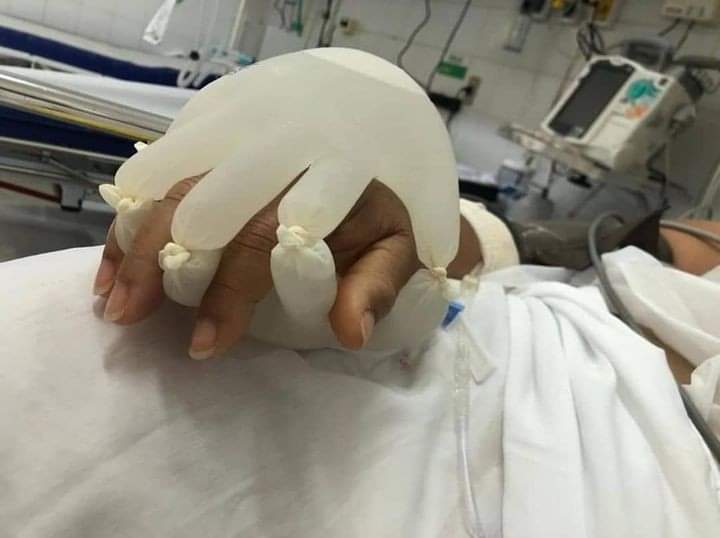
During the pandemic of last year, one of the most devastating realities was not only the loss of life but as well as, the social and physical distancing and isolation of families and loved ones from one another. More and more individuals today, are coming out of the pandemic and the lock-downs with feelings of abandonment and loneliness. But I can’t imagine how painful and difficult it must have been for those

who witnessed their parents, children, spouse, friends, parishioners, neighbors, loved ones lying and dying in a hospital bed all alone. The physical connection of person to person is so powerful and healing that even during the pandemic, doctors and nurses broke down emotionally seeing that loved ones could not hold the hands of each other in that desperate time of need. In an attempt to comfort isolated patients, to bring emotional and mental healing, nurses in Brazil filled two disposable gloves with warm water and tied them around the hand of the dying patients, as they tried to simulate holding hands, to tell the patient you’re not alone, keep fighting.

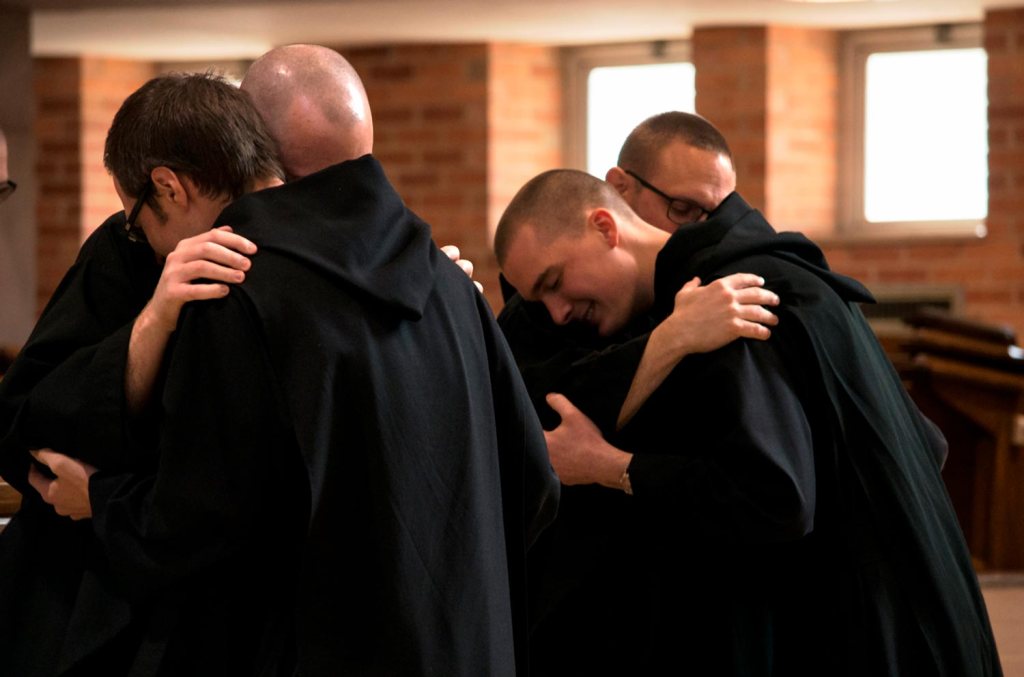
We as humans are communal creators, and even the most introverted person benefits from some sort of human connection. Whether it is coming together, hugging, holding hands, placing a hand on each other’s shoulder, looking into each other’s eyes, all of these have healing and uplifting qualities. Often during times of trouble, war, distress, pain, or disaster, one of the key and life preserving elements is this idea of coming to each other, being in a community. When a loved one is dying or suffering, clergy and medical professionals always say, be there for the person, such as when someone is in a coma, doctors say keep talking to them. During 9/11 it was this communal strength that aided in the saving of so many lives as volunteers rushed into the rubble to save people. As the Church, we believe in the coming together as the body of Christ – which is what the word Church actually means, “Ekklesia” in Greek or Yegeghetsi in Armenian to come together. Physically gatherings and physically greeting one another is very powerful and deeply rooted in our theology. That is why every time in the Badarak we say “Voghchuyn dook meemyants, i hampoor srpootyan – Let us Greet One another with a Holy Kiss.” Again this idea of physically and tangibly coming together.

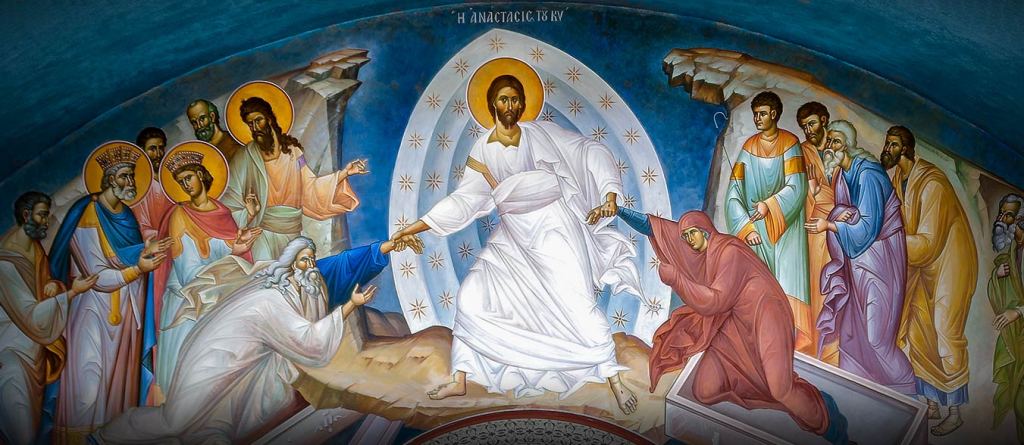
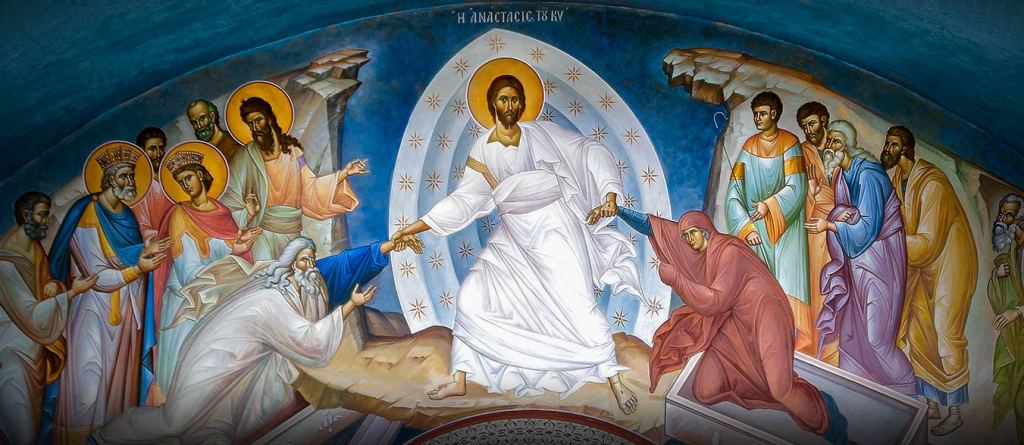
My dear brothers and sisters, God saw that Adam was alone in the garden and so He created for him a helper and an equal partner.  God saw humanity was alone and said, it is not good for humanity to be this way and so we were commanded to grow, flourish, give life, love each other, be with each other – to be physically present. That is also the reason that Christ Jesus, the Word, the Logos, God the Son, had to become human – “The Word became flesh and lived among us” Why? Because our God is not a God of physical or social distancing; Our God is not a God of isolation and separation; Our God is a God of love who physically became like us in order to live like us, hold our hand, cry with us, be with us and die like us. However, God the Son, Christ Jesus did not remain dead, for we proclaim a resurrected Lord – who destroyed death by death. Holding our hand, He pulled us out of death, out of Hades, out of sin! God lowered Himself and became human in order to lift humanity up and make us like Him. And God commands us to do likewise.

This does not mean don’t follow the rules of government in the climate we live in. Rather, it means we must learn to be the resurrected body of Christ, in a different way. Call one another on the phone and genuinely care about the needs of the other. Walk by each other’s homes and greet each other! Cook extra food and share it with one another or even better with those who are homeless and live in the streets. Pray for each other by name! My dears brothers and sisters, real isolation is not that we are physically distant from each other, but rather, that we have distanced our hearts, we have cut ourselves off from each other spiritually and so we have cut ourselves off ultimately from God. For we cannot love God, be close to God, be in Communion with God, unless we first love each other.

Yes, today we are in the pandemic and must physically keep some distance. Whether we agree with it or not, these are the rules and we pray for the health of everyone. But let us not allow this pandemic to be an excuse to distance ourselves from God, from each other’s hearts and minds. Christ Jesus, knowing He came to die, did not distance Himself but became like us because of His love. A love that will heal this world, a love that conquered death and a love that will strengthen each and every one of us who chooses to accept it. Therefore, let us examine and ask ourselves, how far have we distanced ourselves from God, how disconnected have we become from one another and how can we rebuild? The pandemic will be done and gone soon, will our love also go with it or will it remain with each other? Let us always strive to build each other up and love one another at all times; let us be present with each other. And if we don’t know how, let us come to God, speak to our priest, open our scriptures and ask that our minds be illuminated. So that when we have passed from this pandemic, we can gather and Greet each other with a Holy Kiss proclaiming that the Resurrected Lord Jesus Christ is among us! Krisdos Haryav i Merelots, Christ is Risen, Blessed is the Resurrection of Christ!

Easter?

Քրիստոս Յարեաւ ի Մեռելոց. Օրհնեալ է Յարութիւնն Քրիստոսի։
Christ is Risen, Truly He is Risen.
Krisdos Haryav i Merelots, Orhnial e Haroutyunn Krisdosi!

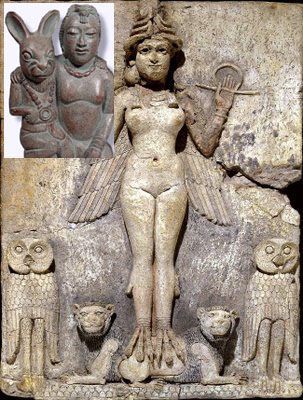
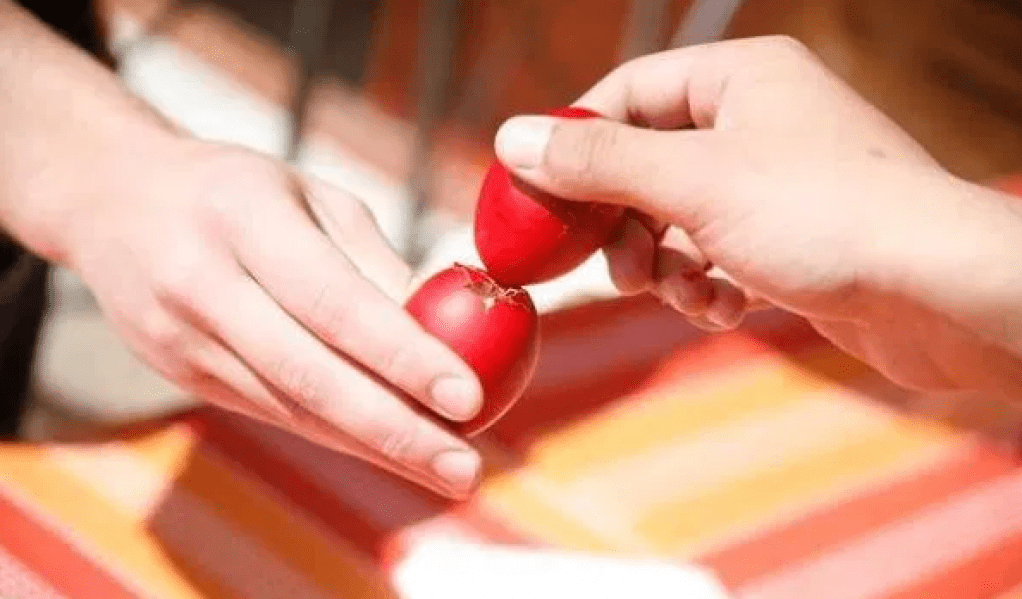
Every year on this blessed day of celebration we play the egg tapping game – havgitakhakh. We paint eggs, we buy chocolates, we do Easter egg hunts and many other traditional events take place during Easter. Unfortunately, however, in the busyness of planning, what gets lost is the meaning and the purpose behind all of these traditions. We begin to think that these simple games and traditions go back to paganism rather than to Christian teachings. Even the name Easter, which we say in English comes from paganism and is comes from the name Ishtar – which was the Babylonian goddess of fertility and sex.

In ancient paintings we see that Ishtar was often symbolized as what? A bunny, from where we receive the Easter bunny reference and her celebration was associated with spring time, when life began to bloom after the winter months. If this is the case then, why does the Church celebrate Easter and even more, why do we maintain the traditions of eggs and games?

Firstly, the word Easter is now the word used for what is in fact being celebrated, in the same way December 25th was originally a pagan holiday and was changed to celebrate Christmas. In Armenian, Greek, Russian, and all the ancient languages and Churches today is not Easter it is Pascha or Zadik, which comes from the Hebrew Passover. In fact, in Armenian the Gospel we read during “Zadik” all these events took place. The word zadig means to secluded or to be separated, just as we would say, zadel meaning to separate from. This is what we as Christian’s are celebrating. Through Christ’s glorious resurrection, we are being separated from our old self. All creation is being renewed through the blood of Christ Jesus and separated from sin and coming into communion with God. St. Paul teaches us, “If then you have been raised with Christ, seek the things that are above, where Christ is, seated at the right hand of God. Set your minds on things that are above, not on things that are on earth. For you have died, and your life is hid with Christ in God. When Christ who is our life appears, then you also will appear with him in glory.” (Col. 3:1-4) Therefore, is it wrong to say Happy Easter or to have our children play Easter egg hunts, etc.?

No, my dears! Today the English word is Easter and many of us don’t even know about the connection to Ishtar and paganism. However, when this week, when today we would much rather sit at home and enjoy the weather, or sleep in; if today we are focused on the food and preparations at home; when today becomes like every day, where we stop praying, where we stop attending Church, where we stop reading our scriptures and fasting, where we begin to remove God from our homes more and more, then yes, we are wrong because we are returning to paganism, we are denying God and choosing sin and death. Today is not a celebration of spring, rather today is the Resurrection of our Lord, the crucified and resurrected Christ Jesus. In the same way we have removed the story of the Christ Jesus’ nativity from Christmas and made it a day of consumerism so too Easter and many other holidays and even our every day life – we have removed God from it all and made it about food, games and self desires. Yes my dears, sadly, we have removed the love of God from our marriages, we have removed God’s presence from our children, we have removed ourselves from the foot of the cross and placed our hope in false idols and practices thinking that “it is enough, that I am a good person.”

My dears, our Christian faith is not about being a good person. God the Son, did not die and resurrect for us to be nice to each other because an atheist can be a good person also. Rather, Christ Jesus died and raised us up so that we would live, separated from sin and joined to His Father. This is the new life in Christ Jesus we are called for, to be the children of God.

The practice of colored eggs and these games serve to remind us in the same way all these icons and the physical building of the Church bring our senses to see, smell, taste, hear and feel God in our lives. This egg with its circular shape is our heart and is the world, for which the blood of Christ is spilled. That is why the egg should always and traditionally be colored red. The hard shell is the symbol of the tomb but also of the chains that we are yoked under because of sin. The life within the egg is symbol of the resurrected Christ in the tomb. And when we crack the eggs as a game what we are doing is breaking the eggs, breaking open the tomb, breaking our chains, breaking our pain, hopelessness, sickness, depression, we are breaking free through Christ as He brings us up to life.

But why do we break the eggs playing a game? Why couldn’t we just smash it on the table? Because we play this game with one another and celebrate as a family. This entire week repeatedly the words of scripture remind us, God the Father’s love is what brought God the Son, Christ, to the cross and tomb. A love for us that is only reciprocated when we love each other and come together. Therefore, my dear brothers and sisters, let us pray; let us bring prayer, love, compassion, back into our lives and homes. Let us come to God and allow Him to separate us from the old, the broken, the hopeless, the pagan, and the countless distractions that blind us to His love. Let us come together and as a family proclaim for the world to hear, Christ is Risen, Քրիստոս Յարեաւ ի Մեռելոց. Blessed is the Resurrection of Christ!  

THE MESSAGE OF HIS HOLINESS KAREKIN II SUPREME PATRIARCH AND CATHOLICOS OF ALL ARMENIANS ON THE OCCASION OF THE FEAST OF THE RESURRECTION OF OUR LORD AND SAVIOR JESUS CHRIST

“Christ is risen from the dead”
(Hymn of the Resurrection)

Dear faithful, 

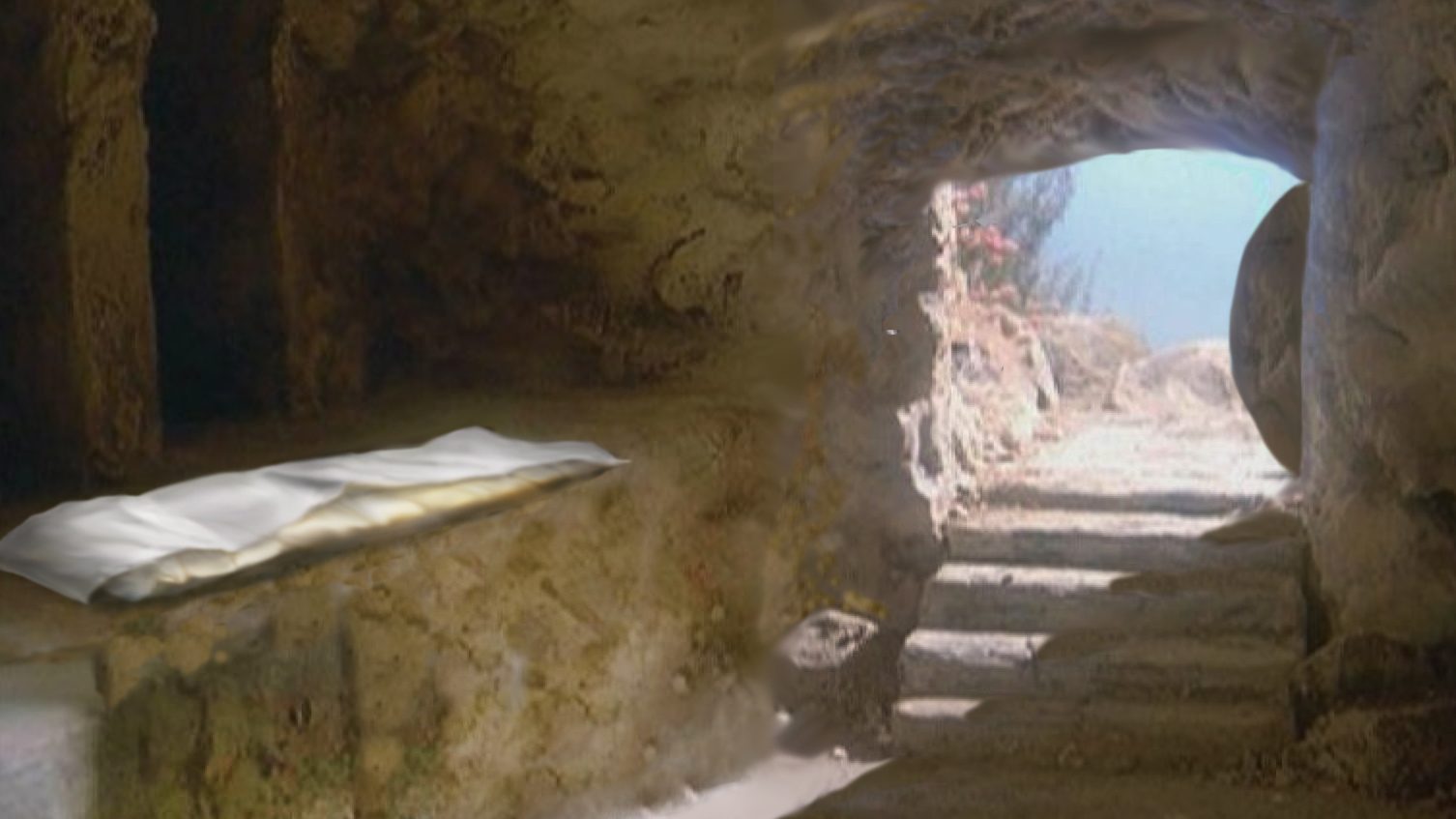
Today is the glorious feast of the Holy Resurrection; a feast of elevation, of victory over sin and death. Christ is resurrected, the door to the grave is opened, the angels brought the luminous good news of life and the apostles were strengthened and inspired by the appearance of the risen Savior. The wonderous Resurrection of Our Lord Jesus Christ gave mankind the heavenly grace to rise from Golgotha, to conquer death and to inherit eternal life. We are encouraged by that confidence and strengthened in the face of tribulation and sorrow, in the horrible reality of death, having the firm belief that Christ is risen, he has restored life, brought mankind out of the darkness of sin and evil, and established reconciliation between man and God. “God gave us eternal life, and this life is in his Son”, says the Apostle (1 John 5:11). The Resurrection of Christ opened the bright path of blessed life, hope, love, peace and solidarity. Straying from this life-giving path spreads death and destruction instead of resurrection, condemnation instead of salvation, and turns life into a vortex of hatred and division, full of evil trials and dangers.

Beloved, last year our people, like the Savior, suffered a crucifixion again. Thousands of our loving sons died in the hellish furnace of war while passing through a suffering of Golgotha, and we lost a significant part of Artsakh, our native homeland. Both before the war and in the post-war period, the commitment to love and solidarity and the way of life according to God’s messages, was not steadfast in our lives. The divisions and the sowing of hatred, the spirit of intolerance, and the continuing political upheavals have put our country and people in danger of new disturbances and decline, overshadowing noble ideas of devotion and patriotism. Also, the unanswered concerns for the security of the homeland, the lack of a vision for life in the homeland, and disappointment and frustration, have clouded our future hopes with the darkness of uncertainty. No circumstance, no goal, nothing can justify the division and weakening of the nation and the homeland, the scattering of our flock, the violation of our national and spiritual values and ancestral heritage, the immoralization and uprooting of the new generation from the national identity, and the degradation of the nation’s dignity and honor. 

Our crucifixion will not be crowned with the life-giving power of the resurrection if there is delay in taking the necessary actions to overcome the crisis of difficult political, economic, and social problems, while we remain in the cave of death. Resurrection does not take place through reprehensible hatred and enmity, division and destruction, but through love, mutual respect, common purpose, love of homeland, and shared commitment to overcoming hardships and difficulties together. The life of our people in the homeland and in the diaspora is waiting for an immediate relief of sorrows, emergence from suffering, and victorious resurrection. 

Dear ones, the light of Christ’s salvation and resurrection, radiates through the virtue of making sacrifices; sacrifices for one another, and sacrifices for the love of our entire nation. It is in this light that we turn away from selfishness and turn toward godliness and that we cast off deadly conduct and turn toward the life-giving God, that actions which cause suffering are replaced by the deeds of the resurrected life, leading towards salvation and eternity. Bringing our country and people out of the plagues and raising the life of Artsakh from ruins, the revival of the Armenians and the homeland are imperative commitments that must be taken up byall the sons and daughters of the nation, political parties, and in particular the authorities, with the greatest responsibility. These patriotic efforts will be adorned, be crowned with success through the commitment to save the statehood from a fatal situation, by giving up personal ambitions, and prioritizing the interests of the state and the nation. In this spirit, we must bring to a victorious destination our cherished aspirations for the restoration of our painful losses, the protection of our national rights, and the universal recognition of the Armenian Genocide.

Beloved faithful, Christ has risen to bring us the power to renew our souls, our lives. Let us not despair or be discouraged by the trials that surround us. Let us remain strong in the faith of the resurrection. Let us live the miracle of the resurrection in our country and in life. Let us stay in our native cradle with warm aspirations to avoid emigration from the homeland and to strengthen our statehood. With the help of the Lord, we will overcome the bitterness and disasters of our lives, and achieve the realization of our hopes and visions, the creation of a resurrected new life.

On this soul-stirring day, let us pray that the blessings and grace of our Lord and Savior be spread through the hearts of the people, bringing peace and prosperity to the world, wisdom to the state officials in their responsibility to harmonize and stabilize the state and public life, leading to prosperity. Let us pray for the health of our children wounded in the war, the return of the prisoners of war, the missing, the souls of our fallen heroes, and the dead from the pandemic; with the consolation of the words of our Lord Jesus Christ. “I am the resurrection, the life. He that believes in me, though he were dead, yet shall he live” (John 11:25). May the hopeful news of Easter grant the power of realizing the shared dream of a safe, prosperous homeland to our people all over the world. Let the skies of our national-ecclesiastical life be adorned with the dawn of the Resurrection, and may our homeland, Armenia and Artsakh, remain peaceful and secure, and our people be strong in faith, with love and unity, today and forever. Amen.

Christ is risen from the dead,
Blessed is the Resurrection of Christ