God Knows And So We Pray

Passages: Isaiah 54:1-13; 1 Tim. 1:1-11; John 2:1-11

In the name of the Father, Son and Holy Spirit, Amen!

“The poorest children in the world are those whose parents gave them nothing but money.” When we pray, when we open our hearts to God, should we tell him what we want? If we do, do we share with God what we want in hopes that God will give us what we pray for? Many of us often wonder why God does not answer us the way we want to be answered – why doesn’t God just give us what we want?
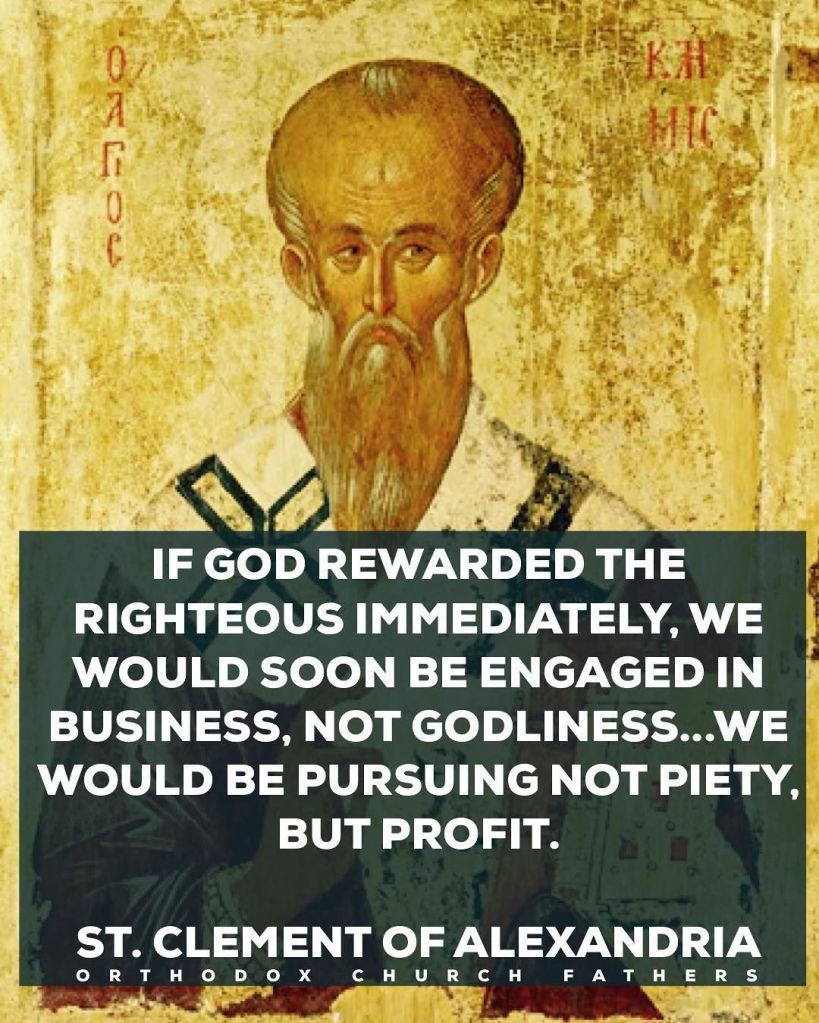
“If God rewarded us immediately the way we wanted, then we would be engaged in business not Godliness…pursuing profit and not piety” – St. Clement of Alexandria. In other words, my dear brothers and sisters, if God gave us what we wanted, when we want it then we would truly be impoverished similar to how if our parents only gave us money rather, then give us the tools, skills and abilities to face life’s challenges. Our relationship would be merely a transaction rather, then communion. Additionally, as the proverb states, “give a man a fish, they eat for the day, teach a man to fish, they will eat their entire life.” It is the same with our faith!

As children of God, we understand and we believe that God knows our needs and our necessities, our wants, our likes, our dislikes, even more than we could ever understand or articulate. Therefore, why even pray in such a manner? Why ask God for anything if he already knows what we need? In today’s Gospel we read the story of Christ Jesus turning the water into wine. And we love this story of Jesus miraculously making delicious wine at a wedding party. Not only do we see and read of what Christ did for his first miracle, according to the Gospel of John, but we also see how he was almost hesitant in helping at all and yet, listened to his mother, St. Mary’s, request. However my dears, something we often overlook, or maybe never thought of, is that Jesus knows, from the very beginning, that the wine is finished. Christ is aware of what is happening in the same way, that God the Father, Son and Holy Spirit know what is happening in our lives and what we need. And it isn’t St. Mary’s pestering Jesus that changes his mind, nor is it that Jesus was waiting for someone to ask – rather, it is the trust that we see that St. Mary has in Christ Jesus knowing that God will provide, God will bless and bless with not what is merely needed but with something even better. We in fact see St. Mary praying to God – in the same way we must pray.

When we pray, we don’t pray a list or present a proposal in anticipation for what we ask. God is not Santa Claus nor is He a businessman. But rather when we pray, we confess, we open ourselves and we express our emptiness and inabilities, our challenges and our goals. But we do so not out of hopelessness or defeat but with hope, trust, love and faith that God will give us exactly what we need in order to heal, to grow, to eat, to drink, to believe, to be wealthy in faith.
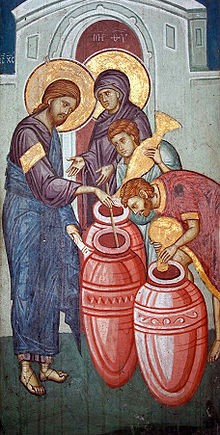
A trust that God will fill our emptiness not with something as plain as water, but rather, with something as satiating, and miraculous as wine. If our trust and faith in God was only evident when we get what we want, we would be truly poor in our faith. We would be like a child whose parents only give them money but never teach them about the value of work, care, dedication. We would, as the saint teaches, only come to God when we had business. We would eat for the moment but starve the rest of our lives.

However, God’s love for each of us wants much more than the momentary satisfaction of a full stomach. God’s love for us is to be always blessed and always fulfilled. This begins when we come into communion with Him through Christ Jesus. As St. Paul says, “Christ Jesus [is] our hope” (v.1). That is why the priest every Sunday lifts up the chalice with the body and blood of Christ and says, “this is life, hope, resurrection, forgiveness and remission of sins.” This is how we begin our communion with God; this is how and why we pray; this is how we trust God to turn our water into wine.

Therefore, yes, we must pray and ask God for His guidance. We must come to God and open the depths of our hearts because through humble prayer we remain in communion with God. So let us always come to God with the same trust and hope that St. Mary came to Christ Jesus at the Wedding in Cana. Let us believe when we pray that God will equip us with everything we need, more than we could ever understand. Let us pray that God will bless us with everything that will enrich our faith and never leave us impoverished and poor. So that we, together, can grow in communion with Him and together learn how to always glorify our Father in Heaven, with His Son, Christ Jesus and the Holy Spirit, Amen!

True Success

Passages: Hebrews 12:18-27; Luke 1:39-56

In the name Father, Son and Holy Spirit, Amen!

If someone was to see us and say we’re so successful or so lucky because of all of our accomplishments, how would we respond? Perhaps we would thank them for their compliment; Some of us may even say it’s just a matter of hard work and dedication; Other’s still might say, we are very blessed to have been so fortunate. Regardless of our initial response, we all would know that even with some luck the truth is our success lays in how much effort we invested and what kind of sacrifices we made to succeed in our work. An athlete invests time in working out and eating properly – sacrificing leisure and sweets.

A student invests time in carefully studying and preparing for their exams sacrificing social life. A doctor invests time in learning about his or her patient’s needs in order to properly diagnose them, sacrificing personal rest. A lawyer invests time to learn the case of their client, sacrificing personal time and peace. The proverbial image of an iceberg comes to mind as we think of how little is seen above the surface of the water, when so much more lays beneath the surface.

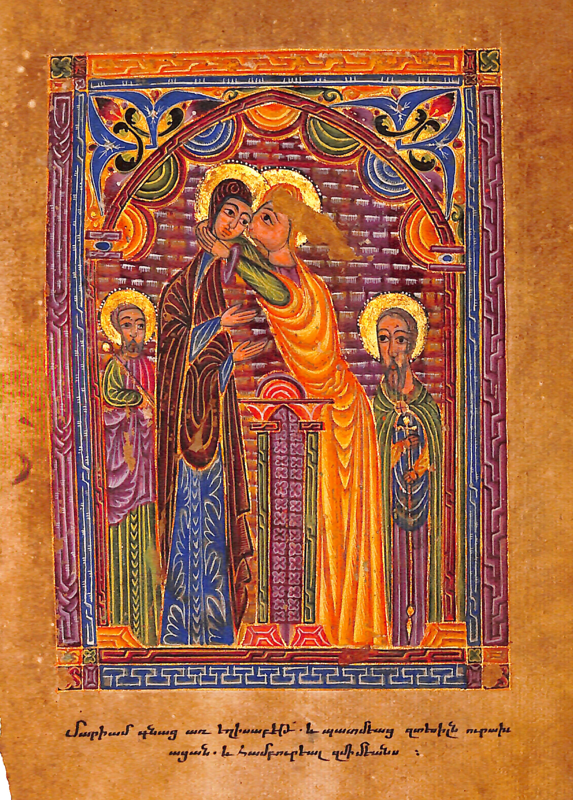
In the Gospel today, we encounter this kind of conversation with St. Mary, the Mother of God and with St. Elizabeth, the mother of St. John. St. Elizabeth proclaims to Mary, “Blessed are you among woman, and blessed is the fruit of your womb!” (v. 43) St. Mary responds with, “My soul magnifies the Lord, and my spirit rejoices in God my Savior, for he has regarded the low estate of his handmaiden (vv. 47-48). In other words, Elizabeth says “you are such a blessed woman” and St. Mary immediately responds with I am only blessed because I have put my trust in God. How many of us, like Mary, would give credit to God for what we have achieved in life? Yes, perhaps we would say things like “by the grace of God” or “Park Astudzo”, yet, as St. Mary does, how many of us would give credit only to God?

My dear brothers and sisters, today’s Gospel is not teaching us to give credit to God for our hard work and sacrifice. Rather, what we are being called to is an understanding that our true blessing and success comes when we place our trust in God not only in words but through action. A few years ago, while talking to some of the counselors up at Hye Camp I was asked if I had ever seen God? I began telling stories of amazing things I have been blessed to see serving in ministry – whether in hospitals, in prisons, or even the lives of parishioners. And I was asked the question, “why can’t we see those same things as it would really help with our faith?” As I thought about the why, I quickly began to understand even for me, my trust in God didn’t begin after witnessing how God is working in people’s lives but rather, I began witnessing those things when I trusted in God.

Even in the case of my own “ministry success” or in goals we set to achieve in life, yes, we are the ones who do the work but in truth it is God who guides us, gives us patience and keeps us going – God blesses the world through us. Because the truth is that God is in our lives always regardless of how much or little we believe or see. However, only when we begin to invest time and effort into our faith, only then do we in fact see God’s presence in our lives. Only then do other’s see God through us. We don’t do it to gain favor with God. Something that is often misunderstood and criticized by our brothers from the Protestant Churches is that we as Orthodox Christian’s believe that we must work for our salvation. No my dears! Christ Jesus, through his birth, life, death and resurrection has already saved each of us. Rather, we work because we have been saved through Christ. We invest time in our faith, we pray, we confess, we repent, we love, we hope, we forgive, we donate, we show mercy, we defend, we lift up, we stand up, we teach, we volunteer, we sing, we do Badarak, etc. we put our faith into action because God already did all this and more for us. God put His love into action!

So when we begin to live in the same way, when we begin to imitate Christ as St. Paul teaches us, then like St. Mary we understand that we are truly blessed and we are truly successful, we are magnified and begin to see God only because God is in us. With our mouths we pray to God and with our hands God works through us. Therefore my dears, if we truly want to be successful, if we truly want to see God’s presence and be blessed, let us begin by trusting God not by words alone but also through our actions. Let us understand that the more we give to God, the more we will receive back. May we understand that we are only truly blessed when we allow God to bless others through us. And by blessing each other, by putting our trust and hope in God, we glorify God the Father, Son and Holy Spirit eternally, Amen!

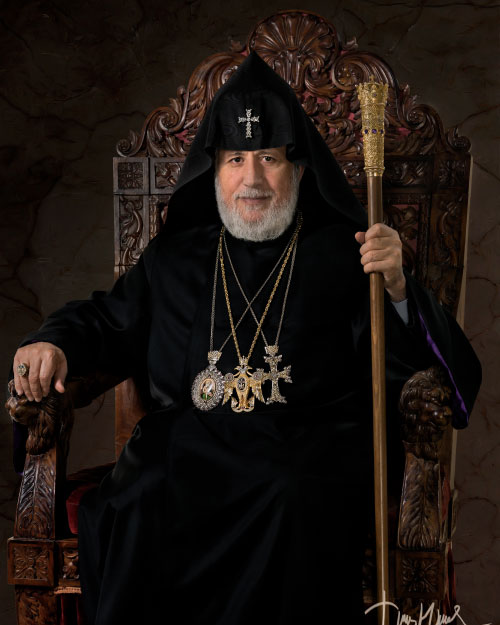
Christmas 2021 Message of His Holiness – English

THE MESSAGE OF HIS HOLINESS KAREKIN II SUPREME PATRIARCH AND CATHOLICOS OF ALL ARMENIANS ON THE FEAST OF THE HOLY NATIVITY AND THEOPHANY OF OUR LORD JESUS CHRIST (Mother See of Holy Etchmiadzin, 06 January 2021)

In the name of the Father, the Son and the Holy Spirit, Amen.
“The true light, which enlightens everyone, 
was coming into the world.”
(John 1: 9).

Beloved Sons and Daughters in the homeland and diaspora,

On the feast of the Nativity and Epiphany of our Lord Jesus Christ, with a prayerful spirit, united in our holy churches, we bless the newborn Savior. On this blessed day of Christmas, the true Light emanated from the manger of Bethlehem to enlighten the souls of humanity. “The true light, which enlightens everyone, was coming into the world,” says the Evangelist.

Like the Evangelist, the hymnologist compares the Nativity of the Son of God, incarnated for the salvation of the world, to the origin of the sun, and says: “Arose from the Father to enlighten the creatures, the Sun of Righteousness, Lord, glory be to You” (Hymn of the Nativity). The Son of God came to dispel the darkness of sin and death, to lead mankind to its Creator. From the humble cave of the Savior’s Nativity radiated the dawn of spiritual renewal, a spiritual power.

From the day Jesus was born, he was persecuted. The Savior and His family became refugees from His birthplace when Herod, wanting His death, organized the massacre of children; believing that He had killed the newborn Son of God and defeated Him. But the real victory was Christ’s, who through the glorious victory of the resurrection crowned the path of suffering by His saving mission. Going through all the hardships, the Lord brought hope to the fallen man and salvation to mankind, immersed in the darkness of iniquity and idolatry. Throughout history, “Herods” have caused disaster, destruction, and misery to mankind; they have wielded opposition and enmity under the influence of evil; alongside progressive achievements there has been poverty, oppression and injustice. Even today, people, burdened with sins, turn away from God, the world is plagued by political intrigues, the materialism that leads to polarisation has taken over societies, and justice with truth have become relative rather than absolute values. In this contradictory and troubled world, Jesus Christ rises as the Sun of Righteousness, the true Light to illuminate humanity’s way through life.

Beloved ones, the miraculous birth of Christ is a source of hope and consolation for our heartbroken people, especially during these grievous days, when we consider that our lives have also not been free from destructive mistakes and sins. Necessary vigilance was not shown in the face of the threats of an unstable peace and war, the interests of the homeland and the people were subordinated to individual aspirations and goals. God-rejecting spirit and alien ideologies and habits permeated our society. Our lives were not far from the lies, insults, intolerance, hatred and enmity that were spreading and continue to spread in various ways, dividing us, drying up the love of Christ in us. And the Gospel testifies: “Every kingdom divided against itself is laid waste, and no city or house divided against itself will stand” (Matt. 12:25). The catastrophic consequences of the Artsakh war have overwhelmed the souls of the sons and daughters of our nation with feelings of despair, anxiety and uncertainty. The loss of a large part Artsakh, the martyrdom of our heroic sons, the pain and grief of tens of thousands of displaced brothers and sisters in dire need of shelter and material supplies, of thousands of soldiers wounded, in captivity and missing, have plunged our national life in the homeland and diaspora into the grip of a gloomy night. It is in this darkness, in this nightmarish reality, that the Sun of Justice shines brightly today, to illuminate our national life and homeland, to provide healing to the wounded soul of my nation with its warming power.

Dear faithful, relying on the endless love and the grace of salvation of the incarnate Son of God, we have overcome the sufferings of wars, disasters, despair, and had victories in our lives over the centuries. These days our faith is alive with the same confidence. We are able to strengthen and enrich our homeland once again and turn a new awakening of our life into reality by uniting the potential and efforts of Armenians around the world, with a joint and harmonious society of Armenia and Artsakh, a developed economy, science, and education, and a highly efficient army equipped at its best. As in the alarming days of the war, our hearts must beat with the love of the homeland, our thoughts and cherished feelings must be tied to the sacred soil of the homeland. Every commitment and every sacrifice is needed to keep the stability of the national life, to not lead the country into dangers, to overcome the existing crises, and to stop the catastrophe of emigration. Let us stand strong in the face of the lethal test for our nation and people with hope and faith; girded with the life-giving power of the Lord; let us gain strength to rise from disasters, to dispel this heavy darkness that is forced upon us with heavenly support, and to illumine the new horizons of our lives.

On this soul-renewing day of the Nativity and Epiphany, let us ask so that that we may go towards the realization of our aspirations, relying on the grace of God’s salvation and the crowning of the victory of our just rights. Let us pray that the vault of our national life will be illuminated with the heralding light of Christmas, that the Armenian church will eternally be enhanced through the dedicated and fruitful ministry of our clergy and the committed life of our faithful people, so that Armenia may be filled with the love and hope of the incarnate Savior. May the Lord grant peace to the entire world, to the souls of the people, and keep in peace and safety our country – Armenia and Artsakh, and to grant a prosperous life to the Armenian people all over the world, today, always, forever. Amen.

Christ is born and revealed,
Great news for you and for us!

Solid Foundation In How We Act!

Passages:  Isaiah 40:18-31; Hebrews 4:16-5:10, Luke 18:9-14

In the name of the Father, Son and Holy Spirit, Amen!

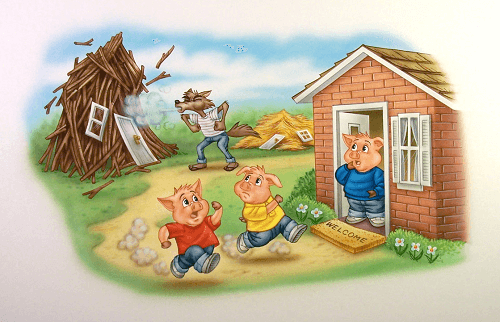
Once upon a time, there were three little pigs. When it came time for them to leave their homes, their mother told them, “whatever you do, do it to the best of your abilities.” And so, the first little pig built his house out of straw because it was the easiest; the second little pig built his house out of sticks because it was quick; and the third little pig, took the longest and worked the hardest by building his house out of brick.

We all know the continuation of this childhood story of how the big bad wolf came and he huffed and puffed and blew down the house down of the 2 little pigs. But try as he might, the wolf was never able to blow down the house of the third little pig. Though this is meant to be a children’s story, there is an underlying biblical message that we must take away, especially as we prepare to end this calendar year.

I have spoken several times in the past of how 2020 has been a year of trial and opportunity, of loss and reevaluation, of pain and of gain. The pandemic, coupled with the war in Armenia, and with all the problems of fear and isolation has devastated many of us. Yet, we have spent more time in prayer, time with our families, assessed the importance of our mental and physical health and time management. In 1 Thessalonians 5:18-22 St. Paul teaches us to, “Rejoice always, pray constantly, give thanks in all circumstances; for this is the will of God in Christ Jesus for you…to hold fast to what is good, abstain from every form of evil.” This year truly has tested us in how we hold fast to what is good because with all things considered, it has been too easy for us this year to have lost hope, to have lived in fear and with concern; we have worried, been filled with anger and depression and we have been lost and unsure. Yet, Christ calls us to remain hopeful in God the Father through our faith, to continue to pray, to repent, to read our scriptures, to talk to our priest, to light a candle, to take a moment and refocus and to use our energy to bring goodness into this world through our actions and decisions through our faith.

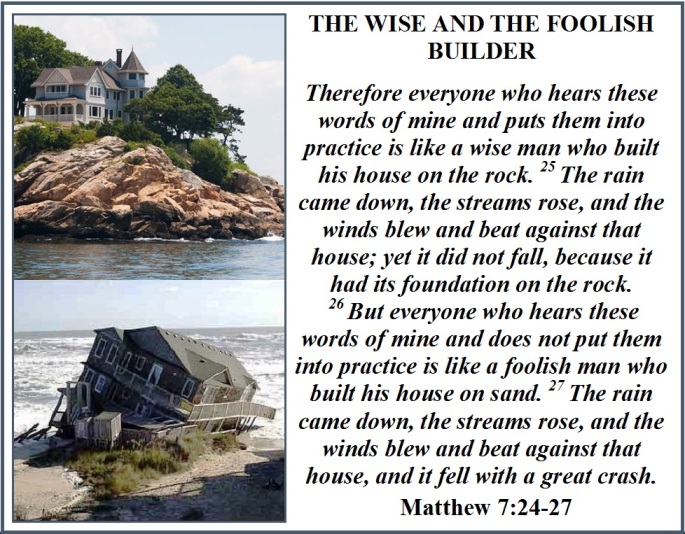
This does not take away, negate or even ignore all the pain and loss around us but rather, it protects us by illuminating our hearts and minds. For “Every one then who hears these words of mine and does them will be like a wise man who built his house upon the rock;and the rain fell, and the floods came, and the winds blew and beat upon that house, but it did not fall, because it had been founded on the rock. And every one who hears these words of mine and does not do them will be like a foolish man who built his house upon the sand; and the rain fell, and the floods came, and the winds blew and beat against that house, and it fell; and great was the fall of it.” (Matthew 7:24-27 RSV) My dears, when we hear the word of God and live by it, it is like building our house out of brick. No matter how much the wolf huffs and puffs, our house remains unshaken. Regardless of the rains, winds, floods and destruction around us, our foundation of who we are remains strong. But if we ignore the teachings of God or if we turn away and never even learn our Heavenly Father’s teachings, then even from the smallest gust of wind or slightest rain, our house will come crashing down and we will be exposed to true devastation.

In the Gospel today, the parable of the Pharisee and Tax-collector is often understood as not being arrogant like the Pharisee but we must be humble like that tax-collector who is lifted up by God. And while this is true, humility should not be confused with hopelessness. Too often have I heard, that the world is beyond saving or how many times have we thought that “we are such sinners, that not even God can save us”?

When we repent and come to God, we must have trust, hope and love in our heart. We must accept that yes, we are sinners and the world is full of evil and we are weak and in need of healing, but that healing my dears, comes only from learning the Word of God, living by His Commandments and creating for us a home with God as our foundation. So that when we fail, when the world huffs and puffs, when war, sickness, famine, job loss, confusion, pain, death occur, we will remain strong in the love of God.

My dear brothers and sisters, remain prayerful, learn the teachings of God by reading scripture and attending Bible Studies, asking questions, come to Church, confess our sins, place trust in God and do good. During this holiday season, we decorate our homes with lights and garlands; let us also remember to adorn our souls with the light of God, because our faith illuminates our eyes to the beauty of Gods hope and love. And as we sing songs of a white Christmas, let us ask God to cleanse us and make us as white as snow, as the Psalmist prays, “Purge me with hyssop, and I shall be clean; wash me, and I shall be whiter than snow.Fill me with joy and gladness…” (Ps. 51:7-8 RSV) In all our choices let us remain merciful, kind, forgiving, compassionate and faithful towards ourselves and one another. And the grace of the Holy Spirit, will bring peace, health, hope and love into our lives and into the lives of our loved ones forever and ever, Amen!

Depart With Christ!

Passages: Isaiah 37:14-38; 2 Thessalonians 1:1-12; Luke 14:12-24

In the name of the Father, Son, and Holy Spirit, Amen!

Now that Thanksgiving is over and the final month of this year is upon us, most of us, if not everyone, is preparing for the Christmas season. Whether people around us are saying Merry Christmas or Happy Holidays, everywhere we are seeing and hearing decorations, lights, the occasional snowfall and the cheerful music. Especially with everything that has been going on this year, even those

who may not like Christmas music or cheesy Hallmark Christmas movies, even they are looking to be lifted up. Songs like “Joy to the World” or “God Rest Ye Merry Gentleman” and countless more all speak about the blessings we hope for in this season. Blessings like charity, mercy, hope, love, joy, and peace are things everyone is striving to feel and see more of, as we conclude this chapter. As Christian’s things such as charity, mercy, hope, love, joy, and peace are not only things we say are needed in this world through these seasonal songs but we understand they are what is needed to be done by us as the work of God in this world everyday. We read about them in the Bible or our priest preaches about how we must be more merciful, loving, hopeful and charitable. We read and know that Christ Jesus is known as the Prince of Peace, who through His Divine birth, ministry, passion, death and resurrection gave all humanity peace.

From the beginning of Christ’s ministry we see His words of love and peace both through His life and His teachings found in scripture, such as in the sermon of the Mount  – “Blessed are the peacemakers…” (Matt. 5) Christ’s teachings continue to echo not just in the text of the Bible but also throughout the life of the Church, such as in the Divine Liturgy here – the Badarak, through our prayers and hymns. One of the most repeated blessings in all our services and the first words uttered by a newly ordained priest are? Khaghaghootyoon Amenetsoon Peace be unto all. (Խաղաղութիւն ամենեցուն) The reason for this is because the Badarak, which we celebrate in all the ancient Church’s, is not a symbol or theatrical interpretation of the Bible but rather, in Badarak, just like in the Bible, God is physically present and here with us in this moment, not only in the Body and Blood but also through the words spoken and hymns sung and it is God the Son, Christ Jesus who is revealed to us and who is blessing us with his Peace. In this moment, just as we read in the moments of scripture, Christ is here, actively still teaching us about charity, love, hope, joy and peace.

However, we also read in scripture how repeatedly those who listened to Jesus teach or witnessed His miracles often walked away, forgot, maybe even ignored His teachings. In Matthew 26:75 we read, St Peter, who loved Christ, denied Jesus 3 times and “Peter remembered the saying of Jesus, ‘Before the cock crows, you will deny me three times.’ And he went out and wept bitterly.” Even Peter forgot! Therefore, let us ask, especially now with the option of watching Badarak from home, perhaps in our pajamas or while having coffee, or even if we do gather physically in the Church – when this is all over, when the doors of the Church are locked and the priest takes off his vestments and when the live stream is over, how many of us forget, ignore, or walk away from the teachings we are listening to right now? How many of us are paying attention? The same way when the Christmas season is over, and we take down the trees and decorations, we forget those well-wishes and songs of hope and joy. How often do we forget the peace and hope of God when Church service is over?

At the conclusion of all the services the priest’s final blessing is “Depart in Peace.” What does this mean? Drive safe, enjoy the coffee, have a good week? My dears, to “depart in peace”, to have “peace upon us”, to sing about all these blessings means we are called to take Christ, who is here now, with us everywhere. The words “depart in peace” in fact mean depart with Christ. Don’t leave faith behind; Don’t forget or ignore what we heard, ate, prayed and experienced here; Don’t forget to do the same out there because my dears, our Christian faith is not ancient hymns or beautiful music. Nor is it moment of symbolic remembrance or a show. Badarak doesn’t end with the service here. Our faith and the blessings/teachings we receive from the very mouth of God are the life we live as Christ in the rest of the world around us. This means that when Christ through today’s Gospel message is teaching us about this grand banquet to which we are all invited to, what He is directing us to understand is, it’s not about eating or receiving to our pleasure while here in Church but rather, it is about being fed and then going out and feeding others.

For this reason St. Paul teaches us, “We are bound to give thanks to God always for you, brethren, as is fitting, because your faith is growing abundantly, and the love of every one of you for one another is increasing.” (v.3) In other words, by actively participating and understanding Badarak, we are giving thanks to God for all his continual blessings. That is why we call it the Eucharist – from the Greek eukharistia (ευχαριστία), which means thanksgiving.

And through giving thanks our faith grows and our love for one another must grow in a way that we then take the blessings we have received here and fill the rest of this world with that hope, love, joy, care, charity, mercy and peace – all those things that we want but often simply forget to do. That is why the prayers of the priest continually say, feed us Lord with your body and blood, and by it cleanse us from our sins and make it a source for virtuous deeds because my dear brothers and sisters, our Christian faith does not stop here but rather, begins here in the presence of God and we depart with Him into this world to do good.

Yes, now that we are in this moment of Christmas preparations, let us not forget nor limit those words of hope, peace and well-wishes to only this season. Let us not think about spreading Christmas blessings but rather, Christ’s blessings in this world. Let us give thanks to the Lord who has fed us, and let us feed others. Let us never forget that we are in the presence of God right now and it is with Him that we depart from this place. And if through our human error we forget and we sin, let us remember that we are always welcome back to Him through repentance, love and mercy. Charity, mercy, hope, love, joy, and peace are things everyone is striving to feel and see more of today – may the world see it and receive it from God through us. Amen!

Quality Fruit

Passages: Isaiah 36.22-37.11; 1 Thessalonians 4.1-11; Luke 13.1-9

In the name of Father, Son and Holy Spirit, Amen!

As the days draw to an end and this year comes to a close, many of us are asking where did 2020 go? This year brought with it many things. At first, we may remember, as the pandemic began, people commented on how being forced to stay home and with family has been a blessing because we’ve had to stay home and therefore, had the opportunity to actually have breakfast with our children or dinner with our spouses.

Additionally, working from home or not having to get stuck in traffic made people more productive. However, this quite quickly changed as the pandemic, then elections, mask or no mask arguments, the war in Armenia, the endless zoom meetings and staying at home orders made this year feel like a broken record, groundhog day, a cycle where minutes, hours, days and weeks blended into one long drawn out story. And almost everyone now says the same thing, “I can’t wait for this year to be over, but I don’t know how it got here in the first place.” This lapse of reality with our time forced many of us to reevaluate it – What do we do with our days, how do we spend our hours? How productive are we really at home or even in the work place? One thing I hear often now a day is, “I don’t have any sense of time. Working from home, I don’t feel like I’m really working or even working enough.”

We all want to be productive even if sometimes we procrastinate or we are lazy. But because we have to and also because we want to, we work, we write, we create, we go for walks, we answer texts and phone calls, we build relationships, we read books, we draw or paint, etc. – we are productive to the best of our abilities. Yet, I am curious, if we ever think about the quality of our productivity vs. the quantity? As a society, we are all wired to think quantitatively – the more the better. The more friends I have on social media, the more popular I am. The more texts I get or invitations I receive, the more liked I am. The more books I read or write, or the more pictures I draw, the more museums I visit, etc. the smarter I am. The more I produce at work, the more money I’ll have, and the better will my life be. However, we rarely question the quality of those friendships, the depth of the conversations through those texts, the information or beauty of the books and artwork or the lasting impact we have through the money we gain through our work.

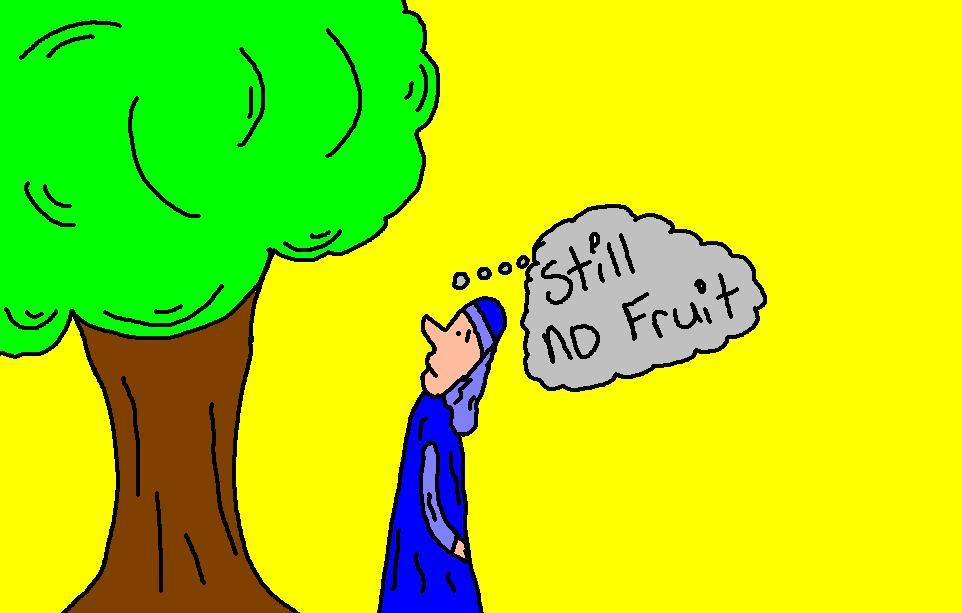
Yes, it is important to produce and create, especially as Christian’s we try to be like our Heavenly Father who is a creator, arareech (արարիչ), above all other things. Yet, do we give thought to the quality of what we produce? In the Gospel today, Christ tells us a parable about a fig tree that does not produce fruit and the master of the garden tells the vinedresser, or gardener, cut the tree down for it is pointless to have a tree that produces no fruit. The vinedresser, who we as Christian’s interpret to be Jesus, argues to give the tree another chance and he will tend to it to help it produce fruit.

However, the parable does not speak about what kind of fruit or even how much fruit. Therefore, what does it mean, as a Christian to produce fruit? We spoke earlier of examples of productivity as people – money, work, relationships, education, etc. Yet, as Christian’s, as the children of God, do these reflect the kind of fruits we must produce? We are told to love one another therefore, we have relationships; We are told to learn, study, ask questions, therefore, we have education; We are told not to be lazy, to contribute to society, to use our talents and abilities and to give of what we have, therefore, we work and the money we have, we take care of ourselves, our families or we donate to Church or other wonderful organizations. Yet, is this what it means to produce fruits as Christian’s?

My dear brothers and sisters, it is not about the quantity of what we do or create rather, the quality. Meaning whatever we create, whatever we donate, whatever we learn, study or cultivate ultimately, as Christian’s, must come from a spirit of repentance. That is why the first part of today’s Gospel, Christ speaks of the importance of repenting. But repentance is not about a feeling of regret. Repentance does not mean we feel bad about our actions, choices, decisions, etc. To repent means to change or turn. In Armenian, repentance is ab-ashkhar-oo-tyoon (ապաշխարութիւն). Ab is the first part of the word, which is rooted in turning. Ashkhar is the second part of the word, which depending on the spelling changes it’s meaning and the way it is spelled in the word for repentance it means tears or sorrow. Yes, to repent means to turn but it does not mean to turn away from our choices but rather, as Armenian Christian’s when we are called to repent, we are called to “turn away from sorrow” towards God. This is to teach us, my dears, that as children of God, we must realize that though we are free to choose how we live, how we work, what we do, how we produce, etc. if we choose to do all this through faith, then we are turning away from sorrow and placing our gaze upon God our Father who blesses us and our fruits.

In other words, we are using our love out of faith rather than an obligation; We are creating out of hope, and not for some type of acknowledgment. That is why St. Paul says, “For you know what instructions we gave you through the Lord Jesus… for you yourselves have been taught by God to love one another… But we exhort you, brethren, to do so more and more, to aspire to live quietly, to mind your own affairs, and to work with your hands, as we charged you” (1 Thessalonians 1:11) In other words, yes, produce, live, create, write, build, enjoy life because life has been given as a gift to us to enjoy, but don’t do it because someone told you or because life requires it. Do it because it is a natural product of our faith to love, to hope, to create, to foster, etc. It is not about how many friends we have, or how much money we gain, or anything else which is defined by quantity but ratherthe quality. And what gives our choices, our fruits quality, is God.

Therefore, if we want to judge as to how productive we have been this year, let us begin by asking, how many times did we live from God this year? How much scripture did we read and use what we read to live our life? How many questions did we ask our priest about our faith and did we try to grow from it? How many times did we thank God for the blessings we do have, even through the struggles of this year? How many times did we really turn away from sorrow and towards God, repent, confess, and strive to grow in our faith? Even if we did it once as long as we did it with repentance, than we produced real fruits through Christ Jesus and we are called to do it more and more.

My dears, yes, this year is coming to an end, just as every day the sun rises and sets. What we do throughout the day is important but let us not forget in what spirit we do those things. When we wake up in the morning, rather then reach out to grab our phones first, let us reach out to God in prayer. Let us turn away from sorrow and towards God so that we will produce fruits of quality through us. Let us do this by asking questions, praying, reading, connecting and loving. And through a life of repentance we will produce fruits, which glorify God our Father, the Son and the Holy Spirit, Amen!
What Does God Want From Us?

Passages: Isaiah 36:1-9; 1 Thessalonians 1:1-10; Luke 12:13-31

In the name of the Father, Son and Holy Spirit, Amen!
There is an old joke that says, “If you want to make God laugh, tell Him your plans.” It’s a simple jest at our plans and desires vs. God’s divine plan for our lives. And though it is meant to be humorous, it holds within it a very important misunderstood lesson. Repeatedly, throughout the Holy Scriptures and from the writings of our Church Father’s we are taught to trust God and pray for His Divine will in our lives. The first prayer many of us learn as children, is the Lord’s Prayer, where we boldly state, “your will be done on heaven and on earth.” (Matthew 6:9-13; Luke 11:1 RSV). This however, poses 2 questions – 1) What is the will of God? and 2) what about our own free will?

Often times we may argue that God’s will is impossible to know or it’s not practical. What about my free will and my ability to choose and plan a life how I see fit? I want us to think about our parents. What did our parents want from us? And for those who are parents, what do you want from you children? Nothing! Parent’s do not want anything from their children, rather, they want something for them. Parents want their children to succeed; Parents want their children to set goals and achieve those goals with little to no pain or failure; Parents want their children to grow up in love, with joy, and to mature as understanding and hope-filled individuals no matter where they go, what they do or when they get there. Yet, the reality is, that no matter how much we may love our children, that does not mean our children will listen to us, or understand that we want what is best for them, nor does it guarantee they will return the love; Life is full of failures, and sickness, and brokenness. However, we as parents, each of our parents, as best as they could, continued to love us, tend and care for us and want what is best for us in hopes that one day we, their children, would understand. Our parent’s will was and is not something from us but for us. How much more is this true for the Divine will of our Heavenly Father?

Knowing God’s will is not about knowing what God wants from us but instead, to know the will of God is to understand what it is that He wants for us. What God wants for us is the same and more as what our earthly parent’s want – for us to succeed, to grow, to mature, to learn, to plan and achieve. To have a life full of love, hope, faith – free of failure, sickness and pain; To have a life in communion with Him. However, because we live in this sinful world, because we choose to turn our back on God’s love by ignoring or never even learning His commandments and teachings – we fail, we fall into despair, we get sick, we misunderstand what God’s will is and ultimately, we break communion with Him. The reason this is so important to understand is because it ultimately also answers the question of our own free will.

We are free to choose to accept God’s love and we are free to plan out our life. God isn’t going to decide whether or not we should be a lawyer, priest, writer or actor. We are free to plan our life, to set goals and to work towards them. What we often make the mistake of thinking or doing is cheapening our Christian faith by limiting God’s will to daily tasks – how does God want me to vote? who does God want me to be when I grow up? How does God want me to dress? Does God want me to be a vegetarian? Why doesn’t God help me pass this math test? Why isn’t God helping me get into college or get the promotion I want? Why doesn’t God feed the beggars in the streets? Etc. When we think these are what defines God’s will, we miss the grand picture, the purpose of what our faith is. God gives us each day but we decide what to do with the moments in those days!

My dears, just like in our physical life, it is the same with our spiritual life, we are free to choose. We are free to choose the life we live and recognizing God’s will is in how we live that life as His children. Meaning do we understand what God wants for us? Do we understand that whether we fail in this life or succeed, God’s love remains the same for us? Do we recognize that our worth is not in what we achieve but in how much we love each other in return? It is not that God doesn’t care about our success but it is up to us to work for it. It is not that God doesn’t care about the beggar in the street, but it is up to us to care also. That is why today’s Gospel reading has 2 parts. One is about a man who gathers up all his crops and stores them and builds bigger containers to store more. However, God comes to him and tells him, “‘You fool! This very night your life is being demanded of you. And the things you have prepared, whose will they be?’ So it is with those who store up treasures for themselves but are not rich toward God.’”

And the second part continues as Christ instructs us not to worry about our lives because God will take care of us, “And do not keep striving for what you are to eat and what you are to drink, and do not keep worrying. For it is the nations of the world that strive after all these things, and your Father knows that you need them. Instead, strive for his kingdom, and these things will be given to you as well.” In other words, all those things we think that give value to our life, all those titles, and earthly successes, only serve us here and they hold no eternal value. It’s not that we shouldn’t work hard to achieve our goals here in this life, but rather, what are we choosing to truly value? Our we valuing our lives only or do we value everyone’s life? Is our diploma valuable or the education and experience we get along the way? Is our house valuable, or the place we feel safe, where we gather with friends and family and build memories? Is our Church building valuable, or the home where we come together to learn about the Word of God? Is our age valuable, or the life we have lived in the time we have had? Is our money valuable, or the ability to help others in need? Is the soil we stand on valuable, or are the history, the song, the food, and the people?

My dears, the old joke about making God laugh truly is a misunderstanding because it misses the fact that God is always joyful when we are with Him. He is joyful not because He get something from us, but because He sees us acknowledging and recognizing His love and will for us. And when we recognize it we begin living it by loving and caring for what is truly valuable. Therefore, yes, let us tell God our plans, tell Him all we want to achieve and how grateful we are for His love and guidance in this life. Because when we are telling God our plans, we are in communion with Him, we are speaking with Him, which means we are praying to Him.

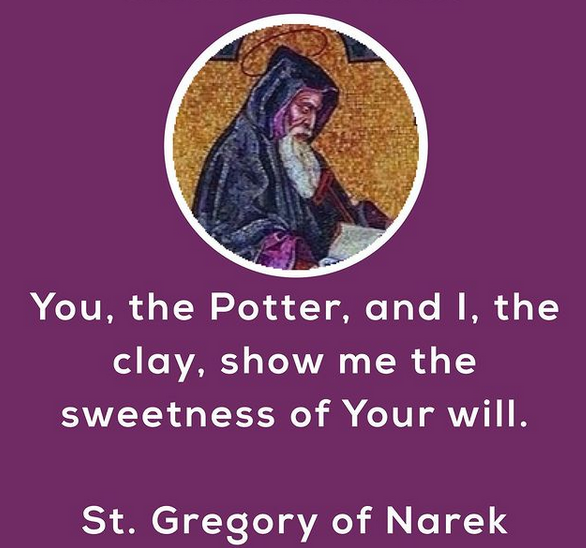
Therefore, as St. Paul teaches, let us pray unceasingly (1Thess. 5:17) and our loving Heavenly Father, like a loving parent will smile and embrace us in His love. In the beautiful words of St. Gregory of Narek, Lord “You are the potter, and I, the clay, show me the sweetness of Your will. Amen!”

“Weep With Those Who Weep”

Sermon for Sunday November 15, 2020

In the name of the Father, Son and Holy Spirit, Amen!

50, 110, 324, 480, 537, 744, 800, 900, 1200, 2300! Everyday more and more names are added to the list. Everyday more news of loss and pain are adding to our lists. Over 40 days of war, and of news that this week utterly broke our spirits, our hearts and our hope. I don’t think there is an Armenian that was not affected by the news of surrender this past week. Even for us diaspora Armenians, or for us who may be part Armenian, or perhaps we are not at all Armenian but as children of God our hearts ache at the reality of loss. The reality that again Genocide has and continues to take place, that our Churches and graves are desecrated and burned – and the world remains blind, stupid and silent.

Some will say that we may have lost but for 40 days we did our best, our brave soldiers fought continually to turn away the enemy and our loss could have been even greater. Perhaps yes, it is true that 3 million people fought against 100 million and somehow still remain. Perhaps yes, out-manned and outgunned, the children of Hayk and Tigran, Trdat and Gregory, the children of Van, Mush, Erzrum, Gumri, Abaran and Yerevan, together fought off tyranny and terrorism of Turkey and Azerbaijan fueled by the indifference of this world. Perhaps there is some silver lining to what has taken place.

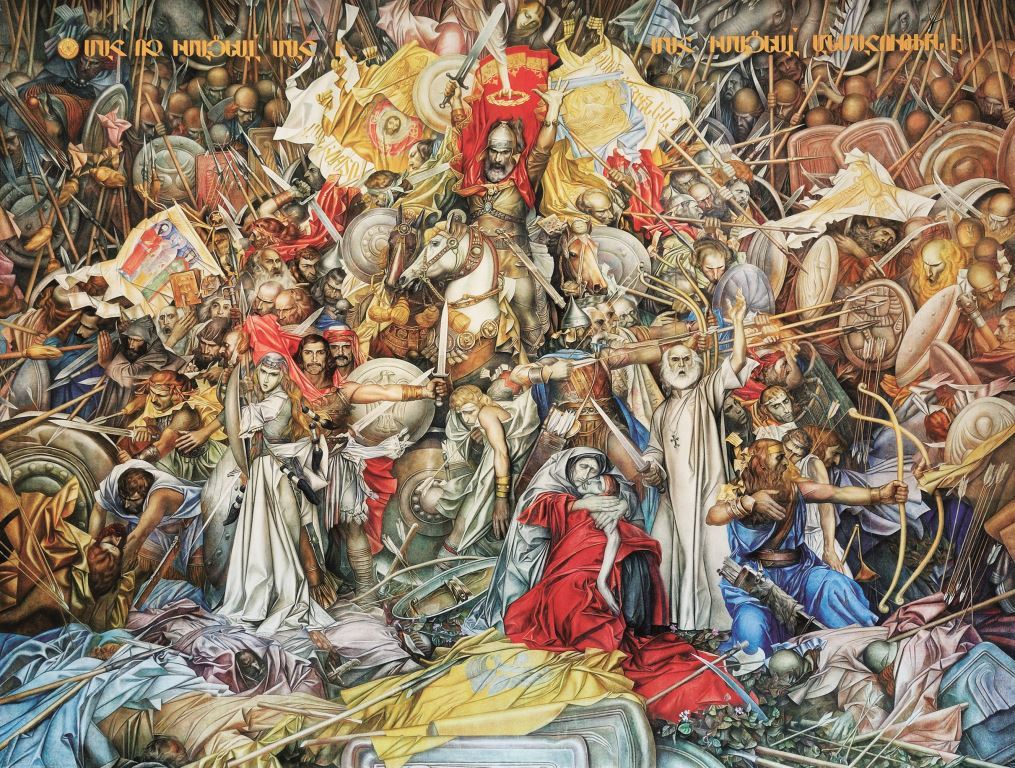
Yes, perhaps, my dears. Perhaps just as we hear the stories of St. Vartan and his soldiers likewise, in a few hundred years our children’s grandchildren will hear stories of our brave soldiers and how this moment changed the course of history for the Armenian people. However, today we lost and we have to acknowledge that loss.

We need to accept that yes, we were defeated on the battlefield. But we need to accept that it is not our soldiers who failed us, who lost our fight. We need to accept that it is not merely the leaders, generals and strategists who lost the war, rather, we all lost this war.

My dear brothers and sisters what pains me is that today, we continue to lose. Seeing what is taking place in Armenia, what is taking place on social media between Armenians, between Christian brothers and sisters – our unity is losing to disillusion; our love is losing to hate; our hope is losing to hopelessness; our justice is losing to injustice; humility is losing to arrogance. We are still losing because we choose to point fingers and say to each other that it is his fault or her fault that we lost. My dears, we are all at fault when we lose. As St. Paul says, “if one part of the body suffers, every part suffers with it” (1 Corinthians 12:26) Yes, today our body is suffering and in order for healing to take place we must acknowledge that pain rather, than lie or blame, point fingers adding fuel to the flame.

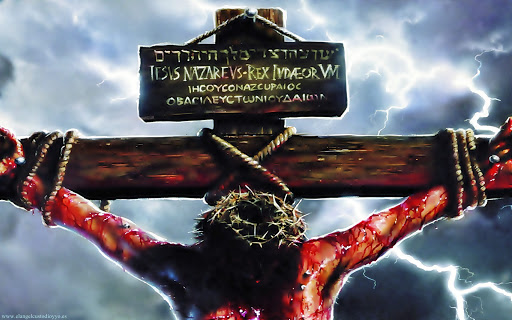
My dears, to suffer defeat, loss and death is a reality. No one can avoid it, not on the battlefield of war, not even on the path of our life. We all suffer, we all lose, we all die. In fact, Christ Jesus suffered. Christ was beaten, whipped, spat on, humiliated and crushed. Christ Jesus, hung on the cross, as His blood poured down into the earth. And on that cross, He gave up His spirit and bowed His head. My dear brothers and sisters, today we bow our heads. Today, the blood of our soldiers has poured into the earth and so yes, today we bow our heads in pain, in defeat and in our loss. But we know that we do not bow eternally because the story of the Cross does not end with Christ defeated. Our faith is in a risen Christ Jesus, as St. Paul teaches. Jesus Christ took on death and destroyed it. His love trampled down death by death and gives life to us and all who believe. A belief not in life without loss or suffering; a belief not in life without pain or disappointment; rather, a belief that life continues after we go through pain and suffering with our trust placed in God.

St. Paul tells us to “weep with those who weep” – meaning in our times of loss yes, we must acknowledge our pain. We lost therefore, let us mourn. However, we are still here, we still live. We lived after 105 years, we live today and we shall live tomorrow but we must live with hope, with love, with unity. We must live with wisdom and understanding to work as one body for the glory of God, who raises us up from the ashes. We must understand that the answer is not at the end of a pointed finger but in our open palms and hearts to do work. We must live not with fear of loss but with a spirit and vision of hope in the future.

Therefore, my dear brothers and sisters, yes, let us mourn. Let us cry as we embrace each other. Let us remember those who died and remember everything we have lost. But let us not put our hope in the material or in words of false promises. Let us not look to the world for justice, or blame each other for why this happened. Rather, we must place our hope in God; speak words of prayers and working together create a vision of hope, light, and life. Whether we are suffering because of war, or suffering because of our battles in life, God hears our prayers, God our Father embraces us and suffers with us; and God will raise us up to life. Amen!

Trust the Unknown to the Known!

Passages: Isaiah 24.1-12; Ephesians 5.15-33; Luke 8.49-56

In the name of the Father, Son and Holy Spirit, Amen!
As a priest, I have often said, one of the most difficult things do is prepare a weekly or sometimes even daily sermon. What makes it so difficult is because each of us here listening, are at a different place in our life. Some of us are heavily concerned with the elections; some of us are concerned with the pandemic; some of us are concerned about what the war in Armenia and Artsakh; we are concerned about the unknown future. Still there are some who are concerned about how they will pay their bills, put food on the table, buy warm clothes or even where they will sleep tonight. Therefore, if we are all in such different places in our life, and even more so with our faith, what kind of message would speak to each of us?

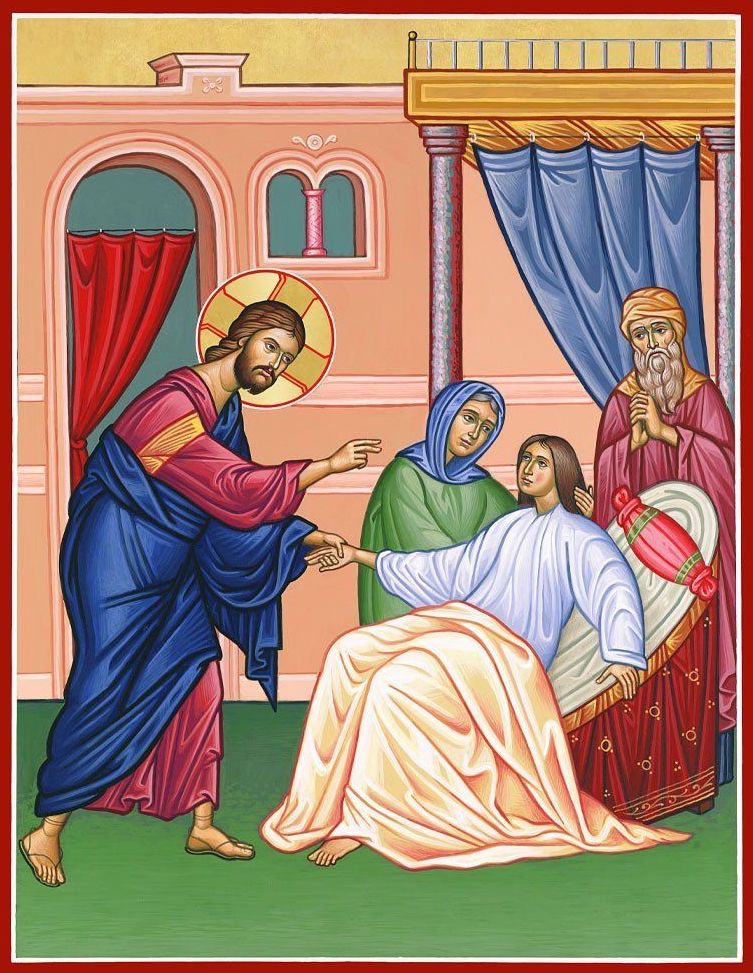
Repeatedly, in scripture we see how Christ Jesus answers the questions or concerns of his listeners in very strange ways. He teaches something that seems confusing or bizarre when you hear it. A man asks Jesus, “Good teacher, what must I do to inherit the Kingdom of Heaven? Jesus said to him, “Why do you call me good? No one is good but God alone.” (Mark 10:17-18) That’s not what was asked. Or in the Gospel today we read that Christ goes into the home of a man whose daughter has just died and rather then console or express sympathy, Jesus says “Do not weep; for she is not dead but sleeping.” (v. 52) Clearly everyone sees the girl is dead. Everyone is weeping, the family is in pain, the lifeless body of the girl is laying there and yet, Jesus tells them something that on the surface level makes no sense.

Of course we as Christian’s know that Jesus is saying this because he is about to bring the child back to life. We know that Jesus Christ is God and He will heal all those who are sick, who are blind, deaf, and paralyzed. We know that Jesus raised Lazarus also from the dead. We know that ultimately, Christ Himself rose from the dead promising life to us who believe. We know all these stories, we know what Jesus does, and yet, when it comes to our own lives we don’t know or we choose not to know that Jesus Christ continues to do the same for us. We act like those who hear what Jesus says and think what nonsense – “And they laughed at him, knowing that she was dead.”(v. 53) Or we listen but because we don’t hear the answer we want, we say, “see the Church or our faith doesn’t cover relevant issues. It’s just a personal belief full of metaphorical stories or philosophies.”

My dear brothers and sisters, regardless of what kind of concerns we have in life or how strong our faith is in that life, the Church, Holy Scriptures, Christ Jesus is not going to tell us who to vote for, or what to do when there is a pandemic or war. The Word of God is not a manual, it is not Basic Instructions Before Leaving Earth (BIBLE). Nor is it a textbook, or a Hallmark card we open to feel good. The Holy Church is not a place we gather to only hear stories of a good teacher and what He did in the past. What we learn here, what is preached through the Scriptures in Church is about our communion and purpose with God in this world. God knows and sees what the world is like; He knows each of our own needs and necessities; He knows where in life we are and what it is that we need to keep moving forward.

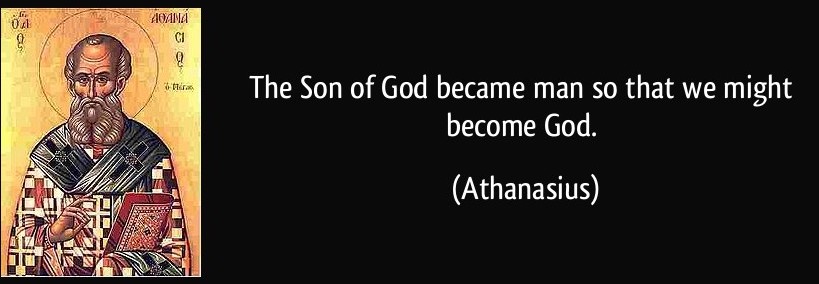
The prophet Isaiah writes, “…The earth dries up and withers, the world languishes and withers; the heavens languish together with the earth…”(v.4) God knows about our pandemic, about the election, about the war; God knows who is struggling with drugs, alcohol, or other addictions; God knows who is stressed about paying bills or keeping the house warm. God knows and He will take care of us – just as He brought back the child, because God is actively present in our lives. What we must do, what the Word of God through the Church teaches us to do is to trust God by remaining Holy, remaining in communion with Him. St. Paul says, “Be careful then how you live, not as unwise people but as wise, making the most of the time, because the days are evil. So do not be foolish, but understand what the will of the Lord is.” (vv. 15-17) That is why St. Athanasius, one of our beloved Church Father’s, teaches “God became man so that man would become God” (On the Incarnation)

My dears, the will of God is for us to be perfect like Him. Not perfect according to our standards but as God defines it, which means to love, to create, and to build. The will of our Lord is for us to repent from our life of sin and live a life not void of concerns but full of God’s presence. This is done by how we live this life. What kind of decisions, what kind of response or reaction we have to the negativity or struggles of our life. Are we hopeless or do we knowingly believe God will help us? Do we hold our tongues or lash out on social media or in person? Do we judge the beggars in the street that come to our car or do we see Christ in that person? Do we use our bodies for momentary pleasure and deny the true beauty we are created for or do we honor the Divine image we are created in and the Spirit that lives in us through our baptisms? Are we being loving in the face of hatred and forgiving in times of misunderstanding?

These are the practical things that we live by and by which God keeps us Holy when we live according to His will. It is in these practical ways by which we are like Christ Jesus who says, “I have done these things, so that you would do likewise.” (John 13:15) And when we are like Christ, we remain Holy by being in communion with God, who ultimately works through us to make this world a better place. Our faith is not a feeling nor is it a philosophy. It is living and active reality that acknowledges the evils of this world and combats it in practical ways. Yes, my dears, the world is full of evil. Not of horned goats and pitchforked devils like we see in movies. But real evil such as mistrust, carelessness, abuse, lust, laziness, exploitation, arrogance and ignorance; A world that is full of unknowns. However, my dears, I was reminded of a beautiful quote this week from the saintly person, which I recommend you read about, Corrie Ten Boom, who says, “Never be afraid to trust an unknown future to a known God”.

My dears, we know God. We know God the Father, Son and Holy Spirit. We know Him as a living God who works through us. Not a God from stories about some teacher from the past or from a history book but from the Living Word about a Living God that continues to heal, answer, feed, and resurrect us. We must therefore, always turn to God through the life we live, and He will makes us Holy through His Grace. Place real trust in Him, who will answer us either through sermons, quiet prayers, the reading of scripture or countless other ways, when we remain in communion with Him through the Body and Blood of our Lord Jesus Christ. His grace, is the source of virtuous deeds in the life we live. A life that must reflect Christ Jesus; a life that must shine light in darkness and be salt to the world. A life that at all times must give glory to Father, Son and Holy Spirit, Amen!