Family!

Passages: Isaiah 22:15-24; Ephesians 1:1-14; Luke 8:17-21

In the name of the Father, Son and Holy Spirit, Amen!
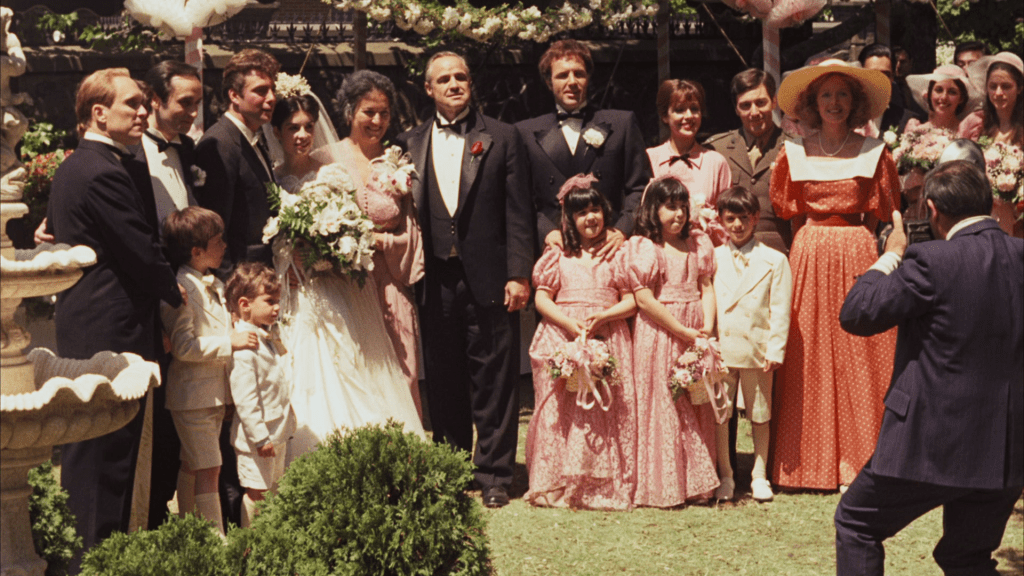
In 1972, Francis Coppola, inspired by a novel, created and directed what is now considered to be one of the classic mafia movies of all times. I am of course speaking about “The Godfather”, a story about a syndicate Italian Mafiosi family. Apart from the main story line of the glorified gangster

criminal life of early mafias in the United States, there was a very deep and spiritual message in the Godfather series. Family! There is nothing more sacred or important then family. To quote, the character of Don Michael Corleone, “The only wealth in this world is children. More than all the money, power on Earth, you are my treasure.” (The Godfather Part III, 1990) And something we come to quickly realize in the movie is that color, blood, geography, age or professions are not the only definitions of family. We know this to be true everywhere, not just in movies.

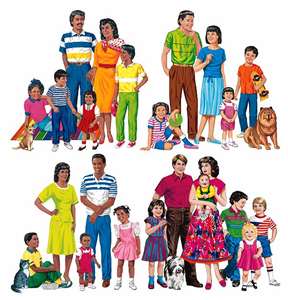
There are countless types of families. There are the traditional families, with parents, children and extended families. There are broken families, through divorce, death or other misfortune. There are families from same cultures such as Armenians, Italians, Irish, Germans, etc. There are mixed families, Black and White, Asian and Caucasian, etc. There are also families of mixed individuals. As the simple yet, deep statement says, a “Brother from another mother and sister from another mister.” For those who may not have understood this reference, it means individuals who are so close and love each other so much, that though they share a different biological family, they consider their relationship to be equal to a blood relation. If you go to Armenia, Greece, Italy, anywhere in the Middle East or if you speak to people from these traditional cultures, the way we speak about our cousins, friends and close people is “my brother or my sister”. As my Indian friend once said, “all the adults in India are my Aunties or Uncles”. As Christian’s here in the Church, we refer to each other as spiritual brothers and sisters. We all call God, our Father, and the Church, our mother. We are anointed and baptized as “adopted children of God” as St. Paul teaches. Yes, families come in all shapes and sizes, formed and deformed, mixed or broken, physical or spiritual, therefore, if there are so many different variations of family, what is the unifying or underlying bond, which should define family for us?
In the Gospel of Luke, while Jesus is preaching to his audience, we read, “Then his mother and his brothers came to him, but they could not reach him for the crowd. And he was told, “Your mother and your brothers are standing outside, desiring to see you.”But he said to them, “My mother and my brothers are those who hear the word of God and do it.” (v. 20-21) Imagine trying to go see your son, you brother, cousin, sister, Aunt and Uncle, who is famous and is always traveling and people are making appointments to see them. You being a family member would think, you have unlimited access and yet, the response you get seems to be a rejection. Now, we don’t know whether Jesus got up and went to them, or if he let them in, I’d think it is safe to assume that yes he did. However, what Christ here is emphasizing is that family, my family, your family, His family is not only limited to a shared bloodline or even a last name. It is not a skin color, culture or shared experience. Rather, for God the sacred family bond is defined by a unified belief, mentality and action – “those who hear the word of God and do it.”

Much like the Armenian word for family, which is ent-danig (ընտանիք). When we look at the meaning of the word, it is defined as “those under the same roof”. This is not a physical roof but the existential roof. God, is our head, the umbrella or roof that covers over us and under which we are gathered. Or as Christ Jesus says right before his crucifixion,“…How often have I desired to gather your children together as a hen gathers her brood under her wings,…” (Luke 13:34) Again another image of us being covered up and together under God likening the Church to a mother hen protecting her chicks. But it is not just that we share our belief that God is our Father and that we are a family under his roof but additionally, we must live our life with His commandments. As my father always said, as I am sure all of our fathers did, “my roof, my rules.” Same thing goes for God. If we accept and want to be part of the ent-danig (family) of God, we have to accept and live our life accordingly. What does this look like?

“Forgive my trespasses, as we forgive those who trespass against us” (Matt. 6:12-14); “Love your neighbor as yourself”(Mark 12:31); “Do unto other’s, as you would have them do unto you” (Matt. 7:12); “first take the log out of your own eye, and then you will see clearly to take the speck out of your neighbor’s eye.” (Matt. 7:5) etc. Or as Christ more clearly says (John 13:15), “I have set you an example that you should do as I have done for you.”
My dears, we are all family here. The person next to you (in the pew or the person watching the live stream) is your brother and sister; I am your brother. Whether we agree with each other, whether we share the same political views, whether we share the same skin tone or even the same language, each of us here and each of us out there are part of the same family. No not the proverbial family of brothers and sisters from other mothers and misters, but a family from the same Father, God and the same Mother, our Holy Church – we are all family. And if we want to remain part of that family, and be able to gain access to God our Father, if we want to be able to freely come and go into the presence of God – we must also live our life by the teachings of our Heavenly Father and Mother. Or else, we will always remain on the outside; we will always be left out of that covering.

So regardless of what kind of physical family we come from, regardless of if we are Armenian or not, whether we speak the language or not, whether we share blood or not, whether we come from brokenness or wealth, here, under God, we belong to the same family, and family is sacred. Family is more important then any job, wealth, money, etc. and when we realize that we are all family, then we will realize how truly blessed we are in this life. We are brothers and sisters, because God is our Father, and “He destined us in love to be his sons [and daughters] through Jesus Christ…” (Ephesians 1:5) by whom we are made worthy to glorify the Holy Trinity eternally, Amen!
Anointed As Christ

Passages: Isaiah 20:2-21:6; Galatians 4:3-18; Luke 4:14-23

In the name of the Father, Son and the Holy Spirit, Amen!

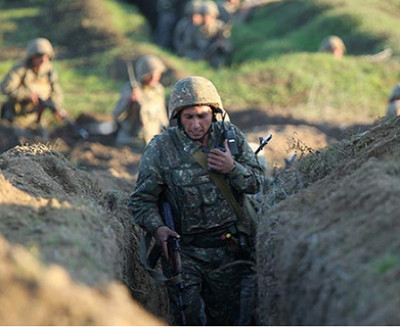
In 2016 of April, the Armenian people, like today, faced a war with Azerbaijan. This war lasted roughly 4 days, during which time many lives on both sides were lost. Along with the loss of life, the countless wounded and injured began there journey of recovery. Some more severe than others, but each one on their own process of rehabilitation. A young soldier, who had lost his leg, began his sessions of therapy, learning to stand and walk again, something we all take for granted. In an interview a

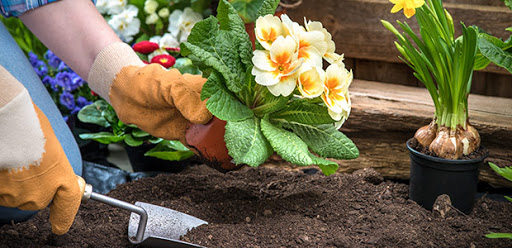
reporter asked him, now that there is another war happening and he being disabled is not able to fight alongside others, what does he fill his day with? The young man answer, “I enjoy planting flowers and watching them grow. There is something special about seeing that which you’ve cared for and tended to go through the process of budding, growing and flourishing.” When asked about the future, he answered, “Before the war, I had many plans, but today whatever I can do I will do.”

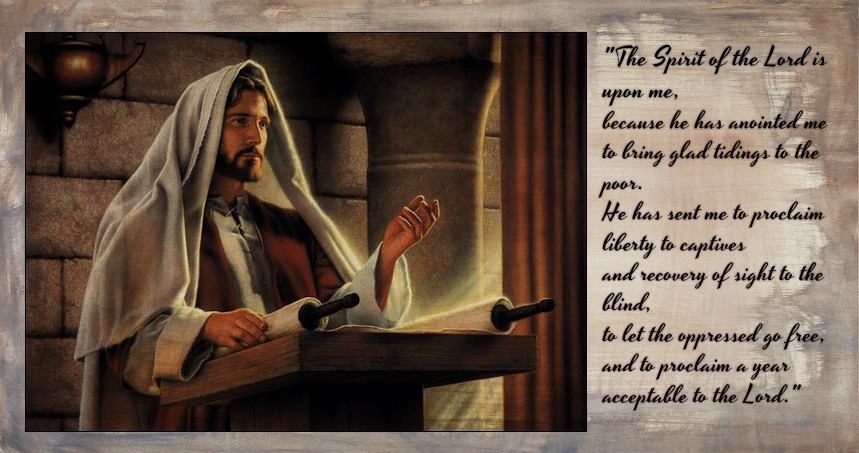
My dears, not many of us know what it is like to live directly in war. Even less of us know what it is like to see death and even personally be disabled by the atrocities of war. Yet, we all know what it means to question and wonder, what will we be able to do, have, and achieve in the future. Especially in times of failure, adversity, and challenge we have all questioned our future. Even if, we have not seen war and we have been blessed to live in a place where we have countless opportunities, we often ask, what can we do, what should we do, and ultimately what’s the point? In the Gospel of Luke today, we read of how Christ Jesus, in the synagogue, read from the scriptures and made an astonishing announcement. He read from Isaiah, “The Spirit of the Lord is upon me, because he has anointed me to preach good news to the poor. He has sent me to proclaim release to the captives and recovering of sight to the blind, to set at liberty those who are oppressed,to proclaim the acceptable year of the Lord.” (vv.18-19) And then Christ Jesus, rightfully of course, declared that those words were fulfilled through Him. He is the anointed one, who must preach, proclaim, heal and set free.

To say that Jesus Christ knew what His future was in this earthly life is obvious because Jesus was born for one purpose – to set us free from sin. Yet, for the rest of us, our future plans are not so concrete, and we don’t know what purpose we have in life, especially, when we face constant failure, devastation, sickness, pain, war and loss. We know by reading scripture, that Jesus Christ came into this world to suffer, die and be raised from the dead – that is what Christ came for. However, my dear brothers and sisters, what we all fail to do, is to understand that when we read scriptures, we not only see Christ’s purpose but also our very own. As Orthodox Christians, we are taught, that when we read scripture, we see God, Father, Son and Holy Spirit – throughout. All the individuals, the events, the history, etc. – from creation to revelation is our story and our communion with God. However, the key is in the details. The prophecy in Isaiah, fulfilled in the person of Jesus Christ, mentions that he was anointed to fulfill His purpose. Just as Jesus was anointed at his baptism and revealed to us as Christ, filled with the power of the Holy Spirit to begin his ministry, guess what? We each likewise, are anointed at our own baptisms.

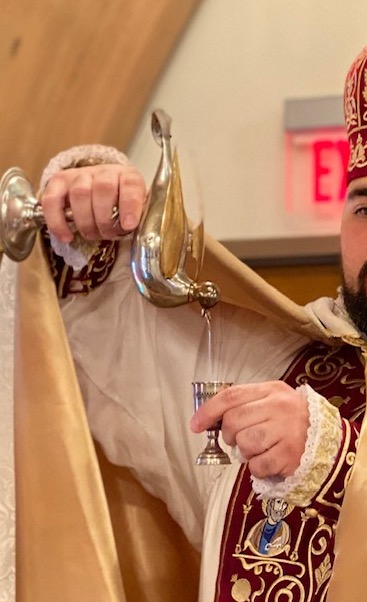
Either as babies or as adults, when we come to the Holy Font and the priest pours that Holy Oil (Myron) out and chrismates our forehead, eyes, ears, nose, mouth, heart, back, hands and feet – we each, become Christ, which literally means anointed. So if we read scriptures in this light, anytime Jesus proclaims that He must do something – we must begin seeing that it is “WE” who are called to do the same. We are called to preach the Gospel with the lives we live, proclaim God’s truth, heal the sick and through Christ Jesus set free. Our purpose in life, whether we are priests, doctors, homemakers, or teachers, cooks, or soldiers, musicians or actors, disabled or able bodied, young or old, male or female, black or white, Armenian or American – every one who believes in Christ Jesus, who has been baptized and anointed by the Holy Spirit is given the same task and purpose.

That is why St. Paul in Galatians teaches, “through God you are no longer a slave but a son, and if a son then an heir. (v.7) [who has received the same Spirit, that came down upon the Jordan at Jesus’ baptism].

All those distinctions we have here in this life, such as jobs, age, geography etc., merely enhance how we fulfill our purpose. As a priest, it’s relatively simple and straightforward; As parent, it is to raise our children with the love and fear of God in their hearts; As a soldier, it is to desire to live in peace and answer the call to defend; As a teacher, it is to educate and foster creativity and beauty in the hearts and minds of your pupils; As an artist, it is to create that beauty to share it with the world; As a lawyer, business owner, accountant, etc. it means to be fair and sound when judging and not taking advantage of people. And if and when we face limitations, when we face pains and sickness and all forms of darkness, it is for each of us to never lose sight of God’s love and light, who continues to light our path.

My dears, we may have plans for the future, and perhaps they will workout, perhaps they may not. Yet, when we realize that our true purpose in life is do what Christ did, then no matter what we achieve or when we achieve it, as long as we answer God’s call each as anointed ones – we will succeed. Just like that brave soldier, we will see the seeds that we have planted throughout our life, bud, grow and flourish. Through the grace of the Holy Spirit, may we always plant good seeds, may we always bring love, healing and hope in our actions and choices into this world. Amen!

Do It Anyway

Passages: Isaiah 19:1-11; Galatians 2:1-10; Mark 12:35-44

In the name of the Father, Son and Holy Spirit, Amen

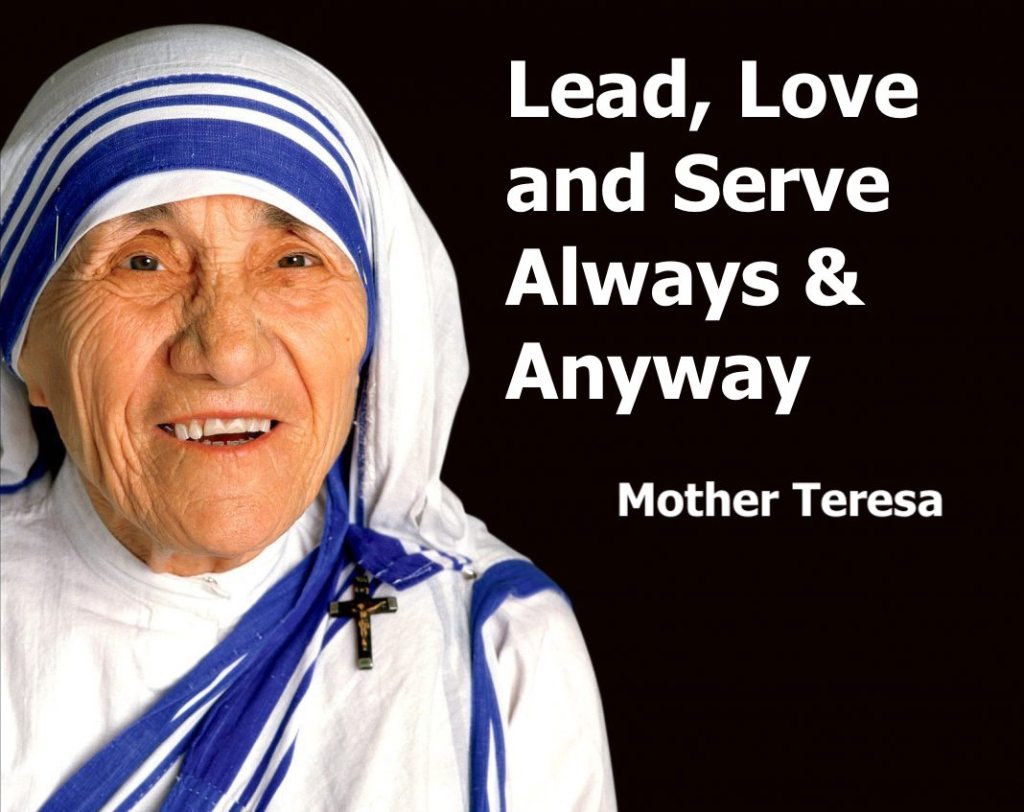
“People are often unreasonable, irrational, and self-centered. Forgive them anyway. If you are kind, people may accuse you of selfish, ulterior motives. Be kind anyway. If you are successful, you will win some unfaithful friends and some genuine enemies. Succeed anyway. If you are honest and sincere people may deceive you. Be honest and sincere anyway. What you spend years creating, others could destroy overnight. Create anyway.

If you find serenity and happiness, some may be jealous. Be happy anyway. The good you do today, will often be forgotten. Do good anyway. Give the best you have, and it will never be enough. Give your best anyway…”

These words, which I am sure many of us have heard, are the words that the saintly Mother Theresa wrote on the wall of a children’s shelter in Calcutta, India. Though she adopted and changed them from the original Kent Keith poem, the prayerful message describe not just her but what she believed that each one of us must do in this world. To forgive, be kind, work hard, be honest and sincere; To create, live joyfully and be good. Not because there is no pain or negativity around us and not even because it will help stop the negativity and pain. Rather, she believed that by doing what is right and good, in spite of all the negativity, it is ultimately a reflection of us. Unlike Mother Theresa, who living in some of the worse conditions in India, we live in the United States where for the majority of us we are blessed with clean water, with shelter and with modern medicine. We have such an abundance of food in our homes that our garbage is full of more food then some of impoverished families in India eat regularly. We have peace on our boarders, and temporary shelters for those who do not have a home. No, life is not perfect and sickness and pain are rampant, yet, with all the blessings that we have how many of us act, live, or even think in the way Mother Theresa calls us to be?

Some will say, she was a saint, and she had a following. My dears, as our Church Father’s say, “every saint has a past and every sinner has a future.” Saints in the Orthodox Church are regular people like you and me who choose every day, with every decision to place their faith in God and use the blessings He has given us to bless others, in spite of the sins, disease, viruses, wars and pains around us. Saints loved when they were hated, they taught when they were persecuted, they created when other’s destroyed around them. Saints give whatever tiny bit they could and God used them to bless others, to teach, to lift and to instruct others. We see this especially clearly in last part of today’s reading, where Jesus uses the widow as an example.

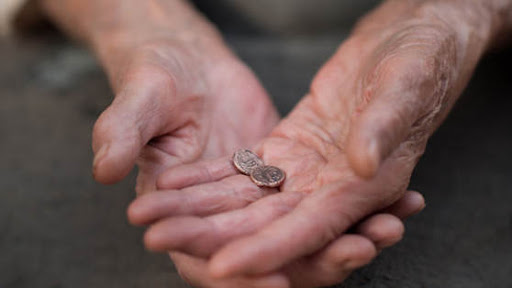
We all know the story of the widow who gave 2 pennies verses all those others who gave out of their abundance. Yet, what many of us fail to realize is that Jesus here is not only speaking about the material or financial giving – but giving of ourselves, a denying of oneself out of love. Because to deny our own selfish desires, deny our comfort, deny our own will and to give all of ourselves to God through love, we learn to reflect Him and bring His love and care into this world regardless of the material pain or loss. The brave soldiers of Armenia and Artsakh this week, just like the countless soldiers from the United States and around the world who answer the call to defend freedom, justice, peace and all good, do so because they understand that despite everything, all the pain and suffering in this world, what their love and good reflect is something and someone much greater then who they are. My dears, we are not all able to take up arms and go to war. And often we may think that we are too small, or our actions will not have the same impact as other’s – perhaps we feel we are not educated enough. Or perhaps we think we’ve already done something, let someone else participate.

My dears, if we think such ways, that we have done enough, we have loved, cared, forgiven, donated, created, repented, etc. enough, then we are not denying ourselves but rather, denying who we are called to be. If we think we are too small or not strong enough, think of the parable of the mustard seed. I personally know of nurses and doctors, here in the United States, who are leaving the comfort of their jobs, and families in order to go and help others. This past week I saw a story of a child, who in Armenia is selling walnuts in the streets in order to send the money he saved to the soldiers – where his brothers and father are fighting. He was able to collect almost 80 thousand dram, roughly $170, as part of his contribution. I know someone in our Chicago community, who has taken out their 401K retirement and has given all of it over to www.himnadram.org. Giving ourselves over to God is about the spirit by which we act, react, listen, etc. When we give ourselves over to God’s Will, meaning we pray, confess and repent our sins, when we read scripture regularly and ask questions to learn, when we use what we have learned to direct our choices, our actions, etc. then God takes us, small or big, educated or not, entitled or not, old or young, takes us and makes us the saints, creates in us the fortitude to do what is right regardless of what is taking place around us.

Sadly, however, too many of us, give to God out of the abundance rather than the whole. We donate when we have something extra. We give but look to see who else is giving and adjust ours accordingly. We come to Church, when there is nothing better to do or we didn’t sleep in. We volunteer our time reluctantly, so that either Der Hayr will stop asking or so that others will not gossip about us. We call Der Hayr only when we get sick, when we have a bone to pick, or to ask questions only when we want to justify our own actions or lack of actions. I remember one day, when I was doing ministry in a prison in New York, an inmate asked me, “Can I sell drugs or prostitutes, if I use the money to support my family or donate a part of it to a Church?” Too often, my dears, we look to God out of the abundance of our time, and out of our desire to justfiy ourselves rather, then give our time and heart fully over to Him. We answer only when it’s convenient but are quick to blame when pain, sickness, war and devastation happens to us.

The beautiful words of Mother Theresa, which is about all of us and for all of us, ends with this “In the end, it is ultimately between you and God. It was never between you and them.” My dear brothers and sisters, be a child of God, love, care, create, do, give, forgive, listen, tend to others not because we are fighting someone or something else, but because it is who we are.

Give everything not because we are expecting a return or because we have extra. Let us not be like those who only do things for show, as Christ teaches about the Pharisees who only love those who love them back. Let us also not think we don’t have anything worth giving, or that we could never be like Mother Theresa or other saints. We are all sanctified through our baptisms and we are all called to be the servants of God in this world. Give everything, always, give yourself out of love. Pray for peace and also be peaceful; Pray for justice, and also act justly; Pray for forgiveness and begin forgiving. Do it anyway, because in the end it is between you and God. A God who loves us all and desires to be in communion with us always, through Christ Jesus, through whom we learn what it means to be like God our Father and to be cleansed by the Holy Spirit, so that no matter what pain, isolation, suffering, war or sickness we see, we will do better anyway, Amen!

Inner Peace During Turmoil

Passages: Isaiah 17:7-14; 2 Corinthians 13:5-13; Mark 11:27-33

In the name of the Father, Son and Holy Spirit, Amen!

This past week, all the children of the Armenian Church and nation across the world have watched earnestly about what is happening overseas. We have seen news of war, news of fighting, news of death coming from Armenia and Artsakh. Living here in the United States, as Americans, our attention this week also greatly focused on the Presidential debate and the

arguments made as to who could govern this country forward in the most prosperous way. Compounded with the ongoing pandemic, the end of summer, flu season, job loss, personal, financial, economic problems as well as, the health and well-being of our social, emotional and spiritual life – we begin to wonder what can be done, how can we cause change and bring positivity, justice, longevity, life, focus and healing to what is taking place?

St. Paul in 2 Corinthians teaches us to “Mend your ways, heed my appeal, agree with one another, live in peace, and the God of love and peace will be with you.” (v.11) Mend our ways – agree with one another. It almost seems to simple what St. Paul is teaching us here, and what does it mean to mend our ways and agree with one another? I don’t agree with everyone around me, how can I live in peace? Or sure, I will try to live in peace but what if my version of peace is not the same as my neighbor’s version of peace or what if, as peaceful as I try to be, others are breaking that peace, so how could I agree with one another?

This morning as I started getting ready for Church, as I have been all week, I turned on the Armenian news and listened to the words of the President of Artsakh, Mr. Arayik Harutyunyan, who spoke about the recent bombing of an Azeri military airport. Though he was proud of his men and the armed forces, he made a very important statement – though the fighting continues on the front lines, I have told my forces to no longer strike into Azerbaijan for the time being because we do not want civilian causalities, we want peace and we know that even the people of Azerbaijan are captive of a totalitarian government. So imagine this leader, who is in an all out war holding back, assessing, understanding that the reality and darkness of war is horrendous for both sides, and though he is able to continue with bombarding, out of a true desire for peace, he is practicing restraint – he is mending his way to agree and live in peace. In essence his words are the words of Christ off of the Cross – Father, forgive them for they no not what they do – these civilians are forced into this war and they don’t know better.

How? How is he able to be so calm and restraint? St. Paul makes it very clear in the previous verse (5), “Examine yourselves, to see whether you are holding to your faith. Test yourselves. Do you not realize that Jesus Christ is in you?” We, and all those who believe and declare that they are children of God, are baptized co-heirs and princes and princess of God All-mighty must always, daily, with each decision, with each word, choice, etc. examine ourselves and see where are we coming from, what and more preciously who is directing us? Are we bloodthirsty, arrogant, vengeful, and are we hateful and spiteful? Are we childish and misinformed? Are we emotional or tired? Or are we open to learn, to listen, to pray, to ask, to understand, to appreciate, to accept our own wrong in order to grow? I spoke about Artsakh and its president’s comments towards a ruthless and barbaric enemy; now compare his words and behavior to both Presidential candidates here in the United States? I don’t care who we each vote for – as a priest I am not going to teach politics – however, we each need to look at our elected officials, chosen by us. Do they reflect us? Additionally, who are we in the case of all these leaders? Are we escalating the negativity or truly wanting peace in our lives? Are we fighting a war in our heads or are we willing to act peacefully?

My dears, just as on a wide platform in both these examples, the same is in our own daily lives. When people hurt us, disagree with us and judge us, how do we behave, comment or react? If we fall on hard times, get sick, feel helpless or alone, how do we behave, comment or react? If we are children of God, if we are Christ’s as we believe we are according to scripture, through our baptisms – then we must begin every day by examining ourselves, by praying, by confessing and repenting of our sinfulness, by coming together with each other in unity and prayer.

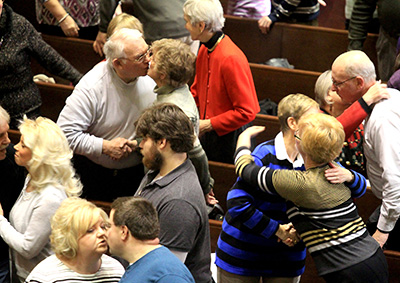
That is why St. Paul ends today’s passage with “Greet one another with a holy kiss.” What Holy Kiss? The voghchuyn ողջոյն the “kiss of peace” which the Armenian Church, along with many other Churches practice every Sunday. Yes, perhaps with the pandemic we can’t physically do the “kiss” however, the beautiful words we declare “Christ among us is revealed – Kristos i mej mer Haytnestav” can still

resonate from our mouths, our hearts, our prayers because Christ is among us and is revealed to us every day, everywhere and every time we live, love, act, behave, repent, pray in peace Christ is revealed through us. That is how we bring healing, love, peace, comfort, focus, life, justice and all positive changes into this world – by beginning with ourselves.

Therefore, my dear brothers and sisters, let us begin our days with self examination and prayer. Wake up and before you even get out of bed, say a short prayer asking for guidance and peace. Open the Scriptures and read what God is saying to us now, so that in our pain, in our darkness, in times of wars, uncertainties and confusion – we will remember this teachings. Let us gather in Church on Sunday and everyday continually praying for peace for each other, praying for peace for our enemy, for those who hate, persecute and despise us. Because by doing so, we will begin to mend our ways, we will begin to learn how to love, and live and agree with those we don’t necessarily agree with. We will learn how to be Christ revealed to the rest of the world who is in dire need of healing. Through the grace of the Holy Spirit and the intercession of our saints, we will have peace!

A Drop of Honey

Passages: Isaiah 14:3-17; 2 Corinthians 10:18-11:10; Mark 10:1-12

In the name of the Father, Son and Holy Spirit, Amen!

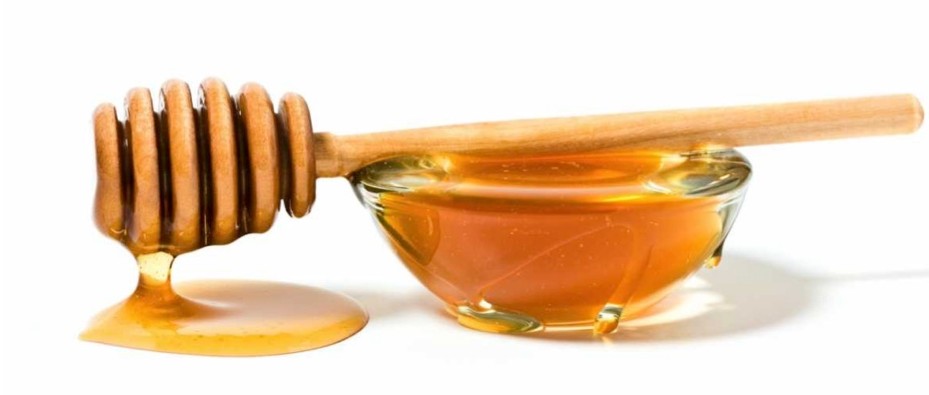
A man owned a grocery store. One day this man was pouring honey from a large container into smaller containers and a drop of honey fell on the floor. At the same time, there was another man with his dog, who was shopping at that store. The dog saw the drop of honey and went to lick it up. The owner of the store saw the dog, became angry and hit the dog over the head. The dog was severally hurt and the owner of the dog saw what the store-owner did and so rushing to the aid of his dog, he attacked the store-owner. In that moment, the son of the store-owner saw his father being attacked by a man and his dog and so he ran to the defense of his father and attacked the man. People, who were passing by, saw what was happening and they one by one, more and more people began going to the defense of each other by attacking each other. Over night civil unrest broke out and men were attacking each other and visa versa. A child in the town saw what was happening around him and he asked his mother, “why are all the men always fighting, people are getting hurt and someone could get killed?” The mother looked at the child unable to answer, because no one knew this all began from a drop of honey.

My dear brothers and sisters, the Pharisees today ask Jesus Christ if divorce is so wrong, why did Moses allow us? However, Jesus’ answer goes far deeper than what they were asking on the surface level because Jesus Christ knew that what the Pharisees were really asking, and what many of us often ask is, “if something is wrong, if something is not proper, like divorce, or suffering, or pain, then why does God allow it?” This is a question many of us struggle with regularly perhaps more this year than ever. In the story of the honey we see that the men were so consumed by vengeance and anger that all they did is attack and attack. They chose to act out, they chose to be violent and the consequence of their anger and furry was the entire town was in turmoil. Much like in the story as is in our daily lives, we neglect to accept our own responsibility, we refuse to converse, we choose not to open our hearts and minds and to love one another – and as a consequence we retaliate. Then we turn and say, why does God allow these things to happen?

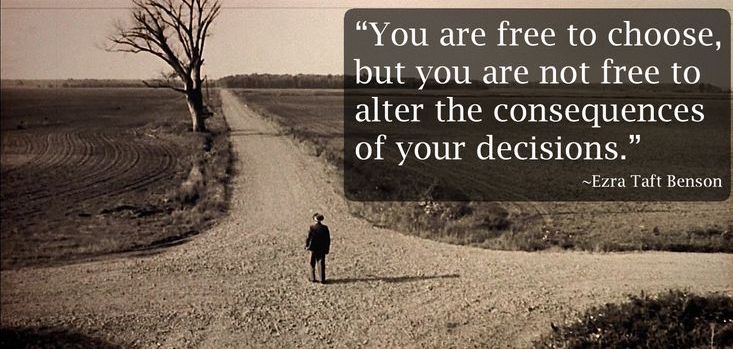
That is why Jesus says us, “For your hardness of heart he [Moses] wrote you this commandment.” (v.5) In other words, God allows such things to happen because we choose to make them happen. God is not an overlord or a puppeteer, pulling our strings; God doesn’t cause floods, or sickness, or murder, or fill our hearts with arrogance; God does not fill our lives with pain, misunderstanding, hatred, prejudice or unrest; God did not create sin within us. We choose to sin, to break communion with God, not just in the Garden of Eden as we read the Adam and Eve narrative but everyday from the moment we open our eyes, go about our days, until the moment we go to sleep – what kind of choices are we making? How do we look at and treat everyone around us? We are given freedom to choose, to act, to decide, to reflect and accordingly our choices and decisions will bring about either good or bad outcomes. And so, when we reflect on why does God allow “bad” things to happen, the simple answer is because God allows us to choose what happens.

It may be a cliché example, but when we see each other in the morning and say “hi how are you?” how much do we care about the person in front of us? When we are conversing with each other on any matter, are we listening to learn, to appreciate, to understand a different viewpoint or merely listening to be able to argue, retaliate and show how the person in front of us is wrong? As we slowly edge towards the elections in November, I see the comments and hateful messages from people to each other, do I jump in and start adding fuel to that fire or do I not get involved and rather look to see how I can be better? We choose to allow good or bad to happen and these are just a few examples in our daily lives my dears where those choices are made.

Now you may say how can my small comment or action change all the world’s negativity? My dears, our choices can change this world. Just like the drop of honey brought unrest to the town in my story, likewise, the smallest act of love and kindness will have an equally as powerful reactions as does our negative actions. If you throw a heavy rock into the water and watch the ripples spreading out, throw in a tiny pebble and you will see how those new ripples change the surface of the water. Every choice we make, every thought, every action has consequences, therefore, what kind of world are we creating and shaping? We speak about our rights but rarely acknowledge our responsibilities. My dears, we have only one right that has been given by God – the right to choose. What we do with that choice is a reflection of our faith or lack there of. Do we choose love or hate? Do we choose to listen or retaliate? Do we choose momentary satisfaction or real happiness and joy? Do we choose revenge or rehabilitation? Do we choose Communion or sin?

Whatever we choose, we must remember that there will be echoes, ripples and consequences from those choices, from the greatest to the smallest actions. Therefore, my dear brothers and sisters, let us take time to reflect every day, every moment, and pray for those choices we will need to make. Allow God to soften our hearts, to open our eyes, ears and mouths to bring glory, love, compassion, healing, forgiveness and blessings into each other’s lives. Let us pray, that God will forgive us of our sinfulness so that we can begin to see His goodness. God allows us to choose what happens in this life, what kind of life are we preparing to create?

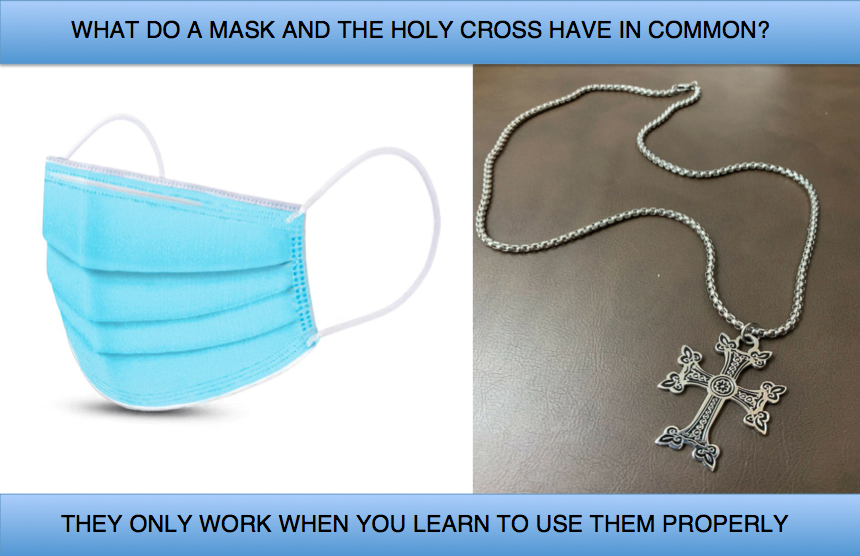
What Do a Mask and the Holy Cross Have in Common?

Feast of the Exultation of the Holy Cross

Passages: Isaiah 49:13-23; Galatians 6:14-18; John 3:13-21

In the name of the Father, Son and Holy Spirit, Amen!

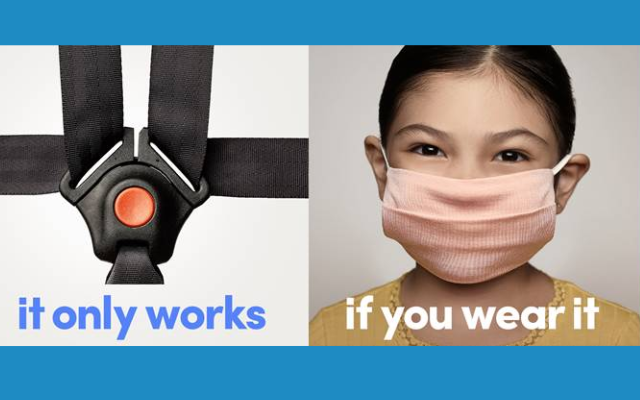
What do a seat belt, a helmet or a mask have in common? They only work when you use them. I am certain all of us have seen on the television, heard on the radio or viewed on social media some version of this advertisement, emphasizing the importance of wearing our face coverings when we go out and about, during this time of the pandemic.

Regardless of our own personal thoughts, the science, the politics, the acceptance or rejection of the mask, having a mask at all times has become a new norm. We never leave the house or car without one, and we keep it on for both protection of others and us. There are also many types but all of them serve the same purpose, some form of protection for the wearer and for those around. Apart from the protection it provides, it also serves as a reminder of what is going on around us, and the difficulties especially of this year. Of course some who see us wearing our protection begin arguing that it doesn’t really work or it’s unnecessary. It’s all a lie made to manipulate people. Then there are those who full heartedly believe that without this protection, they would perish. So I ask you my dears, what does the mask and the Holy Cross have in common? They only work when you use them.

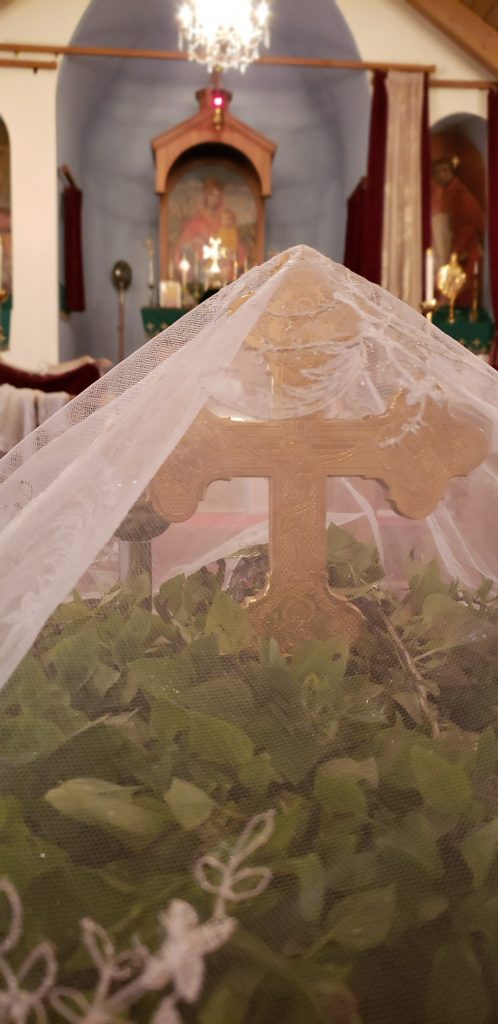
Like a mask, there are many types of crosses, and some people may not agree with us wearing them or keeping them. Crosses make some people uncomfortable, especially those who argue that they are unnecessary or used to manipulate people. As St. Paul says, the cross to many is foolishness and it is pointless. Today, the Armenian Church, along with all the Orthodox Churches in the coming days celebrates the Feast of the Exultation of the Holy Cross. A feast day full of historical stories of how the Holy Cross upon which Christ was crucified was rediscovered and exchanged from one hand to another. However, for us, Armenian Christian’s exulting the Holy Cross is a very natural reality void of politics, opinions and agendas because for us the Holy Cross, upon which Christ was crucified on is not one fueled by history, politics or agendas rather, for us the Holy Cross has always served as a symbol, as a reminder of Christ’s compassion towards the suffering of all humanity. We adorn not just our homes, Churches, offices and other places of habitation with crosses but we also bear a cross around our necks as a continual reminder to us of God’s blessings, and also as a shield and protection against all the difficulties of life we face. We take the words of St. Paul very personally who preaches to the Church of Galatia that “But far be it from me to glory except in the cross of our Lord Jesus Christ, by which the world has been crucified to me, and I to the world.” (v.14)

As Christian’s we use the Cross of Christ not because it has magical powers, not because it serves as some sort of a good luck charm. Let us not forget that prior to Christianity, the Roman Empire used it as a tool to punish and put to death those who broke the law. Therefore, the power of the Cross, what makes the Cross Holy is not within the material or some incantation but rather, the true power of the cross is in Christ Jesus who willingly died upon it for our sake. Our faith is not in the wood or metal but in Christ Jesus who transformed that tool of death into a life. That is what we are celebrating today; that is who we are Exulting, lifting up. Not a material protection but true protection from God; not temporary decoration, but the divine light, which we are adorned with through our baptism; not some piece of gold or silver, but a treasure that is given to us by God as a sword and shield to defend against the all the adversities of this life.

However, just like a mask only works when we use it properly, likewise, the Holy Cross becomes our protection and life when we learn to glorify God properly. This means, if we have no faith, if we do not accept Christ’s sacrifice, if we do not repent of our sinfulness and rather, we place our hope and trust in everything else from blue eyes, to horoscopes, to horseshoes or even in our own abilities, than the cross for us will remain a piece of decoration, foolishness or like this mask, symbolize fear, politics and remains useless sitting in the drawer. But when we lift up our eyes to God, just as the Israelite’s did in the desert, and if we repent, confess and coming to Church receive the Communion of Christ Jesus, accepting everything He has done for us, than for us the cross will become the Holy Cross, the Exulted Cross, the Tree of Life and like this Basil the blossoming of fruitfulness of life.

My dears, what do the mask, and the Holy Cross have in common? The mask is here today, gone tomorrow and serves only to protect what is on the surface. The Holy Cross for those who believe in the Word of God, is the shield and sword to protect our souls and is the crutch to rise up upon and is the Altar upon which our sins through Christ Jesus have been crucified. Let us therefore, remain always aware of what the Holy Cross is to us who believe in God. Let us remind ourselves of the power of the Holy Cross through prayer, whether the Holy Cross is in our homes, Churches and especially around our necks. Let us lift up our lives to God, just as we lift up the Holy Cross, so that He will through the Holy Spirit transform our weakness into strength and our pain into joy, just has He transformed death into life, Amen!

Sigh…

Passages: 2 Corinthians 7:4-16; Mark 7:31-37

In the name of the Father, Son and Holy Spirit, Amen!

Every time I go on social media or turn on the television I can’t help but sigh. I sigh when I read stories of senseless killings; I sigh when I see the comments people make towards each other based on personal opinions and politics. In life, I sigh when I get a phone call of families in pain; I sigh when I see the people I love living unhealthy lives separated from the Communion of God. We have all sighed whenever we have faced pain and misfortune because to sigh is a natural expression of emotion when we feel hopeless and helpless. Yes, there are times when we sigh out of relief or joy, but more often than not, we sigh out of lack of words, when we feel that we can’t do anything. In the Gospel of Mark, we see Jesus’ sighing right before he heals a man who is deaf and mute.

Much like last week, the emphasis on Jesus’ behavior apart from his healing’s and teaching’s have a deep level of revelation to who God is for us. It may seem strange that Jesus would sigh, after all sighing feels defeatist or hopeless. So how do we understand when we read that Jesus, the Son of God paused, looked up to heaven, and sighed?

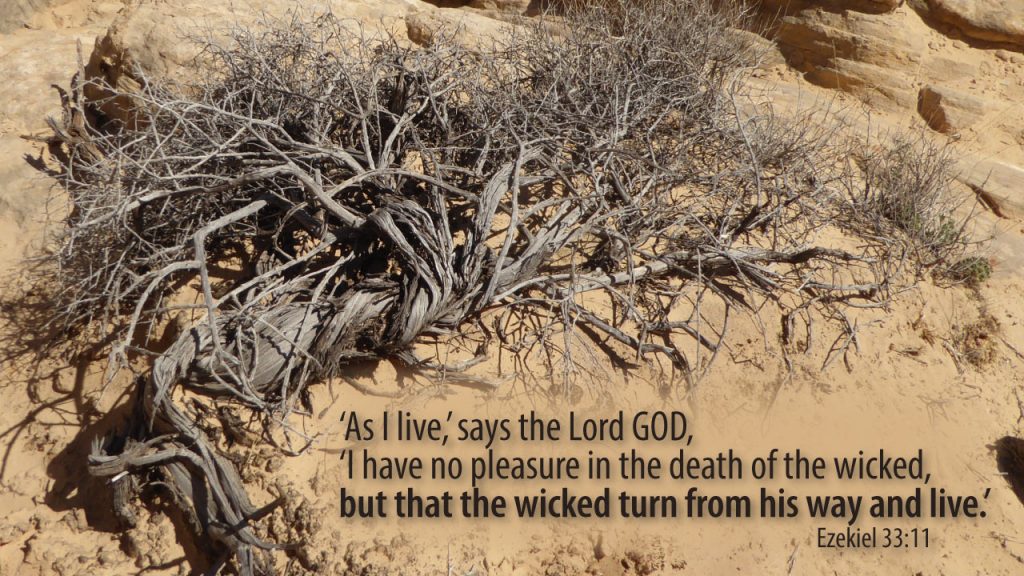
This expression of deep emotion says more than words. My dear brothers and sisters, God our Father, the Son and Holy Spirit is a God of compassion and love – who created humanity to be blessed, fruitful and in communion with Him. He did not create us to suffer and be in pain. But when sin entered this world, when we freely chose to break our communion with Him, we entered into a cursed reality, where sickness, pain and death exist. However, despite our choices and frailty, God’s love remained for us and continues to remain for even the worst of us sinners. As we read in Ezekiel 33:11 – “I have no pleasure in the death of the wicked, but that the wicked turn from his way and live.” And again “God did not make death, and takes no pleasure in the destruction of any living thing; He created all things that they might have being (Wisdom of Solomon 1:13) Death and sickness of every kind is the consequence of sin and so when Christ sighs, in the Gospel of Mark, he is sighing at the pain and suffering of the man standing in front of him just as He sighs at the pain of all humanity: of you and of me as we stand in front of Him at the Holy Altar. Because God sighs and despairs when He sees that we choose sin over His love; God suffers when we deny Him, deny our purpose and live lives of sinfulness, just as a parent suffers when a child ignores their guidance and as a result gets sick or hurt. However, sin does not have the final verdict over us. Though Christ sighed to show his compassion towards us, He continued to heal that man saying “Ephphatha!” (Be Opened) because Christ is also ultimately the one who will heal us and free us from all sin and the results of sin.

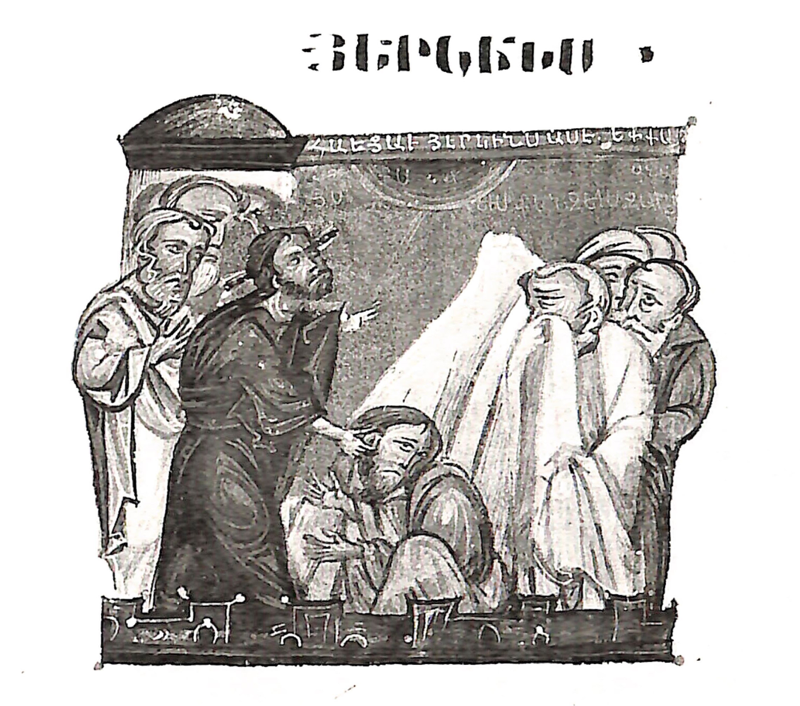
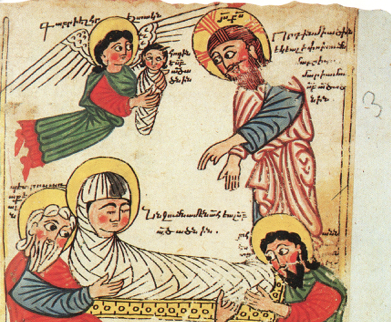
Armenian Manuscript Healing of Deaf and Blind Man

He will open our eyes, our mouths, and all the bindings of our life just as He healed the suffering of the man in today’s Gospel. Christ healed us and freed us when He willingly suffered and was crucified upon the Cross – Christ Jesus personally answered the penalty of sin so that we would again be able to enter into communion with God because creation was not created to be separated from its creator. My dears, that is why Jesus sighs. When Jesus sighed, he reveals to us that God knows our condition yet, he sighs not out of defeat but out of compassion because He has overcome that which brings suffering and separation from communion with God.

My dears, we each were created to be in communion with our loving God who gives us direction, purpose and love. That doesn’t mean that we will not have occasion to sigh; nor does it mean we will not suffer in this mortal life. However, when we look at our lives, when we look at the choices we have made or the paths we have crossed, let us ask ourselves: do our lives break communion with God, do we constantly choose sin, has our life made us blind and mute? We call out to God to heal us and have compassion but we do not answer when He calls us to love each other, to repent and forgive each other and to live according to His commandments. It is like sitting at home and wanting to be cured by a doctor but never going to see the doctor, never taking the medication and never listening to the doctors advice. My dears, just as our physical doctors see our suffering and provide the means for our healing, even more so God our Father knows our suffering and provides the means for us to be healed. But in both cases it is the same – we must choose to follow and live accordingly.

Therefore, my dear brothers and sisters, let us examine the life we live and choices we make. Let us not feel defeated but know that God sees and knows our pain and offers salvation, healing and love to each one of us, no matter how little or greatly we have sinned, no matter how far we have strayed from Him. Our God is a God of the living and our God desires for us all to live. Therefore, may we freely choose to come to Him, listen to Him, ask Him to open our eyes and ears to His love and commandments so that our lives will be continually blessed and opened. So that the only sigh we breathe will be sighs of joy and relief as the grace of the Holy Spirit guides us towards all that is right, Amen!

Unwavering Among the Waves

Passages: Isaiah 9:8-19; 2 Corinthians 1:1-11; Mark 4:35-41

In the name of the Father, Son and Holy Spirit, Amen!

Things are out of control! It seems that every sermon, every devotional and every thought that I as a priest am trying to prepare over the last few months is about survival or about fighting for control. The proverbial saying about the last straw no longer applies to this year as many of us feel overwhelmed, over burdened, tired and in pain. Apart from widespread sickness, social justice issues, polluted politics, exploitation of innocent children and unpredictable weather – apart from wide spread riots, panic, explosions and war – we ourselves are trying to maintain control of our own lives, our families, our health, our work and our faith. There are very few who are able to see and go through this storm without losing hope or control.

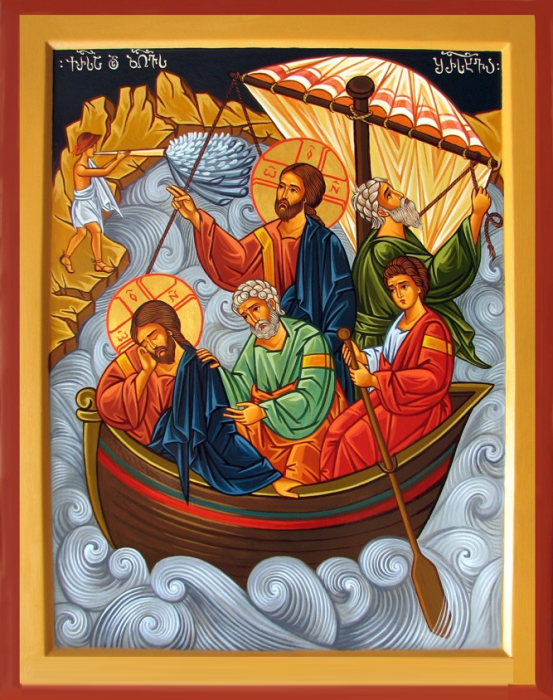
Today’s Gospel illustrates to us a storm like this. A storm that is relentless, uncontrollable and violent. A storm that can cause even the most faithful person to lose hope as they lose control of the situation. The only person we see that is at peace in the storm is Jesus,“But he was in the stern, asleep on the cushion…” (v.38) There are 2 key things about this passage that strike me:

  1. How do we often understand this story
  2. Where is Jesus physically in the story

When we read the story of Jesus calming the storm, often times we reflect on how we as Christians must learn to control our lives through our faith in God. We read verse 40, where Christ asks “why are you afraid? Have you no faith?” and we understand that if we have faith in God then we will not fear the storms of our life and we can maintain control. However, there is something much deeper to understand here then merely our role in how to manage the storms of our life and that’s where the second point comes in: Where Jesus is physically in the story.

When we read the scriptures, when we open our Bibles and prayerfully look to see what Jesus is teaching – what are we paying attention to?

  1. What Jesus is doing
  2. What Jesus is saying

In fact, we have a saying W.W.J.D.? (what would Jesus do?) We rarely pay attention to his physical position or place in the story. However, each word in scripture has a deep layer of teaching and is there on purpose. When we read that Jesus is in the stern, what do we understand? Firstly what is the stern? The stern is the back of the boat and in the stern is the rudder – a flat vertical piece used for controlling and steering. So when we read that Jesus is sleeping in the back of the boat – Christ is teaching us here that I am Peace and I am in control. Even when everything is falling apart, even when the storm is causing us to sink, Christ, God, the Church remains unchanged and unwavering – rather, peacefully, God remains in control. Therefore, what we are called to do is allow God to take control and guide us through the storm. Control does not mean we do not have free will; Control doesn’t mean we do not see chaos; Control does not mean life doesn’t fall apart; Control does not mean there will be no storms in life. Rather, when God is in control, even when we are suffering, we remain peaceful and we chose to trust God, armed with the knowledge that God is there. Our God is a compassionate God, not distant but with us in every way. As St. Paul says “Why, we felt that we had received the sentence of death; but that was to make us rely not on ourselves but on God who raises the dead; he delivered us from so deadly a peril, and he will deliver us; on him we have set our hope that he will deliver us again. (vv. 9-10)

My dears, what are we fighting? Are we fighting for control against the storm or are we fighting against God? Are we choosing to allow God to guide us through the storms we face in life? If we are choosing to allow God, if we trust Him, just as we pray in the Lord’s Prayer – “your will be done”, then what we must do, is be prayerful, remain hopeful and keep the Peace that God has given to us in our hearts, a peace not of this world as Christ teaches (John 14:27). This is done through our actions – when we don’t over react or panic when things fall apart. When we don’t change who we are but remain loving, forgiving and empathetic towards one another even in the face of difficuties. This is done through our prayer life – when we stop and take a moment each day to thank God for all his blessings. So that when we do face adversity, we will find comfort in the knowledge and remembrance of all of God’s blessings and we will then use that comfort to help comfort others, as St. Paul teaches.

My dears, this year is merely a year with several storms – personal and corporeal. Each day, is full of blessings and peace which we will begin to realize when we freely choose to allow God to control and guide us through the storms. Let us remain faithful, and vigilant to how we behave and how we believe when the storms come. Let us remain prayerful and in the Lord’s peace and may the grace of the Holy Spirit help us and be with us everyday Amen!

My Resume…

Passages: 2 Corinthians 6:16-7:1; Luke 1:39-56

In the name of the Father, Son and Holy Spirit Amen!

Regardless of our education, age or stature, as we grow older we begin looking of work. Not necessarily a career or lifelong commitment, but a job, a title, a position in order to begin creating some kind of profit. One thing is certain that when we go looking for work every boss and employer asks for a resume.

A brief layout of our qualities and qualifications, our abilities, our skills, our education – anything that can show our “worth” as a potential employee. I wonder what would be on our resumes if someone asked us what gives us “worth” in life, what defines us – how would we answer? Would it be short and to the point, or would it be detailed and drawn out, may be exaggerated and fluffed up? What kind of imagine would we present as to who we are and what we have to offer?

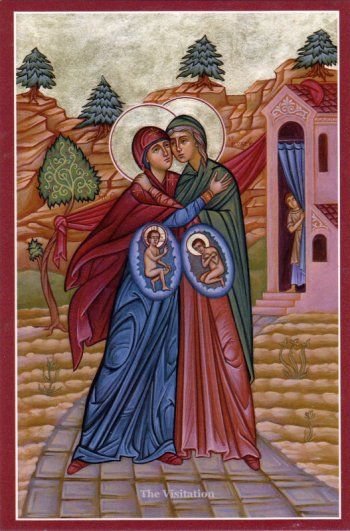
In the Gospel today, St. Mary, the Mother of God, while pregnant with Jesus, came to visit Elizabeth her cousin, who was pregnant with John the Baptist. Elizabeth seeing Mary asked, why are you here? What brought you? Mary answers, “‘My soul magnifies the Lord, and my spirit rejoices in God my Savior, for he has regarded the low estate of his handmaiden…’” (vv. 46-48) Mary very poetically and prayerfully begins to answer by saying I am here, I am called, I am made worthy and I am defined through the Lord who has called me, who has brought me and who has given me worth. Mary, who we know is very young at this time, lays out a unique resume where she does not speak about how she is unique, special or skilled. She does not present an image of “I am special and so God is going to use me.” Rather, she defines herself as special because God is using her. In other words, her resume of faith is a prayer, which plainly would say, I have nothing except that which God has given to me.

My dear brothers and sisters, St. Mary in her beautiful and humble example of prayer teaches us today that our true worth, our true qualities and skills in life, that will yield the greatest profit is not merely words we write on a resume for a job, nor is it title, diplomas, or anything we have achieved here on earth but instead our true value is in the image of God that we are created in. As St. Paul teaches us, we are each temples of the Living God. Just like our Church, it’s real worth, its real quality is not in the paint, icons, organ, robes or even the priest. The real worth of our Church is in the presence of our Living God, Christ Jesus revealed here to us.

Several weeks ago the Turkish government converted the Hagia Sofia, an ancient Byzantine Church, back into a mosque. This past week, they converted another Church into a mosque. And we are pained that our houses of worship, our home is polluted and taken from us. However, the real tragedy is not that we are losing part of our history or artwork – but rather, what we lose is our place where we feel God’s presence. My dears, St. Mary reminds us today, that we must in our heart, mind and soul exult God and know His presence within us. We must recognize God’s presence not just around us but in us and allow that to define us, to direct us, to cleanse us and give us purpose because being a Christian is not about doing good things. An Atheist, Muslim, Jew, etc. can be kind and do good things. If I looked at my resume and the resume of a Jewish rabbi friend, it would be remarkably similar – high school, seminary, public speaking, good with people etc. However, as Christian’s, as temples of God we are called to be different; we are defined not by what we have to offer but by what we do with what has been offered to us.

Christ Jesus, is offered to us every day and week as we pray during the Badarak. Christ Jesus offered up His life willingly for us upon the cross freeing us from the bondage of sin and we receive Christ Jesus through the Holy Eucharist, through our prayers and through repentance. Only having received Christ and being in communion with God, do we become true, pure temples of God where the rest of our skills, our qualities, the physical expressions of being “good” and loving come to fruition in a Christian way. St. Mary accepting what was offer to her she was in communion with God and recognizing her worth in God alone, her soul magnified the Lord – she loved, she forgave, she cared.

My dears, what gives us worth, what defines us and what is written on our resume of faith? Are we in communion with God? Are we temples of God or are we merely trying to write a resume as defined by us? Let us remain prayerful so that we may be cleansed of our egos, our arrogance, our fears, our anxiety and our hardness of heart and may we grow in our prayers – so that we see the image of God and feel His presence not just in life, but in us. May our souls magnify the Lord as we accept what is offered up to us every day and especially during Divine Liturgy. May our resume of faith be filled not with fluff but with the love, compassion, and Words of God. So that we, through our lives will continually bring glory to our Father, the Son and the Holy Spirit, now and forever, Amen!

The Process Takes Time

Passages: Song of Solomon 4:9-15; Isaiah 7:10-16; Galatians 3:29-4:7; Luke 2:1-7

In the name of the Father, Son and Holy Spirit, Amen!

The process of making anything delicious and enjoyable takes time. Last week, our wonderful volunteers came together and prepared delicious meals for this year’s Summer Fest-to-Go. The boregs, choregs, pakhlava, humus and chicken and lamb dinners took time and energy. This is true not just for food. Likewise, building relationships or a family – both physical or spiritual – takes time and effort. Different ingredients, just like different types of people, are mixed, are stirred, are kneaded – but ultimately after some work – a beautiful, enjoyable, coherent body is formed because the process of making anything beautiful and enjoyable takes time.

If you’ve ever tried to make wine for example, the process of fermenting grapes and allowing the wonderful wine to be created takes quite some time. First you need to grow the plant and let the branches stretch outwards. Then those branches need to produce the grapes, which will need time to ripen. Apart from the time that it takes, making wine also requires energy. The grapes are crushed and squeezed, twisted, and stirred – in order for all those great juice to come out.

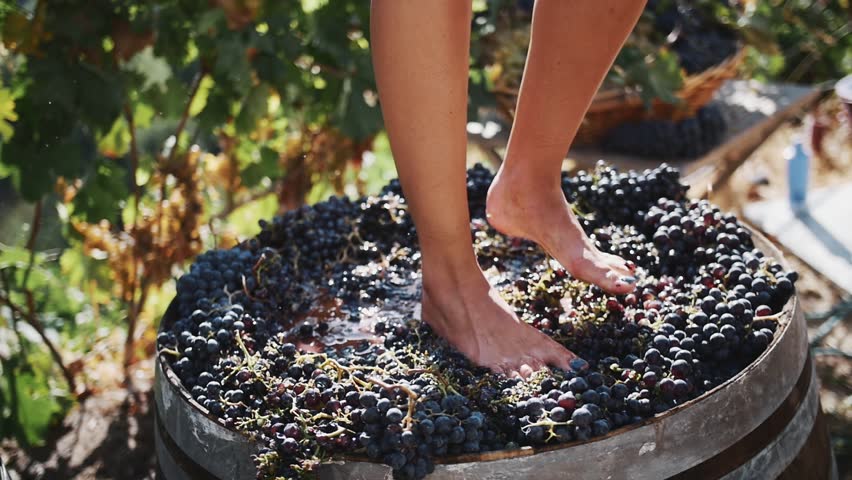
The old-fashioned way of crushing those grapes was by feet. Stomping on and squeezing the grapes eventually produced the sweet grape juices that would become wine. It was messy, but ultimately, we enjoy the wine. Yes, the process of making anything beautiful and enjoyable takes time.

My dear brothers and sisters, our life, our experiences, our highs and lows, success and failure are all part of the process by which we are formed. This process takes time, effort, and energy. Sometimes during this process, we do not truly see the end product; We do not realize the beauty that will come out of it all, especially when on the surface level all we see are failures, sickness, disagreements and all the negativity that our lives are filled with. Last week, I spoke about what we all have been experiencing the past few months as 2020 has been a messy year, full of negativity. But we also saw that out of all that negativity, God has given us abundant opportunities to bring positive change, to show faith, love and hopefulness in a world that feels crushed and oppressed. Every day is another opportunity because my dears, every day is part of the process of life through which ultimately we are called to produce fruits of love, hope, compassion, care, forgiveness, etc. Those fruits over time, our life, ripen and become deeper. And throughout our lives they are crushed, squeezed, stirred, fermented etc. in order that ultimately, we, our lives, create something beautiful and enjoyable.

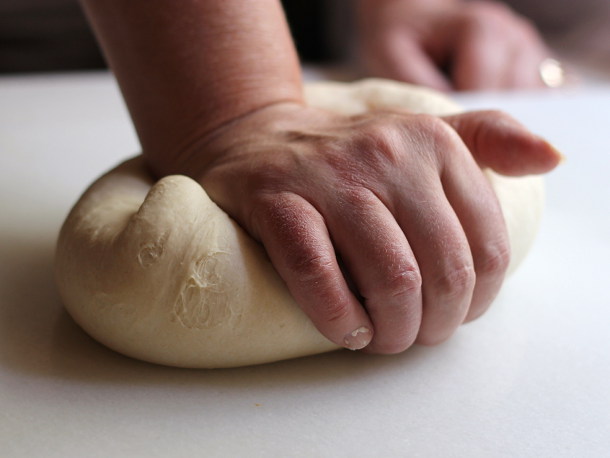
Just like dough that is kneaded for bread or grapes for wine are stomped on, we may feel that we are being stomped on and crushed under the feet of an oppressor. We may feel that the challenges or negativity of life are too much to bear. However, my dears the challenges of life are in fact the process by which we are changed, ripened, mixed and strengthened to be able to create that beautiful, coherent and strong body.

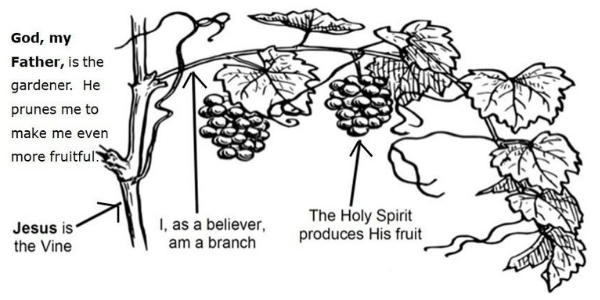
Remember who we are? We are the branches of the vine and our vine is Christ Jesus. (John 15:5) Therefore, if we are from Christ – the process of life that we are going through when we remain faithful to God, will produce from us what Christ likewise gave to this world – love, hope, peace, freedom. These fruits are from the Holy Spirit and are what bless this world. Yes, it takes time, energy, and effort; yes, at times it will feel like we are being crushed and squeezed and maybe at times we will feel like some of the things we are going through don’t belong. However, by putting our faith and trust in God, by remaining prayerful, loving, forgiving, and in communion with God – we will become God’s blessing in this world for each other. We will become the light that shines in the darkness; the healing that cures the infirmity and the love that melts the hardened heart.

The process of making anything beautiful takes time. Today, remembering our beloved St. Mary, the Mother of God, we see that she, as the greatest example for all of us trusted and put her hope in God. Even when she did not understand how, she, a virgin would give birth, she trusted in the love and will of God. She became the branch that bore the first fruit, she gave life to Christ Jesus, God in the flesh, who came to save this world.

My dears, on this day we bless grapes and remember St. Mary; let us remember also, that just as the grapes are fruits of the harvest, likewise, our faith, our lives, will produce fruits to be harvested. What kind of fruit will we fill this world with? If we are truly the branches connected to Christ Jesus, if we are truly children of God – then our lives must produce fruits of compassion, love, hope, faith, and healing. Our fruits must be like grapes, a blessing that will become enjoyable for not just us but everyone around us. Therefore, trust God, place hope in Him who sees the beauty behind the process. Know that by remaining faithful to God and trusting His will – this world will only be blessed.

May those blessings fill our lives also, may they bring healing, love, and hope to us. We ask for the intercession of the Virgin Mary, that she pray for us and gives us the strength, to like her trust in the will of God – in the process that will ultimately produce beautiful fruits. Fruits of love, faith and hope that will bring glory to the Father, Son and Holy Spirit, eternally, Amen!