Born of God and Sinless!

In the name of the Father, Son and Holy Spirit, Amen!
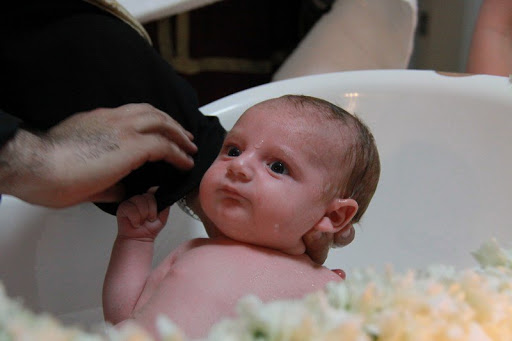
If I were to ask each of us when were we born, we would undoubtedly answer with the date of our birth. If I were to ask each of us when were we born of God, the majority of us would answer with the date of our baptism. As Orthodox Christian’s through the sacrament of Holy Baptism, we believe that we are each re-born or born from above, as is stated by Jesus Christ in the Gospel of John 3. We are born of the Holy Spirit and water, with the washing of our sins to an adopted life of being children of God, heirs of the Heavenly Kingdom.

Within the mainstream Protestant and Evangelical world, being born again describes also the date when as individuals we decide to personally accept Christ into our lives – consciously making that decision rather than having this done as a child for us.
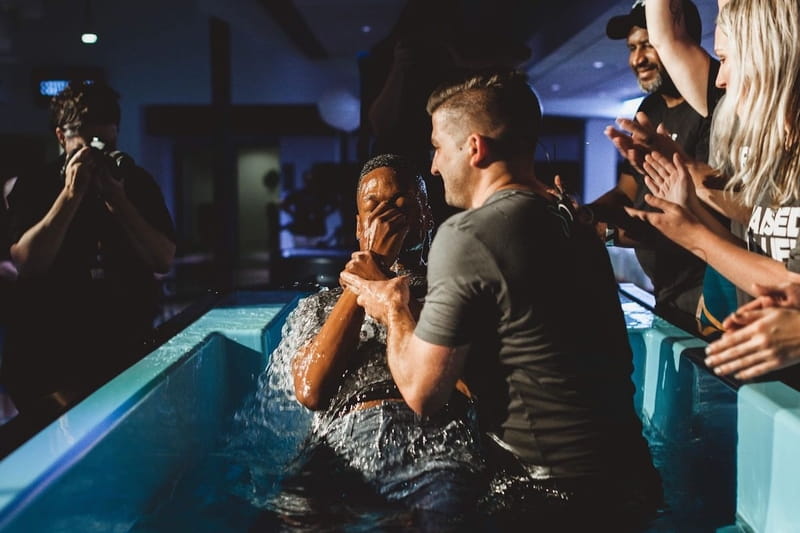
Now the thoughts and reasoning behind adult or infant baptism or “conversion” can be discussed at great lengths, yet, I would like to draw our attention to the words of the 1st letter of St. John 5 – “We know that anyone born of God does not sin, but He who was born of God keeps him, and the evil one does not touch him.”

Accepting that as baptized Christians we are born of God and additionally we accept that we are all sinners and that we all need God to save us, therefore, who are these people who are both “born of God” and that do not sin? How can we likewise come into the state of being sinless children of God?

This weekend is Memorial weekend, when we remember all those men and women who gave up their lives as a sacrifice to fight for our freedom. The moment those brave individuals willingly gave up their freedom and put on a uniform, they were no longer mere civilians but had a responsibility and obligation to live according to a certain path. The path and life of a soldier is not easy. There is the reality of war but also the echoes of past trauma. Sometimes as soldiers decisions are made that are not befitting of a soldier, and for that they face consequences. Regardless of what difficulties they face, even death, they remain a soldier sworn to duty every morning that they get up and put on their uniform.
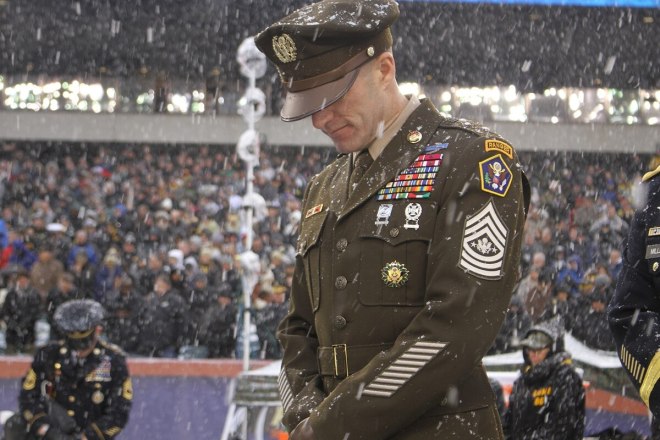
My dear brothers and sisters, when we are baptized, when we are blessed as infants or personally choose to become Christian, we put on Christ, in the words of St. Paul. We are no longer mere citizens of this world but rather we become children of God. As children of God, we are called to fulfill certain duties and responsibilities, living according to a certain path – God’s will. Even if faced with difficulties, even if our past decisions darken our path and bring us pain, even in the face of death, God’s love remains with us guiding us on our paths. And when we make decisions and choices that are not befitting of a child of God – we face consequences. Regardless, just like a soldier, every morning we get up, we are given the choice to put on Christ as seen in the life we live.

Becoming a Christian is not merely a service or words of a personal testimony. Being born of God is much deeper than being splashed with water. To become a Christian, to truly be born of God we need to do so actively and deliberately with every decision and choice we make – from the moment we open our eyes in the morning, until the moment we fall to sleep. By living a life according to God’s will, we already begin the process of living sinless. That is why Christ says, “be perfect as your Father in Heaven is perfect” – in other words be like God. And the emphasis is on the “BE”. Meaning act, live, breathe, choose, create, love, hope, etc. as your Heavenly Father does. Our Christian faith is one that calls us to action. To believe and to act for us, Armenian Christian’s is what being a child of God is. Faith as a Christian is not a feeling, nor is it mere knowledge but wisdom and drive to live out the words we preach, the teachings we read and the love we feel.
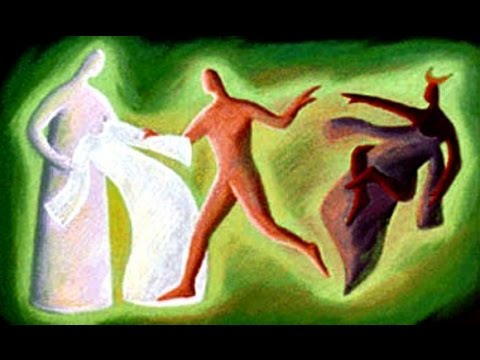
Therefore, my dear brothers and sisters, if we want to be one of those whom St. John writes about, “who are born of God and do not sin” – we must live out our faith in action, not because we gain something but because we have something to give. By living out our faith, God will continually wash us of our sin and we will keep in communion with Him – meaning we will be directed towards a sinless life. Will we face adversity? yes; will we be challenged and at times take the easy path? yes; will we lose our life in God? No! The greatest difference between the uniform of faith, which is Christ, and the military uniform we wear, is that no matter how sinful we are, we will not be dishonorably discharged or kicked out. Because as we read in scripture and in the prayers of the Church – God does not desire the death of even the greatest sinner – but only desires that we repent and turn back to Him.

My dear brothers and sisters let us examine our lives and the choices we make. What drives us towards those decisions and who do those decisions reflect? Are we a true example of our faith in God, of His love and forgiveness? Or do our actions only reflect something else. Each morning we get up, each time we step out of the house, each time we come face to face with a choice, what uniform will we be wearing? 

I pray that as children of God, born of God, we will always remember to put on Christ, to reflect Christ Jesus in how we speak, think, act and live. And if we sin, let us not lose hope but repent and remember that we are still God’s children. So when I ask when were we born of God – we will all answer: We are born of God everyday and in every way because we are all His children. May the grace of the Holy Spirit be with us and may God vest us in his glory, Amen.
Mine Eyes Have Seen the Glory!

Sermon for Sunday May 17, 2020

Passages: John 9:39-10:10

In the name of the Father, Son and Holy Spirit, Amen!
Christ is Risen!

In November of 1861, during the early days of the United States Civil War, Julia Ward Howe was asked to pen the famous lyrics to the popularized song “Battle Hymn of the Republic.” This patriotic song lifted spirits and instilled bravery, and coupled with the newly formed lyrics, it drew parallels between the final judgment of the sinful at the second coming of Christ, to the calamities of the Civil War. Words, which as prayer looked to Gods glory and truth as his swift judgment came against the enemy. “Mine eyes have seen the glory of the coming of the Lord; He is trampling out the vintage where the grapes of wrath are stored; He hath loosed the fateful lightning of His terrible swift sword: His truth is marching on.” To see with our eyes, the glory of our Lord, to see his divine judgment perhaps is something which lifts us up and yet, for many it strikes fear. And this ability of sight though so blessed, in today’s reading of the Gospel of John it appears as though Christ is changing our abilities to see and observe.

“Jesus said, ‘I came into this world for judgment so that those who do not see may see, and those who do see may become blind.’” (v. 39) Christ here is acknowledging that He has come in order to bring judgment. And he continues not by stating what kind of judgment but rather why he is bringing judgment – “so that those who do not see may see, and those who do see may become blind.” If we were to look at today’s reading starting from here, it may feel strange, why is Jesus talking about making people blind; after all Christ taught that all things hidden will be revealed and all will be brought to light. It almost feels like Jesus is contradicting himself.

In the passages preceding today’s reading, we read of Jesus healing a blind man. So if Jesus is in one instance healing blindness, why is the latter part of God’s judgment meant to blind us? In the Gospel of Luke, we meet Simeon the Elder, a man who in his old age was waiting to see the savior of the world. When Jesus is brought to the temple 40 days after his birth, according to the Jewish law, Simeon took the child in his arms and prayed, “’Master, now you are dismissing your servant in peace, according to your word; for my eyes have seen your salvation, which you have prepared in the presence of all peoples,a light for revelation to the Gentiles and for glory to your people Israel.’” (Luke 2:29-32).

Simeon, seeing with his eyes Jesus Christ affirms that he has seen “the salvation of the world…a light for revelation [to all].”

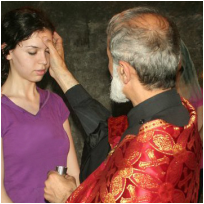
Likewise, when we are baptized in the Church and the priest anoints our eyes with Holy Myron he prays, “May this seal in the name of Jesus Christ, enlighten your eyes, so that you may never sleep onto death.”

My dear brothers and sister, through Christ Jesus, through our faith our eyes are opened, enlightened and bearing witness to God and his love. So when Jesus is referring to giving sight to those who do not see, what He is teaching us is that through our faith the eyes of our souls and minds are opened to see hope in hopelessness, to find richness in our brokenness, to find love when we are surrounded by hate and anger. The limitations and failures that life has burdened us with or the sickness and pain we feel closed off by – these chains are broken and our eyes are opened to see God’s glory and presence in those moments. By seeing Christ, as Simeon the Elder did and as we do through our baptisms, we see the salvation, which is the judgment upon this world. Now, what about those who can see that will become blind, who are these?

One of the Armenian Church great orators, teachers and Patriarch of the last century, Archbishop Maghakia Ormanian writes that the Pharisees, who were listening immediately, understood that Jesus was talking to them about seers becoming blind. That is why they immediately asked, are we also blind? The Pharisees were the ones who knew the laws and they knew the prophecies. However, because of their arrogance and egos, they would become blind to seeing God’s glory. They pretended to not see their sinfulness, therefore, they would be blinded from seeing their reward. The best example of this case is found in the Gospel of Matthew (20:34-39) Jesus heals 2 blind men and says, you are healed according to your faith.

My dear brothers and sisters, what sort of healing will our faith bring? Will it open our eyes to the truth, to salvation or will it bind our eyes and blind us because of our own self-interests? In this life we all will face judgment. Through the life we each live, we will face hardship, sickness, pain, failure and brokenness. Through Christ Jesus, we are healed and are able to look past and walk through that darkness into love and into his light. The light of God is a powerful flame, which after we have been filled with we are also charged to take forward and continue lighting for the rest of this world through our own actions. However, if we think we are better, if we think we are more in anyway shape or form than those around us, than those who are still struggling and who are sick and in pain; if we like the Pharisees become blind to our self serving ambitions at the cost of others, then we will become blind to God’s light. The eyes of our souls and minds will be limited to God’s love and presence and this itself becomes our judgment.

Therefore, my dears, if like the words of the song, our eyes seek to see the glory of the coming of the Lord – we must humble ourselves, confess and pray for our sins and for each other, asking that our eyes will be illumined to the truth of God’s love. A truth that is marching on and that cannot be stopped; the truth of Christ Jesus. Who is the light of this world and who is the salvation for the revelation to all. And when our eyes have been opened, we pray, that our hands and feet will walk and be directed in the ways of our Lord which is to bring love, hope, care and healing into this world. Whereby, we will glorify our heavenly Father, the Son and Holy Spirit, Amen!

Seeing the Cross

Sermon for Sunday May 10, 2020
Feast of Appearance of the Holy Cross

Passages:

Galatians 6.14-18; 1 John :1:1-10; John 7:14-23; John 19.25-30

In the name of the Father, Son and Holy Spirit, Amen!

Christ is Risen.

Imagine if you were there. Looking up and seeing the cross. Knowing that the cross means death. How would we feel? How would we react? In the Roman Empire, the cross was meant as a tool of ridicule and death. Only the worst of criminal’s were crucified, that is why crucifixions took place up on hills, so that when others would see it from afar, they would know not to break the laws or else they would meet the same fate. Yet, today we do not live in the Roman Empire, the cross is not used as for capital punishment, so when we see the cross today, what do we feel? Would it strike fear in us, as it did to the 1st century citizens of the Roman Empire?  Would it lift us up and fill us with hope?

Throughout the last 2000 years, several apparitions or appearances of the Holy Cross have taken place across the world and people’s reaction has been very different. Some have doubted, some have feared. St. Paul reminds us that for those who don’t have faith the cross remains a folly (foolishness) but for us Christian’s the Cross is something we take pride in, that we must glorify because through it “the world has been crucified to me, and I to the world.” (v.14) Meaning that when Christ was crucified on the cross for our sins, we was set free and we are no longer a slave to this world. But what if we don’t believe or what if we struggle with our faith? What reaction will we have when we see the cross?

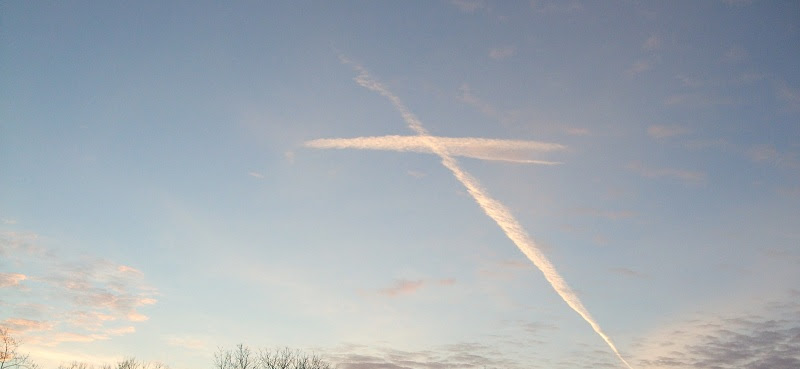
Today, the Armenian Church celebrates the Feast of the Appearance of the Holy Cross. In the 4th century, St. Cyril of Jerusalem and thousands of others, Christian and non-Christian looked up and saw the Holy Cross appear in the skies of Jerusalem for several days – day and night – shining brightly. It stretched from the hill of Golgotha, where Christ was crucified, to the Mount of Olives, where Christ Ascended into Heaven and those who saw all reacted differently. Many ran in fear, because it is believed that seeing the cross was the coming of the end of the world, as we read in the Gospel of Matthew (24:30-36). Many more – prayed. There are witness accounts of how countless individuals and families gathered in Churches, where mass baptisms took place. Yet I wonder, how we would react? If the cross appeared to us, what would we do?

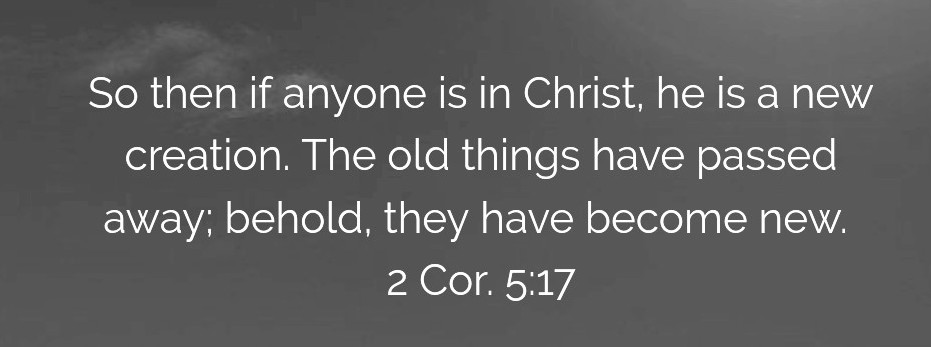
My dear brothers and sisters, the cross which was meant to strike fear into the hearts of the law breakers in Rome, today and through the sacrifice of Christ has been transformed for us into the life giving tool which must pour love into our hearts. Today, that tool of death has been made new, and through it we have, likewise, have been made anew as it says in 2 Corinthians 5:17 – “So if anyone is in Christ, there is a new creation: everything old has passed away; see, everything has become new!” Sometimes, when we read of these miracles and stories, such as the cross appearing in the sky, we begin to wonder and say, “If I saw that, I would definitely believe” or “I wish I could have been there to witness that miracle”. Yet, we do not need to see the cross appear in the sky or for it to all of a sudden appear in random places. The cross for us is everywhere and it’s message of salvation through Christ is everywhere. We cross ourselves every time we pray;

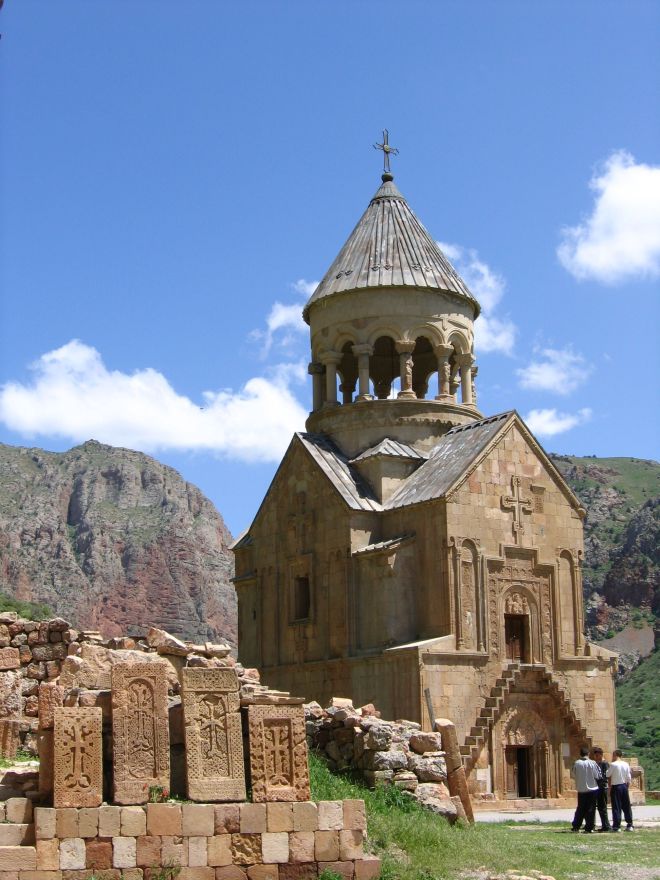
The Cross hangs around our necks and it decorates our homes; The cross is in our Churches; The cross is on top of every Church, placed high up for all to see. In fact, in middle eastern cultures, every time you saw a cross of the Church or in the cemetery you would bow down or cross yourself. Because for all humanity the cross today is a sign of hope, it is the definition of love, it is a shield and sword which protects us all. Yet, for those who do not believe, for those break communion with God, the cross remains folly and it remains as a sign of fear, regardless of where it appears.

Today, we are bound to our homes and unsure when we can return to some form for normality in our lives. Today, more than ever in recent history, we have far more questions than answers. However, when it comes to our questions of faith, when it comes to our hope and our salvation, the only place we must turn to is the Cross of Christ.

Today, when we see the cross up high on a Church, in our homes or in the sky, it is a presence and the love of God. For the cross is the Altar upon which our sins are laid upon; the cross remains the ladder by which we rise up to God. Yes, the cross is the tool by which God chose to bring salvation into this world transforming all death into life, all hate into love, all doubt into hope and all darkness into light. And we are called to likewise, use this Cross, as a tool for good in this world.

As we read in 1 John chapter one, “God is light and in him is no darkness at all. If we say we have communion with him while we walk in darkness, we lie and do not live according to the truth; but if we walk in the light, as he is in the light, we have communion with one another and the blood of Jesus his Son cleanses us from our sins.” (vv.5-7) The blood of Christ, my dears, was spilled upon this cross so that we may live. Therefore, we must remain firm in our faith, turning to God and trusting in Him to also transform our lives. So that when we look up and see the cross, wherever it may appear to us, our hearts will be filled with love, hope and life. So that we will be strengthened to likewise, fill this world with love, hope and life and thereby glorifying our Savior Christ Jesus, with the Father, and Holy Spirit, Amen!

Blessed is the Resurrection of Christ!

It’s in My Nature

In the name of the Father, Son and Holy Spirit, Amen!

Christ is Risen, Krisdos Haryav i Merelots!
 
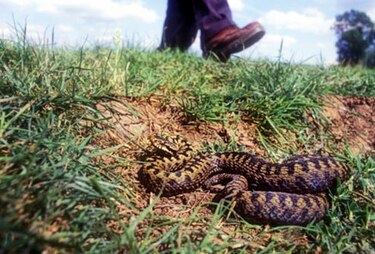
A man walking through the desert saw a large snake trapped and in peril. Deciding to help,  the man picked the snake up but it immediately bit him. The bite caused excruciating pain, the man dropped the snake, and the reptile fell right back into its trap. The man tried to pull it out again and again the snake bit him.

Finally the man pulled the snake out of its trap and set it free. Someone who was watching approached the man and said: “Excuse me, but don’t you understand that every time you tried to get the snake out, it was going to bite you? Why didn’t you quit? The man replied: “The nature of the snake is to bite and attack, but it is my nature is to help.”

My dear brothers and sisters, I am sure many of you at home have heard this story. Whether you have or not, this story invite us all to truly examine our lives through its teaching, especially today. When we are in pain or in comfort, what is in our nature? Who defines us? Each and every one of us has limitations and boundaries. When those boundaries are pushed or our limits are tested, how we react ultimately stems from who we are. Today, with the continued spread of the pandemic, with the lack of direction from political and social leaders and with the unknown of what will come next, it is easy to see how all of us can fall into disarray and confusion. Adding insult to injury, we are cut off from each other, our families, our friends and even our Churches, places where we normally go to rejuvenate and refocus in times of need. Therefore, I ask what will be our reaction, what is our in our nature today?

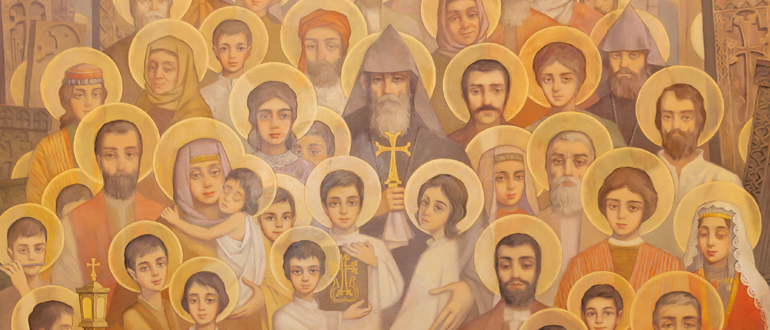
Our martyred ancestors faced a dire unknown over 100 years ago. Each day, they witnessed the manifestation of evil, the serpent that drove them from their homes, lands, families and Churches into the desert – where the sting of death and torment flew above them like vultures. Yet, my dear brothers and sisters, our martyred ancestors did not deny their nature, they did not deny who they were. What defined them above all else was not their age, job titles, skin color or any socially defined category. What drove them was not flesh and bone alone; What unified them was their faith in Christ Jesus. A faith that kept them alive as they marched into certain death; A faith that paved the way for life to be born out of a barren desert; A faith that took them from the pain of victimhood to the crowned joy of victory.

Yes, the pain and injustice was real. The atrocity of Genocide was perpetrated against men, women and children and their blood was spilled over the soil of their homes. However, their blood became the fertilizer of the foundation, the ground in which Christ Jesus Himself was buried in, was planted into and from where Christ was resurrected. Likewise, they were planted and their faith gave life to new fruits – each and every one of us. One of our Church Fathers Tertullian is famously quoted for having said, “the blood of the martyrs is the seed of our Church.” Yes, the blood of our martyrs gave life to each of us because there is not one Armenian, not one Christian, not one child of God that was not impacted by the atrocities of the Genocide. Thus, there is not one Armenian, not one Christian and not one child of God who is not the fruit of the faith and blood of those martyrs. It was the blood of the martyrs, which also gave strength to all those who did survive the Genocide to live on and pass on their faith, hope, wisdom and love to each one of us. It was the blood of the martyrs, which gave strength to all those who did survive to build homes, Churches, families and communities. As the anecdotal proverb teaches, the apple doesn’t fall far from the tree. My dears, we have not fallen far from our ancestral trees therefore, I ask again what is in our nature today? Who are we, if not the fruits and the descendants of that faith.

My dear brothers and sisters, we are the children of that living faith in Christ. The undying flame, which engulfs this entire world and fills it with light. We are the ones, who have been baptized once, as Christ died once – and with Christ we have been raised to life. We are the descendants of those martyrs, we are the descendants of those survivors and fighters in whom the seeds of faith were planted and blossomed. And in order for us to give life, to bear fruits of that faith, in order for us to also blossom we must realize that our nature and what defines us each is not our ages, not our job titles, not our skin color, not even the “ian” or “yan” of our last names. What defines and unifies each of us, what give us life is our faith in Christ Jesus. And it is through that faith that we will overcome all pains and trials of life. It is through that faith, by which even if we are repeatedly attacked by the serpents or even die, we shall live on. As we read in scriptures, the snake will bite the heal, but the heal will crush the serpents heads. Yes, our resurrected Lord has crushed the head of that serpent.

But that faith must be part of our nature, must be what drives us forward and fuels our actions, thoughts, hopes, dreams, ambitions and personhoods. As we have seen throughout the centuries and the stories of the Armenian people, each time our faith has been under attack, one thing has remained the same, just a heifer cannot change it’s own skin, likewise, as Armenians’ our skin is equally unchangeable as our faith in Christ Jesus Because that faith today lives on through each one of us, even if we are cut off from our Churches. That faith lives on today through each one of us, even if we are in quarantine and unable to gather together. That faith lives on today through each one us, even if we were dying in the desert, because our faith is in our nature and the nature of our faith is to love, to hope, to sing, to dance, to live and fight for justice and strive to bring light into a darkened world.

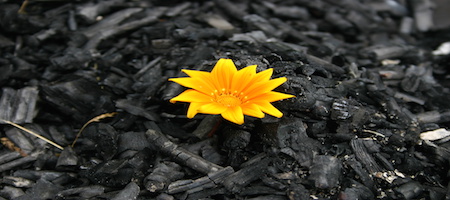
Therefore, my dear brothers and sisters, what is our nature? If like our martyred and saintly descendants our nature is founded in our faith in Christ Jesus, let us live accordingly through our decisions and treatment of ourselves, our families, of each other and all creation. Do we glorify God our Heavenly Father or do we cast doubt and darkness? Faith brings life and light. In this season of Easter, as we greet one another with the command of Christ is Risen, let us believe and know that through faith lived, we too will rise with Him from our tombs and from the ashes. We will rise and continue to live. Therefore, let us live a life that gives thanksgiving and glory to our Heavenly Father, with the Son and Holy Spirit, Amen!

Christ is Risen!

(RE)New

Sermon for Sunday April 19, 2020
New Sunday

In the name of the Father, Son and Holy Spirit, Amen!
Christ is Risen, Krisdos Haryav i Merelots!

At the age of 16-18, while we are still in the prime of our teenage lives, preparing for adulthood and getting out into the real world, what is one of the key things we desired? Something that was a staple and defining element to the independence that we seeked? Our driver’s license and the new car. Regardless, if you grew up here in North America or overseas, for majority of us, the first car was special.

Though truth be told, for most of us at that age, and perhaps even in the early stages of adulthood, our first car is rarely ever fresh off the lot and new. It may even have a few dents and the smell it comes with is not a new car smell. Regardless, when you show it off you tell me people this is my new car. The word new has a very specific meaning, yet, new can be understood in various ways. New could mean new to us, like a new car or new experiences. New can mean the latest or ever the greatest. New can often times also indicate the beginning of something – such as a newly married couple. Yet, how do we understand “new” within the context of our faith?

All throughout the Traditions of the Church – meaning scripture, prayers, hymns, theology etc. we read or hear about Christ making us new. St. Paul writes, “Therefore, if anyone is in Christ, the new creation has come: The old has gone, the new is here!” (2 Corinthians 5:17) The concept of a New Jerusalem being established at the end times is often said. Isaiah speaks “Forget the former things; do not dwell on the past. See, I am doing a new thing! Now it springs up; do you not perceive it? I am making a way in the wilderness and streams in the wasteland.” (43:18-19) Our hymns testify to all creation becoming anew through Christ. Yet, when we speak about new in the material world, whether we receive something or experiencing something new – often times it is a replacement for the old. But within the context of our faith, new is not so much a replacement but rather a transformation and renewal.

What do I mean? In the Armenian Church the first Sunday after Easter is known as Nor Kiraki – New Sunday. Yet, what is new? The day of the week is the same. Perhaps, 2000 years ago, it was a “new” Sunday for those disciples who witnessed and saw Christ Jesus resurrected. Well what about us? Why is today known as New Sunday?

My dear brothers and sisters, Christ teaches, I did not come to abolish the law but to fulfill it (Matt. 5:17) meaning what Jesus taught or did, His ministry, on earth was not new nor was it a replacement for the Old but rather it was an illumination or revelation in our hearts and minds – Christ transformed and fulfilled what was already there – Christ raised up what was broken. Christ took water and made it into wine; Christ took prayer and directed it as a more personal connection with our Heavenly Father; Christ took death and through His own death, transformed it into life because “new” in our faith means fulfilled, transformed, purposefully and ultimately renewed.

God in His love has already made everything perfectly and with purpose. Through sin, we became blind to that purpose and to His love and so we turned away from God and tried to justify life according to our own limited and already sinful ways. Yet, God continuing to love us, continuing to desire for us to join Him, gave us an opportunity to be renewed and transformed through Christ Jesus. God did not replace us; God did not wipe the slate clean or throw us out because we were defective. But rather, God desired for us to return, just like the prodigal son; God went out searching for us, just as the lost sheep; God created communion with us by physically communing with humanity and all creation through the person of Christ Jesus. That is why today is a renewed Sunday, it is a renewed opportunity, and we are a renewed creation.

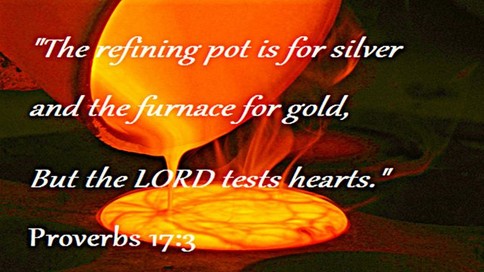
Yes, my dears, through the pains and difficulties of life many of us will feel used, abused, broken, crippled and useless. We may feel unimportant in the greatness that is all creation and we all ask what is our purpose, what is my purpose in life? But Christ Jesus came and sacrificed himself in order to renew each and everyone us. Christ came to give sight to the blind, hearing to the deaf and life to the lifeless. Christ is that fire through whom we must go through to be cleansed, the same way any precious metal is cleansed through fire. Christ came to teach us and heal us in order for us to find the purpose for which we have been created for. Not a new or replaced purpose but the original purpose, the original love which we see and witness.

A purpose for us having been renewed to also called to go forth and be a source of renewal for all others, for all creation. Young, old, sick, healthy, tall, short, black, white, male or female, ALL! – because the power of renew is in the power of God’s love for ALL creation. God’s love in the person of the Christ Jesus, who we must exemplify and share with each other. Not by preaching alone, but by loving solely.

Therefore, my dears, it is a renewed day and we are a renewed people to whom the resurrected Christ has been revealed. Though in the current situation we are in our homes – God’s love and our love is not limited by dry walls and closed doors. God’s love and renewal is available everywhere and at all times. However, we must desire to be renewed, with a greater desire than we have for new material toys, clothes, cars or experiences. As the prayer of St. Nersess Shnorhali beautiful commands –” When you come in glory, on that awesome day, Christ remember me. Making  old things new, make me also new, livened and adorned.” Christ is Risen, Christ is revealed, Christ is here and we all ask that Christ renews us and lifts us up from our brokenness. So that together we can glorify him with the Father and Holy Spirit, Amen! Christ is Risen!

Knock at the Door

Sermon for Sunday April 5, 2020 Palm Sunday
Passages

Zechariah 9:9 – 13; Philip. 4:4-7; Matt. 20:29-21:17

In the name of the Father, Son and Holy Spirit, Amen!

During coffee hour, as the pastor greeted everyone after Church service, he saw a new woman in their midst and wanted to introduce her and welcome her first visit to their small community. As the woman was introduced and the pastor said welcome, the lady put her hand up and asked if she might be able to say something. Surprised the pastor obliged and the women spoke, “I am not a person of strong faith, nor do I honestly believe whole-hardheartedly that God is always watching over me. However, I am also not someone who believes in coincidences. A few days ago, as I sat in my home and looked out on the rainy afternoon, I felt alone, isolated and in pain. I had no one to love and no one loved me in return as I have no children and my husband has passed for many years. After much thought I finally decided to attempt to take my life. As I prepared and climbed onto the chair, all I could think of in my head was, this is right, no one would miss me really.

Then I heard a knock at my door. I thought, ‘who could this be?’ And so I waited and thought it must have been a mistake. But again, a strong knock at my door. I figured I would ignore it and they would leave me alone. But again, a strong knock at my door! At this point I was irritated, who was this and why were they bothering me? I got down from the chair and made my way to the door.

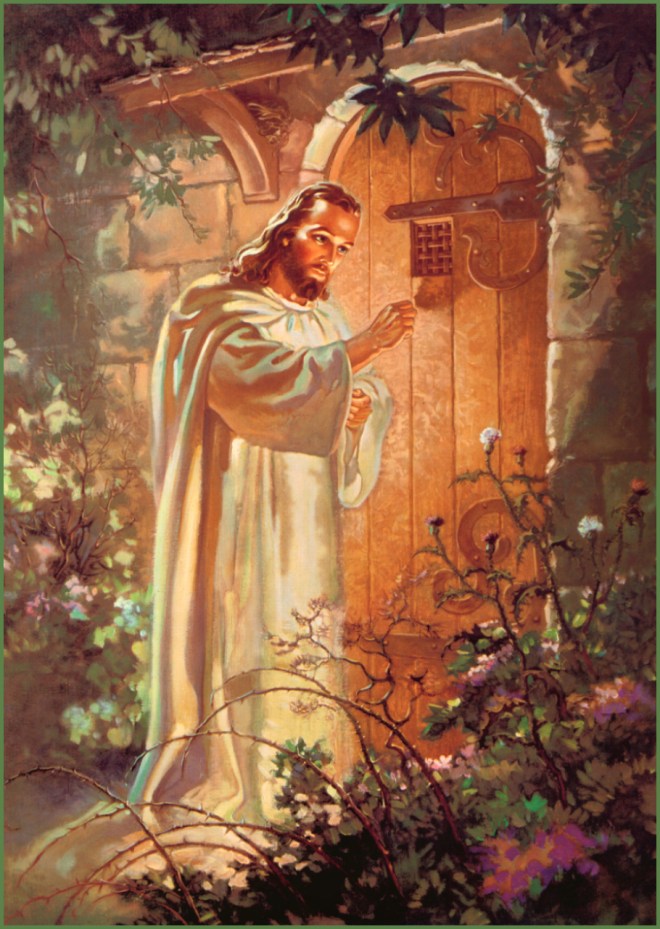
As I opened the door, I didn’t see anyone at first until I looked down and saw a child standing there, smiling as he said, ‘good afternoon Ma’am, I am sorry to bother you. I am from the Church down the street and I wanted to invite you to join us for Sunday prayer if you can.’ He then handed me a pamphlet and walked away. As I looked down at the pamphlet, it had an icon of Jesus on it and it read , ‘I knock at your door, who will answer to let me in? For I loved you so much, I gave my life for you, so that you may live.’ That is why I am here today because I opened the door, when God was knocking.”

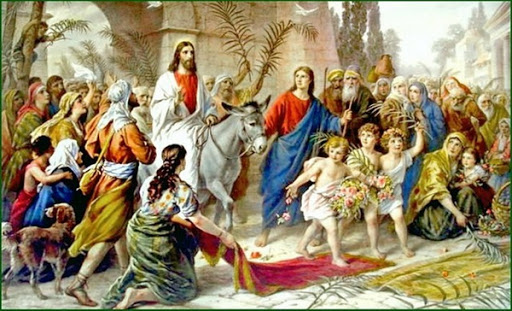
My dear brothers and sisters, I am sure some of you may have heard this story and whether it is true or not, the message of God’s presence at our doors and his love for each one of us is very real. This day, which should have been a day of great celebration, of joy and of breaking horizons, this day which celebrates Christ’s entry into the earthly Jerusalem where the Armenian Church conducts the rite of opening of the doors, opening of the curtain and our entry into the presence of God – this day, for many of us, feels lonely, isolated and cut off from that celebration. Every Palm Sunday for as long as any of us can remember, we faithful have gathered in Church as the priest has song the somber hymn of Open for us Lord – Բաց մեզ Տէր, where as children, we cry out to God and ask Him to open to us the doors of mercy so that we too can enter with Christ into the heavenly Jerusalem. Today, many of our Churches remain empty of the echoes of that hymn.

However, my dears, today remains a day of change. Today, I invite us to change our mindset and focus on a different “knocking”; of God knocking on our own doors. We often forget that our faith is a two way street. We come to God, we pray, we seek and we desire to build communion with Him, yet, the moment we step outside of the walls of the physical building, the instant we fall into distress and hard times or the moment we become comfortable and life gets easy, we forget God. We forget the words of our own prayers; we forget that our faith in God is not limited to the 4 walls and dome of the Church; we forget God. Yet, my dears, as much as we seek out God – we need to understand that God also seeks us out. For thus says the Lord GOD, “Behold, I Myself will search for My sheep and seek them out. (Ezekiel 34:11) The difference is that God never forgets us. God does not forget us when we are not in the physical Church nor does God forget us when we turn our back and deny Him with our choices and lives.

Today we are in a pandemic and we can easily fall into the temptation of saying God has forsaken us or else this would not have happened. However, my dears even in this sickness, even in our pain, even when we feel like there is no hope and we might as well be dead, God is still knocking in order to enter into our lives. Why? The reason He knocks, the reason God seeks us out is because He loves each and every one of us and desires for us to live in hope, in love and in peace. Yet, how many of us are listening when God knocks vs. how many of us listen only when we feel like we need God? Life get busy. Work, relationships, school, family, etc. However, God’s presence must be felt in all of the aspects of our lives and at all times. Yes, my dears, in today’s world especially as we continue to live our Holy Week physically cut off from the Church, we must not lose heart or be dismayed because even now we are still with God, if, we live our faith and answer His call when He knocks.

God will not force Himself into our lives nor will he break down the door. He will keep knocking. Even if we think that we can just ignore it and He will go away; God will keep knocking. Even when we have become deaf to his call; God will keep knocking because my dears, God demands from each of us the same thing He gives to us: love and communion. Love for Him through Communion with one another. That is what Palm Sunday is about. It is about God entering into our lives and showing us His love and his mercy through Christ Jesus, who illuminates and opens our eyes. That is why the Gospel reading today begins with, two blind men who yell out after Jesus, “Son of David, have mercy on us.” Christ moved with compassion, meaning love, healed their eyes and they began to see. Yet, what did they do after? “They followed him”. To follow Christ means to live according to His divine commandments, to love, forgive, repent, and show the same love and mercy we have received to those around us and to all creation.

My dears, we sing Open for us Lord, the doors of your mercy yet, we must also open our doors in order for God enter and to heal our eyes, hearts and minds – in order for us to recognize His love and mercy. Only then can we truly follow him, through a good life and a difficult life; in sickness and in health. Therefore, my dears I ask, do we hear God knocking? If we don’t, let us begin to remove the distractions that keep us away from God. If we do hear Him knocking, will we answer? Through the lives that we live, will we answer His call and allow Him to enter all the areas of our lives. Today is Palm Sunday; today God is knocking; today is our turn to answer, Amen!

Make Your Bed!

Sermon for Sunday March 29, 2020
Sunday of Advent
Passages:

Isaiah 66:1-24; Colossians 2:8-3:17; Matthew 22:34-23:39

In the name of the Father, Son, and Holy Spirit, Amen!

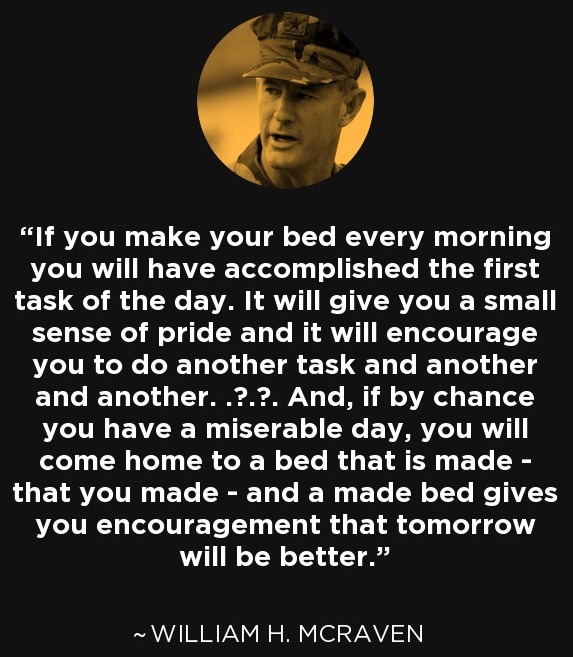
“If you want to change the world, begin by making your bed every morning.” US Navy Admiral William McRaven in his speech to a graduating class of Navy Seal’s addresses his audience about how to change this world. “If you want to change the world, begin by making your bed every morning. If you make your bed every morning, you will have accomplished your first task of the day. It will give you a small sense of pride and encourage you to do another task…Making your bed will also reinforce the fact that the little things in life matter.”

My dear brothers and sisters, though it may seem simple and unimportant in the grand scheme of things to begin our days by making our beds, yet, what we learn is that every small decision, every action, every choice ultimately reflects and shapes the life we live and the world in which we live that life. Today we see a world that lives in isolation, panic, fear, desperation and loss because of sickness, death and confusion. We see a world around us that, today, suffers from a pandemic known as Covid-19, but in truth it has been suffering much longer than this because of our carelessness and our lack of an appreciation for the little things in life – which leave the greatest impacts. Now you may ask, what does this have to do with our faith? In Isaiah we read, “Thus says the Lord: Heaven is my throne and the earth is my footstool; what is the house that you would build for me, and what is my resting place?” (v.1)

Today, we are celebrating the Sunday of Advent, the last Sunday of Great Lent prior to Christ’s entrance into Jerusalem on Palm Sunday. Advent means the arrival or coming – գալուստ. And so God is asking what kind of world am I invited to come into? We always speak about Great Lent as a period of preparation. Where we have more Church services, we have Lenten dinners and we make preparations for Palm Sunday and Easter. Yet, the true preparation that we often neglect is our self-preparation.

If God were to knock on our doors today and ask to come in, what would He find? I remember growing up, my mother would make sure the house was always ready and clean and that we had baked goods in the fridge, just in case we had guests. I am sure many of us have either seen this or experienced it. Yet, how many of us take that much pride and care in preparing ourselves, and ultimately this world, for when Christ returns? Last week in the reading, Christ asked, will the Son of man find faith in the world, when he returns? My dears, “do we make our beds?”

In other words, when it comes to our faith, do we take care of the little things such as saying a daily prayer? Do we repent and come to confess our sins? Do we fast? Do we apologies, not because we were wrong but in order to build relationships? Do we live lives that show gratitude towards God? Do we chase of momentary thrills or live a life of sexual immorality? Do we make excuses as to why we don’t go to Church? Do we love God with all our heart, soul and mind and do we love our neighbors as ourselves? Do we love ourselves? Do we make our spiritual beds, my dears?

In the grand scheme of things each one of these may seem small, insignificant, unimportant or a matter of our own private lives. Yet, it is these little things that prepare us for when the greater challenges we come face to face with. So that when disease, sickness, darkness and pain surround us, we will not lose hope, we will not feel isolated but rather we will be with God, and recognize that God is there with us. “All these things my hand has made, and so all these things are mine, says the Lord. But this is the one to whom I will look, to the humble and contrite in spirit, who trembles at my word.” (v.2) My dears, let us take a moment to reflect, to pray, to humble ourselves and ask, are we prepared? For those of us who say yes, then we must continue to prepare to strengthen our communion with God and help others on their paths. For those of us who honestly say no, let us start by “making our beds.”

Great Lent is almost over, however, every day, every choice, every moment is an opportunity for us to prepare by turning to God and humbly in prayer asking for His love and guidance. Even if we feel our prayer is simple and small, it is the smallest things that prepare us in the biggest ways – remember the mustard seed. Therefore, my dears may we all in this time of quarantine awaken with an appreciation of preparing ourselves for the coming of the Lord. Yes, the Church doors are closed, but access to God is always open and free. Seek it through the lives we live, and His love will always shine upon us and guide us to all understanding, Amen!

Social Distancing

Sermon for Sunday March 22, 2020

Sunday of the Unjust Judge
Passages

Isaiah 65.8-25; Philippians 3.1-4.9; Luke 17.20-18.14

In the name of the Father, Son and Holy Spirit, Amen!
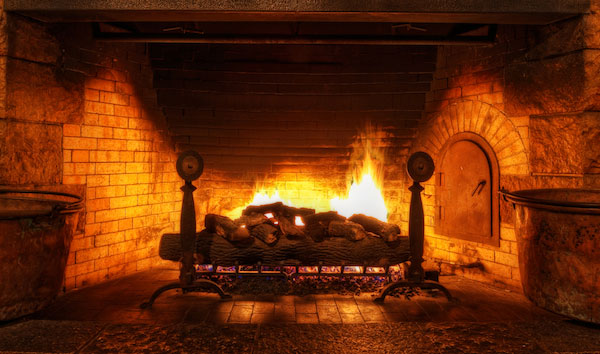
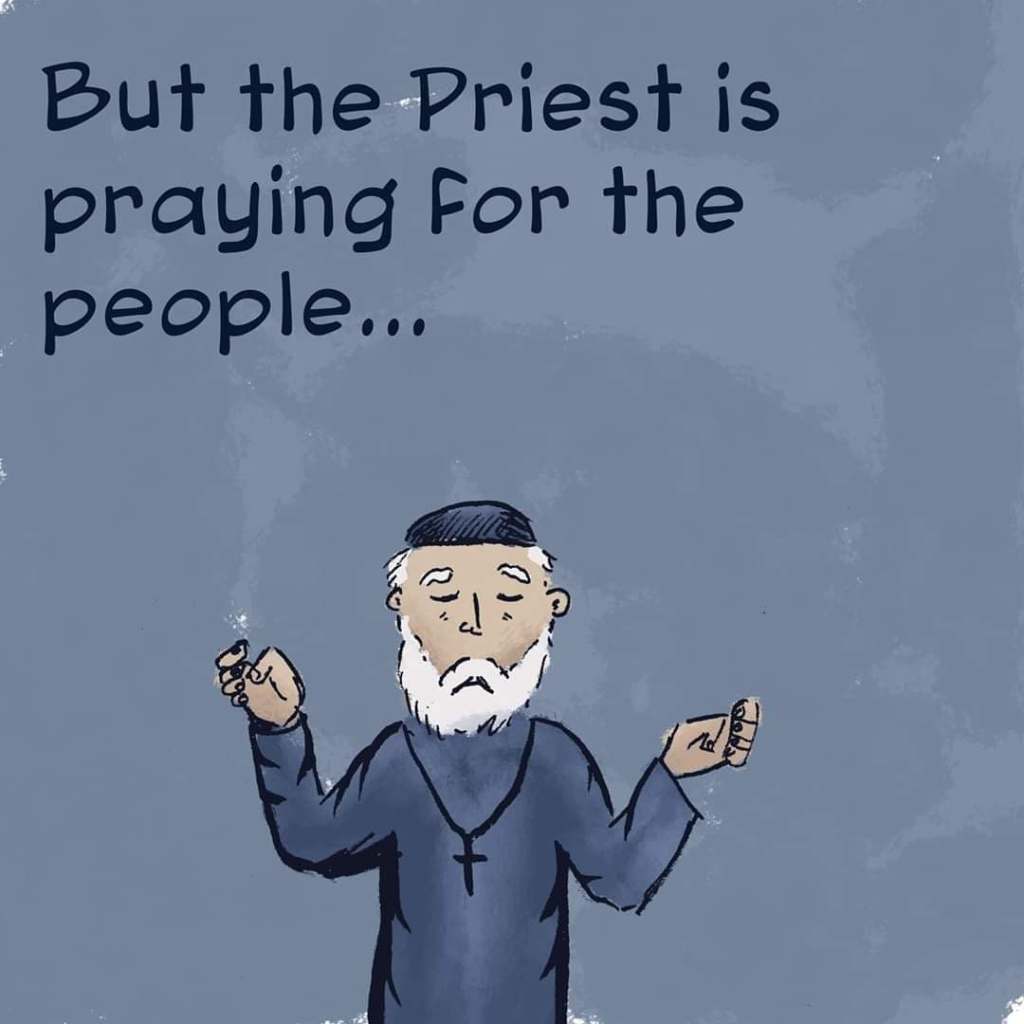
There was a faithful man who attended Church everyday. He knew the sharagans (the hymns), and prayers all by heart and with love and joy he attended as often as he could. He was active and participated in every way he could and he volunteered and helped other congregant’s come and worship. However, one day, as the man was in his prayers, he overheard someone in the congregation ridicule him. Hurt, the man slowly distanced himself from the Church and the people. He became bitter and grouchy and eventually, he just stopped going to Church. Days, weeks and months passed, he did not come to Church because he had been hurt and did not want to return. One day, his priest came knocking on his door. Angrily, seeing the priest, the man blurted, “come in.” The priest walked in and found the man sitting by his fireplace, rocking back and forth not even acknowledging the priest. The priest came, sat down next to him and for a few moments they stared at the crackling fire. Without saying a word, the priest grabbed the metal tongs and took one of the logs off the roaring fire and placed it on the stone floor. At first the log kept burning, but slowly and eventually, the logs embers died and it went out. After a few more minutes the priest picked the log back up and placed it back in the fire and within moments the log reignited and the fire grew stronger. Both the priest and the man stared at the fire. The priest got up without ever saying a word and walked to the door opening it, stepping out about to leave, when the man immediately said, “Thank you, Father, I will see on Sunday.”

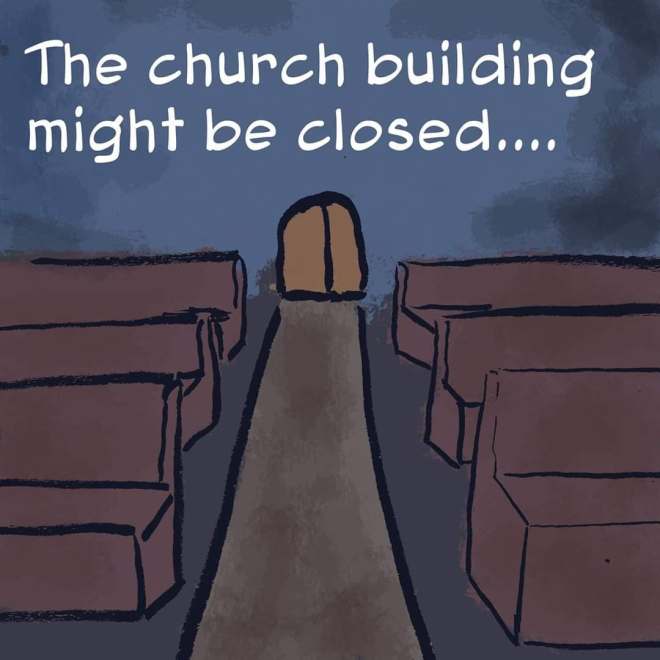
My dear brothers and sisters, today and in these days, many, if not all of our Churches remain empty from your presence. Because of the sickness and virus of Covid-19, we have been limited in our comings and goings and we are being taught to “socially distance” ourselves from one another in order to prevent the spread of today’s viral pandemic. However, my dears as important as it is to socially distance ourselves in order to prevent the spread of today’s virus, what we must not allow ourselves is to grow spiritually distant from one another and break communion with God. The Church as a physical building, a sacred home, serves as the heavenly realm on earth, the hospital for the spiritually sick, where we must gather and consume the body and blood of Christ Jesus, the Holy Eucharist. In these times, we are being taught that we must not go to Church to prevent sickness, yet, how many of us have kept a distance from Church, distance from God through our own choice for whatever reason, before “social distancing”?

Though social distancing was not practiced, how many of us have stories of hearing of how people distance themselves from each other because of how others look at how we have dress, how we talk, vote, sing or laugh? How many of us have felt this way? How often have we felt isolated, distant and alone even when we have physically gathered in Church? In cases like these, the Church no longer feels as the place of healing. We feel it is better to socially, emotionally, physically and ultimately spiritually distance ourselves, rather than deal with the virus of judgment and condemnation. Much like the Pharisee and the Tax Collector in today’s parable, both were physically in the Temple praying, yet they were very distant in heart and mind.

Through of the sin of arrogance the Pharisee, we read of how he physically, socially and spiritually distanced himself from the tax-collector and doing so he ultimately distanced himself from God. Yet, even then the tax-collector, who could of easily heard the open criticism about him, he did not wane in his faith and he did not get up and leave or distance himself but humbly continued to pray, in order to strengthen his communion with God. The tax-collector understood that just as he is a sinner and he is in need of healing, so too is the Pharisee. By not distancing himself from God in his heart and mind, the tax-collector prayers ultimately cleansed him of the virus of sin and strengthened his communion with God.

My dearly beloved brothers and sisters, we are all in need of healing today. Not only of physical viral infections, but also of the infectious mindset that we are better than others. If the Church is a place of healing, if the Church is a place where by communing with God, we become inflamed with His Divine love and light, therefore as children of God, through the lives we live and by how we treat one another, we must become a source of healing, a source of love and light. We must become Churches for the rest of the world and for ourselves, so that when we are in darkness, when we are being judged and are falling victim to sickness, when we are forced to not be able to gather in worship in Church, our own fires remain lite and do not die out. How is this done?

As we learn from the first parable today, through continual prayer. St. John Chrysostom teaches, that no matter where we are in the world, whether we are physically isolated or socially distancing, in a hospital bed or in quarantine at home, in a palace or in the desert, we become the Church by setting up an altar to God in our heart and mind through prayer. God our Father, hears those humble prayers and lifts us up, not because we are better than others but because He loves us, and because He desires for us to share that love with all creation.

This week has taught us and perhaps the coming weeks will enforce even more, that the Church, this body of Christ is not limited to the walls of a building only. Yes it is necessary to come and gather in a Church, because it is here where we receive that fire that keeps our faith burning. It is here, this physical presence of a sacred place, where the Eucharist, the body and blood of Christ is celebrated and offered up to us as “hope, resurrection, forgiveness and expiation of our sins”. However, our prayers are heard no matter where we are in this world. Our prayers are heard from the depths of our hearts and they are echoed and rise up as incense to God our Father – whether those prayers are said here in Church or in our own homes. Those prayers are heard because of the love of God which is given to us in order for us to begin to love each other.

My dears, God is allowing us to use this time in our lives, this opportunity of staying home, to spend time with our families, reflect and pray. We are in the second half of the season of Lent, and God has given us this time to fast not from foods alone, but from arrogance, anger, judgment, laziness, malice, racism, etc. God has created this day to teach us that no matter where we are, no matter what sickness, fear, darkness pain or isolation we face, we can build communion with Him through our prayers. “And even when we feel as though we are praying alone, the choir of saints and the hosts of angels surround us” – St. Clement of Alexandria.

My dears, I invite us to find a few minutes each day to stop, to breathe, to pray, to pick up our Bibles and read – and to do it with our families. To call each other on the phone or online using social media and the electronic devices we have been blessed with to remain connected to each other, because by creating communion with each other, our communion with God only grows stronger, the fire of our faith gets brighter and warmer. We have nothing but time in this moment, we have nothing but this opportunity, and we need nothing but the love of God, which is emanated through Christ Jesus to us. And if we have questions, reach out to your priest and ask. Because by doing so, our light grows, our love grows, our faith grows and we each become the presence of the Church and of God in the lives of one another. By doing so, even when practicing social distancing, we remain connected to God, we remain inflamed and thus bring healing to this world and remain spiritually and emotionally connect to one another.

May we through our prayers, in these difficult times be protected by the Holy Cross. May we remember in our prayers each other by name, our leaders by name. Let us remember our doctors and physicians, nurses and first responders and all those who put the lives of other ahead of their own safety. Let us remember all those across the world who have died or are battling this virus. Let us remember to keep praying, and the grace of the Holy Spirit will be with us all, Amen!

In Times of Uncertainty

Sermon for Sunday March 15, 2020

Sunday of the Steward
Passages

Isaiah 56:1-57:20; Ephesians 4:17-5:14; Luke 16:1-31

In the name of the Father, Son and Holy Spirit, Amen!

As I reflected upon what I could speak about today, my mind, my heart as I am sure all of our hearts and our minds could not get past the reality of what we here in the United States and majority of the people across the globe are facing. As is evident from the lack of the number of faithful physically present here in Church, as is evident by the canceling of schools, public events and workplace extended home stays, and finally as it is blatantly and sorrowfully evident through the behavior of panic and complete disregard of our neighbors needs across many grocery stores, in these times of uncertainty and sickness, we don’t know what to do. Uncertainty has gripped us all; uncertainty has crippled us; uncertainty has driven us into a life of fear. Where was the message of hope in all this?

This Sunday being the Sunday of the Unjust Steward, one sentence stood out to me more than any other in today’s parable through my reflections “What will I do, now that my master is taking the position away from me? I am not strong enough to dig, and I am ashamed to beg…” When we fall onto hard times, when we lose a job, when we fail at something large or small, when we become sick – the uncertainty of what will we do next grips our hearts and minds. How will we move on? Where will we find purpose, goal and healing? How will we overcome our ailments? Perhaps the story of the Unjust Steward in its fullness is not something that resonates directly with us in this season, however, the pain and the reality of uncertainty is something we are all struggling with. Regardless of the cause for uncertainty in our lives today, whether it is something happening at home, at our workplace, in our relationships, in our minds or whether it is the sickness of the Corona virus pandemic that we do not understand, all humanity shares in the experience in the fear of what we do not know.

It is easy to say that we must be prayerful and place our trust in God. Yet, as physical creatures that live in a tangible world, who have children and parents and grandparents, who have friends and colleagues, we want to know what we can physically, tangibly do to help combat and overcome our pain, sickness and hurt. What can we do now, what can we do in this time of sickness?

It is easy to say that we must be prayerful and place our trust in God. Yet, as physical creatures that live in a tangible world, who have children and parents and grandparents, who have friends and colleagues, we want to know what we can physically, tangibly do to help combat and overcome our pain, sickness and hurt. What can we do now, what can we do in this time of sickness?

On September 11, 2001 when the horrific acts of terrorism took place in New York, as the two towers collapsed, smoke and ash filled the air. All that could be heard was the screams and cries of people in pain, looking around lost and crippled in fear. Yet, in that moment, in the blackness of smoke and agonizing cries of despair, hope was found in those same people, who were equally as lost, equally as confused and in pain, yet, they ran into the pits, into despair, people ran in and began to dig and pull, to lift and raise one another out. Did the pain go away, no, did the confusion or tragedy disappear, no. But the answer as to what do we do next was answered. What we do next is: be love.

Being love to one another means caring for one another even from a distance through our actions. Being love means not exploiting one another, spending time creating hope and strength. Going into the pit and being with others in their darkness. Love is done by not going out and hording toilet paper and water. Love is done by not thinking that the materials we have or the money we have accumulated sets us apart. In the Parable of the Unjust Steward, our Church father’s teach us that this parable is not about how we, as stewards, treat God, our master, but rather how we treat, how we are stewards to one another, to all creation. We are all stewards of this world, as was established by God at the moment of creation. Do we act out of charity? Are we just, or do we take advantage of people and oppress others? This is why the parable of the Steward is followed by the parable of Lazarus and the Rich man. Material wealth, health, position, opportunities, clothes, gender, age, skin color, creed, ideologies, etc. none of these things make us better than those around us.

Rather, what lifts us up, what gives hope and clarity to us in these times of uncertainty, is the love and mercy that we as Christian’s find in the Person of Christ Jesus, which we are called to emulate.

Christ Jesus did not speak as a distant deity, but He is and was God in the flesh, who willingly suffered as we suffer. Jesus Christ chose to enter into this world of uncertainty, into our pits of despair, and face the uncertainties and struggles and pains of what it means to be human. But He was not overcome by them, but rather taught us that through Gods love and through our own actions in that love, we too can overcome those uncertainties and sicknesses.

Does that mean we don’t get sick? No. Does it mean that we don’t suffer and magically gain all the answers? Not likely. What it means is that we go through uncertainty and pain, we face it, fight it and rise above it and we do it together. When we buy food for our families, maybe we also buy something extra we can drop off for someone who doesn’t have the ability to go out and shop. When we buy cases of bottled water or food, we can also but an extra case and hand it out to those people living the streets that will only of tents as their areas of care and quarantine. I saw a number of people this week post online (and I also took it and posted it) that if there are any families or people we know who are unable to go to the store or are financially unable to make purchases in these hard times, to contact one another, anonymously, and help would be given.

That is what we do, my dear brothers and sister. That is our hope and answer in these uncertain times. In life, sickness and disease, failure and pain, fear and lies are present and evident not because we don’t wash our hands, but because we use our hands, our mouths, our eyes and ears as tools that only serve our own desires and we ignore our neighbors. St. John Chrysostom writes that lions and tigers out of their nature devour out of hunger to eat. Yet, humanity, which has been given the ability to think, speak, learn and grow, we fail and are worse than the wild animals because we go against our own nature of the Divine image. Yes, this corona virus and many other sicknesses like it have come and gone and will happen again. How will we respond? What will we do next?What kind of Stewards will we be to one another?

My prayer is that in this Lenten season, in these last few weeks, which is meant to be a season of charity, mercy, fasting and repentance, let us face the uncertainty with the desire to do good, the hope to do greater good and with the love that can heal all fear. Let us act with wisdom in a way that makes us good and worthy stewards and servants – examples of light in dark places, hope in fear and love in the face of hate and may the grace, hope and love of our Lord Jesus Christ, through the intercession of all the heavenly saints be with us all, Amen.

One Rule

Sermon for Sunday March 8, 2020

Isaiah 54:11-55:13; 2 Corinthians 6:1-7:1; Luke 15:1-32

In the name of the Father, Son and Holy Spirit, Amen!

Don’t eat meat, go to Church, love your neighbor, don’t slouch or sleep in Church, don’t have sex, pay your dues, don’t smoke, don’t drink, don’t laugh out loud, don’t color your hair, don’t dress like that, don’t do this, don’t do that.

For too many people in this world, for too many of us, the Church and our Christian faith appears to be a list of rules and regulations, do’s and do not’s, a means to govern society and our lives. All too often the Church is seen as an organized institution or an organized religion that sets up obligatory rules made to control. Faith begins to bog us down and we may begin to feel lost, struggling to keep our head afloat over all those rules – just as Peter did when he began to sink beneath the waves of the storm when he was afraid.

My dears, who among us has not felt this way about our Christian faith? Even more, if we say we have not felt this way, how honest have we been in growing and strengthening our faith? It’s easier to merely say, “too many rules I give up” or as today’s society does, “too many rules I don’t agree with therefore, I’m out.” Yet, Christianity, only has one rule, one measurement, one foundation which all those other man made rules must direct us to – that rule is Christ Jesus. Fasting, prayer, repentance, abstinence, charity, how we act, our we dress, how we talk, whether we drink, smoke, eat, etc. how we live out our physical lives impacts our spiritual life. That is why those rules are there; to help us physically live a life that continually builds communion with God through Christ Jesus. They are not meant to choke or drown us in guilt but to help build us up towards Christ. When we are lost, bogged down, isolated, pressured or when we don’t seem to be able to understand or accept the rules – what we must not lose sight of, what we are called to understand is that our Church, which has been given to us by Christ Jesus, is here to transform us, find us and return us to God. It is for us to hear the voice of God, come and be changed by the Church, not for us to change the Church or create a god in our own understanding.

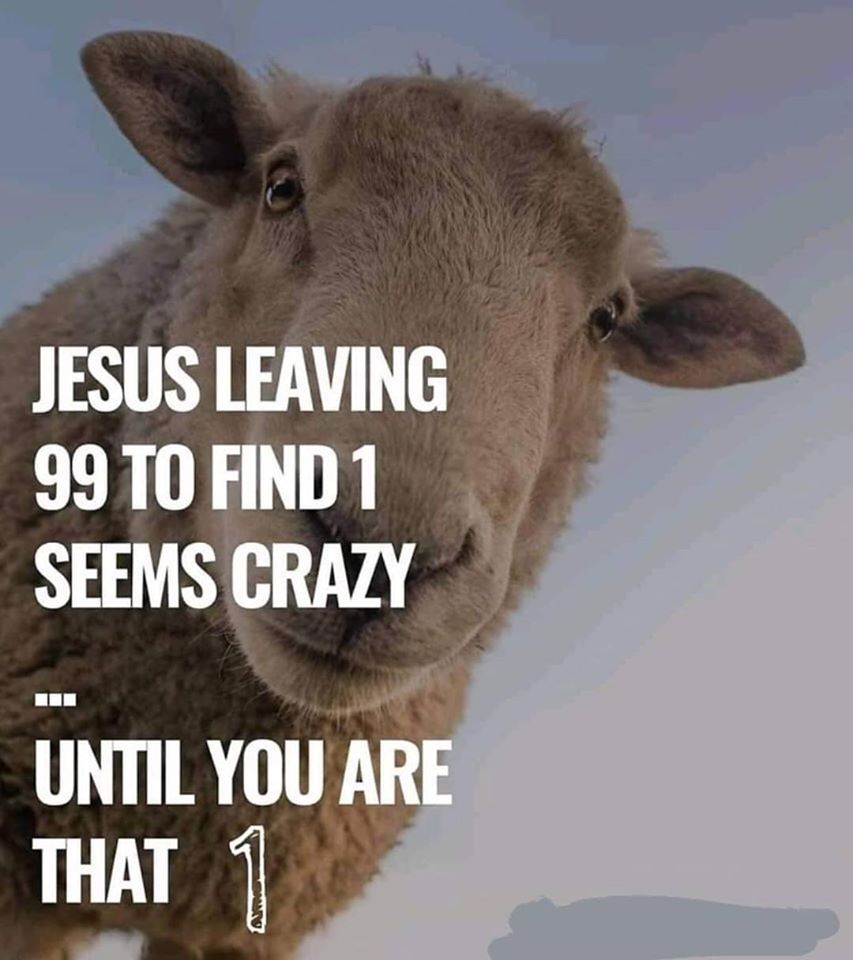
Today, the Armenian Church is remembering the Prodigal Son. However, apart from the prodigal son parable, in today’s reading Christ speaks of the lost sheep and the lost coin. We all know this story, of the shepherd leaving the 99 sheep and going out to look for the 1 lost sheep. Who here has seen a herd of sheep? What do they do? They graze, they eat, they stand around and they do nothing; They live out their lives. If it were not for the other shepherds and sheep dogs, they would wander off, they would get lost and be eaten by wolves.

My beloved brothers and sisters, we are the sheep. We are the 99, but we are also the one lost. We live our lives and the Church with its clergy and laity and all those rules serve as shepherds and the sheep dogs who are there to help protect us from wandering off. They are their as guilds for us to not lose sight of our True Shepherd, Christ Jesus. But when we do wander off, when we get lost, when we feel bogged down – Christ Jesus – the true shepherd leaves the 99 under the protection of all those rules, which serve as guides to hold us together, and He himself comes to find the 1 lost. Yet, much like the 99, what is the 1 lost sheep doing? Nothing. It’s living out its life yet, still the shepherd comes for him.

My dears, whether we are the 1 lost or the 99 in the herd, there is nothing we must or can do to “gain” favor with our shepherd apart from hearing His voice, trusting Him and allowing ourselves to be found, because our shepherd Christ Jesus comes after us, he calls us by name and when we get lost He places us on his shoulders and carries us back. Why? So that we will not be devoured by the wolves that wait for us to wander off and get lost.

And so when we look at all the do’s and don’ts that the Church sets before us, we are called to use those rules as mirrors for us to examine the life we live with our friends, in our work place, here in Church, online, everywhere and with everyone. Are we in the constant presence of our Shepherd Christ Jesus, is the life we are living building communion with God or have we gone after distractions and strayed from the herd, are we lost and confused? Whether we are in the 99 or the 1 at any moment in our lives, we must all heed the voice of Christ Jesus who calls and says, follow me and I will give you rest.

Therefore my dears, in the words of St. Paul today, “let us cleanse ourselves from every defilement of body and of spirit, making holiness perfect in the fear of God”. Meaning let us examine our lives, weigh out the choices that we make, test to see whether the physical life we are living is strengthening our spiritual life we hope to live, and if not, let us begin to adjust and ask how can we begin to clearly hear Christ’s voice. Let us ask questions and search for what is lost in the same manner that Christ Jesus, our true shepherd, searches out for us. For it is through Christ that we are brought back to the herd, it is through Christ that we grow in Communion and are made worthy to glorify the All Holy Trinity forever and ever, Amen.