A “Foolish” God

Passages: Is. 3:16-4:1; 1 Corinth. 1:25-30; Matt. 18:10-14
Ընթերցուածքներ՝ Եսայ. Գ 16-Դ 1; Ա Կորնց. Ա 25-30; Մատ. ԺԸ 10-14

In the name of the Father, Son and Holy Spirit, Amen!

I hated being picked last in school! Whether it was for teams, partners, co-op work, person to sit next too, etc. Being picked last never felt good. However, around the age of 12-13 when I grew to be both taller, and broader, whenever we had tag o war, football, or any other competition where being bigger and stronger was needed, I was often one of the first ones to be picked. This felt good. To be wanted and to have the qualities that made me feel important was pleasing. The truth is we all want to be wanted; no one wants to be picked last. That is why we tell our children and ourselves that hard work, commitment, and many other qualities are needed if we want to be first, if we want to be successful. Be stronger, be bigger, be smarter; read more, lift more, practice more; sacrifice, overcome and don’t give up. Yet, what is missing from those qualities my dears? Foolishness!

Now, you may be surprised that I would say foolishness is a good quality. As much as we all want to feel good and wanted, no one wants to be made to look foolish. But to understand what foolishness I am referring to, we need to look at St. Paul’s first letter to the Corinthians, 1:25 “Because the foolishness of God is wiser than men, and the weakness of God is stronger than men.” The word foolish that St. Paul here is using comes from the Greek μωρός (mōrós). In fact, we use this word in English as well, moron, as a derogative term meaning slow, dull, foolish, stupid. How could St. Paul be calling God foolish or stupid? I am sure if we wanted, we could all think of and describe a stupid or foolish person and the lack of qualities they have; what makes them undesirable. In the same way we can list qualities that make a person desirable. Yet, what St. Paul is indicating here is understood from the verses before this reading, “Where is the wise? Where is the scribe? Where is the disputer of this age? Has not God made foolish the wisdom of this world? For since, in the wisdom of God, the world through wisdom did not know God, it pleased God through the foolishness of the message preached to save those who believe.”

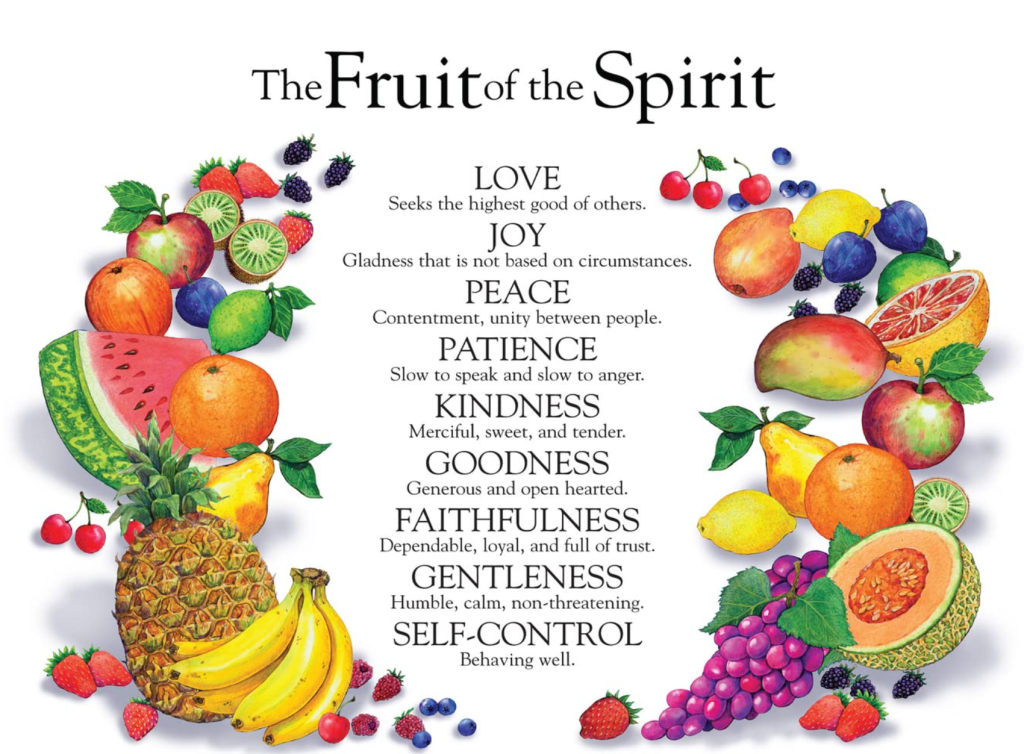
In other words my dears, for as brilliant as the Greek philosophers were, (remember this is being written to the Corinthians, a Greek city) as wise, strong and regardless of the good qualities they had, they struggled with understanding God. And the Jewish people, who are called the chosen people, even with all the signs and wonders, even though the witnessed Christ’s miracles, they did not recognize God. What this shows us my dears, is yes, the qualities that we strive to teach our kids, such as hard work, strength, wisdom and dedication, qualities we aim to have and which we would use to describe a successful person, as great as those are, what about the qualities of God? Qualities that this world calls foolish and weakness. Compassion, empathy, mercy, forgiveness, love, joy, peace, forbearance, kindness, goodness, faithfulness, gentleness and self-control. What St. Paul describes as the Fruit of the Spirit in the letter to the Galatians. What about those qualities? How much importance do we give to those? Vs. survival of the fittest, power of the sword vs. power of the merciful pen?
Today’s society tells us to be stronger, faster, smarter; live with no regrets; take action; take what is yours; etc. It is why people disregard the Word of God. It is why Christianity and God are seen as weakness and stupidity. For example, yesterday’s heinous act of shooting at former president Trump was just that. Loss of self-control, anger, fear, and vengeance. What was far more disturbing was some of the comments I heard people making on social media and elsewhere about how it’s too bad the bullet wasn’t a few inches closer, or too bad the shooter missed. Regardless of Trump or Biden, left or right, black or white, Armenian or not, how disgusting that today we justify the quality of anger over what God teaches us. That is why St. Paul says, God chooses the foolish; not the strongest, not the “so-called” wisest, or most successful. But those that the world would reject and pick last. 

Our value, the qualities of life we should strive for my dear brothers and sisters, are the qualities we see by Christ on the Cross: Humility, compassion, love; forgiveness, mercy and self-control. At His Crucifixion, the Jewish leaders, ridiculed Jesus to save himself. They thought their wisdom made Jesus to look like a fool and weak.  Christ, the Son of God, could easily have gotten revenge. In fact, He says this when He was being betrayed, and Peter draws his sword, Jesus responds with, “Put your sword in its place, for all who take the sword will perish by the sword. Or do you think that I cannot now pray to My Father, and He will provide Me with more than twelve legions of angels? (Mtt. 26:52-53) Yet, it is by the foolishness of this world that God saved us. My dears, Christ dying on the cross is not connected to how successful we think we are, how accomplished this world defines us as, or whether we are picked first or last. Christ came to die for all of us equally; to love us and heal us equally.  Which is why Christ in the Gospel today compares children and sheep to one another.
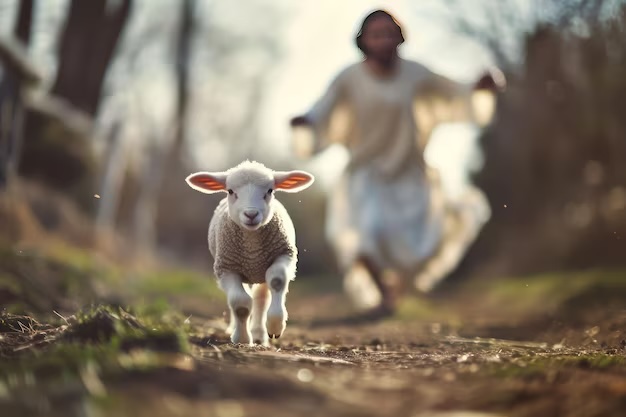
First, He says, to not “despise one of these little ones” because “the Son of Man has come to save that which was lost.” And continues to speak about how the shepherd goes out to find his one lost sheep because “it is not the will of your Father who is in heaven that one of these little ones should perish.” My dears, we are the little ones, we are the lost sheep; like children we desire the love of our Heavenly Father; and like the sheep, we have lost our direction, our purpose and what really matters in the end. Yes, be smarter, stronger, faster, hard-working, and committed. But also do not neglect the qualities of our Heavenly Father, compassion, mercy, meekness, love, humility, peace and self-control. Even if the world tell us those are worthless and weak, by learning and living with these qualities, we begin to grow and understand how as children we are called to be like our Father in Heaven. We learn that God always chooses us, He is not here to reject us for another. And if we find ourselves, lost, afraid, unsure and feeling unwanted, we know God comes looking for us all.

Therefore, let us pray for the Divine Wisdom and understanding that though we might be foolish to the world but by faith we recognize who God is. Through repentance, reading the Scriptures and living His commandments we will be worthy to be a child of God, Amen!

A $1 A Day!

Passages: Isaiah 3:1-11; Roms 11:13-24; Matt. 14:13-21
Ընթերցուածքներ՝ Եսայ. Գ 1-11; Հռոմ. ԺԱ 13-24; Մատ. ԺԴ 13-21

In the Name of the Father, Son and Holy Spirit, Amen.

One day, a man came to Church and began praying, “God I am tired and hurt. I am at my last straw, and I have nothing worth to give. My wife wants to leave me, my son won’t listen to me, and all around me my community is falling apart. If you can hear me, answer me and all I have is yours.” All of a sudden, in the middle of the prayer, the man was blinded by a light, as he heard a voice answering back, “my son, you have asked for me to hear your call, and you have promised to give all that you have to the Church. What is it that you think I want?” Amazed the man answered, “I don’t have much talent, nor a lot of money. But what I have, I will give.” To the surprise of the man, the Lord ask, “How much do you have to give?” To which he answered, “Lord I don’t have much; it is only $1440.” And the voice answered, “rather than giving it all at once, I command you to divide it up and every day, taking one dollar to use on your family, use to build your community, use it on your child and wife. And when you have spent it all, come back to me and I will answer your prayer.” Astonished the man promised he would do as he was told; after all it was a command from God. However, $1440 is not much my dears, and to use only $1 a day, what could he possibly do with that amount? Regardless, he had made a promise to God.

Therefore, he decided he would start right away and everyday he would spend his $1 allowance either on his wife, his child or his community and those in need; and as he left the Church, a beggar in the street came up to him. Recognizing this as the opportunity to begin, immediately he gave the man the $1. The next day, when picking his son up from school they got into an argument and so, rather than drive home, he drove to the local diner and ordered his son an ice cream and they sat in quite, while his son ate. The next day, coming home tired after work, a woman at the intersection before getting home approached his car as she was selling flowers. He gave her $1 and took the flowers and gave it to his wife. The next day, again he saw another beggar and without any thought to whether the beggar would use it on food, drugs, or alcohol, he gave them the $1. Eventually the beggars began to recognize him, smile and share a hello anytime they saw him. Again, every time he picked his son up from school, they went to the diner and quietly had a $1 ice cream; until one day the son, rather than sit quietly began to converse with his father. Likewise, realizing he couldn’t do much with $1, eventually the man asked his wife for them to go on walks through town, by the water or wherever it would be. And on those walks, he would spend his $1 on buying her ice cream, a nice card, popcorn, etc.

After 1 year, the $1440 the man had run out and he returned to Church and prayed to God. When suddenly the Lord’s voice asked, “my son, did you spend the money as I commanded you? Did you spend only $1 a day either on your wife, son or those in need?” “I did” replied the man. And so God asked, “and what about your prayer which you prayed a year ago?” The man replied, “my Lord the $1 I had each day was not much in today’s world. Therefore, I was forced to not think about what I could spend the money on but how I could spend what I did have. I began walking and talking with my wife, sharing laughter and stories, remembering our young love. At first my son would not talk to me but eventually the ice cream I could afford with the $1 gave opportunity for my son to share about his day, and struggles, to which I listened to and helped. As for those in the community, the beggars, and peddlers, those who are not well off, I did not see them merely as lazy people after my money, but someone looking for a warm smile and kind gesture. What I prayed for a year ago is not what I am struggling with anymore; my community is better, my wife and I love each other, and my son and I look forward to the time we have together. I am blessed to have all I do have.”

My dear brothers and sisters, so often we want God to answer our prayers, to change the world, give us what we want. We want revenge when we are hurt, healing when we are sick, and fulfillment when we feel lost and hopeless. And we often think that God is going to answer in some miraculous way. Yet, we often miss my dears, our proactive contribution to our faith. Please do not misunderstand me. It is by the grace of God, that we are saved from sin. Freedom from the bondage of sin, was crucified on the Cross through Christ Jesus. This is our faith! Yet, St. Basil emphasizes, “for it is by faith by which we are saved, as says the Apostle [but he continues] faith which works, manifests itself by love.” In other words, yes we believe in all that Christ has done for us, but just as Christ teaches us to believe, He also commands us that we must pick up our cross before we follow Him; our faith demands an action. We are not merely passive bystanders, indifferent observers or children asking for candy. Each and every one of us, who is a baptized child of God, meaning a prayerful, repenting believer, we have been called to do as Christ would.

Which is why in the Gospel today, where we read the famous miracle of feeding of the 5,000, when the apostles came to Christ and said, the people are hungry, his response was, “They do not need to go away. You give them something to eat.”(v. 16) In order to feed those who are in need my dears, we need faith, we need love, compassion, mercy, empathy. Yes, money is necessary in this life, but what we learn from the miracle of the 5,000 is not the quantity of what we have but the belief that no matter what we have small or big, if we give over to God, He will use it for good. His miraculous presence will be revealed through us. Again going to the Church Fathers, St. Gregory of Nazianzus gives the example of Rehab, who was a prostitute, yet she is justified in the Old Testament because of her hospitality (how she treaded others). The tax-collector in Christ parable was exalted for his humility (how he looked at others). Meaning my dears, we must ask ourselves, what is it that we think God is asking from us? Money, titles, experience? What do we think is necessary apart from living as Christ teaches us for God to hear our prayers, heal us, and feed us?

In the story of the man who spent a $1 a day, who can tell me what that means? $1440? Every day, my dears, we have approx. 24 hours; 1440 minutes each day. Imagine what we could do, if we spent 1 minute (not $1 but 1 minute) a day living our faith? Having compassion, listening to one another, being a shoulder to cry on, not looking at the external but the image of God in which we are all created in; imagine 1 minute of genuine prayer, repentance and love. Surely God will take that minute, and multiply it 100 fold; God will take our proverbial 2 fish and 5 loaves, and feed the world, heal the world. God will perform the greatest of miracles around us, through us, by us, and for us. God isn’t demanding we quite our jobs, leave our families, walk into the desert and do Badarak all day. God sees us, hears us and says, everyday use what I have given you, all creation, this life, 1-minute a day, to live by faith and we will indeed be fed and begin to feed others as well. And so by the grace of the Holy Spirit, with the Wisdom that is Christ Jesus and with the love of our Heavenly Father, let us ask ourselves, what can we do in faith with just 1 minute a day.

Sleeping In Seeds

Passages: Isaiah 2:5-11; Roms 8:30-10:4; Matt. 13:24-30
Ընթերցուածքներ՝ Եսայ. Բ 5-11;  Հռոմ. Ը 30- Ժ 4; Մատ. ԺԳ 24-30

In the name of the Father, Son and Holy Spirit, Amen!

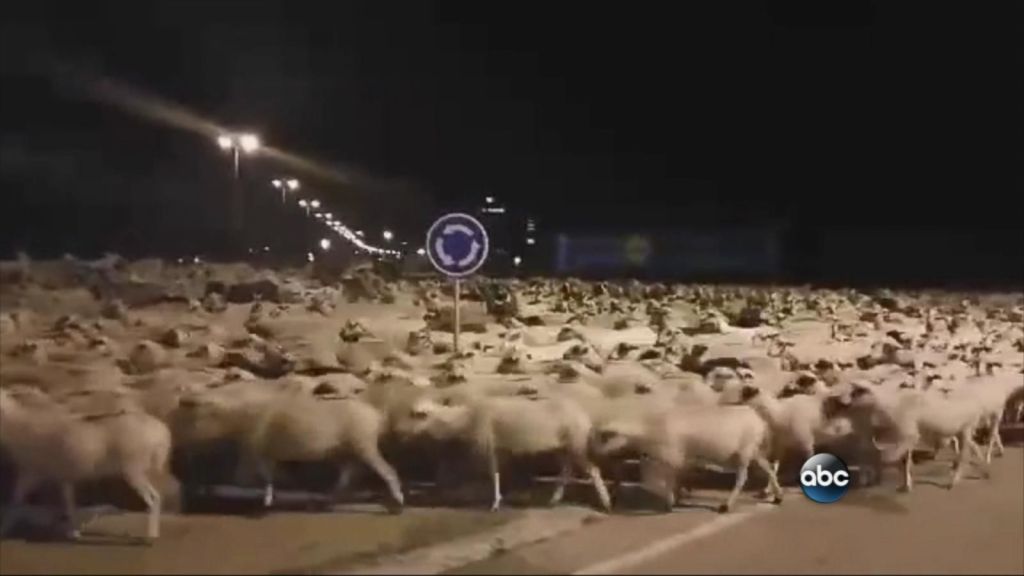
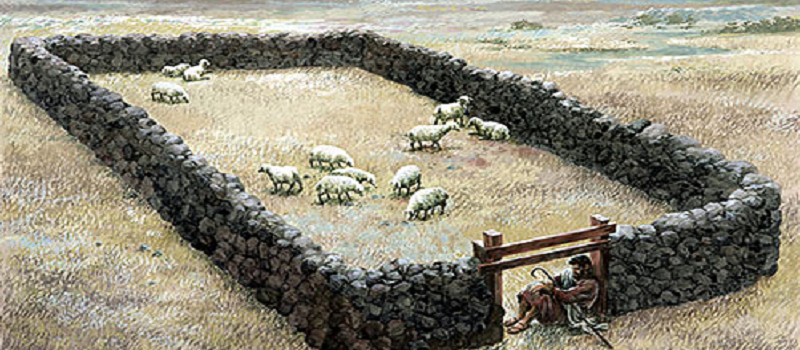
Imagine waking up early in the morning, getting ready to go to work, knowing full well that you are about to get caught in morning traffic, when all of a sudden you see the streets are full of sheep. In 2016, nearly 1,300 sheep wandered into the Spanish city of Huesca, (about 150 miles from Barcelona). How did these sheep end up in the city? Where was their shepherd and herder? It turns out the police after several hours of investigation found the shepherd, peacefully asleep in the field. The shepherd, who was called to guide these sheep had fallen asleep and caused all the sheep to wander off, and cause traffic, confusion and chaos in the nearby city for many people. And if you had watched the news coverage of this event, the anchors on the US News, couldn’t help but laugh. Perhaps we might get a chuckle out of imagining waking up and seeing our neighborhoods, or even the city of Chicago overrun by sheep. Yet, as humorous as the story is, the reality is it could have been much worse. Someone could have gotten hurt; the animals could have been killed; not to mention the headache of having to clean up and make sure the city is able to return to function orderly. All because the shepherd fell asleep.

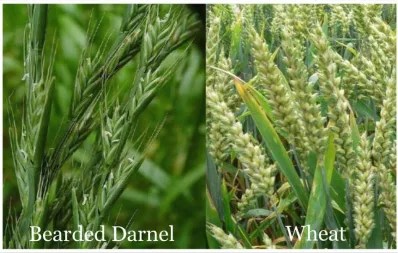
In today’s Gospel, Christ gives us a parable about good seeds being planted in the field. Yet, what follows the opening of the Parable, in verses 25-27 is “but while everyone was sleeping, his enemy [the master’s] came and sowed weeds among the wheat and went away. But when the grain had sprouted and produced a crop, then the weeds also appeared. So the servants of the owner came and said to him, ‘Sir, did you not sow good seed in your field? How then does it have weeds?’” Firstly, the weeds we read of in the Gospel of Matthew here are not just regular weeds. If we looked at the region of Palestine and the kind of weeds that existed, Matthew most likely is referring to what is known as a darnel. Why is this so important? Darnel very closely resemble wheat. As it grows unless someone is an expert, they would not be able to tell them apart. It is only at the time of harvest when the heads of wheat and darnel mature that you can tell them apart. So we read that when the grain had sprouted, meaning when the seeds had grown and began to mature and revealed their fruit or lack of fruit, the servants go to the master, the owner and say, you planted wheat, you planted healthy seeds not fruitless, not weeds, where did the bad seeds, come from?

My dears we know later on, that in verse 36-43, the disciples ask Christ to tell them what this parable means. Christ tells them that it refers to the end times; Of how the master is God, and the enemy is Satan that comes and spreads bad seeds. When the time of the harvest comes, when God’s angels are sent to reap the harvest, meaning us, then the good and bad will be divided. Yet, I want us to go back to verse 25 and especially how it ties into verse 27 – “(25) while everyone was asleep, the enemy came…(27) so the servants came and said to the master…” My dears, how often do we struggle with the reality of evil in this world? How many of us see pain, suffering and sickness? We often hear the argument that if God is good, why is there so much evil in this world? And it is this very point that St. Matthew is making in his Gospel. While everyone was asleep. Who is everyone? The shepherd, the pastors, the Church leaders, the parents, the teachers – us Christian’s. In the same way in the story of the sheep that began to wander off when their shepherd fell asleep, those of us who have been charged with staying awake, protecting, teaching, caring, loving and forgiving, we have fallen asleep. It is no wonder that so many of us get lost and wander off; it is for this reason why the enemy, Satan is able to enter into our lives, into our homes and Churches, and fill it with fruitless weeds that only cause harm.

What is more, just like the servants of the parable, what do we do when we get caught having fallen asleep? We often blame the master, we blame God. Didn’t you plant good seeds? Aren’t you all good and loving? Yes, my dears, God is good and only fills our life with fruitful seeds, planting goodness and love. But it is we Christian’s, who through our baptism’s have been given authority and a duty to remain awake, protectors and imitators Of Christ as St. Paul says, of the goodness for others. So that the enemy, Satan, will not be able to enter into our field and plant seeds of doubt, anxiety, fear, hatred, lust, hopelessness. This does not mean my dears, we are not allowed to sleep.  In Psalm 3 we read, “I will both lie down in peace, and sleep; For You alone, O Lord, make me dwell in safety. Our true peace of mind and of heart comes from the Lord. What Christ is reminding us however, is to not be indifferent, to not be lazy, or think that we have no part to play in the reality of good. God’s love for us is so deep that He desires for us to work with Him, to be His stewards, His shepherds, His presence of goodness, kindness, and compassion to those around us.

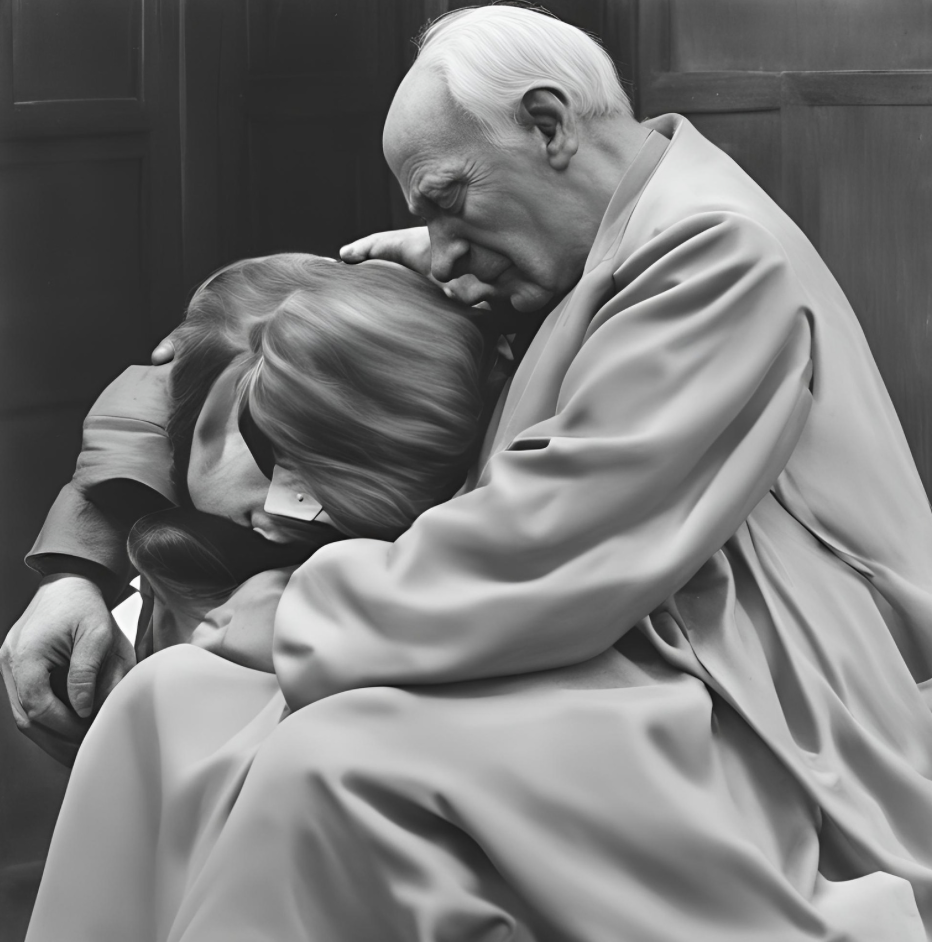
God is telling us that if you do see someone asleep, unaware, unprepared, through mercy and love protect them. In fact, if we saw someone asleep in Church, (during the priests’ sermons for example), what would we do? We would either laugh at them, or chastise them. In our mind we would look at them as lesser. Meaning the Devil would have entered our heart and mind and planted seeds of arrogance, hatred and judgement. We might think we’re in the right. After all we are awake! Yet, just because the seed in our heart looks like wheat does not mean it is wheat. Maybe it is the darnel weed, fruitless and masquerading as a wheat, causing us to for fall into sin. Rather my dears, one of my favorite stories of the Holy Church Fathers comes from an Egyptian monk who says about those snoozing during worship: “Whenever I see a brother who has fallen asleep during the services, I put his head in my lap and let him rest there.” For who knows what struggles they face that it is in the presence of God they have found peace and rest.

My dears, are we frustrated with the evils of this world? The fruitless lies, and sinful hatred that we are surrounded by? Then let us wake up – arise and remain vigilant, so that our true enemy, Satan, cannot enter into the field in which God has planted only good things. Let us remain diligent and actively spend time in prayer, fasting, confession and repentance not out of obligation or duty because it makes us a better person. Rather, because through those we learn about the good in our life; we learn to discern the weeds from the wheat, we understand what kind of fruit we bear through our lives and how to protect ourselves and those around us from the lies and temptations of the evil one. So that when the time of the harvest arrives, we will look to the East, and proclaim our faith in Christ. So that we will be gathered by the angels into the place of rest and rejoicing, where the saints, angels and faithful are gathered under the grace and mercy of our Lord. We will be with our master who is, was and shall ever be our source of goodness, hope and love. May the grace of the Holy Spirit keep us awake and protected now and always, Amen!

What’s In A Miracle?

Passages: Isaiah 1:21-31; Rom 7:25-8:11, Mt. 12:38-45
Ընթերցուածքներ՝ Եսայ. Ա 21-31;  Հռոմ. Է 25- Ը 11; Մատ. ԺԲ 38-45

In the name of the Father, Son and Holy Spirit, Amen!

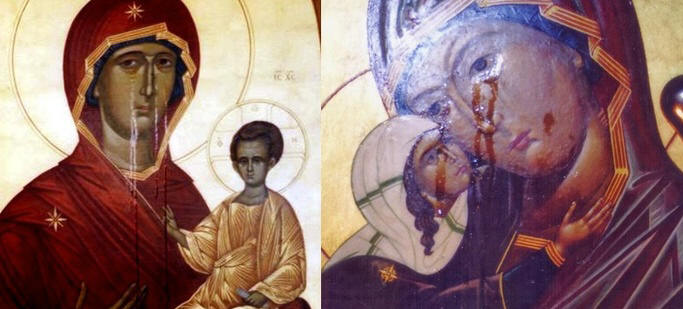
A few years ago, the Greek Orthodox Church down the street revealed on the News that they had a “weeping icon”. This miraculous event drew faithful and skeptics from all over the city. I remember I went to see it as did many of you. A few years ago, there was another Church in Cicero where this same miracle occurred – the icon of the Holy Virgin Mary began to weep oil. I’m going to be honest my dears, when I hear about such miracles, I don’t always jump out of my seat to go and see. I’m not a skeptic, I very much believe in miracles. I have witnessed several miracles myself; miracles that medicine and science could not explain; miracles perhaps some of you yourselves have experienced. The Holy Scriptures, the lives of the saints are full of stories of miracles, healings, strength, and most importantly of all – resurrection. Yet, as Orthodox Christians, miracles are not something we look for to validate or witness to our faith in Christ.

Rather, miracles for us Orthodox Christians are something to be optimistically cautious about, meaning we need to understand what’s in a miracle. Several years ago, a young man was at a Church camp, where miraculously an icon began to weep. Excited, the children at the camp ran to tell the priest of this miracle, and they asked “Father what could this miracle mean?” “He answered, we don’t know what it means, we’ll see what fruit it bears.” In the Gospel of Matthew we read, “Then some of the scribes and Pharisees answered, saying, ‘Teacher, we want to see a sign from You.’” They were saying to Christ, we want to see a miracle. Perhaps we’ve all had this desire; we have all said this prayer. “God give me, or show me, a sign.” Yet, our Christian faith is not based on seeing miracles; we are not called to seek out events or signs taking place. Rather, as the priest said, if and when miracles happen, they should be looked at with a discernment: “what fruit it bears.”

In 1980 December, a man named Wally Nelson discovered the body of a 19-year-old girl named Jean Hilliard, frozen on his doorstep; She had apparently sat for six full hours outdoors in -22 F Minnesota temperatures. Immediately she was brought to the hospital, where, to everyone’s amazement she was revived, with only a few blistered toes. A miracle; a medical marvel, right? Well what happened after this miracle? Jean became a celebrity overnight. She toured churches, appeared on talk shows telling her story: The miracle girl from Lengby, Minnesota. Yet, over the years, attention died down; her miracle was not that miraculous anymore. People became bored and began searching for the “next miracle.” Almost everyone she knew, medical professionals and friends told her she was saved by a miracle yet, it all stopped for some reason. Eventually she got married, had kids, and moved to central Minnesota where she works at Walmart – and everyone else moved on.

Was it a miracle? Undoubtedly! Yet, what fruit did it bear, my dears? Did it bring her closer to God? Did others renew their faith by seeing or hearing about this miracle? Or was it just the new sensation for a time until the appetite of people eventually wore off and interest in the miracle was lost? My dears, this is why Christ rebukes the Pharisees and says they will not get another sign apart from Jonah, “But He answered and said to them, ‘An evil and adulterous generation seeks after a sign, and no sign will be given to it except the sign of the prophet Jonah.’” (V.39) Why are they an evil and adulterous generation? All they wanted was to see a miracle. Well let us examine what does an adulterous person do my dears? They cheat and lie. They are never satisfied with their spouse. They seek pleasure and a false euphoric feeling through the indulgence, betrayal and devaluing who they are married to by seeking “fulfillment” elsewhere. The Pharisees and Scribes, much like society today, are like this. We ignore God; we are unsatisfied and are seeking a false pleasure. We only listen to God or follow Him when He fits our needs, fulfills our desires. At the cost of their own souls, the Pharisees ignored all the miracles, healings, feedings and signs Christ has already done – those which they, by the way, said was by the devil – and they wanted something new or else they would move on.

Christ isn’t saying praying for, desiring, witnessing or experiencing miracles is wrong. Our God is a God of miracles. We read in Psalm 77 “You are the God who does wonders;” Our God heals the blind, gives voice to the mute, cleanses the leper and gives life to the dead. Christ Jesus tells us to pray, to ask, to seek and we will find, we will be quenched, we fill be fed. Yet, what Christ is rebuking is that evil spirit by which we are seeking signs because if all we want is a “miracle to prove to us God exists”, through that mentality we make God into a stage act, a performance. As long as we are entertained and get what we want, we will remain interested. Or else, like an adulterous person, we will move on to the next “miracle” and performance. Elsewhere Christ again tells them “‘Most assuredly, I say to you, you seek Me, not because you saw the signs, but because you ate of the loaves and were filled.’” (Jn. 6:26) You’ve seen the signs but you believe me not because of the miracle but because of the momentary material want. Like the Pharisees, we too have already seen, read and heard of all the ways God works in our lives, blesses us – yet, do we ignore them? Perhaps we forget? 

Yes, miracles and seeing God work in our lives is wonderful and can help strengthen our faith but we believe regardless of those miracles. It’s amazing how some of the most faithful people are those who have seen the least miracles, who have suffered and carried the heaviest of crosses. Why? Miracles do not give us faith – rather, faith gives us wisdom to see and understand miracles. My dears, if we are so blessed to witness a miracle, whether it is a weeping icon, a healing from some sickness, an overcoming of pain and suffering – we need to ask ourselves, what fruit does it bear? Is the miracle we see and experience a reminder of how much God loves us; will it serve as an opportunity for us to continue to pray and read scriptures; will this miracle help us remain faithful so that our life will reflect the joy of Christ’s life everywhere we go? Or will we forget in a few weeks? Look for something more interesting? Or because of skepticism, ignore it completely.

My dears, we don’t come to God, pray, repent of our sinfulness, or read the Bible to make us feel good, fill our stomach’s, be entertained, get a miracle from or some other material gain. We come to God, because we believe that Christ Jesus, God the Son came to us, lived and suffered like us, died for us and through His resurrection calls us to live through Him. That is why St. Paul in Romans writes, “if the Spirit of Him who raised Jesus from the dead dwells in you, He who raised Christ from the dead will also give life to your mortal bodies through His Spirit who dwells in you.” (Rom. 8:11) Why do we pray? Why and what signs are we looking for? What fruit will it bear? Are we seeking our faith to be validated or are we looking for an opportunity to grow in our faith?

Yes, we are human and we may be forgetful sometimes. Which is why God every day invites us back to Him; through the Holy Scriptures, the Holy Church and through other people reveals Himself to us. For this reason, my dears, let us pray for wisdom and discernment; let us ask God to open our eyes and ears to hear Him and strengthen our faith today not only through miraculous signs but through love, and hope. And perhaps, through the grace of the Holy Spirit, our lives will be a reflection, a testimony of faith for others to see and witness a miracle; perhaps we are a miracle for others to come to God by yet, we don’t recognize it. Because assuredly my dears, as Christ tell us, there is no greater miracle, no greater joy and celebration on Heaven or on Earth then when one person repents and comes to God. That is a miracle that bears blessed and divine fruit – truly an act of God’s presence. May the grace and love of the Holy Spirit, guide and protect us in this life so that we will come to God, Amen! 

Sabbath Is Just Another Day!

Passages: Isaiah 1:2-15; Rom 6:12-23, Mt. 12:1-8
Ընթերցուածքներ՝ Եսայ. Ա 2-15;  Հռոմ. Զ 12-23; Մատ. ԺԲ 1-8

In the name of the Father, Son and Holy Spirit, Amen!

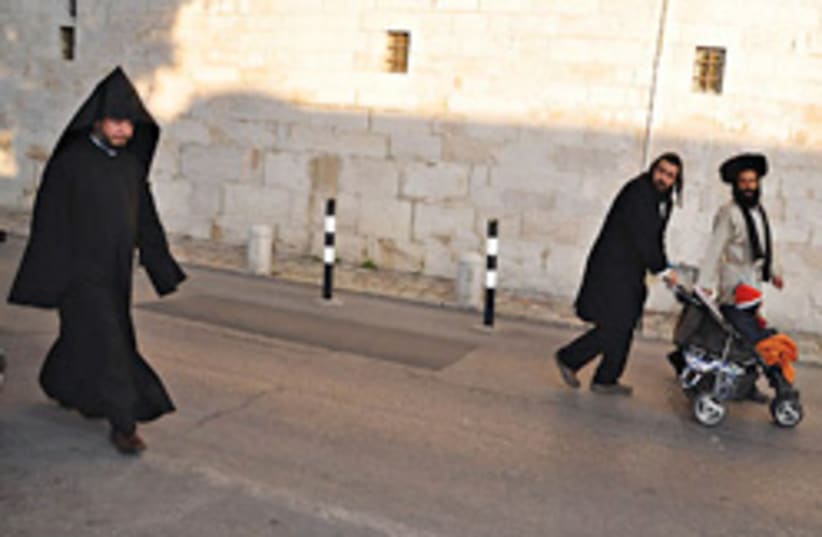
Back when I lived in Jerusalem, as some of you may know from my stories or from the news, as a Christian we experienced a reality of persecution that we don’t see living in North America. Orthodox Jews when they would see a cross or see us clergy walking down the street in our cassocks (black robes) or in procession going to the Holy Sepulcher for example, they would either vocally or quietly spit on the ground, in our direction or on us directly. As a result, we could either ignore them or more often a fight would break out, resulting in both parties being arrested for assault. To help show some hospitality and that this is not all Jews living in Jerusalem, one day a synagogue in the new city of Jerusalem extended an olive branch to us and invited us to their Friday evening Sabbath service. Following the service, we split up in groups of 2 and were invited to the homes of some of the Jewish families to share in a Sabbath dinner. Just like Armenian’s, for Jews and all Middle Eastern cultures, sharing bread is a sacred act not done with enemies. As me and my fellow seminarian walked with the Jewish family, to whose home we were invited, I noticed that the street we turned on was pitch black. As we approached the apartment building where they lived, we noticed that there was no power; the entire building was dark, while a group of men gathered on the outside. Before climbing the stairs, the Jewish man of the family asked me to flip the switch on the breaker for the entire building. As I did, the building lit up and we walked up and into their home for a pleasant evening of fellowship. I couldn’t help in that moment but to ask the man, if I had not been there, what would they have done? Why couldn’t they just flip the switch? The man replied, we would have sat in the dark until the Sabbath was over or asked one of the children who had not been Bar Mitzvahed or Bat Mitzvahed (in case of a girl) to flip the switch as the older one’s would not be allowed according to their laws.

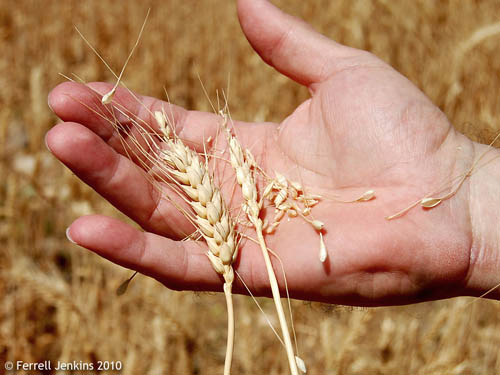
For us hearing this, it feels strange to imagine that even their modern interpretation of the mosaic laws forbids them from flipping a switch. Yet, we read from Scripture, that even in the times of Christ this same argument existed for the Jewish people. “At that time Jesus went through the grainfields on the Sabbath. And His disciples were hungry, and began to pluck heads of grain and to eat. And when the Pharisees saw it, they said to Him, ‘Look, Your disciples are doing what is not lawful to do on the Sabbath!’” (Mt. 12:1-2) The disciples are being criticized as unlawful, disobedient not to mere earthly laws but to the laws of God because they “plucked grain and ate.” This commandment comes to us from the Laws of Moses, specifically the 4th commandment of the 10 Commandments, “Remember the Sabbath day, to keep it holy.” (Exodus 20:8) Over the last several weeks, in our weekly Bible Studies we have been dissecting the 10 Commandments because for many of us some of the commandments are misunderstood, and Christ tells the Pharisees who are criticizing his disciples that they don’t really understand this commandment either. Elsewhere in the Gospel’s, only a few verses later, in Mt. 12 Jesus is again chastised for healing a man on the Sabbath, because again the Pharisees and Jewish people do not understand what the commandment of the Sabbath is about.

My dears, how many of us have full-time jobs here? Only a few years ago, before cellphones especially, we would go to work 9-5 and then come home. Work would not follow us home; we wouldn’t be bothered by our boss or clients to check emails and respond immediately. Apart from certain profession’s, most people would work 5 days a week and enjoy the weekend. Even in communities where agriculture was the way of life, when your animals slept, when the sun went down, work stopped. Yet, in today’s society, we are non-stop; there are a number of us who work multiple jobs to feed our families and pay our bills. As a result, what happens? Our families suffer; we focus on making money at the risk of our mental and physical health, and even more so our faith. Only a few short years ago, Sunday was when the family came to Church, prayed together; yet, today, so many times I hear from faithful, Der Hayr Sunday is our only day off to relax, to do laundry or clean the house. Compounded by with sports, extracurricular activities and such, we don’t have time for God. That my dears is what this commandment is about!

Yes, in 1st century Palestine, there was no NFL or playoffs, and the Jewish people did stop work on Saturday’s and go to the temple yet, today just like back then the purpose of that commandment was missed. The remembering of the Sabbath, to keep the Sabbath Holy was not about light switches or work, in the same way our Christian faith is not merely about going to Church on Sunday. This commandment is a reminder to all of us to make time for God in our life; to stop, slow down and work on our faith. To use that time, Saturday or Sunday (or any day of the week), to build up the relationships with each other by also building our relationship with God. St. Paul in 2 Thessalonians 3:10-13 says that “those who don’t work shall not eat.” In other words, work is good and necessary, but what about God? What about our Lord who created this world and called us to work it, be stewards and caretakers of it? My dears, this is so important because it is only by being with God do we find faith, healing, strength, hope and forgiveness for our sins. When we neglect our faith, our relationship with God, and when we fall into hard times, we blame God; we feel lost and ashamed; we are filled with fear, anxiety and we begin to fall even further away from God. We begin to think that either we are beyond redemption, that God has turned away from us, God doesn’t exist, or that if we fulfill some sort of obligation like coming to Church once a week, writing a check, singing in the choir, volunteering at a soup kitchen or lighting a candle, than through that act, we have pleased God.

Yet, that is not faith; those rules are not to gain favor with God. Which is why Christ says, that “I say to you that in this place there is One greater than the temple. But if you had known what this means, ‘I desire mercy and not sacrifice,’ you would not have condemned the guiltless. For the Son of Man is Lord even of the Sabbath.’” God is the purpose of the Sabbath, not the “rules” we follow or don’t follow. Christ Jesus is our Lord whom we remember by coming to Church through repentance, through prayer, through love. A love that removes the stain of sin from our life, Rom. 6:12 “For sin shall not have dominion over you, for you are not under law but under grace.” Christ is the reason we choose to follow the rules, come to Church, pray, etc. St. Eusebius of Caesarea says, The day of his [Christ’s] light . . . was the day of his resurrection from the dead, which they say, as being the one and only truly holy day and the Lord’s day, is better than any number of days as we ordinarily understand them, and better than the days set apart by the Mosaic law for feasts, new moons, and Sabbaths, which the apostle [Paul] teaches are the shadow of days and not days in reality” (Proof of the Gospel 4:16:186 [A.D. 319]).) In other words, through the death and glorious resurrection of Christ Jesus, by which we are saved from our sin, also the days of the week, celebrations, feast days, etc. they received meaning and purpose, through Christ. Even this today, Sunday. What does it mean? In Armenian today is what day of the week? Kiraki, from the Greek word, Κύριος (Kyrios, Lord) – the Lord’s day.

My dears, whether it is Sunday, Saturday, Christmas, Easter, morning, evening, alone, with friends and family, driving, sitting in Church or at home, how many of us truly remember the Lord? How many of us take time to stop, calm ourselves, turn to God and open ourselves to understand how much our Lord loves us, desires us and has given us the tools by which we are called to know Him? vs. how many of us live out of obligation, put more emphasis and importance on baseless actions, and in the effect forget God and His love which is what gives us healing, freedom and hope. That is what this commandment, and all the commandments are about. They are tools by which we are taught how to draw closer to God.

Therefore, I invite each one of us to take a moment, 1 minute each day, (if you have to put it in to your phone calendars as a reminder), to stop, force ourselves to pause and either read scripture or say a small prayer. Actively plan on attending Sunday Badarak, or if you need to, call your priest and come during the week alone or with your family. Come and remember the Lord your God, remember not the Sabbath as an obligation but as an opportunity to ask for God’s healing love in our lives. Because one day the street we turn on, the home we are in, the community we live in may spit at us, may persecute us and reject us; and the room may feel dark.  If we are with Christ than perhaps, we will be the one called on to flip the switch, illuminate the room, heal this world with the same love God has loved us with. Our lives will be filled, we will grow stronger; if we are in the dark, the light switch will be turned on and through us, our families, our communities and our Churches will be healed, will be fed, will be protected, illuminated and all will see His light and glorify of God our Father, the Son and Holy Spirit, now and always, Amen!

A Gust of Wind

Passages: Acts 2:1-21; John 14:25-31
Ընթերցուածքներ՝ Գործ. Բ 1-21; Յով. ԺԴ 25 – 31

In the name of the Father, Son and Holy Spirit, Amen!

I love this time of year! Especially living in Chicago, the weather is finally getting warmer, and we are seeing more of the sun. Along with the weather changing we see people changing as well.  People smile more and are in a better mood when the weather is nice. Short sleeves, cold drinks, BBQ’s, food festivals, celebrations and of course use of the beautiful Lake Michigan. There is something about being out on the water that is relaxing, and at the same time terrifying. I never learned how to sail but it always fascinated me to be on the water, unsure of what was below. Today we use technology and we go out onto the water with yachts, speed boats, or even some modern sail boats. Yet, for most of human history going out into the water, being able to enjoy the sun from the water could only be done 2 ways, with oars, paddles, or if you had a bigger boat, the wind on the sails. And the winds play a crucial role in many areas of our life.

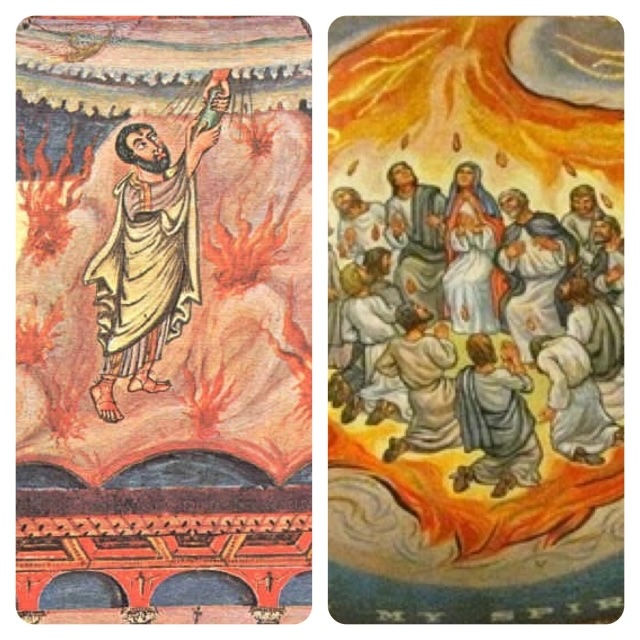
Whether we are out on the water, or walking down the street, though we love the summer weather, when it’s too hot, a fresh gust of wind, gives us relief and peace. That little soft breeze on our face rejuvenates us, or the gust of wind against the sails both allow us to keep moving forward. It is perhaps for this image that Christ speaks about the Holy Spirit coming to us as wind. In the story of Nicodemus, which we read during our Baptism service, Christ tells us that “You must be born again. The wind blows where it wishes, and you hear the sound of it, but cannot tell where it comes from and where it goes. So is everyone who is born of the Spirit.” (Jn. 3:7-8) The word for wind, which in Hebrew is ruach, is the same word we find in Acts 2, in the story of Pentecost.  This wind, this power and freshness uplifted and moved the Disciples opening their tongues as we know from the story of Pentecost. For many, we read and celebrate the Feast of Pentecost as the birth of the Church, when the Holy Spirit opened up the Disciples tongues and the Gospel was able to be taught to all peoples. Yet, if we see this event merely as the start of the Church, as history, we miss out on something very important. What about the ruach in our life, where do we feel the wind moving us in our life? 

My dears in life we have 2 types of wind. We have winds that blow in our life and which cause storms to rise up against us. Those winds are violent, dangerous and fill us with fear of sinking. Winds of addiction, depression, hate, etc.. However, the winds of the storms in our life are not the wind of which brings to us the Holy Spirit. In the C.S. Lewis Chronicles of Narnia series, in the 4th book The Silver Chair, there is a moment when the 2 protagonists, Eustace Scrubb and Jill Pole find their way into the a mythical land. While there, they find a cliff, where Jill approaches the edge, and Eustace, trying to pull her back to safety, falls over the edge. In that moment, it is Aslan, the main hero of the Narnia series who symbolizes God, appears and saves Eustace by blowing a powerful wind and sending him on a wind stream to Narnia, to safety. My dears, the wind that brings the Holy Spirit, the wind that Christ refers to and which fills the upper room is like that of a calm summer breeze, a stream, which comforts us, renews us and most important of all causes us to move. A wind that does not blow us over the edge into the abyss but towards safety. A strong, powerful wind that pushes the sails of boats on the water to move in the right direction, the same way that after receiving the HS, the Disciples began to move the hearts of those who listened to the Gospel message, of how Christ died upon the cross for our sins and who by His loving grace moves us, lifts us up, renews us from death to life.

In the book of Acts we read that in that time of Pentecost, the Jewish people were having a feast; the feast is known as Shavout. In Judaism, Shavuot combines two major remembrances, the grain harvest of the early summer and the giving of the Torah, the 10 Commandments and the Laws of Moses on Mount Sinai seven weeks after the Exodus from Egypt. For the Jewish people, much like most agrarian cultures, the harvest signifies an important reminder of God’s blessings. Another season of food, of nourishment and caring for our needs and being able to feed our families. And the latter, the receiving of the 10 Commandments on Mt. Sinai is the moment when the Jewish people received their understanding of how to live and be different than those around them, those who do not believe in God. My dears, when we receive the Holy Spirit, when the winds of God fills our soul we begin to feed on His Word; we begin to understand God’s love, hope and grace. We learn what it means in our prayers “Give us this day our daily bread…” That God is not merely a god that fills our stomachs or gives us material happiness. But God’s love is that calming breeze, that gentle wind that gives us strength even when the hot weather is bogging us down.

Furthermore, when we receive the Holy Spirit, we receive the wisdom, the illumination and purpose of how we are called to live, to move, to act, to behave in this life, how we are called to be imitators of Christ Jesus. “But the Helper, the Holy Spirit, whom the Father will send in My name, He will teach you all things, and bring to yourremembrance all things that I said to you.” (Jn. 14:26) Yes, my dear brothers and sisters, whether we are up on a mountain, out on the water, walking down the street, in our homes looking up at the sky on sunny day, the beauty of this world is both enjoyable but also terrifying. What lies below or what is in the Heaven’s above is there for our wonder and amazement. Yet, we do not live in fear; we do not live with uncertainty, and we do not live stuck in one place. The winds will blow, the soft wind will kiss our face, lift us up, move our sails, push us forward and teach us who we are, who God is and what is our place in this world. Because our Christian faith is one of movement and growth, of sowing and harvesting, of setting us apart from the rest of the world. If on a summers day when we step outside and enjoy the weather, and change our behavior and outlook on life, imagine what God can change in us when we step out with the presence of God. 

Cat In the Box

Passages: Acts 20:17-38; 1 John 3:2-6; John 9:39-10:10
Ընթերցուածքներ՝ Գործ. Ի 17-38; Ա Յով. Գ 2-6; Յով. Թ39 – Ժ10

In the name of the Father, Son and Holy Spirit, Amen!

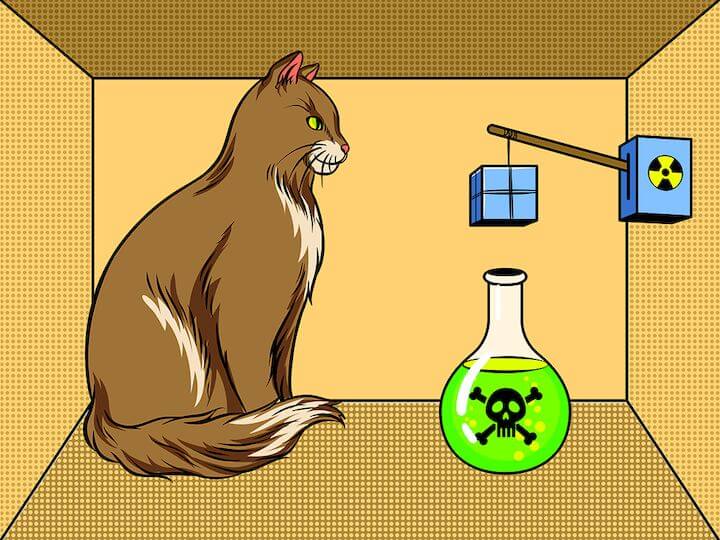
In the world of quantum mechanics there is an experiment created by Austrian physicist Erwin Schrödinger known as, Schrodinger’s Cat, a.k.a The Cat in the Box. Without going into the technical scientific jargon, Schrodinger’s Cat is a theory that says, that if you place a cat into a box with something that can eventually kill it, you won’t know if the cat is alive or dead until you open the box. So, until you open the box and observe the cat, the cat is simultaneously dead and alive. The truth in the box is unknown; what we know for certain is that there is a cat, there is the reality of danger, and the outcome is either traffic or joyful. While this experiment is designed to ask questions about quantum mechanics, there is a truth that can be applied to our faith.

As Christian’s we learn from a young age about Jesus. We learn about God loving us, forgiving us, helping us. We sing songs and teach our children songs with joyful words, “Jesus loves me this I know for the Bible tells me so” or in Armenian Soorp Astvadz, Soorp yev Hzor… (Holy God, Holy Immortal…) But in life we experience suffering, we experience failure and hurt. In the same way we know of the cat and the danger present in Schrodinger’s experiment, likewise, we know of Jesus and the presence of sin in our life. Yet, my dears, only by opening the box will we know the truth of what is inside, likewise, only by “opening” the gate to God will we know the truth that is inside. In the Gospel of John we read, “Very truly, I tell you, I am the gate for the sheep. All who came before me are thieves and bandits; but the sheep did not listen to them. I am the gate. Whoever enters by me will be saved, and will come in and go out and find pasture.” (Jn. 10:7-9) I am the gate, I am the door, my dears, means it is by coming to Christ Jesus alone, that we can learn the truth, the fullness of God. It is only through Christ we begin to understand how we can live our life with hope, joy and love while in times of danger, suffering, pain and hurt. It is only through Christ that we can know God.

Our faith is not a theory, it is not a “feel good” or motivational mindset written in songs; our faith is a relationship, a deep Communion with our Heavenly Father and that relationship brings to us a real knowledge. A real knowledge, which we call an illumination through the Holy Spirit of who God is and what that means for each one of us. So many people these days argue “which religion is the true religion”, “which God is the real God.” Or if God is not someone we are interested in, we ask, who am I? What is my purpose? And while grappling with both, we ask, how is it possible that I struggle, suffer or why do others suffer in this world if a loving God exists? In the Psalms (86) we read, “Among the gods there is none like you, O Lord; Neither are there any works like your works.” What the Psalmist is referring to is not that there are many gods out there but that no one and nothing that we have created, thought of, or designed in our life and made into “gods” compares to the One and True God. Also, how God works, how God is active in our life, what thy Will is, is not limited to our understanding; We don’t decide who God is, what is acceptable in His sight, what He could, should or would do. We make statements like God is love, God is Hope, God is good, etc. Yet, sadly, too many of us live the other way around; today’s society puts love as god, hope as god, health, wealth, our own ambitions as god… We choose to decide who or what God is when we struggle to define we who are as humans. We make gods (small G) for us and when we fail, when hurt, pain and suffering surrounds us and we find no answer, no guidance, and no hope, we blame God (big G).

Yet, my dears, the only thing we can do, what we are invited to do, is open the box, “open and enter the gate” through reverence, love, repentance, and prayer, and God will illuminate and reveal to us who He is and what His will is and who we are in that will. St. John in his letter says, “What we do know is this: when he is revealed, we will be like him, for we will see him as he is. And all who have this hope in him purify themselves, just as he is pure… (1 John 3:2-3) My dears, yes we know evil, sin, suffering, hurt exists in this life; we know that in the “box” we call life, there is danger. Yet, when we open the proverbial box, when we enter into Christ and live this life in faith, we will also know God, we will know how to live as God created each one of us to be – as His beloved child. We will understand that through Christ on the Cross, the danger in this life is temporary and will pass. And so, my dears, how do we enter the gate

By opening our Holy Scriptures, by participating in the Sacraments of the Holy Church actively, learning, seeking, knocking on the gatedoor, and asking God to let us in. To open the box is to be revealed to the truth; God came to reveal to us His truth which had been blinded to our eyes because of sin. Until we open the box, what is inside will remain hidden; we will not fully know God or ourselves. What we will know is merely what we “create” in our heads. Therefore my dears, come to Christ, pray for wisdom and peace, love and hope not based on our limited understanding but through the Holy Spirit let us pray for an illuminating understanding, where God our Heavenly Father is revealed to us and reveals to us who He has created us in this life for be despite of the evil that is around us – We are His beloved children. Open and seek, come and ask, pray and listen and we will in this life come to know God, come to know ourselves, come to know the truth of life. Glory to my God, glory to my God, for all things, glory to our Lord, Amen!

Harvest, Broken, Washed Into Salt

Passages: Acts 17:1-15; 1 John 1:1-10; John 7:14-23
Ընթերցուածքներ՝ Գործ. ԺԷ 1-15; Ա Յով. Ա 1-10; Յով. Է 14-23

Քրիստոս Յարեաւ ի Մեռելոց. Օրհնեալ է Յարութիւնն Քրիստոսի
Krisdos haryav ee merelotz! Orhnyal eh Harootiunun Krisdosee!
Christ is risen from the dead! Blessed is the resurrection of Christ!

In the name of the Father, Son and Holy Spirit, Amen!

So often we hear, see and feel the evils in this world! We see on social media, hear the news, or even experience in our lives the very real presence of sin. Sickness, suffering, despair and hopelessness are not foreign to us, we don’t need to read about them as if they are some far off and distant exercise. We are all struggling with something; we have had or still do face demons, know loneliness, pain and all of us have questions about the way our life is, the way society is declining, and so forth. It is easy to become anxious, fall into depression or confusion. Yet, my dear brothers and sisters, our Lord Christ Jesus tell us this is the reality of life. Christ, tell us that this world is sick. (Lk. 5:31-32) He doesn’t sugarcoat or lie to us that if we believe in God, then we will not see pain. Yet, Christ also reminds us that this pain is temporary; that He inviting us into Holy Communion with our Father in Heaven, is here with us to heal us, heal this world, our homes, our society, our communities of all evil. And in that invitation, we read in the Gospel of Matthew (5:13-16), we are not passive bystanders, only meant to be present but actively involved as the salt of the world.

Salt gives flavor, it preserves, it protects, and it brings more than what is merely on the surface. St. John in his letter writes, “That which was from the beginning, which we have heard, which we have seen with our eyes, which we have looked upon, and our hands have handled, concerning the Word of life— the life was manifested, and we have seen, and bear witness, and declare to you that eternal life which was with the Father and was manifested to us…” (1 Jn. 1) That which we have heard, which we have seen, which our hands of handled. I’m not sure how many of us know where salt comes from. Though it is a natural resource, the salt that we enjoy in our homes needs to be harvested, broken up, washed, refined and processed into what we enjoy in our foods. It is the end product that so many of us enjoy, that we use in our recipes and medicines and it is that end product that Christ reveals to us that we are called to be. 

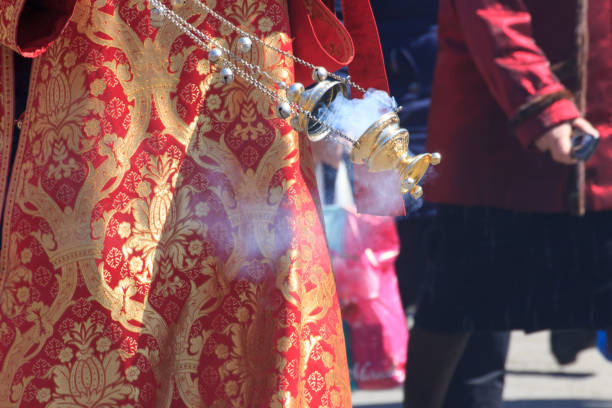
This means my dears, that our faith, being in Communion with God, being a Christian requires us to be processed, broken down, washed, refined and transformed into who God is calling each and everyone of us to be in this world. Sometimes this hurts; it is not always safe and easy. Yet, it is in the darkest places, in the times of the most loss where if remain prayerful do we see, and experience God’s real presence. How? Through the love of others around us. This is very important because so many of us want our faith to be tangible, to be something we see, feel, enjoy with all our senses. When we are baptized, the priest anoints not just our forehead but also our eyes, ears, mouth, nose and hands – all our senses. When we walk into an Orthodox Church, we see the icons, we hear the music, we smell the incense and we eat with our mouths – worshipping and communing with our entire body, all our senses. This is because we experience God with all our senses, and be we are convinced of the goodness of God by experiencing God’s goodness around us. Yet, if we, who claim to believe in God, to be a child of the Most High, if we are not different, if we are not who Christ calls us to be, then the goodness, the love and hope of God is darkened even from the most hopeful of eyes.

Going back to the words of St. John, we are the ones who hear, see and handle – we are the ones who have tangibly felt, heard, and experienced the Gospel and it is we who must be the witness, bring it into reality. It is we who are each called to be the salt of the world – to give flavor, to preserve, protect, grow, and heal this world of the evil in it not through combat alone but through recognizing and living the Gospel in our very lives. We acknowledge that pain is there but remain strong that through Christ we can overcome. How we treat one another, ourselves, the environment; how we raise our families, go out with friends, dress or even drive our cars, etc. We might think some of these are simple or silly, yet, it is even in the most simple of things, where people look and seek the presence of God. Imagine driving down the street and an angry driver behind you is high beaming you, honking their horn, speeding, and cutting in and out of traffic and as they pass us, they “flip you the bird” as they say. What would we think? What a horrible person. Now imagine if we recognized that person as the priest? What would we think? What about who we are? It is the same with each one of us who say we are a child of God, who claim and believe in the Resurrected Lord Jesus Christ – we are the salt of the world.

My dears, we see wrong all around us; we see evil, we see sickness, despair, and hopelessness and so much more. We don’t deny their reality but rather than fall into anxiety and fear, God, who we know loves us, take us and transforms us into the salt of this world, into the person that can bring and manifest His glory, His love, His hope and His presence into this world against those evil’s. So that when people see us, they will see, feel, and hear God’s presence. Today, the Armenian Church celebrates the Feast of the Appearance of the Holy Cross, a historical event many centuries ago, yet, let us be reminded that each one of us is the appearance of the Holy Cross, the life-giving, victorious, healing, protective Cross in this world. Yet, it is and only can be if we allow God to harvest us, break us down, wash us, refine us into the salt we are called to be. Only then can we give flavor to this world, protect and preserve, heal and bless this world, our lives and the lives of those around us. Only then through the grace of our Lord Jesus Christ will our lives reveal God’s presence to others and as we bring Glory to our Father, the Son and the Holy Spirit, Amen!

Greet One Another…

Daily Readings: Acts 5:34-6:7; James 3:1-12; John 1:1-17
Ընթերցուածքներ` Գործ. Ե 34- Զ 7; Յակ. Գ 1-12; Յով. Ա 1-17

In the name of the Father, Son and Holy Spirit, Amen!

Քրիստոս Յարեաւ ի Մեռելոց. Օրհնեալ է Յարութիւնը Քրիստոսի!
Christ is Risen from the Dead. Blessed is the Resurrection of Christ!

When I was a teenager, my parents enrolled me into a military program up in Canada. The program, which is equivalent to the ROTC in the US, taught military discipline as well as other skills. We were taught that when an officer walked by, you would stand at attention and salute, as a way to greet the officer out of respect. I remember a few times when the same officer would walk by and I would salute, they would say, “you don’t need to keep saluting every time I walk by.” But this was a way of respecting the individual. In our everyday life, we don’t go around saluting each other, but when we see each other for the first time, when we walk into a room, when we see a person in the streets or call someone on the phone, we greet one another by saying “Hello”, “Hi”, “hey, how are you?” showing respect and comradery. Though greeting one another is universal, there are some unique qualities depending on who we are greeting and where we are from.

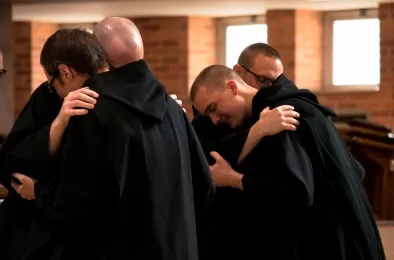
In the military, we salute; in our everyday lives, we smile, shake hands and/or show acknowledgment in through words and hands. When we see a priest, we greet them with the request of “Orhnetsek Der Hayr” – Bless me Father, and the priest responds with “Astvadz Orhne” – May God bless you. If we are from overseas, traditionally we would kiss the priests hand as well, or lower our head for the priest to place their hand on our heads. And more than this, being from overseas, when we greet each other, we don’t merely say hello and shake hands, but especially if we are close, we also kiss each other on the cheeks. This is a sing of respect love and it shows equality. While in English we say hello, in Armenian we say what? Parev or voghchuyn.  Yet, do we know what these words means? Parev means 2 things. The first part Pari – goodness. Aryav meaning remembrance – as in may we remember each other well. But additionally, arev is sun, pari arev – in other words, may the sun be well, may your day be good, may the Lord bring blessings to you. Or the other Armenian word, which is a bit more formal – Voghchuyn comes from the word voghch, meaning complete, full, alive. Therefore in Armenian when we greet one another, we are not merely saying “hi” but much like when greeting a priest, more than showing respect, we are expressing love, strength, hope, and goodness and asking for God’s blessings upon that person.

It is with this same love, hope, and goodness that today we greet one another with the words Christ is Risen. We are declaring “the good news of joy, hope, faith, victory over suffering and death” in those simple words. How? Through Christ Jesus, our Lord. A that greeting extends to all but it begins from here, inside this Church. It is here in the Church, at the Holy table, from the Holy Gospel, from the place where we believe God is present that we take that joyful greeting to others. Where at every Badarak, almost immediately after the chalice which hold the bread and wine, the Body and Blood of Christ, is placed on the Holy Altar, that the Deacons and Priest chant, “Greet one another with a holy kiss, Christ is revealed in our midst” as the choir begins the hymn of Krisdos I mej – “Christ is among us.” This part of the Badarak, Divine Liturgy, celebration is known as the “Kiss of Peace”. It is known as the greeting, of the “hello”, of the declaration and sharing of love, hope, goodness and blessing from God to us and from US to one another. That is why the priest says greet each other, while another priest, or designated person comes to each of us and greets us with those words, “Krisdos ee mech mer haydnetsav” (Christ is revealed among us) and the receiver responds: “Orhnyal e haydnutyunn Krisdosi” (Blessed is the revelation of Christ).

But why? Because, our Lord Jesus Christ came to earth to bring peace amongst people. Christ came because of his love for us, to heal us, to remove the barriers of hate, sin, pain and loneliness and bring us into communion with Him. Remember the first things that God said after creating Adam, “it is not good for man to be alone.” God was there in the life of Adam, in our life, and yet, God recognizes that we need each other. But physically coming together is not enough my dears. Just walk downtown and there are plenty of people around us, and yet, sometimes we feel the most alone in a crowded place. That is why God calls us to be present in each others lives; to share in the love, hope and peace that he brings. Christ came to us and we are then called to bring Christ to each other. If in Armenian the word we greet with is voghch – wholeness, then through God and each other we are whole. That is why this moment in the Badarak is the Kiss of Peace. 

Peace in the Semitic language, shalom (שָׁלוֹם‎) or salam (سَلاَم), means more than just peace of mind but  reconciliation, harmony, and completeness. 1) Peace with God, 2) Peace with others, 3) Peace within ourselves. We are at Peace with God, because Christ, our Lord sacrificed Himself on the Holy Cross, rose from the dead, and we are saved by His blood, which means Christ is covering us with His arms, so our sins are not noticeable. By passing on the “Kiss of Peace”, we express our joy that we are going to be back home and we are saved from death. We find peace with others through our Lord Jesus Christ, who did not come to bring salvation for only certain people, but for the whole creation. He brought unity under His Holy name; that is why we are called Christians. Christ is for all! We find peace within ourselves, when Christ enters our life, heals us and transforms us from within. No matter the things that happen in our life, no matter our successes or failures, no matter how much the world values or devalues us, God loves each and every one of us and calls us to be with Him. And those of us who accept Him, who come into Communion with Him, and who greet one another with peace and love, the Gospel says, “But as many as received Him, to them He gave the right to become children of God, to those who believe in His name: who were born, not of blood, nor of the will of the flesh, nor of the will of man, but of God.”

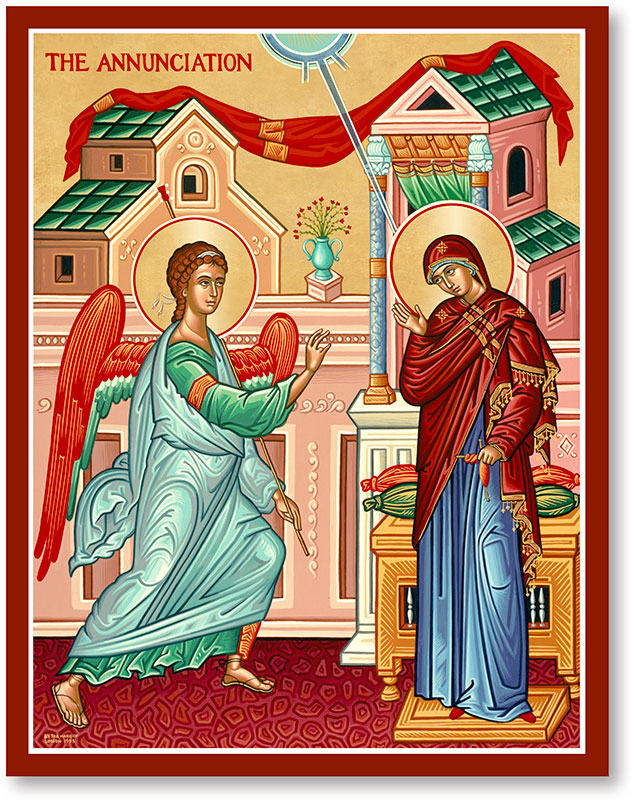
Today, as we celebrate the first Sunday of Holy Resurrection, the Armenian Church also celebrates the Annunciation of the Theotokos, the Holy Virgin Mary, where the angel Gabriel greeted Mary with the blessed news of how she would give birth to our savior and Lord Jesus Christ. My dears, the angels greet us, the Lord greets us here in Church, in our prayers, through the Holy Scriptures; we greet one another in the street, on the phone, at school and in the workplace. Yet, we are called to greet each other also here in the Church with more than just words of hello. We are called to share in the great news that not only is Jesus some 1st century Jew resurrected from the dead, but that Christ Jesus is the Risen Lord and Christ Jesus has defeated death and Christ Jesus, our Lord is here with us. We are joyful, whole, complete, loved and at peace when he is with us and when we are with each other. That is why we kiss each other, we embrace one another and say, Kridos I mej mer Haytnetsav – Christ is revealed among us. Christ is revealed through us. Blessed is that revelation which is given to us by the grace of our Lord Christ, illuminated in our hearts through the Holy Spirit and heals us by our Heavenly Father, Amen!

And may I add, just like saying hello can be unique depending on from where we are, same with the “kiss of peace”. In many other Churches this practice of “the kiss of peace” is merely a handshake, or in some Catholic Churches it is sung but not performed. But as Armenian’s we are movers, as Christians, it is Christ that moves us and so, we embrace each other, we hug and kiss on the cheeks and give this blessing. Because if Judas took the kiss and betrayed our Lord with it, Christ takes the kiss and transforms it into a healing gesture. And so though this is outside of its proper time, the sharing of our love, peace and hope is in our heart and so everyone stand up, and greet the person next to you with the Kiss of Peace and say, Christ is Revealed Among us, and we respond, Blessed is the Resurrection of Christ.

Over and Done With

Passages: Zech. 9:9-15, Philippians 4:4-7, Matt. 20:29-21:17  
Ընթերցուածքներ` Զաք. Թ 9-15; Փիլի. Դ 4-7; Մատթ. Ի 29 – ԻԱ 17

In the name of the Father, Son and Holy Spirit, Amen!

I was so glad to be finished. After all that work, patience, tiring days, and energy spent, it was done. I remember the day I graduated High School, I was relieved it was over. Yes, I would miss the time with friends, the sports and get togethers but I’ll be first to admit, I wasn’t the best student and so I was glad it was done with. Many of us perhaps remember the day we finished school; high school, trade school, college, law school or med school – regardless of the years it demanded, by finishing we were relieved, perhaps a bit sad, but fulfilled that finally it was done. Or perhaps we did not go on to continued education but rather in our lives, we faced big tasks or projects which required countless hours, the hard work, and the sacrifices – all coming to an end. And so whether school or something we worked one, when we finished – we breathed a sigh of relief that it was done. Though joyful and relieved when we finish, what we often remember is how did we arrived at the end. What challenges we faced; what uphill battles we conquered and how now by finishing we are stronger, better prepared for the next task, the next chapter and next challenge. As the saying goes, “it’s not the destination but the journey we travel.” 

Yet, this proverbial saying is not about physical traveling but anything we are going through. The journey through school, through career planning, through a project, and through emotional development and maturity. Today, this message can be applied our spiritual growth as well. We are all celebrating the end of another journey – our 2024 Lenten journey. All of us know that with Palm Sunday we end the season of Great Lent. A time of fasting, sacrificing, almsgiving, and prayer. But if we are honest with ourselves for a moment, this journey is not the same for all of us. For some of us this truly is a Holy time, and we are committed to strengthen our faith through the practices of the Church and reading scripture, regardless of how difficult it feels at times. Perhaps for some of us, we don’t fully understand the importance of Lent and why are called to abstain from certain foods and activities or why we have different prayer services. Yet, for too many of us, we don’t take this journey seriously and see it as a waste of time, something unnecessary. In the same way in school my dears, there are student’s who dedicate time and energy into learning and growing; there are those who don’t fully understand the importance; then there are those who think it’s a waste of time and unnecessary. Regardless, whether it’s school, physical traveling, something we are working through, journeying through life or our Lenten journey, one thing remains the same – they eventually all come to an end. What stays with us, what we can look back on and reflect – is how did we end up here.

My dears, this question is so important to reflect upon because each journey, each moment, each project, each challenge we face in life affects how we continue forward – how we face what comes next. Most of us would say, that this year’s winter was very mild. And though we are grateful that the snow was not torrential, and the cold was not unbearable, an unseasonable winter means an unseasonable rest of the year. One journey in life effects the rest of the journey’s we go on; how we travel one path, will impact the end of that path and the way we begin our next. If I attempt a project at home and fail; and try again and fail; try again and through frustration again fail, what will happen? I won’t try another project again. If I barely scrapped through school whether because I didn’t care or because I wasn’t getting help when I needed it, what will happen? I won’t want to learn, grow and continue my education. If I’m in a challenging time, if I’m overwhelmed and hopeless and no one is there to help me, what will happen? I will feel anxious, broken and isolated from everyone. Likewise, my dears, with our faith. If we approach our faith in Christ merely as an obligation, something forced on us, if we don’t invest time to grow, ask questions and learn, if we remove ourselves from the Church and fall into thought of the temptation that “if I fail then I am no good,” then what happens? Our faith becomes fruitless, unnecessary, and often times unbearable. Our faith doesn’t grow; and eventually when we look back on our life as Christian’s, there is no growth, no strength, no future, no spirit of hope. It’s no wonder so many walk away from God; it’s no wonder our families are broken, society is filled with hate and anger.

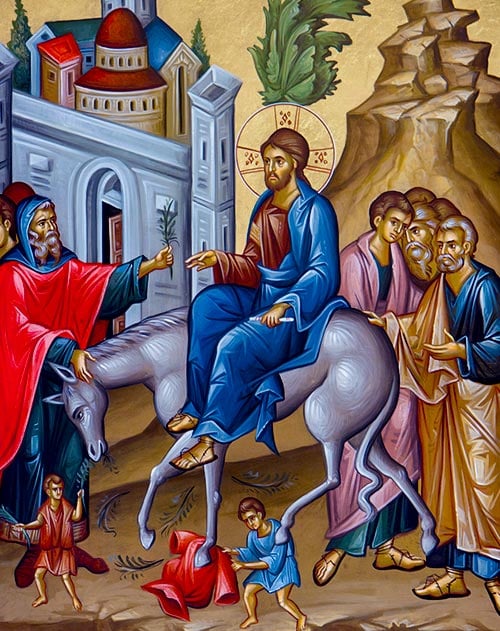
We are happy when Church service ends, when a sermon is short, when lent finishes or when we can finally go home having put a tick next to the “obligation” of going to Church.  Apart from those who are physically unable to attend Church and therefore utilize online services, so many of are satisfied with God through a screen, leaving us ultimately unsatisfied and in doubt. Much like leaving school, we breathe a sigh of relief that it’s over. Yet, my dears, our faith is not a checkbox to be filled in “as done.” Faith is a daily journey; a journey we look back on and reflect to ask who we are here today. Though today physically marks the end of Great Lent, Christ is not here for the end; Palm Sunday where we celebrate Christ Jesus today entering into Jerusalem prior to His Passion and Crucifixion, is not about the ending of the Gospels or the end of His earthly life. Christ came into this world, entered into Jerusalem, died on the Cross for us to begin life; to have a new start, a renewed spirit on this journey of life.

In 2 Corinthians 5:17 we read, “…if anyone is in Christ, he is a new creation; old things have passed away; behold, all things have become new.” Meaning when we accept Christ into our life, if we are truly a Christian, then we are not bound by our past; our failures, temptations, and shortcomings on our journey in life don’t define us.  Instead, we are always renewed, we are made new, with a fresh start and renewed purpose. So many of us think the purpose of Great Lent is to arrive at Palm Sunday and Easter. Or that the purpose of Lent is to fast from food, to pray more or read more; our purpose in the Church is to sing, sign a check or fulfill some obligation. No, my dears. The purpose of our faith is for our old self, our sins, our burdens, to be replaced and washed away with new hope, and possibilities, new life that can only happen through Christ Jesus. The purpose of Lent is to remind us that we become new not by removing foods but by adding Christ into our life. St. Paul in Rom. 12 says, “And do not be conformed to this world, [we all like that part and know it well, but look at the continuing] but be transformed by the renewing of your mind, that you may prove what is that good and acceptable and perfect will of God.”

My dears, therefore, let us ask what are we celebrating today? Our Church is beautifully decorated, our curtain is open again, we received Holy Communion and this week we will have the Holiest week in our Church calendar. So what? So, we can end the month of March? So we can end Great Lent and eat meat again? So we can end winter and start spring? Or, my dears, so that we can reflect on what life we live and ask, how can I begin, how can I be renewed, how can Christ enter into my life as He entered Jerusalem? Whether we fasted for 40 days or not, let us honestly reflect on our journey of faith.  Are our prayers just words, just another obligation? Is our being here on Sunday just another checkmark?  Or do we genuinely call out to our Lord with a desire to be renewed?

Christ loves us so much that he hears our prayers and asks, “What do you want Me to do for you?” (Matt. 20:32) in the same way he asked the two blind men as he entered Jerusalem. Therefore, my dears, whether we fasted during Lent, whether we took time purposefully in our day to pray, or ask questions, to seek Him out, regardless of how we “end” Lent today, right now in our hearts let us openly pray to God, “hear me Lord”, “in everything by prayer and supplication, with thanksgiving, let your requests be made known to God…” (Phil. 4:6) St. Paul says, then today we start anew; today we begin a life in true Communion with God – with a renewed purpose. Because whether we are going through school or working on a project – each and every one of us is going through something – we are on a journey. If our journey is with Christ, our end will be with Christ. And so all together, as we did at the beginning of Badarak, let us pray “let the doors of mercy be opened for me to enter” for God loves each and every one of us my dears. God hears us, calls us and waits for us to desire to begin a life in Him. This is not the end, we are not failures, we are not lost and worthless – we are loved. The love of God will overcome all troubles in this life, the love of God will guide us in whatever journey we are on in this life, the love of God will strengthen us regardless of what we are working on. For it is the love of God our Heavenly Father, who sent Christ to enter into the physical Jerusalem inviting us to enter into the eternal Jerusalem with Him. My the grace of the Holy Spirit illuminate our heart and mind to seek our Christ our Lord who renews us from life to life and brings us into the Communion with our Heavenly Father, Amen!