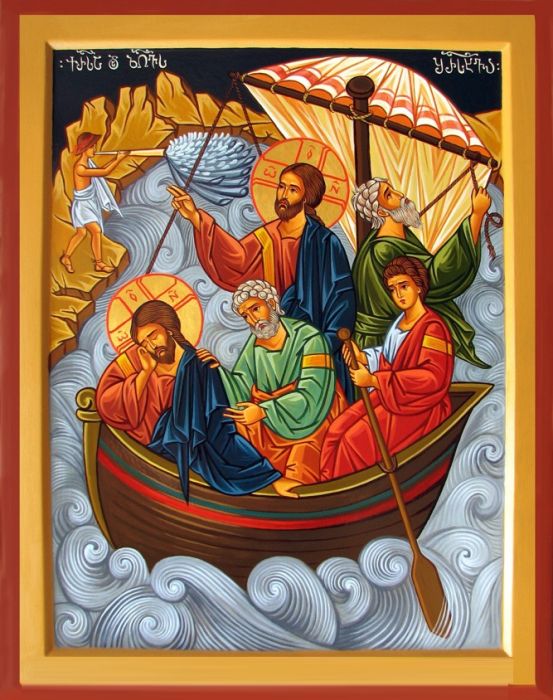
Preparing For More

Passages: Is. 25:9-26.7; Phil. 1:1-11; Lk. 9:44-50
Ընթերցուածքներ՝ Եսայ. ԻԵ 9 – ԻԶ 7; Փիլիփ. Ա 1-11; Ղկ. Թ 44-50

In the name of the Father, Son and Holy Spirit, Amen!

Growing up, I enjoyed each year around this time watching people put up Christmas trees and decorations. Some were elaborate, while others are smaller. Homes, neighborhoods, communities, cities would all be adorned in lights, wreathes and festive merriment. The preparation that would begin almost immediately after Halloween stretched through Thanksgiving into the New Year. Which of course for us Armenian’s stretched a little more into January 5-6. Regardless, the copious amounts of work that went into decorating ultimately beautified the cities and communities we live in. The work wasn’t done just on the outside of the house or building. What about tree inside the house? What about the Christmas pillows that are swapped in for the regular or fall pillows? And of course we could never forget the food. Whether it is traditional Armenian cooking, or more North American style cuisine, everything from appetizers to sweets, Christmas preparations brought out the delicious sights and smells. But why do we go through the trouble of all these preparations and decorations? 

My dears, today the Armenian Church transitions from the season of the Cross and enters into the season of Heesnag. Heesnag, comes to us from the Armenian word heesoon literally “50” and it represents the roughly 50 days period before our January 5 celebration of Christmas, the birth and revelation of Christ Jesus. In English terms, Heesnag is the Armenian version of Advent. The word “advent,” from Latin adventus, means “coming,” and speaks specifically about the coming of Christ into the world. Whether or not Heesnag has a relationship with the Western version of Advent, this transitional season towards Christmas, towards the Nativity of Christ, holds 2 significant and very important questions for us; Are we ready and what are we preparing for? 

I remember when Yeretskin and I were expecting our baby, we painted his room, we put up shelves and prepared for when he would be born. In the same way perhaps many of us have prepared when we first became parents, but the same preparation is also seen as we said, for this season of Christmas. The trees and lights, food and decor all for the parades and guests that we would soon enjoy. Yet, in an ever growing secular world, Christmas season decorations, parades, lights, and food are enjoyed by all people. Even our atheist neighbors might put up “holiday lights” or attend the local “Santa parade”. For us Christian’s however, our preparations are not limited to this season and they symbolize our preparations for something greater.  Heesnag, as we celebrate it, is not a period to prepare for the physical celebration of Christmas. Rather, it is a period of time for us to reflect and ask, are we prepared for God in our life? Are we prepared to grow in faith? Is the dinner table all we want, or do we attend the heavenly banquet of Holy Badarak with the same joy, love and desire?

In the prophet St. Isaiah, we begin today’s reading with the words, “It will be said on that day, ‘Lo, this is our God; we have waited for him, that he might save us. This is the Lord; we have waited for him; let us be glad and rejoice in his salvation.’” The prophet is teaching us, we have waited for him, we have prepared for God, who celebrate not a date in the year, but rather this day, every day and with God we are glad and we rejoice. My dears, each and every one of us is here has a life outside this Church. We have a life of work, school, relationships, family and friends; we have a physical life where we eat and drink and where people see how we live our life. But we also have an invisible life – internal hope and aspirations, goals and pursuits. We decorate and show parts of our life to those around us – both the physical but also invisible parts. Much like a city and home that is decorated for Christmas inside and out, we put on display of what we want others to see. Yet, we also have struggles, and pain. We have uncertainty, and doubt; fear and anxiety. We have addiction, skeletons, violence and all sorts of other darkness that we are dealing with. We have a part of our life that we hide from others, or even try to hide from ourselves. We even try to hide from God. And no matter, what we show people on the outside, we know those areas are there as well. 

This season of Heesnag, this day of preparation, therefore, is about asking God to be with us in those areas of difficulty and suffering because it is only God that can heal us, guide us, prepare us and help us get our life in order from the inside and outside. We need God to be in our life, but we are afraid to show Him who we are. Yet, God our Heavenly Father knows who we are and says, yes my child, I see you pain, I see your tears and your smiles. I am here to cleanse you and free you, to fully prepare you so that when we have questions, and uncertainty – we will not be afraid. We will be glad and rejoice as Isaiah says. God has given us Holy Scripture, prayer, fasting and the sacraments of the Church; God has given us the opportunity to repent, come for confession, to speak to our clergy, to light our candles, to have a place of gathering. God has given us the Church as the place where we begin seeing God in our life. In the Gospel, after Christ speaks about His crucifixion and the Disciples did not understand, we read, of how everyone was afraid to ask, they shied away. Yet, we have the opportunity to ask, to learn because it is through that which God prepares to face life as a Christian. These are the tools, the brooms, hammers, and nails that help us prepare, clean up, decorate and prepare through the help of God, to understand and celebrate His love. Because no matter what we look like on the outside, no matter what we feel in the inside, God loves each and every one of us. 

Christ Jesus our Lord and Savior, through the love of God the Father, calls each of us and through the Holy Spirit, we each have the means, by which to understand how we prepare and what we are preparing for. Trees and presents? Santa and reindeers? Cookies and pie? Or a renewed life, a renewed hope, a renewed joy that we can share openly with in this world. Christmas is not only a celebration of Jesus being born into the world, it is about Christ being born into our lives. Heesnag, Advent, this period of prayer and transition is not about lights and decorations – it is about being adorned in Christ’s light that shines brightly. We my dears, have been given this day to ask are we ready. We have been given this day to get ready. We have been given this day to be with God. Pray for one another, pray to have God enter our lives and prepare us. Pray for light to shine in the darkest parts of our lives. Pray and know that you are loved, you are decorated with the Holy Name of Christ. Therefore, may the grace of the Holy Spirit illuminate our hearts and minds to come to God, asking Him to help prepare us through the Holy Church, to strengthen our faith and through us reveal His love and renewal in this coming season to all, Amen. 
The Greatest Generation

Passages: Is. 24:1-12; Eph. 5:15-33; Lk. 8:49-56
Ընթերցուածքներ՝ Եսայ. ԻԴ 1-12; Եփե. Ե 15-33; Ղկ. Ը 49-56

In the name of the Father, Son and Holy Spirit, Amen!

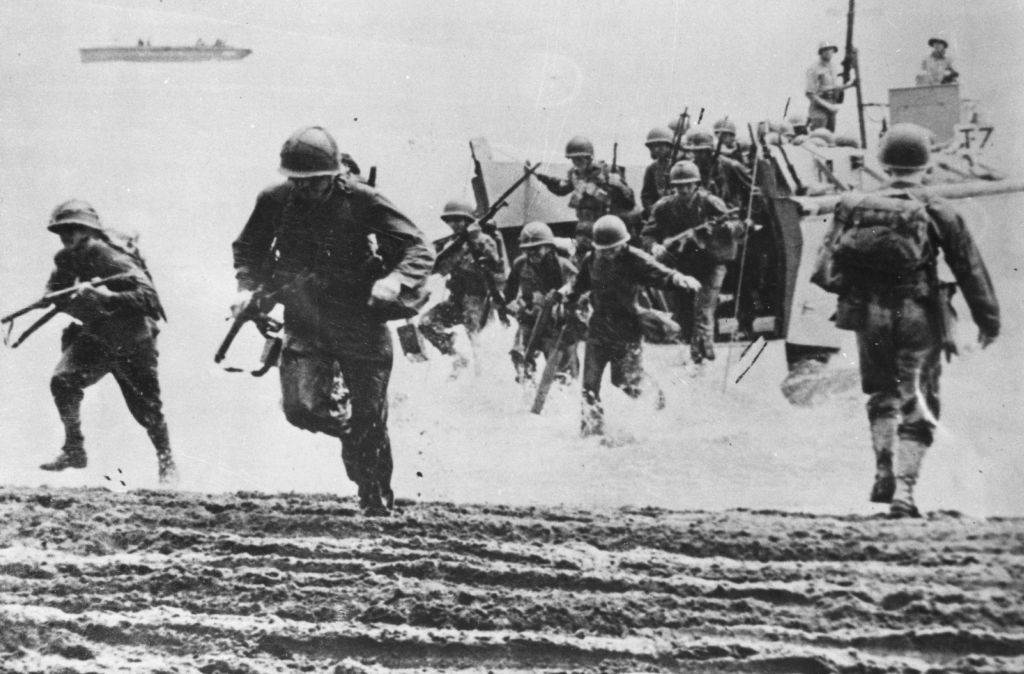
August 1942: American marines coming ashore from landing craft at Guadalcanal. (Photo by Keystone/Getty Images)

In 1998, Thomas Brokaw, an American retired network television journalist and author wrote a book titled The Greatest Generation, where he coined this term as a description to those men and women who were born roughly between 1900 – 1920s. The greatest generation members all lived through the Great Depression, Spanish Flu, sinking of the Titanic, World War I and of which many of them fought and died in World War II. On November 11th of each year, we pause to remember these brave and exemplary men and women. But as we pause and remember, it also gives us an opportunity to question, what made them so great?  Especially as we see war continuing to break out, genocides committed once more or pandemics reemerging, what made them the greatest generation and what’s more, what can we learn from them, if anything at all? 

When we think about greatness, we often use words such as brave, courageous, strong, and determined. Therefore, it is not hard to see why those men and women of the early 1900’s were great. They overcame famine, economic struggle, sickness, and war by remaining brave, courageous, and strong. As Christian’s we, likewise, find these characteristics to be virtuous and desirable for ourselves especially when we face such difficulties. Yet, in Scriptures we see Christ giving a different example of what greatness is. The greatest among us is the child, “the greatest among you [Christ says to his disciples] will be your servant.” Though at first glance it may seem as if this definition of greatness and the characteristics of the “greatest generation” are opposed to one another, upon a closer look we see that they are in fact emphasizing the same truth. To be great we must begin with loving those around us. The sum of all the characteristics of the “greatest generation”, bravery, courage and determination – begins with love. In Christian terms, a love for our neighbors as ourselves.

Leo Tolstoy writes in his book titled On Life, about spiritual kinship by saying “…every man prefers his own child, his wife, his friends and his country, to the children, wives, friends and country of others, and he calls this feeling love. To love means in general to do good. Thus when I love…I desire the welfare of mine more than the other.” This is natural, we love that which is ours and want what is best for them. Yet, Christ teaches us to love the other, by seeing the other as ours. This is done through the very example of Christ, who seeing us in our sinfulness, in our separation from God the Father, choose to be like us, take our suffering, our thirst and hunger, to take us and bring us into Communion with Him. Likewise, we, as the children of God must therefore, in compassion empathetically choose to know each other, take each other’s pain, suffering and experiences, despite our difference and thus begin the pathway to love. And once we love, and to love means to do good. To love even in the face of evil no longer becomes a paradox. To do good becomes a natural reflection of the love in us.

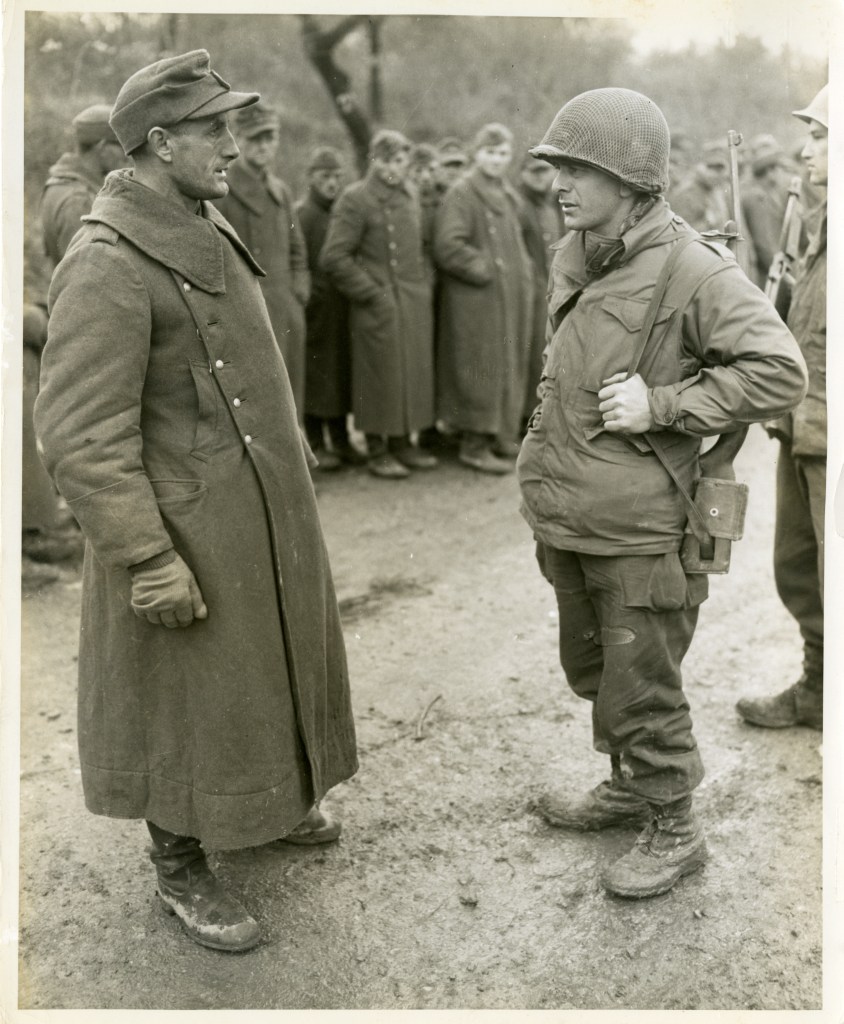
When WWII broke out, the evil and atrocities about what was taking place overseas was heard about all over the world. How countless lives were being slaughtered not just in the battlefield but also in Hitler’s Nazi occupied lands. Yet, many of the people who were involved in those horrific acts, had no idea what was taking place. Propaganda and lies fueled how they looked at those who differed from them. They did not know the truth of war, of suffering, or of the pain of their fellow man; especially when Germany was coming out of great economic woes, it was easy to understand how people were seduced with the notion that it was the someone else’s fault. For example, in 1940, as WWII was moving forward, a young, uneducated, and hungry German boy, Rudolf Paul, saw that the German army was offering free food, clothes, a place to stay, and this momentary comfort blinded him to the truth of what horrific events were taking place in the war. Whereas in contrast, after seeing the horrible events of Pearl Harbor, Sergeant Keiller of the US Navy, volunteered to serve and defend against those who committed the atrocities of war. Two men, who volunteered to go to war yet, one blinded to the realities of the suffering of others, vs. one who knew they had to serve and protect the other.

The greatest generation, my dears, are those who in spite of hardship, in spite of physical weakness, they responded by serving, they self-sacrificed to fight and defend their fellowman, their neighbor. The greatest generation loved and served. The greatest among us must love and serve. Thus their greatness was their love – and this love cannot be apart from God. St. Paul in today’s reading to the Ephesians writes, “Be very careful, then, how you live—not as unwise but as wise, making the most of every opportunity, because the days are evil. Therefore do not be foolish, but understand what the Lord’s will is.” The Lord’s will is love, the Lord’s will is for us to serve one another as He served us; to be wise and recognize the evils of today and respond by being the opposite.  A life lived in love is a life of faith, a life of love, mercy and compassion demands a life lived by this divine virtue. As St. Maximus the Confessor teaches us, “spiritual knowledge without practical life is the theology of demons.” In other words, if we who claim to know God, who claim to be His child, who through the grace and loving kindness of our Heavenly Father, have been redeemed and in Christ Jesus have been illuminated to true greatness, if we don’t live our life in love, if we don’t reflect through spiritual knowledge God’s example to those around us, than we are no better than the demons, then those who act blindly.

To love in the face of tyranny is not to condone it; to love in the face of war and persecution is not to bend our necks to the sword. To love our neighbor, to love others, even in times of evil is to live a life in service to God. When we open up our scriptures, come to Church, confess our sinfulness, speak to the priest and receive Holy Communion, by the grace of the Holy Spirit we learn, become knowledgeable about God’s love for us and of God’s love for all humanity. This love wipes our sins, quenches the fiery darts of evil, fills us with wisdom and knowledge. Yes, my dears, evil exists.  War, economic hardship, pandemics, genocide, addiction, darkness, suffering are not new things in this fallen world. When we see them on the news, when we come face to face with these realities, it is because we are aggravating a wound that has been left from sin, from the denial of God’s love, from denying each other. Our only response can be that of the greatest generation – our response must be to love. Only then can we call upon our Lord to raise us up, even from the darkness, to raise us to greatness, to equip us with the wisdom, hope and love that can overcome all evil, all sin and all darkness. A life lived in faith, a life lived in Christ, a life lived in love brings glory to our Father in Heaven, by the grace of the Holy Spirit, now and for all time, Amen!

Predestined For More

Passages: Is. 22:15-24; Eph. 1:1-14; Lk. 8:17-21
Ընթերցուածքներ՝ Եսայ. ԻԲ 15-24; Եփես. Ա 1-14; Ղկ. Ը 17-21

In the name of the Father, Son and Holy Spirit, Amen!

Living in a big city, we often miss a beautiful reality that exists in nature – the night sky and our ability to observe the stars and constellations. As Christian’s when we look to the stars, we see the magnificence and beauty of God’s creation. In fact, only a couple hundred years ago the sky was referred to as the Heavens; the great unknown that is beyond our understanding. Through science and the amazing work of telescopes we have seen depths of space, stars and planets previously unseen to the naked eye. And while there is a lot to be learned from the stars, we as Christian’s don’t believe in astrology, fortune telling or the reading of stars for hidden messages about our lives. Some of us have heard the saying that our destiny is prewritten, or written in the stars. In Armenian, we bring it closer to home and say that our destiny is written, where? On our foreheads.  That is why the Armenian word for predestination or destiny is jagatakir ճակատագիր. Literally, text on our forehead.  The question of ones destiny is one we all think about and it affects not just our physical lives, our biology and where we will end up as a person, but also our spiritually.

Biologically, one might define destiny as family history. If we generationally have had obesity, or diabetes in our family, it is highly likely we too will develop these. Physically, one might define destiny based on if you come from an affluent family or from a higher income surrounding, then we are destined to be educated and “successful.” If we come from a Christian family or community, we are most likely destined to likewise be a believer. And if someone is unsuccessful or if we see certain individuals who struggle with their faith or relationship with God we might say that they were predestined to not believe or succeed no matter how hard they try. In fact, St. Paul in Eph. 1:4 says, “In him we were also chosen, having been predestined…” While family medical history or where in the world we are born might determine a lot about our future health and statues, this word destiny, jagatakir, pre-destiny, etc. or even the idea that our future is written in the stars is problematic when we apply it to our faith. Because it means that not everyone is given an equal opportunity. God has already chosen certain individuals. God has already decided without any regard to our prayers and hopes if we will be His child or not. In other words, God has pre-determined and/or destined us for Heaven or Hell regardless of how we live. This is problematic – if we don’t look deeper into the text.

It’s problematic because it takes away our free will. It’s problematic because if scripture says, by faith we are saved, by works we bring forth fruits of our faith, then what is the point of trying if in fact, everything has already been predetermined. My dears, as Orthodox Christian’s we do not believe in predestination or that our future is written on our foreheads or the stars. Rather, we believe that as children of God we are pre-oriented, pre-designed, which is in fact more closely translated from the original Greek word, prooristhentes. In Armenian it is the word nakhakhnamvadz նախախնամուած or nakhasahmanvadz նախասահմանուաց. What’s the difference? We begin to understand the difference by looking past just the word predestination. St. Paul says “In him we were also chosen, having been predestined according to the plan of him…” in other words according to His, God’s plan or purpose.

My dears, take for example this Ukulele. How is it played? By plucking the strings. Can I not use it as a percussion instrument by keeping a beat on the back? Yes of course, I am free to do so. What about if I were to use a bow to draw the strings? Sure I can, I am free to choose how I play. However, this instrument was designed, oriented, and made to be played a certain way, in order for it to create a certain sound and serve a purpose. In the same way each one of us my dears, we are free to choose how we live; how we behave, how we pray, how we eat, what we believe, how we vote, how we dress, etc. We are free to choose. However, God has predestined meaning God in His love for us, for a higher purpose created, designed us in a certain way for a certain purpose – To be His children. To be in Holy Communion with Him. What do we read in Genesis at the Creation story? God created Adam and Eve, meaning humanity, in His image and likeness. So yes, we are predestined, we do have a destiny, or more correctly a destination. And as Christians we recognize that we are pre-designed for a purpose that goes beyond this flesh and blood, beyond our physical limitation. God in His providence, which is a better word than predestination, in His Divine Wisdom and Love did not create us merely as animals but created us for a purpose.

Thus, my dears, the real problem at heart is we have forgotten our purpose, our direction, for which we were predestined. Because of sin, we have become blinded to God’s purpose and design for our life. We have allowed our physical appearance, our jobs, our social statues, our age, our degrees, our checkbooks, our clothing, etc. to re-define and re-orient our value in this world. It’s no wonder we are looking to the stars for answers because we are looking for something outside ourselves that is greater because we begin to realize that those arbitrary and artificial values hold no purpose, no value. Yet, Christ Jesus teaches us in the Gospels, “For there is nothing hidden that will not be disclosed, and nothing concealed that will not be known or brought out into the open.” My dears, Christ Jesus, God the Son, sees our brokenness, knows that those things are not our real purpose and so calls us back into Communion with our Heavenly Father. Christ reveals to us that when we live our life, freely choosing to repent, learning the Holy Scriptures, following His commandments, then our true identity, our true worth, the purpose for what each and every one of us was created to be by God our Father, will be revealed to us in such a way that the fog before our eyes will be removed, that the arbitrary and hopeless pains of this life will melt away.

My dears, we were predestined for greatness, if only we choose to follow, and the only text that is written on our foreheads, the only jagatakir we have, is the Christ, Krisdos, which by Holy oil, the Holy Myron, by which we were chrismated at our baptisms we become a children of God. Yes, look to the stars my dears, look to the Heavens, look at the creatures in the wilderness, the vastness of the ocean’s and see not horoscopes or other such nonsense. See the majesty, the power, the love and creativity of our God. In that same way, God created each one of us, God has destined us and designed us for a greater purpose, God our Heavenly Father, created us with a plan in mind, that sin hid from us. Yet, in His infinite love God sent His only begotten Son, Jesus Christ to bring us back into Communion with Him. And every day we freely choose to follow, every day we choose to allow God’s will in our life, than through the Holy Spirit, our true value, our true purpose, our destiny will be revealed. So that like the stars in the sky we will shine brightly. Like the instruments in our hands, we will make beautiful music, and like the Children of God we are, we will bring glory to our Father in Heaven, to Christ Jesus through the Holy Spirit by the life we live, Amen. 

The False Beacon

Passages: Is. 20:2-21:6; Gal. 4:3-18; Lk. 4:14-23
Ընթերցուածքներ՝ Եսայ. Ի 2- ԻԱ 6; Գաղ. Դ 3-18; Ղկ. Դ 14-23

In the name of the Father, Son and Holy Spirit, Amen!

When storms rage on the waters, and winds blow hard, ships navigate through rough waters using equipment and technology for guidance. Throughout history, before modern technology, lighthouses played a pivotal role in guiding sailors to safety in such storms. However, there are occasions when mariners mistook a glimmering light in the vicinity of the lighthouse – a mistake that almost always resulted in a shipwreck. Such as in 1845, when in January on Cape Cod, a false beacon – during a severe storm was mistaken for another light in the vicinity resulting in four lives being lost. Yet, in that time of the storm, the sailors are merely seeking a light, and succumbed to the fears of the dangers of the storm, all they wanted was safety. Much like many of us, in times of trouble, and difficulties all we want is safety and so we look for guidance. Perhaps not a physical light or lighthouse but something to illuminate, to direct our path towards safe harbor. Therefore, we begin to place our trust and devotion in people, in philosophies and ideologies and other such practices.

St. Paul tells us that these things, these guiding “lights” are not the true light, they are, what he calls, the elemental spirits, which we often willingly become enslaved too. Gal. 4:3 “So with us; when we were children, we were slaves to the elemental spirits of the universe.” Anytime St. Paul talks about us as “when we were children” he is referring to a time before Christ. And those elemental spirits for the Israelites and the Jewish people they were the laws, the moral code of conduct and prophecies by which if they followed, they would be redeemed, and God would be with them. For the non-Jewish or pagan world, the elemental spirits are the material world, idols, nature, water, fire, wind, and earth. In both cases, regardless of how one would look at them, these elemental spirits or guides enslaved people. They restricted and created false pathways. Much like a false beacon of light does not guide ships to harbor but can lead to devastation after giving a false sense of hope, likewise, these elemental spirits showed light but did not bring true peace, comfort, guidance or freedom.

It is only God the Holy Spirit, the Spirit of the Lord which comes from God the Father that serves as the true light, the true guide. As the Psalms says, “a light unto my path.” (119[120]:105) But this true light is only known to us through Christ Jesus, who is the physical light we see, the physical incarnation or person of God that came to us, lived with us, loved us, cared for us and died and rose from the dead for us giving us that true freedom, true harbor of salvation. And what St. Paul is telling us is that when we didn’t know Christ, these elemental spirits served a purpose. The laws and prophets, before Christ served as a purpose. And scripture speaks about how all creation, all of nature, the planets, animals, galaxies, etc. “The heavens declare the glory of God” (Psalm 19) But only “when we were children.” Now that we know Christ, now that we have matured, we need to discern, pray, reflect to understand which spirit is upon us? Who is guiding us? Is it God or something else? “Beware lest any man spoil you through philosophy and vain deceit, after the tradition of men, after the rudiments of the world, and not after Christ.” (Col. 2:8) Since true freedom is in Christ, St. Paul is asking why are we choosing to be slaves to those spirits?

Now I know some of us will say but we aren’t pagan, we don’t follow ancient philosophies and we aren’t Jews and so we don’t fall into this category of following the wrong spirits. We aren’t slaves to those spirits. Yet, St. Paul equates the “elemental spirits of the world” not merely with the Old Testament or Greek philosophies but with all rules and regulations, ideologies and teachings, material goods and products. My dears, how many of us put more trust in our material wealth than in the gift of God? How many of us place more trust in human words than the Word of God? How many of us look for justification in laws of governance then we do in the commandments and love of God? How many of us allow our worth, our value to be dictated by arbitrary societal standards? Look at the state of the world today. We look for justice from Congressman, Presidents, or political parties.  We look for self-identity and love on social media and filters. We pay more attention to a glimmer of light, in the vicinity rather than going to the source. And so we follow a false light or false spirit, and so we become slaves to those spirits.

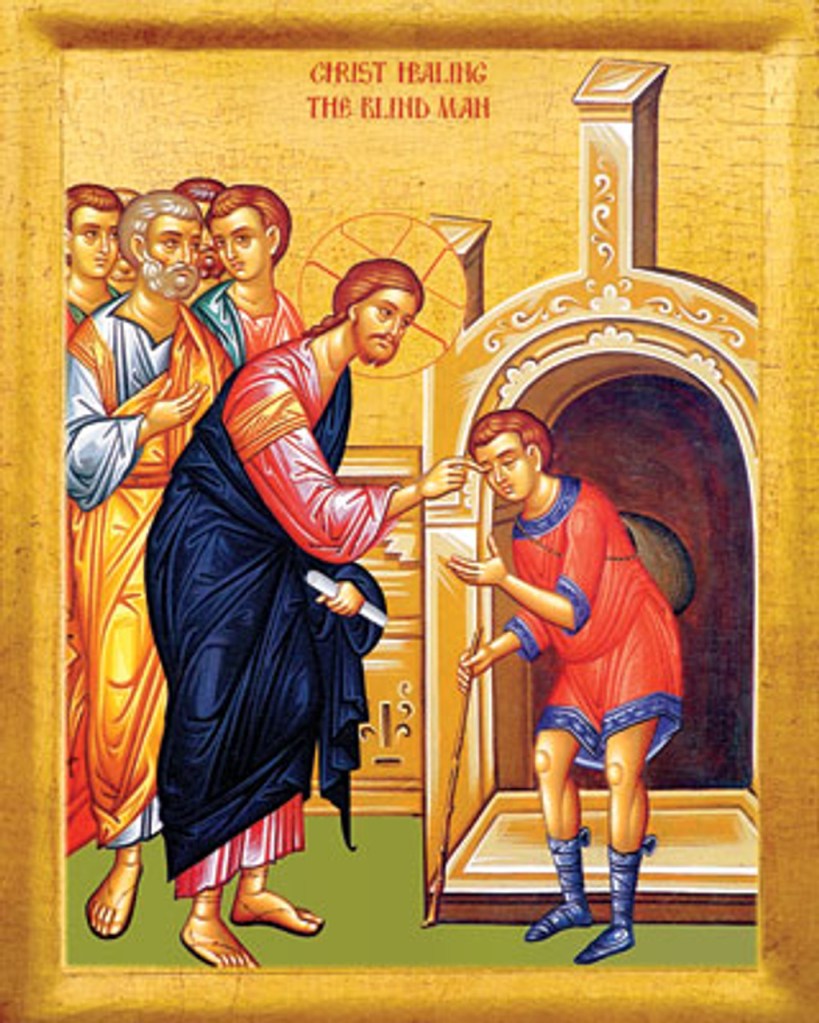
Perhaps like those sailors in the storm it is because we are scared, we are unsure, or we feel lost. Yet, Christ says, I know you, I know your worth, I know your pain, and I love you. ‘“The Spirit of the Lord is upon me, because he has anointed me to preach good news to the poor. He has sent me to proclaim release to the captives and recovering of sight to the blind, to set at liberty those who are oppressed, to proclaim the acceptable year of the Lord… Today this scripture has been fulfilled in your hearing.’” God has given us His Son Christ Jesus as the true light to be our true guide. God the Holy Spirit is with us comforting and illuminating us. Yet, we only remember to pray and come to God when the storms rise up. We only come to God as a last resort placing more trust in the worldly. My dears don’t misunderstand me because the world, the material is not bad. Nature, such as fire, wind, water and earth are created by the same God that created us. God gave the Israelites the commandments and regulations of the Old Testament. And those elements served as a glimmer, a reflection in the same way any artwork reflects characteristics of the artist.

The falsehood is when we begin following and placing those created things above the artist, creator, the true light. As the 2nd century saint and philosopher Justin Martyr draws this distinction and compares Greek philosophers such as Socrates with Christianity, he says what Socrates partially knew as an “unknown god” has been fully revealed to the Christians in Christ. In other words, everything in life we have serves to bring us to Christ Jesus, who is God. And it is in Him we find the true light, the true guide, and receive the Spirit of Truth, the Holy Spirit that reveals to us true salvation, true freedom, compassion and mercy, true love, our true identity. A light that does not fail, does not abandon and does not leave us hopeless or lost. And so going back to the words of the Psalmist, “a light unto my path”, the verses teach say, “How sweet are thy words unto my taste! yea, sweeter than honey to my mouth! Through thy precepts I get understanding: therefore I hate every false way. Thy word is a lamp unto my feet, and a light unto my path. I have sworn, and I will perform it, that I will keep thy righteous judgments. I am afflicted very much: quicken me, O Lord, according unto thy word…” How sweet, how pure, how real, how powerful is your word, the Word, Christ Jesus. Through thy precepts, which means guide, through your guidance, through the Holy Spirit do we get understanding and hate or reject the false way because your Word, the Word, Christ Jesus is a lamp for my feet and a light on my path and I will perform, I will live it. I am afflicted but Lord teach me.

My dears, are we a willful slave to the spirits of this world? Are we more inclined and trusting of the material, the temporal, the glimmers of light that perhaps give some hope but leave us hurt, broken and devastated? Or do we learn the Word, do we pray and ask for God to send His spirit upon us, to illuminate our path towards Him? Our Christian life, which begins in the Church through our baptism, invites that Spirit into our lives and equips us with the tools of confession, of services, of conversations with the priest, of prayers and lighting candles not because they are what we believe in but because all creation, everything we have in this world is a gift from God to reveal to us His love. A love that never fails, that gives sight to the blind, release to the captives, liberty to the oppressed and hope to the lost. Pray for discernment and understand. Pray for the Spirit of the Lord to be upon us. By the grace of the Holy Spirit pray and ask for that light, so that even in times of storms in our life, trusting in God we can live a life of freedom, reaching the safe harbor prepared for us in the Kingdom of Heaven, through Christ Jesus and in the presence of our Heavenly Father, Amen.

Muscle Memory of Faith

Passages: Is. 17:7-14; 2 Corinth. 13:5-13; Mk. 11:27-33
Ընթերցուածքներ՝ Եսայ. ԺԷ 7-14; Բ Կորնց. ԺԳ 5-13; Մկ. ԺԱ 27-33

In the name of the Father, Son and Holy Spirit, Amen!

Repetition is the best way to learn. All of us have things in life we want to remember and hold onto. Whether it is part of our long-term memory or short term, knowing and recalling information is a necessary life skill. For example, when we meet someone for the first time or when we are learning something new, psychologists suggest we repeat it 3 times in order to remember it well. Growing up, when I was learning piano, I would repeat the bar or measure of music several times before moving on. This was not just to familiarize myself to the music but to make it part of my muscle memory.  When studying, it is recommended that we read aloud, so that our ears are listening; and when possible, to write down what we want to learn, so that our hands will learn as well. The more we use a name, listen to a song, fulfill a new task, or create a habit, we become better at it through repeating. In fact, to create a new habit it is suggested that we force ourselves to practice it a minimum of 30-60 days and if we want to break a bad habit, we need to work on it for 90 days. In other words, my dears, the more we say, do, and listen to something, the better we become at it, the more familiar it becomes and overtime, becomes part of muscle memory or second nature. This is true not just about our everyday experiences but additionally about our experience and understanding of God.

We’re in Church today, and we are here in different capacities and reasons. Some of us are here seeking healing, while others are here for hope. Some are here because our parents told us to go to Church, while others are here because they are in search of something. Regardless, there is something that unites us all – we all have ideas, and thoughts, about God. Who is God? Who is Christ? Who is the Holy Spirit? This is such an important question and one that perhaps we rarely ask ourselves except in times of difficulties. Yet, in the same way memorizing and learning new things in life help us grow as a person, likewise, to know who God is is the fundamental part of growth in our Christian faith. To know who God is, strengthens our faith not just for the moment but for all our lives. To know who God is, helps us answer our difficult questions about such things as sickness and suffering. To know who God is, begins to answer our understanding of knowing who we are.

In today’s Gospel, when the Pharisees asked Christ by what authority he was doing all his miracles and teachings, what they were revealing to us is that even though they who are known as teachers of the law, meaning they were educated, they are deep in the theology, deep in the rituals and rules of Judaism, they could not and did not recognize Christ Jesus as God, as the Messiah from the prophecies. As the Prophet St. Isaiah warns, “For you have forgotten the God of your salvation, and have not remembered the Rock of your refuge; therefore, though you plant pleasant plants and set out slips of an alien god, though you make them grow on the day that you plant them, and make them blossom in the morning that you sow; yet the harvest will flee away in a day of grief and incurable pain.” God had become alien, unrecognizable, and fruitless to them warned Isaiah, and when grief comes, when difficulties come, what is known will flee away. Who God is, had been limited to transactions, if we pray God will give us; or God was seen as a boogie man, someone to fear. This is unfortunately how most of the world today sees god. If God is real, then it is a controlling, arbitrary being of power. Or God is like a magician or as Karl Marx taught, god and religion are an opiate for the masses, a crutch for the disabled that numbs pain but in truth has no real sustenance. If the world and atheists such as Karl Marx who are distant from God misunderstand Him, what excuse do the Pharisees or even us have in not knowing God? After all, we are here; we pray and say we believe. Yet, my dear brothers and sisters, in the same way we learn new habits, songs, skills, names, etc. by repeating and internalizing them, I wonder how much time, effort and repetition to do we give to knowing who God is? And I don’t mean repeating the sign of the cross, or coming to Church and saying Der Voghormya (Lord have mercy). After all that is what the Pharisees did. What I mean is how often do we personally spend internal time with our God, growing and knowing Him?

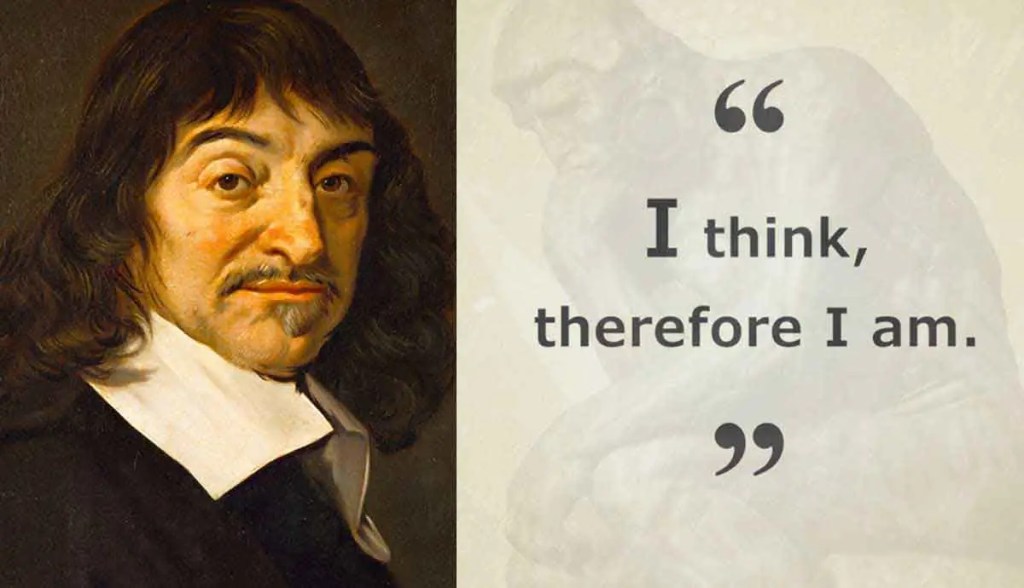
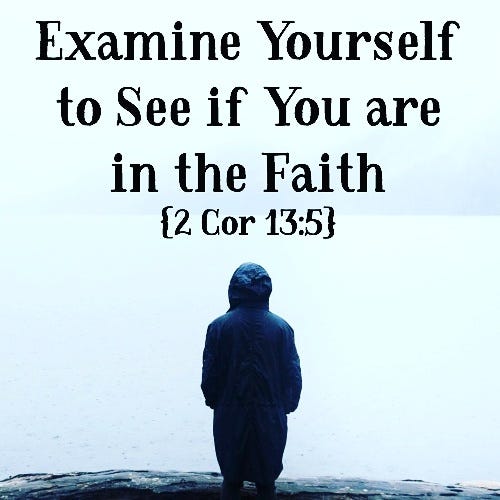
As Armenian’s we like to say that we are the first Christian nation, and we have over 1700 years of Christian history. This is beautiful but why? What did the people of Armenia over 1700 years find and see that they wanted to know God in their lives? My dears, our people, God’s children examined themselves as St. Paul says. They looked within their hearts, their minds, and souls to seek and ask do I know God? Does God know me? Do I know who I am? These are crucial questions we must ask ourselves and of our Christian faith, because they begin to answer all the questions of our life. It is easy to say God is love, God is good, God is merciful. Yet, what do those mean?  This is important because St. Paul invites us to ask are we love, are we good, are we merciful? The French philosopher René Descartes coined the term, cogito, ergo sum, meaning “I think therefore, I am.” And this term referred to our ability to use our minds, our imagination, our skills and therefore, manifest who we are as living creatures. Yet, I would argue that today we have changed this term to “I think I am therefore I am” and applied it to God. We think God is, therefore He is. Rather than learn who God is through the Holy Church, through the Sacraments, through conversations with the priest, reading the Holy Scriptures and Church Fathers, we have decided that God is who we think He is. We have begun to create God in our own image rather than, learn to know who God is and understand that we have been created in His image and likeness. And by diminishing God to our standards, we have diminished who we were created to be.

For some of us here, we might be falling asleep or think that this is too philosophical or too difficult to comprehend. Isn’t a sermon supposed to be a word of hope, a message to apply to our lives? Yes, it is my dears and this is the hope. That God is knowable to all of us, God sent His only begotten Son, Christ Jesus to reveal to us His love, his goodness and mercy in a way that is not limited to our understanding but rather, lifts us up to His level and reveals to us who we are. In today’s worldly standards, we might define ourselves through our failures, our shortcomings, our sexuality, or skin color and demographics. We define our worth through our diplomas, and bank accounts. Yet, none of these define us or decide our value. Only by growing and seeking Christ in our life, learning and making faith part of our “muscle memory”, only then we do see our true value. Only then in times of tribulation and persecution, in the face of evil, sickness and even death, we will know our Heavenly Father as the unfailing God, the God who does not abandon us, does not turn away, does not look at our physical abilities but heals us of our disabilities and seeks our availability to teach, to love, to heal those around us who are likewise seeking to know Him. Theology is the pursuit of truth, and God has revealed His truth to all of us and made it accessible for us to learn and know. Not for mere knowledge but to bring God into this world through our lives. That is why it is important to learn who God is, and who we are. That is why it is crucial to read and learn by internalizing the Word of God and making it part of our short-term and long-term memory, our muscles memory and nature. 

Therefore, let us examine ourselves as St. Paul commands, know that Christ Jesus must be in us. Let us challenge one another to read scripture daily, pray continually, come to confession with an open heart to be healed, and take advantage of all that God has given us. Create a habit of faith, and if repetition is the best way to learn, let us repeat the love of God in our life. God desires to know us, and to be known by us. Only then will we be able to find peace, love, mercy, hope and compassion. Only then will we through our lives be the very presence and knowledge of God to those around us. Only then will we give glory to God our Heavenly Father, through wisdom and knowledge from the Holy Spirit, in this life and for the life to come, Amen!

We Are Dark Matter

Passages: Prov. 3:18-26; Is. 65:22-25; Gal. 6:14-18; Matt. 24:30-36
Ընթերցուածքներ՝ Առակ. Գ 18-26; Եսայ. ԿԵ 22-25; Գաղ. Զ 14-18; Մատթ. ԻԴ 30-36

In the name of the Father, Son and Holy Spirit, Amen!

When the world was created, as Christian’s, we believe that God created the stars, the plants, the sun and the moon and all life. All begins began with God and nothing existed before God. How and what we know about the beginning is limited to what we read in Holy Scripture and while the intricacies might be remarkable, such as the how, what, and how long, etc. However, for us Christian’s we focus on is the reality of God created the visible and invisible world because of His love. Science, which deals with the observable and measurable world, theorizes that perhaps at the moment of beginning, when things came into life, there was a big bang, a singularity that through an arduous process and over millions of years, atoms, protons, neutrons, hydrogen, carbon and all other things came together, and the material and observable world came into being. Whether there was a big bang or not, whether it was millions of years or 7 24-hour days, as Christian’s it isn’t very consequential. Faith is knowing about God’s presence in our life while science deals with what can be seen, measured and quantified, meaning it is always growing and changing and in 1933, the theory of dark matter was first coined. Without getting into the science of dark matter both because of my lack of knowledge and the sophistication of it, in its basic form, dark matter is not observable by the naked eye. When the big bang took place, dark matter was also created; this invisible presence which affects gravity, light and so much more. And though it is present in our galaxy, dark matter can only be observed, measured, and understood through how it affects the things around it.

For some of us here perhaps we are thinking, oh Der Hayr is talking about how God affects the world even though we don’t see and observe Him directly. And while this is absolutely true, there is something else I want us to think about. In today’s world, though as Christian’s we believe in the love of God, in the good, in the blessings we have received, the truth is we observe much more hatred, anger, bigotry, racism, intolerance, death and destruction, than we do good. Our social media and news platforms are riddled with the latest shootings, the polarization and division of people both here in the United States and around the world. We see once again the genocide against the Armenian people happening in Artsakh, the exodus from our homeland and silence of the world and indifference of people. We observe far more negativity and darkness than we do the light. Not just in the news, but perhaps in our life as well; we smile on the surface, but we are struggling in our lives. We have addictions, we have disorder, we have brokenness, we hide our face so that people will not see. We are fighting with our loved ones, we are struggling with our faith. The list goes on and for a moment this observable world feels much more like dark matter, and hope feels distant.

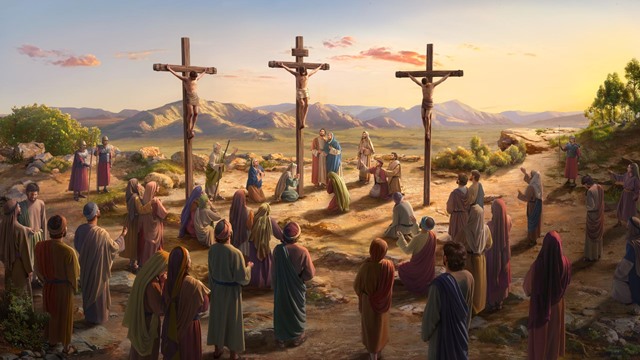
You see as humans we are physical, material and though we have a spiritual, and mental side to us as well, the what we see, what we can measure and quantify is what often times we focus on. That is why for example, the Romans crucified Christ Jesus. Crucifixions were done on high hills, for all to see and be warned – that if you break the law, you will be punished in such a way. To be crucified was to be humiliated, rejected, and cursed. Yet, for us Christian’s through the death and resurrection of Christ Jesus on the Cross, that tool, the observable reality death and suffering has been transformed into life, into a shield and sword by which evil is destroyed and we live. But unless, like dark matter, we only look with our hopeless human eyes, we will be lost to the power of death, we will be overcome by the evils and the suffering and pain that exists – we will only the cross of death. That is why in the Gospel today we read, “then will appear the sign of the Son of man in heaven, and then all the tribes of the earth will mourn…” When the sign of the Son of man appears, what sign? The Cross. The tribes, the people, the nations of the earth will mourn. Nations doesn’t mean Armenian, Canadian, American, Turkish or other. Nations means the different types of people, of all ages, of all religions, of all backgrounds – nations of the earth meaning will mourn, will tremble, will be filled with fear. In other words my dears, those who the cross has remained a sign of death, a tool of humiliation, they will be filled with fear.

But for us, we who don’t look merely with our physical eyes but our illuminated spiritual eyes, we take glory, we know and believe that what we see with our eyes is only part of the picture. You and I are not our sins, we are not the darkness that exists in our life. We are not the addiction, we are not the drug, we are not the broken relationship, we are not the failed test. Our value, who we are is not defined by the observable world, or the crosses of death in our life. Rather, when we look with faith, we see who we truly are – beloved children of God, created in His image and likeness, freed from our sins by the blood of Christ Jesus. We are the dark matter of the world, which might not always be seen and observed but when we live our faith, we impact and affect he world around us. When we live with hope, we begin to be the light in darkness, we begin to be the healing in suffering, we begin to be Christ no matter how the world tries to scare us into hopelessness and fear.

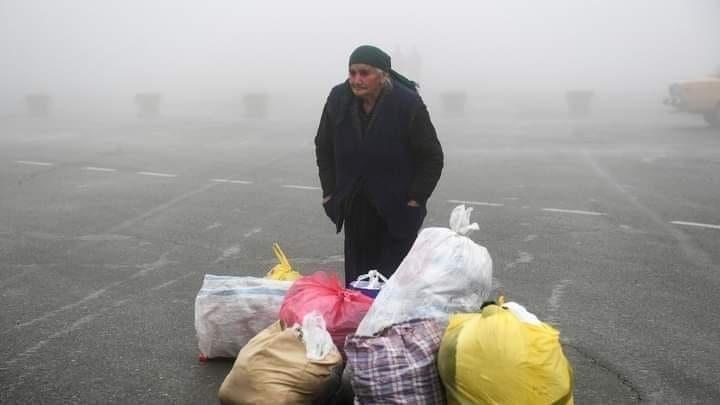
Over the last week, as we read of the stories of Armenian’s being forced from their homes, I read a story of a grandmother who as she was packing her things to leave wanted to burn her house down so that the Azeris would not take it. Yet, she as she thought about it, she remembered the love, the joy, the families, the faith that had built that home. The memories of her children who grew up in that home and the prayers she taught them. And so she decided to wash the dishes, put away the cutlery and as she left, she wrote a note that said. Dear Azeri soldiers, this home was a place of faith, of love, of respect and of hope. Whoever takes over, and whatever you do, may it be for you a place of love, of hope and of faith. In the face of evil, this Armenian grandmother remained the light, the hope and the very presence of Christ Jesus. Perhaps that note will be torn and never read; perhaps she will pass into a faded memory one day. But like dark matter, that isn’t always observed directly, her impact, her presence will always remain and affect the world around it.

May we my dears, not focus on the observable negative, not fear the tools of darkness and pain but focusing on the life we have received in Christ Jesus, may we become the tool of new life, of new hope, of renewal in this world, the resurrected Christ. Proverbs teaches us, “Do not be afraid of sudden panic, or of the ruin of the wicked, when it comes; for the Lord will be your confidence and will keep your foot from being caught.” Pray so that we will not be afraid, love so that we will not be lost, hope and know that our Lord Jesus Christ has conquered the world, has conquered the pain and even death and so though we may not always be able to see with our naked eye, in faith we know that hope in God our Heavenly Father, as revealed to us through the Holy Spirit is there to strengthen us, and comfort us. We are the power of God, we are what the world observes and measures of God; imagine how we can transform and affect those around us when we ourselves remain in that hope.

Glory to God, Amen!

Inconvenience of Faith

Passages: Is. 49:13-23; Gal. 6:14-18; John 3:13-21
Ընթերցուածքներ՝ Եսայ. ԽԹ 13-23; Գաղ. Զ 15-18; Յով. Գ 13-21

In the name of the Father, Son and Holy Spirit, Amen!

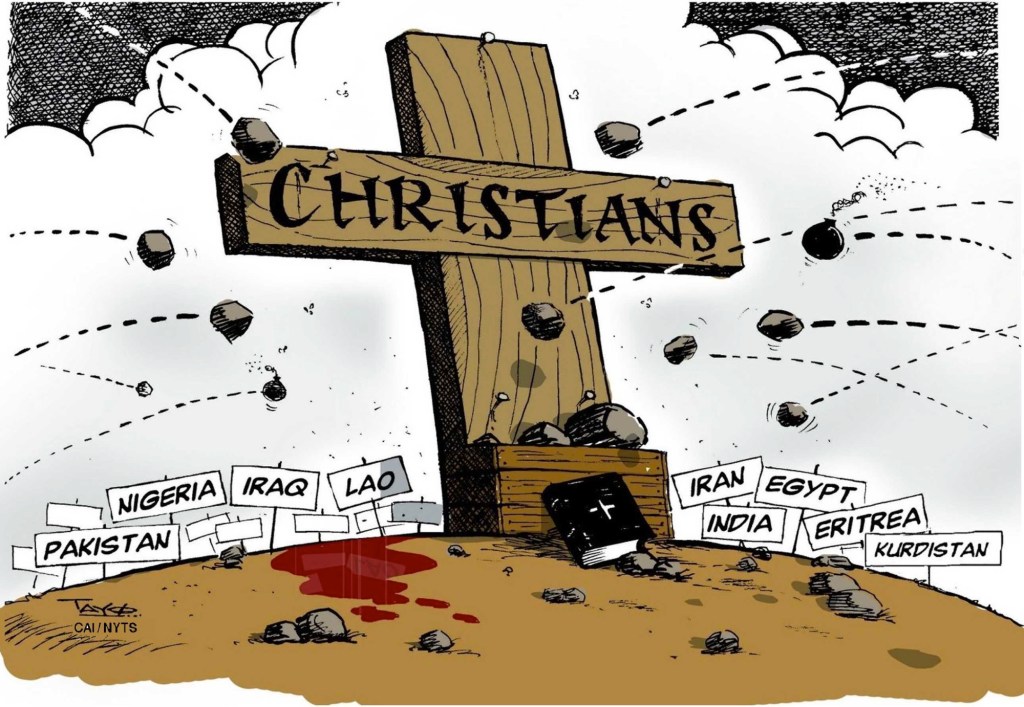
Provider: CartoonArts International / The New York Times Syndicate

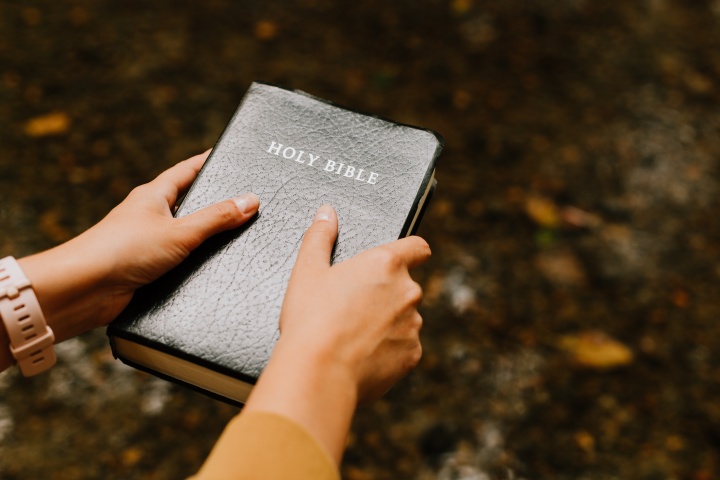
A Christian missionary one day visited China where he was teaching and preaching the Word of God. Christianity is persecuted in China and so his work was illegal. Regardless, almost 20-30 student had gathered privately to learn. The preacher asked a question, “what will happen if the government catches us?” The students answered, you’ll get deported, and we’ll go to prison. And so as the lesson began, the missionary and his group handed out Bibles but they were shy by a few and so some people had to share. The preacher said, let us turn to Galatians 6. And as the students opened their Bibles to the page, he noticed one of the women giving her Bible to someone who didn’t have one. After the lesson ended, he asked the woman, why didn’t you read along. She said, I didn’t need to. While I was in prison, I memorized the entire book. Surprised the preacher asked, how? Aren’t Bible’s illegal to have in prison?  Yes, she answered, that is why we bring them in on small papers and memorize them quickly. Amazed at the devotion the preacher was lost for words. At the end of the 3 days lesson, as the missionaries were preparing to go home, they asked the students what would you like us to pray for as we go back to America? The students answered, “that we can be like you.” The preacher stopped for a moment and said, no! You see in the United States we have are free to pray and worship, learn and grow but we don’t. The students rode a cramped train 13 hours, secretly to come and pray; in the US, if we have to drive more than 30 minutes we won’t go. You sat on a wooden floor for three days, in the US if service is longer than 40 minutes, we won’t go or complain the entire time. Not only did you sit here for 3 days on the floor, you did so with no A/C, very little food, and with the risk of going to prison; in the US, if the pews are soft, the a/c or heater is not working, the coffee made and table set up for fellowship, we won’t go. In the US, there are an average of 2 Bibles per family, which we barely read; yet, you have almost no Bibles and yet, you memorize, you internalize the Word of God from pieces of paper. Why would you ever want to be like us?

My dear brothers and sisters, it is true that we here in the United States enjoy the liberties of freedom. We are free to worship, free to learn, free to profit and grow. Yet, in that freedom we have somehow grown cold and distant from the value that is our Christian faith. We have begun to view our faith in God as Christian’s merely as just another personal belief, just another viewpoint or even just another inconvenience. Even for us who come to Church, sometimes we merely go through actions without every allowing God to truly enter into our hearts. Or especially as Armenian Christian’s we come to Church on Sunday, or for weddings, baptisms and funerals because it’s the cultural thing to do. However, to be a Christian, to be a follower of Christ is countercultural. Our world today tells us to choose convenience, comfort, the lazy boy or memory foam; to numb ourselves through medication, alcohol, technology or countless other means. Being comfortable, enjoying a memory foam pillow or taking medication, having a drink or using technology are not evil or sinful. Yet, when they replace the message of the Gospel they become a god for us.

What does it mean? It means making all other things a priority above God. Giving more importance to football states and newspaper headlines than the Word of God. We can talk about sports for hours, politics for days and so much more. Of course, these are not bad things I love football, politics and history yet, what does the Gospel teach us? What is the basic belief of our faith? Have we ever thought about this? If we entered the elevator and someone asked us what we believe, what would our elevator, quick answer be to what it is that we believe about our Armenian Christian faith, how would we answer? This is very important to know my dears because when we are unprepared, when we have become numb to our faith, or don’t know we are vulnerable, to the attacks of the enemy, of the demon’s and of Satan. Not through scary images of pitched fork goblins but of the comfort and laziness of life. When we deny God not by saying we don’t believe but by replacing Him, replacing the Gospel with what makes us comfortable.

St. Paul says, in 1 Corinthians, “For the message of the cross is foolishness to those who are perishing, but to us who are being saved it is the power of God.” The message of the Cross, the Holy Gospel is foolishness, it doesn’t make sense, it is inconvenient and stupid and it clashes with what the world tells us today. Yet, if we are truly Christian’s, true believers of God, who came down from Heaven in the Person of Christ Jesus, then the Cross is the thing we choose to follow. Not when it is convenient, not when it’s sunny, or the service is livestreamed, not when it’s Christmas or Easter, but always. Because it is in through the Cross upon which Christ spilled his blood for us, that we are freed from sin.The Cross which was a tool of death, of humiliation, of suffering for us now as children of God is the symbol of victory. It is the power of God that we must seek out by coming to Church not just physically but with our hearts and minds hungry to learn; opening up our scriptures and reading the Gospel, the Word of God daily; by praying and coming to confession, receiving Holy Communion and making our faith the foundation of our life. So that when we suffer, when we fail, when we face persecution and are on the Cross, even if we have no Bible available to us, even if the Church is not physically near, or the priest is not available, we will not lose faith, we will know the power of God.

Yes, we are blessed to live in a country where we are free to worship, to pray, to grow. Where we are not actively persecuted, jailed or even killed for our faith. Let us pray that in that freedom we freely choose to learn and know God, to love God as He loves us. To turn to God for all, not just for when we need. Let us pray that when we Cross ourselves, wear a cross around our neck, tattoo the cross on our arms, place a cross in our home, or see one on a Church, that those crosses become a reminder of God’s love and power, victory over all pain and suffering. Because “For God so loved the world that he gave his only Son, that whoever believes in him should not perish but have eternal life. For God sent His Son into the world, not to condemn the world, but that the world might be saved through him.” Do we know that love my dears, do we freely choose that love, do we know what that love means? May the Holy Cross of Christ reveal to us His love today and everyday, glory to God, Amen!

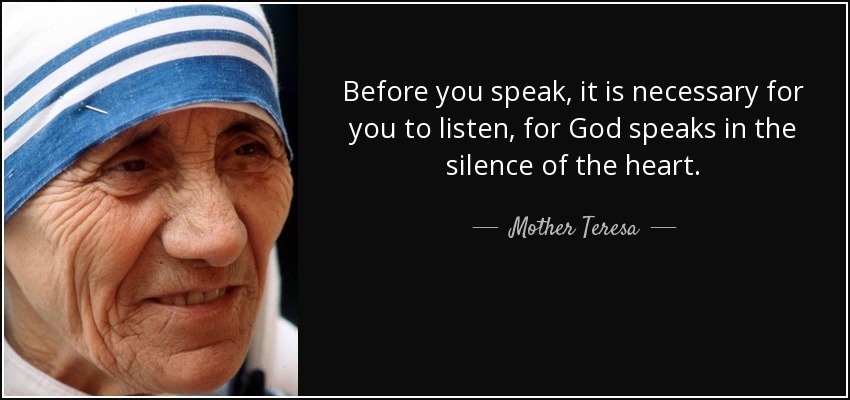
Listen Before You Speak

Passages: Is. 13:2-11; 2 Corinthians 7:4-16; Mark 7:31-37
Ընթերցուածքներ՝ Եսայ. ԺԳ 2-11; Բ Կորնց Է 4-16; Մարկ. Է 31-37 

In the name of the Father, Son and Holy Spirit, Amen!

When a child is growing up and slowly being exposed to the world around them, they begin to develop likes and dislikes, including flavors, style and their own personality. Who they will grow up to be is influenced by what they see and hear through the good and bad examples of their lives. One of the last acts or senses to develop in a child is speech; the ability to talk and express themselves. Not just when but even the kind of speech a child begins to use develops from what they have observed and heard. If a child lives in a foreign home, they may develop an accent; or if they live in a home full of cursing and vulgar language, they will develop a vulgar vocabulary. And once a certain vocabulary, habit, attitude, taste, and personality has been established in a child, it is very difficult to break. Yet, a devoted parent works and strives to bring that child to maturity in their speech and behavior by teaching them, by listening and instructing the child, no matter how stubborn the child may be. Of course, we all know this, that unless the child learns to listen and understand they will never actually want to change and so it will always be an uphill battle.

My dears, when we pray to God we are hoping He will listen. We sit in our cars, or at our workplace, in school before an exam, alone at home, or in Church, or wherever we may be, and if we have any belief, we pray. And there are a multitude of things we all pray for; opening up our hearts, we ask for forgiveness, healing, strength, patience, hope, love, courage, wealth, or health. We pray for rain, we pray for sun. We pray for many-many things hoping that God will hear us and give us what we are asking for. Yet, the Church Father’s ask an interesting question, when we pray to God and hope He is listening, do we listen to our own prayers? What does this mean? In the Gospel of Mark today, we read of how “they brought to him a man who was deaf and had an impediment in his speech; and they wanted him to lay his hand upon him.” In other words, they came seeking healing. In other translations it says deaf and dumb. This might seem offensive to a modern audience today, to refer to someone who is mute or has difficulty speaking as dumb, but in the ancient world and even at its root a “dumb” person did not mean “stupid” or “uneducated” but rather, one who cannot speak. Interestingly even in Armenian, what do we call animals? Anasoon, which today may seem like insult, just like the word dumb, but at its root it means those that don’t speak. So they bring to Christ this man who is deaf and unable to speak for healing. They bring a man who either from birth or over his life had lost his ability to hear and who was unable to speak. Whether this meant he grunted, or made noises, or perhaps was just not able to express himself we don’t know. Scripture indicates a speech impediment not complete silence. We do know however, that once Christ healed him, he was able to speak plainly, meaning in a way that others could understand him. Yet, I want us to look at how he was healed. “And taking him aside from the multitude privately, he put his fingers into his ears, and he spat and touched his tongue; and looking up to heaven, he sighed, and said to him, “Eph′phatha,” that is, “Be opened.” And his ears were opened, his tongue was released, and he spoke plainly.” What stands out? Look at the order of events especially in that last sentence. “…his ears were opened, his tongue was released…”

When we pray to God, we come with requests and desires, and we look for words to be able to articulate and express what we want. Much like a child who has only just began to learn how to express themselves, in prayer sometimes we aren’t sure how to speak to God, or if God even understands or hears us. Perhaps we feel like a person with a speech impediment, we make noises but are not sure if we are understood. Yet, our entire Christian faith is not about us petitioning or telling God what we want. Our faith is about maturing, learning, and growing. It is about being healed of our sinfulness, our brokenness, our vulgarity, our perversions, our shortcomings, etc. To be a Christian is not defined in our ability to give a sermon, sing or chant in Church, recite prayers, or even talk clear sentences.  Those are the things that should be a natural reflection of an already healed and growing faith. Rather, Christ first must heal us, open our ears and our eyes to observe and learn so that when we pray not only do we hope that God hears our prayers, but we also listen and understand ourselves of how God speaks back to us.

Why? So we can speak plainly, meaning we can speak our faith, live and express our faith in a way others can understand. Sadly, especially in today’s society, we have chosen to become deaf and dumb once again. Much like a child who does not want to learn, we do not want to listen to God. We want to hold on to our own premonitions, thoughts, ideas, views, and concepts. We don’t listen to each other, we don’t see each other, and we act as if everyone else is dumb and unable to speak while we know better. We want the Church to change, we want our parents to change, our community to change, our government to change, our world to change, yet, we refuse to listen to God who first calls us to be changed and healed, and therefore, we become the change we want to see. For our own ears to be opened first, then for us to be able to speak plainly, speak with love, speak with hope, speak not just with words but with our very lives. In the same way, the best sermon is the life we live not the words that come from the pulpit, likewise, the greatest prayer is the faith poured out not with the words we say to God as if he was the mall Santa Claus. But rather, the life of faith lived which others will see and understand.

My dear brothers and sister, in Proverbs 4 we read, “be attentive to my words; incline your ear to my sayings. Let them not escape from your sight; keep them within your heart. For they are life to those who find them, and healing to all their flesh. Keep your heart with all vigilance, for from it flow the springs of life. Put away from you crooked speech, and put devious talk far from you.” Learn to listen first. Grow and learn what God is teaching us through the Holy Scriptures, through the Traditions and life in the Church. These are the tools by which God speaks to us and heals us saying “Be opened” – Be healed my child. Then live a life of faith, of maturity, of hope, love and courage; a life of compassion, mercy and joy standing firm in the knowledge that yes, God our Heavenly Father does hear our prayers, and through the Holy Spirit lifts us up, answers us, if only we would first choose to listen. Come to God, seek to be opened and grow. Take time to ask, develop a vocabulary of love and hope in Christ Jesus. Only then may we use what God has given us to lift others up, hear the prayers of others, listen to the commandments of our Lord who heals and transforms us each day we come to Him. And may we bring glory through the life we live, to God our Father, the Son and Holy Spirit, now and forever, Amen!

To Eat or Not to Eat?

Passages: Is. 10:12-19; 2 Corinth. 2:12-3:3; Mk. 6:30-44
Ընթերցուածքներ՝ Եսայ. Ժ 12-19; Բ Կորնց. Բ 12- Գ 33; Մկ. Զ 30-44

In the name of the Father, Son and Holy Spirit, Amen!

There are very few things in this world the bring people together like food. Whether it is sitting around a dinner table with family, or spending time with friends and colleagues, most human interaction revolves around food. This weekend in the United States and Canada it is Labor Day weekend. For many people it marks the end of the summer season and the beginning of the latter part of the year. We celebrate with food! In fact, as we think about the latter part of the year and prepare for fall and winter we see countless advertisements about pumpkin spice latte’s, Halloween candy, Thanksgiving Turkey, and Christmas cookies. All food! When we ask our friends for help when we are moving or something else, we offer food as a reward. When we choose to travel the world, we think about the local cuisine. What are we going to eat? As the summer is ending and all our local Armenian Churches had their festivals; when we compare how it went, we always talk about how good the food was. We’ve spoken about this in the past, but food is even part of our vocabulary. In Armenian the word for friend is Unt Ger – the person you eat with. In English what do we say about food? You are what you eat.

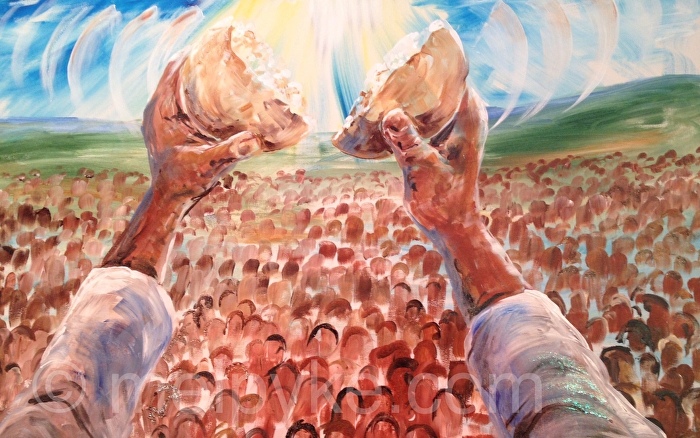
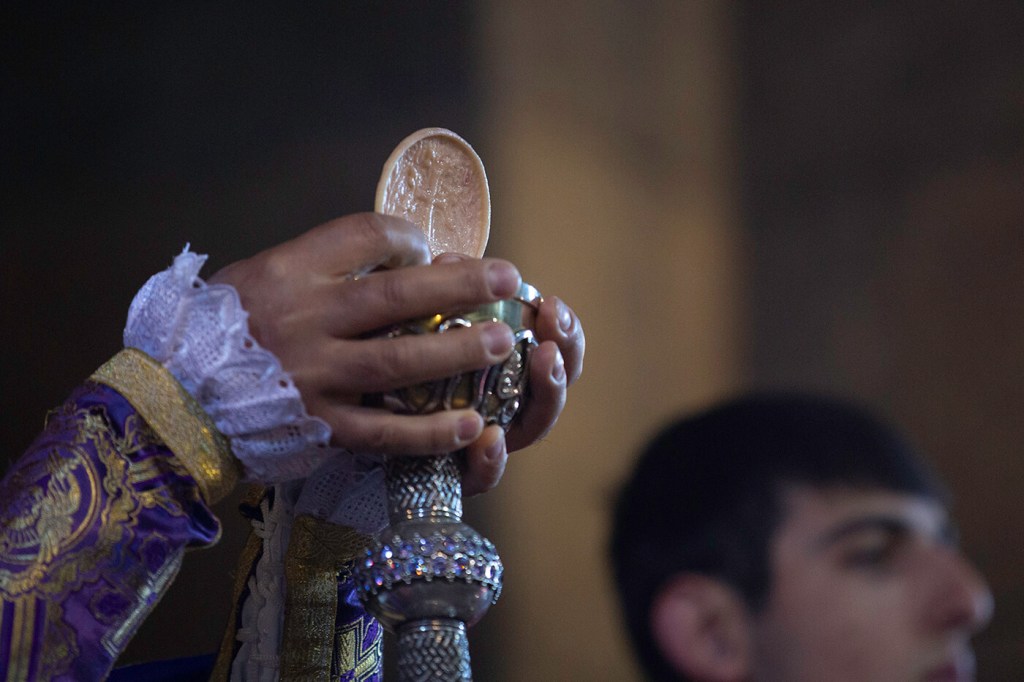
Food is such an important and binding part of our lives, it is even part of our faith. Scripture is full of images such as the banquet table in Heaven, where we gather every Sunday and eat the bread of life, the body and blood of Christ Jesus, which brings us into Communion with God. When we pray, we ask God to “give us our daily bread.” In today’s Gospel of Mark we read of how Christ feeds the 5,000 with the miracle of the bread and fish. We all know this story very well and in fact, this story is so important that it is found in all 4 Gospels, something unique. But it is written in 2 different ways in the Gospel of Mark. Some say it is a repeat because of editorial mistakes while other scholars argue it was 2 separate events. Regardless, a story that appears in all the Gospels already tells us how important it is, and that it requires a careful reading and understanding. The reason it is so important to understand this passage carefully is because if we solely focus on the miracle of the food multiplying, we might wrongly focus on the physical food; something we do in our daily lives as well.  All too often, we focus on the physical food, the physical reward, the material without giving deeper thought to the spiritual and divine part. Whether we are gathering with friends, celebrate an event, attend the Church festivals, or even attend Church service, if all we do is focus on the physical, we fail because we give more importance to the physical and material rather than the spiritual.

In all the Gospel accounts of this miracle we read of how Christ tells the disciples to feed the hungry people. And we know how they say they don’t have much to offer, and so Christ takes what they have and multiplies it so abundantly that everyone eats and is satisfied.  We have heard many sermons about what this means. Yet, I wonder if we have paid attention to what precedes this miracle and Christ’s command to us. We read in the Matthew (14:14) “As he went ashore he saw a great throng; and he had compassion on them, and healed their sick.” Mark (6:34) “As he went ashore he saw a great throng, and he had compassion on them, because they were like sheep without a shepherd; and he began to teach them many things.” Mark (8:1-2) “In those days, when again a great crowd had gathered, and they had nothing to eat, he called his disciples to him, and said to them,“I have compassion on the crowd, because they have been with me now three days…” Luke (9:11) “When the crowds learned it, they followed him; and he welcomed them and spoke to them of the kingdom of God, and cured those who had need of healing.” John (6:3-4) “Jesus went up on the mountain, and there sat down with his disciples. Now the Passover, the feast of the Jews, was at hand.” What stands out about all these readings? All of them show how Christ saw his followers, had compassion on them and began healing and teaching them. Even in the last one, when we read it was the feast of the Passover, the Jews had come to Jesus, a recognized Rabbi, to be taught. It is only then my dears we read of how Christ tells the disciples that the people need to be fed by them. So what do we understand?

My dear brothers and sisters, Christ calls all of us to Him through His Holy Communion. Christ Jesus came into this world, to love, heal, forgive all of us of our brokenness and dying on the Cross Christ Jesus gives us new life. We learn all this where? In the Church, through the Holy Scriptures and the teachings of the Church Fathers. But we also learn in the Church that we as Christian’s are called to then take this message of hope, love and resurrection to the rest of the world through our lives. As St. Paul says, to be a sweet fragrance. To be an example of God’s love through the life we live; in other words, to feed others. But first, this means that we need to be fed, not just physical food but spiritual. Meaning, we need to first open our hearts, our minds, repent and confess our sinfulness to God, and then after we have been fed, feed others. Sadly, for too many of us, just like our focus on physical food likewise, our focus remains mainly on the physical acts of “religion” like coming to Church or praying “give us our daily bread”, and thinking that this feeds our soul. Yet, we come to Church only to judge, to fulfill some sort of obligation, we pray just so we can tick it off on a to-do list, to show up and show off.  Yet, Christ saw and had compassion on those who followed Him; those who had a genuine desire not to show off but to be healed. Christ fed those who were hungry.

My dears, Christ first teaches and heals those who have gathered, God blesses us with what we need and does so abundantly and then teaches us how we should feed each others in turn. Meaning my dears, Christ provides us with the spiritual food, the spiritual nourishment that strengthens our faith and we in turn then provide both the spiritual but also physical food to the rest of the world. When we gather for labor day weekend or some other celebration the food doesn’t matter – it’s the time we spend with our loved ones. When we feed our friends who have helped us move, the food doesn’t matter – it’s the fact that we took time to help one another out. When we attend Church festivals, the food doesn’t matter – it is the community and coming together that is important. When we attend Church, what we wear, how educated we are, the color of our skin, our money or statues, our weakness and failures, our success and riches – none of this matters. It is our heart, and humility that God looks to and has compassion over. It is us that God calls to Himself, to feed us and strengthen us in order to send us out into world to feed others.

Yes, food my dears, is important. We all gather around our tables, share a meal, follow specific diets, try multicultural cuisines and break bread. This feeds our physical stomachs! Yet, Christ reminds us to not forget the spiritual, the divine that is fed, each time we confess our sins to God seeking His love; each time we stretch out a helping hand; each time we volunteer at a soup kitchen; each time we sit with a friend who is going through difficulties; each time we come together in Church to pray. Our soul is fed. It is interesting to think that eating food is one of the first sins that Adam and Eve committed by which Satan broke our communion with God and yet, it is through eating that Christ gives us an opportunity to come back into Communion with God the Father. This reveals to us that when we gather to eat, it is not the physical but the divine that gives us value, the love, hope and life in Christ Jesus which heals the world of its ailments. If we are what we eat, let us eat of God; let us take what we have been given and feed others who are hungry for more. And may the grace of the Holy Spirit reveal to us how God see us, teaches us, feeds us and calls each of us to serve and feed others, Amen!

The Opportunity of Doubt

Passages: Is. 9:8-19; 2 Corinth. 1:1-11; Mk. 4:35-41
Ընթերցուածքներ՝ Եսայ. Թ 8-19; Բ Կորնց. Ա 1-11; Մկ. Դ:35-41

In the name of the Father, Son and Holy Spirit, Amen!

One day, I was with a group of friends, and we were having a conversation with a priest, and the priest asked us an interesting question. Have you ever doubted God in your life? Most of the group, even I, acknowledged that yes, sometimes we had doubted God’s existence or even His presence in our life. There was however, one girl in the group who said, no she had never doubted God. While some of us in the group felt like “wow, that must be so good, to never have doubt” the priest surprised us by saying to her how difficult it must be for her to trust God. Perhaps it was prophesy, perhaps the priest knew something we didn’t, because a few years later I learned that when that same girl had come into some hardship, she had completely abandoned her faith and God.

My dear brothers and sisters, do we doubt God? Is doubt a bad thing when it comes to our faith? Some of us think so. Yet, as the elderly priest explained to us when we were surprised by his answer to the girl, doubt gives possibility for growth. As modern people, we feel safest when we know and have certainty. We know it is going to rain, so we dress appropriately and take an umbrella. We know we have to maintain our health and so we, hopefully, follow the doctor’s orders. We know that the sun can burn and so we put on sunscreen. We know how bad Chicago traffic is and so we leave a bit early when we head downtown. We are comfortable when we know and doubt, especially in our faith makes us scared. We fear doubt and think that perhaps our faith is weak; if we doubt then we are sinning. Yet, even some of the greatest saints of the Church doubted.

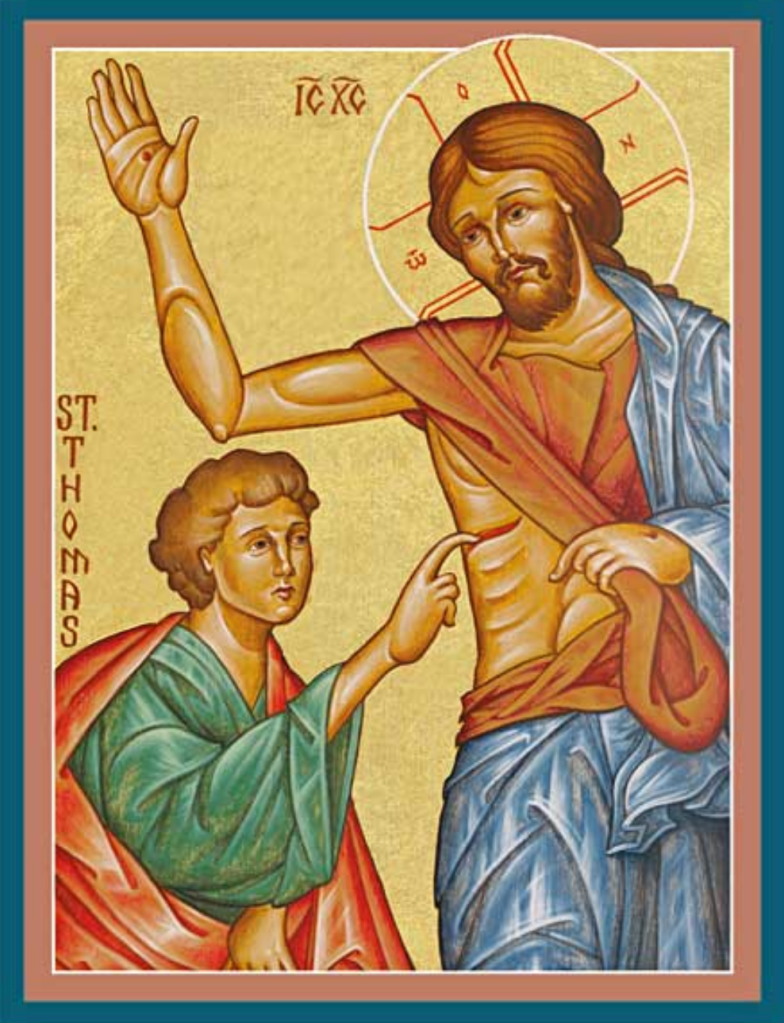
Yesterday, we remembered St. Thomas the Apostle to India. Yet, St. Thomas is known as Thomas the doubter because after the resurrection of Christ we read in the Gospel of John (20), “Now Thomas, one of the twelve, called the Twin, was not with them when Jesus came. So the other disciples told him, “We have seen the Lord.” But he said to them, ‘Unless I see in his hands the print of the nails, and place my finger in the mark of the nails, and place my hand in his side, I will not believe.’ Eight days later, his disciples were again in the house, and Thomas was with them. The doors were shut, but Jesus came and stood among them, and said, ‘Peace be with you.’ Then he said to Thomas, ‘Put your finger here, and see my hands; and put out your hand, and place it in my side; do not be faithless, but believing.’ Thomas answered him, ‘My Lord and my God!’” Yet, Thomas, is a saint of the God’s Holy Church and evangelized much of Asia including our Indian brothers and sisters, where he was eventually martyred. Or what about King David, in the Psalms (13) wrote about his struggle of faith. Well David hadn’t seen God and Thomas was asking to see Christ after the resurrection; they had reason to doubt. Well what about Matthew 28:16-17, after Christ was with the disciples and many other witnessess, for 40 days, after his Resurrection we read, “Then the eleven disciples went away into Galilee, to the mountain which Jesus had commanded them to. And when they saw Him, they worshipped Him but some doubted.” Doubt is not a bad thing in faith. Doubt is not weakness. Doubt is not sin. Doubt is opportunity!

In Isaiah 1:18 for example we read, “Come now, let us reason together, says the Lord: though your sins are like scarlet,they shall be as white as snow; though they are red like crimson, they shall become like wool.” This is so beautiful, “Come now, let us reason together.” This is a direct invitation from God to us to reason, to wrestle, to ask questions to work out and illuminate our hearts and minds to God. Yes, we are sinful, but we will be cleansed and made white as snow. Meaning my dears, that doubt is not a bad thing, to struggle or reason with faith is in fact necessary. Yes, we want to be certain in life about every thing but faith is not a thing, it is communion. Meaning that faith and knowledge can’t be understood or applied equally. We have knowledge, we know that 1+1= 2; we know that if we jump into the water, we will get wet; we know that if we have too much sugar, it’s not good for us. These are facts. Yet, faith which is communion with God is not a fact but a relationship. Unlike facts, relationships come from free will. God doesn’t force us to love Him, to believe in Him in the same way we can’t force others to love or like us. It’s our choice to, which we make; to trust, love, hope and believe in God. And this is what is scary or causes fear about doubt in us. We compare our communion to God with our relationships to others around us. What if I share my love or open my heart to someone who doesn’t return that love or worse abuses it? What if I get hurt? What if I get rejected? What if I’m wrong? We don’t know, we are uncertain of how others will be with us and so we are afraid. We take that fear of the uncertainty, we take that doubt and apply it to our Communion and relationship with God. Doubt is normal my dear brothers and sisters, especially in faith, in fact, it is healthy because to doubt gives us an opportunity to ask questions, to cry, to yell and search deeper for meaning and understanding.

When someone asks me which is my favorite Church, I always answer – an empty one. Because in an empty Church I sit and pray and if I’m struggling with something in my faith, I yell and verbally and vocally argue with God. In the same way, in today’s Gospel when the storms arose around the disciples on the sea of Galilee, they turn and yelled at Christ, “Teacher, do you not care if we perish?” When we read this passage, we read it very quietly, but imagine that scene in the boat – there is a storm! The boat is sinking; the wind, rain and waves crashing into them. How do you think they were going to speak to Jesus? Quietly? No, they were yelling, they were afraid, they were uncertain and had doubt. And we might think that Jesus is arguing with them, yet, we read he rebuked the storm, but he told the disciples. You see if the disciples had no faith whatsoever they wouldn’t have woken Jesus or cried out to him. But rather, Jesus is reminding them that in faith, even if you doubt, trust in me, I will not abandon you.

My dears, there is nothing wrong in doubt when it comes to our faith. We doubt because we are afraid and we want to know, we doubt because we are struggling and wrestling to understand. Ultimately, it is our choice which path to take though. Do we freely choose to love God, learn about Him, trust and hope in Him or will succumb to our fears and walk away? If we have doubt, it is an invitation to come to Church, cry, yell, seek, read the Holy Scriptures, talk to the priest; give yourself an opportunity by giving yourself to God through the Church. Too many of us go through the actions, whether it’s volunteering, singing in the choir or writing a check, yet, how many of us sit down in the Church or call the priest and say Der Hayr, I want to learn about God? Doubt is an opportunity. Doubt is not the opposite of faith, rather through it we are challenged to go deeper into the communion that is true faith in God. A faith that will calm the storms of our life, that will overcome the burdens we carry, and illuminate our hearts and minds to God’s presence in times of uncertainty. To know God, is to love God; to love God is to choose God; to choose God is to seek God; to seek God is to wrestle with God; to wrestle with God begins with doubt. May our doubt open our hearts to grow, pray, learn and ultimately trust in the love and hope of God our Heavenly Father, whom we come into Communion with through Christ Jesus and the Holy Spirit; God will never abandon us, Amen!