Exemplary?

Passages: Is. 40:18-31; Heb. 4:16-5:10; Lk. 18:9-14
Ընթերցուածքներ՝ Եսայ. Խ 18-31; Եբր. Դ 16 – Ե 10; Ղկ. ԺԸ 9-14

In the Name of the Father, Son and Holy Spirit, Amen!

There are students in a classroom of all different levels. In one classroom, there was a student who was very dedicated to his schoolwork. He is what you would call a perfect student; He was involved in extracurricular activities, he has the 4.0 GPA and so he’s doing everything proper and what is expected for a high achieving student. In that same class, there is another student who couldn’t care less. He doesn’t study and does with an attitude of carlessness. One day, his teachers came up to him and warned him, that “you’re not going to graduate, you’re not going to get anywhere in life, if you don’t apply yourself.” The lazy student heeded his teachers warning and with tutoring and extra help at the end of the year, as accolades were being given out the students, the one student with the 4.0 GPA, with the guaranteed college and full ride scholarship received all that he worked for. Yet, what did he not receive? To the surprise of many, the student who could barely get through class received the award for “Student of the Year.”

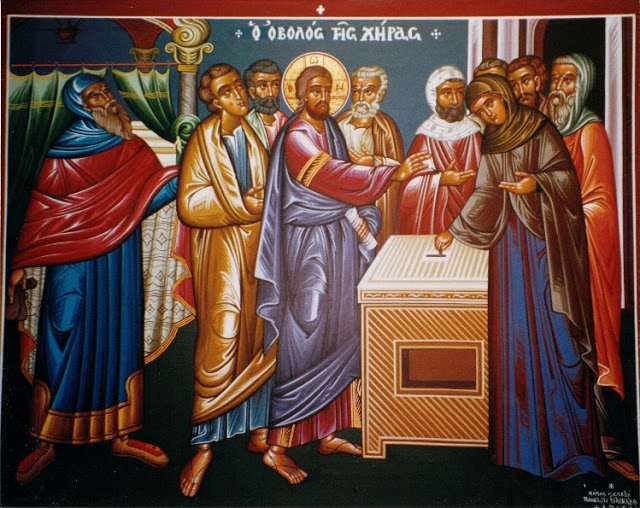
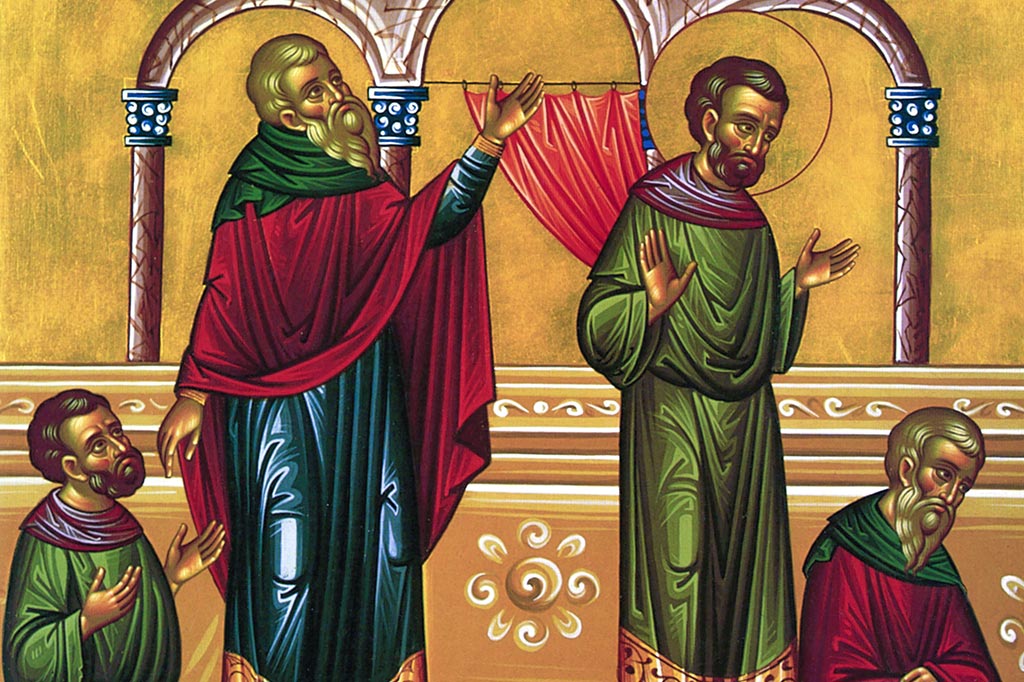
Perhaps we may think how is that fair? Why does he get “student of the year” and the one that truly was an exemplary student does not? Today my dears, Christ presents to us, the parable of the Pharisee and the Tax Collector. On one had, someone of the law, someone who is the ideal member of the Jewish community. The Pharisees are the ones that are learned; they’re the ones that people are going to for advice. The Pharisee is the exemplary one. But we also have another person, a tax collector. Well that’s his job but why does Christ use the example of a tax-collector? Because the tax collector, just like today the IRS or whatever, whoever is collecting our taxes, they’re not really liked. A Jewish tax-collector lives well but in their community, they are the bottom of society because while both Pharisees and the Tax-collectors were both Jews, one is a leader, a teacher of his people, the other one is an enemy of his people because he works for the Romans; he gets rich at the expense of his people. Yet, it is he that Jesus says will be justified, he who will receive a blessing, not the Pharisee.
Contrary to what some might believe, the Pharisees were not rejected by Jesus my dears. In fact, Christ said “I did not come to abolish the law, but to fulfill it” and the Pharisees are the teachers of that law. Elsewhere Jesus says, when speaking about the Pharisees, “do as they say, not as they do.” Rather, Christ rejected the idea that just because we think we are doing the things, just because we dress nicely, because we have the material wealth, the diplomas, and all these things, than we are someone exemplary, and blessed. However, when God created humanity, how did He create humanity? From the dirt? What else do we read? In his image and likeness and, my dears, when humanity was created and after sin came into our lives Adam and Eve did not approach God because they were naked and ashamed. Meaning, God created us naked! That nakedness, whether was physical or not, reveals to us that God created us with no diplomas, with no accolades. with no scholarships, with no cars, no cell phones, nothing material. God created the matieral world, and used the material to create us. God took matter and made it matter! But what matters most is not the matter, but the Creator in which image and likeness we are created in.

That is why the it was not the Pharisee, the good student that was exemplary, who put value in the external but in the tax-collector who was justified because regardless of job, regardless of accolade, regardless of how society will accept or reject us, for God the only thing that truly gives us value is humility. Humility doesn’t mean we feel bad or beat our chest saying, woe is me. Humility is not what in today’s society we call victim mentality. Humility is recognizing that no matter what we achieve or fail, all of us need God’s love and mercy. Humility is recognizing the person in front of me is equally in need of God’s love and mercy. Humility is knowing that regardless of the material in my life, unless I have God in my life, unless I have His presence, none of it matters. Beauty fades, clothes get holes, money runs out!

Humility and the grace of God is eternal when He is present. The grace of God is eternal; recognized in the act of love that brought Christ into the Manger, which we will be celebrating either in a few days on December 24-25 or in a few weeks on January 5-6. In reality, we don’t celebrate on a date, but every day because it is in that Manger from which Christ began his earthly ministry up to the Holy Cross, and from the Cross He returned back a manger, a tomb. The was born in swaddling cloth and He died and was wrapped back in swaddling cloth. But He rose from that tomb and in His humility as God, coming down into our lives raises us up. He repurposes us, transforms us declaring I don’t care about your language, or skill, skin color, your hair length, or anything else. None of those things matter, if there is no humility in us.

Today in Armenia for those who may be following, we see how clergy are against clergy, of how politicians are against the people, where is the humility? Yes perhaps some of the criticism against the clergy and the criticism against the politicians is correct but where is the humility? Where is the mercy? Where is the value that God has created us in, His image and likeness? Unless there is humility, unless there is an understanding that who we are, our value, is in the love of God, unless we understand that whether priest or popper, child or adult, pharisee or tax collector, unless there is the humility of God to recognize our need for Him and His love not just for me but for all of us, than we will remain in darkness. Nothing will transform us.

However, the love and grace of God, in Christ has come to transform us – if only we begin with humility. For when we have the humility and love God calls us to have, then like the tax collector we will grow, we will be lifted up, we will be justified, and our true value will shine forth and our lives will give glory to our Heavenly Father, Son and Holy Spirit, whether it’s Christmas, Easter or any day of the year, now and always, Amen!
Who Are We With What We Have?

Passages: Is. 37:14-38; 2 Thess. 1:1-12; Lk. 14:12-24
Ընթերցուածքներ՝ Եսայ. ԼԷ 14-38; Բ Թեսաղ. Ա 1-12; Ղկ. ԺԴ 12-24

In the Name of the Father, Son and Holy Spirit, Amen!

Money is the most important thing you can have because money helps you prepare for life. Money helps you make friends; money helps you buy things, fill your life with valuable treasures. Afterall, that is the season we’re in right? We’re in the season of buying as we prepare for Christmas! My dears, the Church is in the season of Advent, of preparation, but not in the way that the world tells us to prepare.

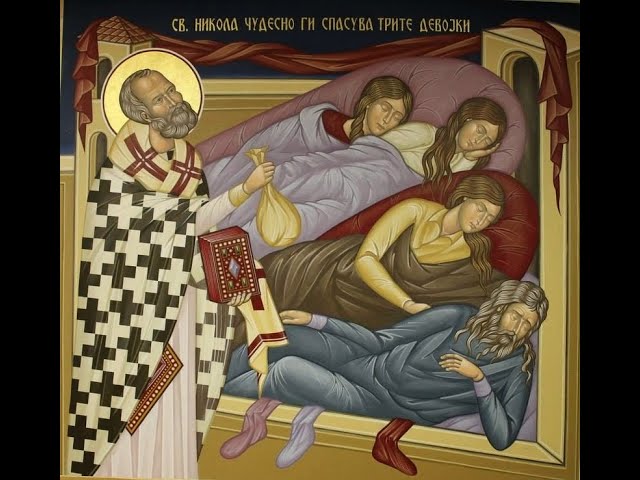
There once was this very rich man, who had inherited wealth from his parents. They were rich and so of course he was rich, and as he grew up he became very respected and liked in his community. One day, this rich man walking down the street overheard another seemingly poor man praying by his open window, “Dear God, I have three daughters, I don’t have enough money to wed them. Help me at least wed my oldest one.” The rich man walked past after hearing this prayer and thought to himself perhaps, I can help but I don’t want any reward, I don’t want recognition. And so, in the middle of the night, the rich man came and threw money through the window of the house. In the morning, when they woke up, they found this bag of gold, enough to wed the older daughter, sitting by their shoes. Unsure where this came from the man prayed “thank you God, that through this money I am able to wed my daughter. That through this money I’m able to provide. But Lord, I ask that you please also help me with my second daughter.” Again, the rich man overhearing this prayer does the same thing; throws in the money and the next day again the money is discovered. Confused not knowing where this money is from the man prays again thanking God, prays again for help but this time decides “I’m going to stay awake to see where this money comes from.” In the middle of the night, the bag of gold is thrown through the window again and this time he runs out to stop whoever threw the money. “Sir, why are you helping me?” and the man responds because “where your heart is, there your treasure will be.”

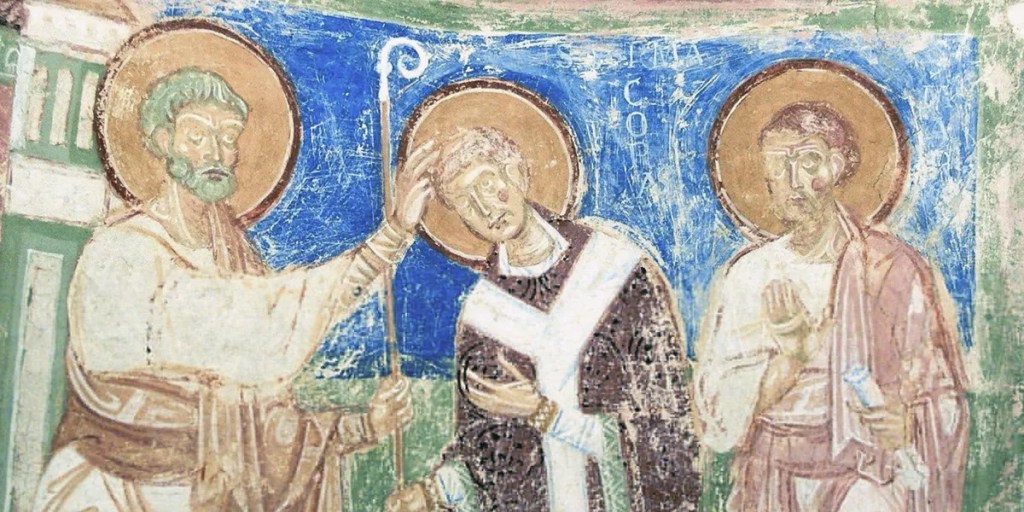
This rich man’s name is Santa Claus, St. Nicholas. Not the Coca-Cola, European red suit, white beard but the real St. Nicholas. This is one of the stories of the real Saint Nicholas which we in the Armenian Church and much of Christendom celebrated as the Bishop of Myra. He who was from a wealthy family, who gave up that wealth to be a priest, becoming a Bishop, serving God, becoming a teacher of the Church, a Holy Father, who participated in the great Council of Nicaea, which 1700 years ago defined our faith. The life of Saint Nicholas, and truthfully, the life of all our Saints especially of  those who’ve sacrificed riches, wealth and royalty, their examples begs the question from all of us – with the life we have, with our riches, our successes, our bodies, and minds, regardless of how the world defines or values us, with what God has given us, how do we respond to God?

In the Gospel today, Christ gives us the example of 2 grand banquets. In the first, He tells us to be inviting, to be helpful to those whom we have nothing to gain from. In other words, help without seeking reward or recognition. But the Gospel also continues with a banquet story of someone who does help, who does invite and yet, those who are invited make every excuse as not to attend. This is what it means when I say, who are we. The God invites us to His banquet, but also reminds us, our participation in that banquet begins with who we invite to our banquets. When we are kind, loving, merciful, when we forgive others and live out the commandments of God as the Christian’s we are – do we do so because we want something in return? When God calls us, gives us opportunities to help, to learn His commandments, to respond to our Christian faith – do we make excuses why we can’t. It’s cold, it’s too hot, our team is playing, I have laundry, I have homework, I was out late and am too tired, too much to do, I have x, y, z?

Ultimately my dears, the core and foundational answer is the same. Who we are is a child of God; who we are is a Christian. To be a Christian is to respond to God and to one another. Which is why St. Paul says, “your faith is growing more and more, and the love all of you have for one another is increasing.” Our faith grows by how much we love one another in addition to how much we love God. Yet, if our faith is merely a belief in Jesus as a teacher, another guru among the plethora of other religions of this world, then of course, we can find any excuse to pick and choose when and what we believe. When and if we want to attend the banquet table. If our Christian faith is merely about being a nice person, so that we can “go to Heaven”, in the same way we are only friends and kind to those we have something to gain from, then yes, our faith and our relationships are merely transactional and commercial.

I’m sorry if this offends but neither of those are Christianity. One is a buffet, and the other is business. Yet, to be a child of God, our Christian faith – is Communion with God, which extends to others. It is a recognition that when we do good, we do because God is good and God does good through us. When we come to Church, read our Scriptures and pray, when we attend Bible Studies, and through repentance confess our sinfulness, we do because our Heavenly Father invites us to sit at His banquet table where He reveals to us our true purpose and value. In other words, my dears, our Christian faith is realized when we approach the Holy Altar, participate in this banquet, and then extend that love to one another, by giving with as Christ gives, out expectation of reward. To love without return. To care and understand without a desire to be cared for our understood. That is what it means to love one another, to love our enemies and to pray for those who persecute us. I don’t imagine Christ liked the Pharisees and those who persecuted his disciples very much. And yet, Divine love poured out of Him on the Cross to look at those who crucified him and say, “Father, forgive them for they not what they do.” And my dears, we are called to be likewise. To look to the world not with an expectation of what we can gain but with hope, compassion and love – to look and see goodness and light by being goodness and light where there is darkness and say God, Abba, forgive this world who knows not what it does and illuminate my mind so that I learn what it is that you want me to do. That is our Christian faith, a responding to God our Heavenly Father.

How? Through this banquet table which we than extend to all others who are hungry and know not what they do. Respond my dears. Pray. Love. Come and eat from this Holy Table, be filled through the Word and take what God has given us, as His children, take and give to others. Be fed and feed. And thereby, this response, our lives, and the lives of St. Nicholas and all our saints, will be an example for others to see and follow. A life that gives glory and honor to our Heavenly Father, the Son and Holy Spirit, Amen!

Theology of a Child

Passages: Is. 25:9-26.7; Phil. 1:1-11; Lk. 9:44-50
Ընթերցուածքներ՝ Եսայ. ԻԵ 9 – ԻԶ 7; Փիլիփ. Ա 1-11; Ղկ. Թ 44-50

In the Name of the Father, Son and Holy Spirit, Amen!

One day, a group of tourists traveling across Europe, wanted to visit historical cities and villages and they came to a village that looked like it was from a story book. The valley and lush mountains created an energy that clearly this was a special place. As the tourists, entered the village on foot, they saw a man sitting on the street corner and considering he was quite elderly, they thought he would know the people and history of this village. They asked, “good sir, were any great men born in this village?” The old man thought to himself and replied, “Nope, only babies.” Our society is obsessed with this idea of trying to define and determine who is the greatest. Who’s the greatest, Lebron or Jordan? Kane or Bedard? And while defining greatness comes in many shapes and sizes, with accolades and prestige, what makes these individuals or perhaps even us the greatest? After all, I don’t want to be a good priest, I want to be a great priest; I want to be a great husband, and father. What makes me or any of us great?

Most of us would define greatness as achieved over hard work, dedication and contribution to the respect area be that sports, music, etc. Yet, Christ in the Gospel reading today, gives us the example of a child. What makes a child great and why would Christ choose a child as an example? A child is naïve; Yes, they can be smart, but Lebron and Jordan aren’t going to be taking lessons from one. A child is inexperienced; Yes, they look at the world in a unique way but none of us are going to be taking financial advice from them. My dears, to understand where this argument even comes from, we need to also look at the first part of the reading. In vv. 44-45 we read, “Let these words sink down into your ears, for the Son of Man is about to be betrayed into the hands of men.” But they did not understand this saying, and it was hidden from them so that they did not perceive it; and they were afraid to ask Him about this saying. It seems strange Jesus is telling the Disciples to listen and yet, at the same time we read they didn’t understand because it was hidden from them. How does this make sense?

My dears, when I say to parents at what age did you have “the talk” with their kids, we all understand what that means, correct? How the biology of the making of a family is neither gross, strange nor weird. And yet, if we talk to our children before they are ready, they will giggle, yell out eww! or be very confused and scandalized. This is because as we mature, we are ready to learn and understand the world around us in its fullness. It is likewise with our faith. The Disciples and we, are children of God. They were not ready for understanding what the passion and death of Jesus would mean fully. Yes, it was very important to know yet, God our Heavenly Father at the very core wants to be in Communion with us, to teach us, to embrace us as a parent embraces their child. If we, as the children, are not ready, and rush into something we are unprepared for we will fall and be hurt. So while it is important, it is far more important for us to understand that we are children and that God is our Father. That is how this all ties into one another.

My dears, the Disciples clearly understood more of Christ’s teachings than the children around them. Yet so what? So, what if we understand theology, if we understand Church history, if we understand the Bible in multiple languages, if we sing the choir, are a priest and serve on the Altar or Church committee? These are not what make us valuable. When Christ gives the example of the child, what He is teaching us that all those things society teaches us that are meaningful, valuable, what we think is perhaps important in life, those don’t matter in the eyes of God. Yes, having ambition, dedication and drive to achieve, learn, serve, and contribute is wonderful. Scriptures teach us to work hard, to serve one another. Yet, this same world will also reject us and throw us aside when we don’t fit it’s standard of greatness. This world will tell us our age, our skin color, our language, our lack of education, our inexperience of work makes us a nobody. And scripture reminds us that for God our value is in the purity, innocence and humility. As a Christian, are we first a child of God and that is why we serve the Church and each other. Yet, if there is not humility and love in us, then all we are trying to be is what we deem is a “proper Christian.” That is why St. Paul in 1 Corinthians 13 teaches us, “Though I speak with the tongues of men and of angels, but have not love, I have become sounding brass or a clanging cymbal. And though I have the gift of prophecy, and understand all mysteries and all knowledge, and though I have all faith, so that I could remove mountains, but have not love, I am nothing. And though I bestow all my goods to feed the poor, and though I give my body to be burned, but have not love, it profits me nothing.”

Do we wish to understand all theology, all the Scriptures, and to be a proper Christian? St. Evagrius Ponticus tell us, true theology, true Christianity happens when we truly pray. When we understand, “Our Father…” means we are merely a child and He is our Father. A child that is loved by God regardless of what we may or may not achieve in this world. A child that is loved by God regardless of if this world says we are nothing. A child that is loved by God regardless how many times along the way we mess up, and make mistakes. If we humble our egos, if we in saying Our Father understand “Dad, help me”, if we come to Church, attend Bible Studies, Confession and learn with a true desire not for self-justification but for transformation, for our Father’s love, then in the Kingdom of Heaven, we will be the greatest.

But I end with this warning, yes, Christ is telling us to be humble like children while at the same time reminding us, to accept others, to look at one another and see a child of God in each other. Whether we like each other or not, whether we agree with each other or not, we are children of God our Heavenly Father, in Communion through Jesus Christ our Crucified and Resurrected Lord who lifts us out of arrogance, ignorance and pride, and through the Holy Spirit, guides us in this life from the moment we are born of the Baptismal Font of the Church. For as St. John Chrysostom reminds us, we must see Christ in the beggars and prostitutes in the street, we must have love for all if we ever want to find Christ and His love and mercy in Church. My dears we are not born great, we’re born as babies, and we will always remain the children of our Heavenly Father. Therefore, approach as children, pray with innocence, love and humility and in our simple “Hayr Mer” we will have declared the greatest message of love for this entire world, Amen!

Sin of Fear!

Passages: Is. 24:1-12; Eph. 5:15-33; Lk. 8:49-56
Ընթերցուածքներ՝ Եսայ. ԻԴ 1-12; Եփե. Ե 15-33; Ղկ. Ը 49-56

In the name of the Father, Son and Holy Spirit, Amen!

Something that we all share and experience is fear! From early childhood, we experience fear. Fear of the unknown, fear due to uncertainty, fear of results, fear of lack of results. There’s something that we are all afraid of yet, in scripture we read over and over again “do not be afraid”. In fact, Scriptures tell us that fear is not part of what God created for us. In today’s Gospel, when we read about Jairus’ daughter we read, a man comes and tells him that your daughter is dead don’t bother the teacher anymore. What does this mean? It means lose your hope, it’s hopeless and there’s no point in bothering God. Yet, Christ responds with “do not fear, only believe,” have faith and all will be made well. But the reality is life doesn’t always fit that reality. Yes, we trust God and yet, we’re all afraid of something. So how do we have fear and have faith at the same time?

My dears, the greatest fear and the greatest sin is hopelessness. What do we read about the story of Cain and Abel? We all know the story of how Cain killed Abel. Yet, when Cain and Abel gave their gifts to God and Abels was accepted, we read in Genesis chapter 4 presented their when Abels was more acceptable God comes to Cain and says sin is at your doorstep, why are you angry with your brother? Why are you afraid, why do you think that you’re going to be unacceptable when you didn’t chose the best for God? It is only after, Cain filled with hopelessness, and anger, does he kill his brother. This means that the greatest sin that any of us could do isn’t theft, bigotry, lying, gambling, alcoholism, murder, etc. you name it. The greatest sin is hopelessness, the greatest sin is discouragement, the greatest sin is when we come face to face with death, we say what’s the point don’t bother God. Don’t bother the teacher yet, Christ tells us do not lose heart to remain faithful.

St. Paul emphasizes this by saying take heart and be renewed by God daily. In order for us not to lose heart, we need to draw near to God. Right now, my son being four years old, is at the age where around 2:00 in the morning he likes to come and climb into bed with us. Childhood psychology says that children do this not because they are trying to annoy us but because children do not have the developed skills to overcome fear and at night when the child is afraid they go to their mother and father to feel their heartbeat, to feel the warmth and find their comfort knowing that all will be well. My dears, when we are discouraged when we face anxiety and fear, when we in fact look into the tomb, we need to draw closer to God, we need to go and feel his heartbeat by coming to Church.

Now you’re gonna say Der Hayr keeps saying come to church because he wants the pews filled. And absolutely of course I want the pews filled. We should want our pews filled. Because it is here in Church, with our Heavenly mother that we her children come to our Heavenly Father. What parent doesn’t want their child with them; how could God not want his children to be with Him? God our heavenly father wants and calls us to Him daily and if we are afraid, when we fall into sin over and over again, God tells us do not be afraid, it will be well when I am with you. St. John Chrysostom for this reason says, that it doesn’t matter how much you fall, life was raised from the tomb. Therefore, no matter how much you fall, life can be raised!

Do not lose hope, and be not afraid. But just like my son climbs into bed to be with mom and dad, likewise, we must do we must take steps towards God our heavenly Father, He will not force upon us His will. Yesterday, the Armenian Church celebrated the Feast of the Holy Archangels Michael and Gabriel. In the Gospel reading of yesterday, it says that when one sheep goes astray the shepherd goes out looking for him, but doesn’t force the sheep to come to Him. He goes out looking and is ready accept, when the sheep recognizes its shepherd. There’s a story of an Abbott, a monk, who’s praying in the monastery and after the faithful leave, he’s cleaning the monastery up. While cleaning the sanctuary and he hears a child crying. Looking around seeing no one, he thinks nothing of it until he hears a baby crying again. This time he goes around the convent and again doesn’t see anything. But hearing a baby crying he looks to the hill next to the monastery and he sees a baby goat. Approaching the baby goat, he sees that the baby goat crying was because its foot was caught in thorns. So the monk pulls the leg out of the thorns and the goat runs away and does what? Falls right back into the thorns. Again the monk helps, again the goat falls into the thorns. 3-4 times and finally, the monk thinks to himself, I have to pick this goat up and put him to the side and find a way to keep the goat safe. When the monk approach the goat, it now runs away not back into the thorns but just keeps running away and the closer the monk goes to the goat it keeps running away until finally it comes to a cliff and the Abbott says that if I try and catch this goat it might fall to its death and so it backs off.

My dears, God comes after us but if we’re going to keep running away, if we’re going to keep succumbing to fear and not searching Him out, if we’re going to keep pushing Him away, we may come to a cliff in our life and our Heavenly Father desires us to live, not to fall over that cliff and so he’ll stand back and wait for us to come back to Him. And we might say, why isn’t God there in my times of fear and doubt, when we are the one who distanced ourselves.

Yet, God still waits. Because the way we overcome fear, the way we strengthen our faith and know that all will be well, is by being with our Heavenly Mother the Church and our Heavely Father, God. Just as a child seeking Him out when all hope is lost, when the world tells us don’t bother, we should bother more, desire and seek more. Because the greatest sin that we could ever have in our life is hopelessness and discouragement. Our hope is Jesus Christ, Crucified and Resurrected. Our life in God is our strength and the Holy Spirit by which we are renewed daily, guides us to come to our Heavenly Father. Let us live a life recognizing and seeking Him our in our times of fear and discouragement. That even in times of despair, even in times of uncertainty, we know and believe. And all will be made well for which we give glory to our Heavenly Father, the Son and Holy Spirit, now and always, Amen!
Within The Family

Scripture Readings: Is. 22:15-24; Eph. 1:1-14; Lk. 8:17-21 
Ընթերցուածքներ` Եսայ. ԻԲ 15-24; Եփես. Ա 1-14; Ղկ. Ը 17-21

In the name of the Father, Son and Holy Spirit, Amen!

Last week we read the words of St. Paul on the feast of the discovery of the Holy Cross that “the message of the cross is foolishness to those who are perishing” and this makes sense because the cross was a tool of death. That’s why Christ was crucified up high, so that when you saw the cross you would remember to behave. It would kind of be like saying that the message of the electric chair is salvation for us, it’s kind of strange. And so how do we understand the message of the cross, how do we understand our faith?

First of all, Holy Scripture is written not to be read verse by verse individually but as a whole as, an organic body, as God Incarnate in our life. And so, when the Church fathers on certain Sundays give us certain passages to read, there is something that they are trying to teach us. In today’s Gospel of Luke, we have two portions: First, Christ saying that all that is hidden, all that is secret, will soon be revealed. Then the second part kind of seems out of place, where we read Christ’s mother and it says brothers and sisters, Christ’s family has come to see him. And rather than say “oh welcome,” He says, “my mother and my brothers (my sisters) [my family] are those who hear the word of God and do it.”

So what how do these all tie together my dears? We are all baptized Christian, and we bear the name Christ. Christ means anointed one from the Greek Christos. And when we were baptized out of the holy font, we received the name anointed with the Holy Oil. Therefore, as one who bears this name, we belong, as St. Paul says, to this body, this family. We are not individuals each one doing our own thing. We serve God, as one organic body with our unique ways, we are a family, God’s children. And we gather with our Heavenly Mother, the Church, where we are together as a family come together. In fact, what’s the Armenian word for family? Unt-danik. Unt means under and danik is roof – we are all gathered under one roof, we are one family and we remain a part of God’s family, so long as we do what? What God has commanded as Christ says. So long as we love each other!

Think of our own families. In an ideal world our families are the ones where we come together, where we share Thanksgiving meals, where we share Sunday meals, where we share our dreams, our hopes, our tears, our losses. A family is strengthened by its coming together and within that family there are secrets there are things only shared within that family. Anyone on the outside we’ll never understand what’s happening within the family. That is what Christ is telling us my dears. That is what last week’s verse that the message of the cross is foolishness to those who do not believe who are perishing is. To us meaning, we who are part of this family, who bear the name of Christ, to us the secrets will be revealed, God will reveal to us Himself as our Father, in his fullness God will teach us. What it means to endure suffering; God will teach us what it means to be compassionate and forgiving and loving. But God will reveal to us, as we mature and as much and as faithful as we are in this family.

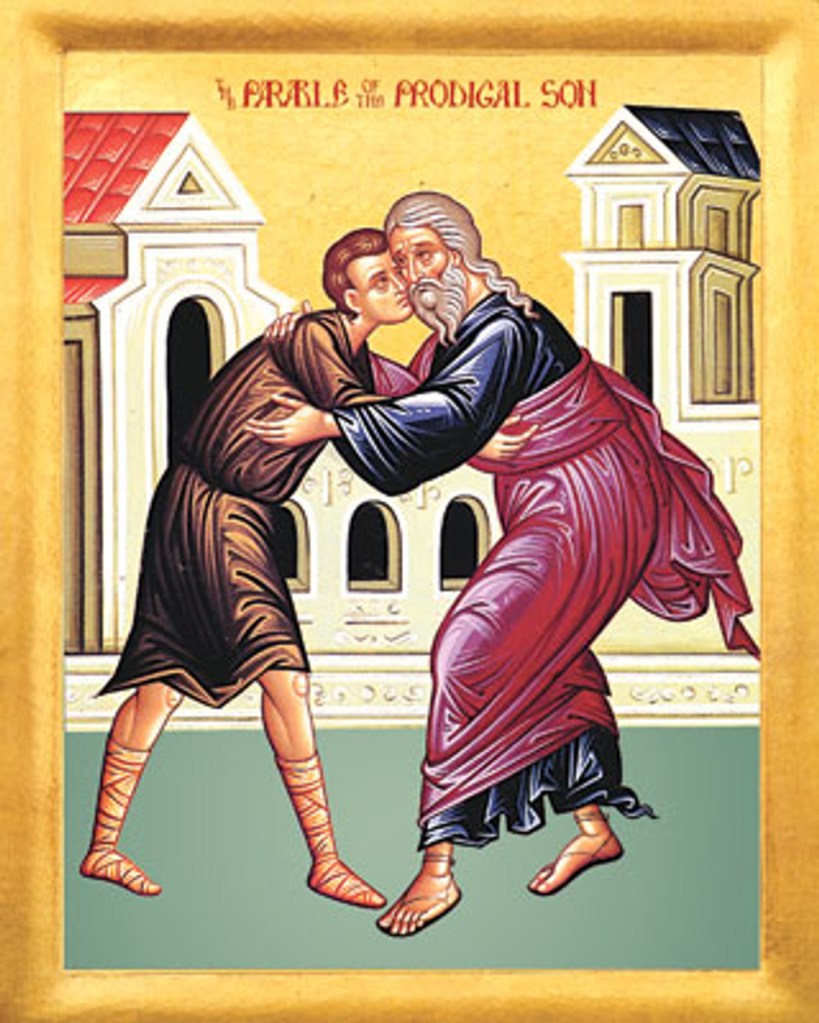
In the Gospels we read of the parable of the Prodigal Son. We only read that once a year right during Great Lent. There are two sons; the youngest son takes his wealth, takes his riches, basically says dad you’re dead to me, give me what’s mine, forsakes the family and is no longer committed, is no longer faithful to the family and squanders it. But then when he comes to himself, when he repents, he comes back to the family. His Father embraces his son, accepting him back into the family but at the same time the father says to the older brother that what I have is now yours. It’s not like the brother who wasted everything is going to be receiving another equal portion, no! There are consequences to being unfaithful. Well, when we are in the family, when we are with our Heavenly Father, when we do what God commands us, when we love, when we forgive, when we gather under the one roof then the message of the cross, the secrets that God has, our life’s purpose will be revealed to us. Yet, when we are unfaithful, we will always remain on the outside, we will not be part of the family. We will always retain the name but what good is a name if I don’t live it? What it good is being a Christian if I’m no different than those who don’t believe? Yet, when repent, God our Father, through the Church our mother, will embrace us back even with the consequences and scars we will live with.

The sad truth is my dears we’re looking to be part of God’s family but we’re denying it by how we live. A few days ago, we celebrated in North America Halloween. Whether or not we should be celebrating that’s a completely different discussion but during Halloween kids and adults wear masks. They run around pretending to be something that they are not. And whether we celebrate Halloween or not my dears, how many of us are wearing a mask? How many of us are hiding and not being part of this family, God’s family? How many of us are masquerading looking for something, looking for a “treat” elsewhere, when all that God blesses us with is here if only, we would take off that fake mask, if only we would recognize the name that we have been anointed with and the family we belong to. Not because we’re perfect, not because we have all the answers, but because we are a child of God and our Heavenly Gather calls all of us home. He loves all of us and I want you to be part of this body, this family as my child and through the Church our heavenly Mother we learn what that means. We are gathered under this roof, where the secrets will be revealed, where the message of the cross, where what the world says devalues us will be transformed into what really makes us valuable – the name of Christ upon our foreheads.

Let us take the masks off, let us come and be part of this family. Let us recognize who our Heavenly Father is, praying in repentance and in compassion and humility that all secrets be revealed to us in time. That the true value of who we are, the image and likeness that we were created in, the love of God strengthens and lift us up individually and as a family. And as a family, every Sunday and every day we will glorify God our Heavenly Father, the Son and Holy Spirit, now and always, Amen.

Peace of the Cross

Scripture Readings: Is. 33:22-34:1; 1 Corinth. 1:18-24; Matt. 24:27-36
Ընթերցուածքներ` Եսայ. ԼԳ 22- ԼԴ 1; Ա Կորթ. Ա 18-24; Մատթ. ԻԴ 27-36

In the name of the Father, Son and Holy Spirit, Amen!

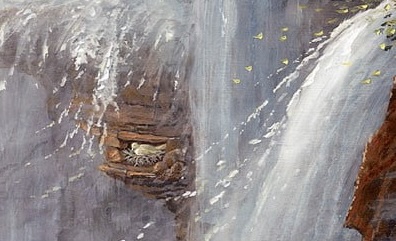
There once was a king who was struggling to find peace in his life. His mind was always lost in the troubles of his kingdom; therefore, he commissioned for a royal painter, anyone in his kingdom that could paint for him true peace. One by one artists displayed their works of art, trying to convey true peace. One artist painted a vast lake under a blue sky full of serenity, and calm. Another artist painted a beautiful quiet valley, and mountains blossoming with flowers displaying gentleness, and beauty. Another artist showed an empty room, no distractions, no movement, rather, simplicity and stillness. One by one artists showed what they understood as peace, yet though beautiful each of them was very predictable and unrealistic and therefore, none of these revealed to the king true peace. Finally, an unknown artist, who was not very wealthy, who painted with inexpensive paints and tools brought his painting before the king. Laughed at by the other artists, the painting was dark, full of rain, and lighting splitting the sky in two; there was destruction and winds raging, as everything seemed to be crashing into each other. The trees bent from the wind, and danger abound, yet, hidden on one of the branches of a fragile tree, a small bird sitting on her nest, protecting her eggs – calm and unshaken, regardless of the storm around her. The king smiled and said, “this is true peace” for peace is not found in the absence of chaos or danger; it is found within it when we remain true to our purpose. For life will always be full of storms, challenges and dangers, what remains is who we are in the storm.

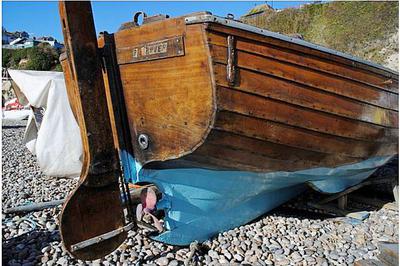
My dear brothers and sister, today the Armenian Church celebrates the feast of the discovery of the Holy Cross. A historic event of how the saintly queen Helen rediscovered the Holy Cross of our Lord. However, what we celebrate year after year, the importance of the Holy Cross is not merely history, nor is it the piece of wood. Wood is the material; it is a created substance in the same way all matter is created. Therefore, what we are celebrating is not merely a piece of wood but rather, peace from that wood. In the Wisdom of Solomon (14:1-8) we read, “Again, one preparing to sail and about to voyage over raging waves calls upon a piece of wood more fragile than the ship that carries him. For it was desire for gain that planned that vessel, and wisdom was the artisan who built it, but it is your providence, O Father, that steers its course, because you have given it a path in the sea and a safe way through the waves, showing that you can save from every danger, so that even a person who lacks skill may put to sea.” My dears, the wood of the Cross, much like the “piece of wood more fragile than the ship that carries” it, as Solomon writes is the symbol, the tool (which is a tiny rudder), that is in the providential hands of our Heavenly Father, who steers its course through the storms of raging waves on our voyage of life. In other words, while wood is the material, it is the Holiness of God, Christ’s act of compassion and mercy on that wood that we glorify as St. Paul says.

It is the act of Christ Jesus Crucified for our sins, that transforms this former tool of death and oppression into a symbol of victory and glorification. A ladder, as St. Ignatius writes, by which we climb out of our tombs towards heaven. Yet, the Cross of Christ through which we have been liberated of our sins too often remains distant from us and merely a piece of wood, something material. We hang wood, gold or silver crosses on our necks as decoration, we place crosses in our homes viewing them equal to the “evil blue-eyes” and other charms, we tattoo them on our bodies as symbols but all for what? As St. Paul warns us in 1 Corinthians “For the message of the cross is foolishness to those who are perishing, but to us who are being saved it is the power of God.” Are we being saved or are we foolish my dears?

My dears, the message of the Cross can only be understood and can only save us when we recognize it not as mere material but as the tool in which we place our trust, our confidence, our hope and faith in God. And we may say, yes, we already do! That is why we pray and why we are in Church. Yet, my dear brothers and sisters, let us ask ourselves for a moment, where do we look for peace in our storms? Most of us would say things such as in the mountains, with loved ones, by the calm water, when we are alone in a quiet place; When we go “off-grid”! Much like the various artworks presented to the king, yes, these are peaceful places yet, how many of us regularly can escape to the mountains or to the deserts? Even there, there is still danger, there is still the realities of life and hardship. Just think about how our minds wonder and we think about our troubles while sitting in Church, trying to pray. Rather, true peace when we face the storms, is trusting and turning to God first; true peace is when we live our faith everywhere and at all times. Faith is not practiced in the walls of the Church, in the same way true peace is not experienced when life is easy, serene and calm. Faith is realized daily in our lives in our choices, in how we think, how we speak, how we treat our minds, bodies and souls; faith is exemplified in the way we treat others, with those whom we like and dislike. True faith much like true peace is courage and prayer first in the most difficult times, when we face challenges, even death knowing that God our Heavenly Father will not abandon us, will not forsake us but will protect us and continue to give us the strength to remain in peace through the raging storms of life.

That is what the peace of the Cross is for us my dears. That is why St. Gregory the Great teaches us, “The knowledge of the Cross is concealed in the sufferings of the Cross.” Christ our Lord’s suffering, who, as St. Paul writes in Eph. 2:14-16 “He himself is our peace, who has made us both one and has broken down in his flesh the dividing wall of hostility…so making peace and, [He] might reconcile us both to God in our body through the Cross…” Yes, on the surface we see things going wrong in life, even facing death and yet, when our trust remains in our Lord, the wrong things evolve into a process, into a reshaping, a revealing of what the message of the Cross is, that in faith by the grace and love of our Lord Jesus Christ, God the Son, we are reconciled, we are brought into Communion and therefore, into peace with God the Father, and Holy Spirit.

My dear brothers and sisters, we all have our challenges. Some appear on the surface, some we hide behind our smiles and material wealth, while many of our challenges often keep us away from the Church. What we share is a desire to find peace. If we remain at a distance, if we don’t pray for guidance of the Holy Spirit than the storms and pains of this world will overwhelm us and will keep us away from recognizing His love, His peace. Yet, the message of the Cross, what we celebrate today, is a reminder that no matter how hurt we are, how many battles we face, no matter the scars and the pain we are going through, the power of God is greater, the love of God is for all and with God we will find true peace even amidst our storms.

The love of God, by which Christ Jesus, took our sins, guides us by the Holy Cross, through the raging storms, towards Him. Let us therefore place our trust in God first and always. Let us read our Holy Scriptures, attend Church especially in times of inner anguish. Pray and present to the Lord our God what we are struggling with, openly and honestly seeking His peace, His love, and His compassionate healing. Not only when life is easy, on the blossoming hills, but in the storms, holding tight to our Cross of Christ. And just as the King saw in the painting of the storm, the tiny bird on the branch, Christ our Lord, the King of Kings, the King of Peace sees us in our storm and comes to us, protects us and lifts us up in compassion. To Him, with the Father and Holy Spirit is due glory and dominion, Amen!

Holy Translator

Scripture Readings: Is. 19:1-11; Gal. 2:1-10; Mk. 12:35-44
Ընթերցուածքներ` Եսայ. ԺԹ 1-11; Գաղ. Բ 1-10; Մկ. ԺԲ 35-44

In the Name of the Father, Son and Holy Spirit, Amen!

How would we describe an apple? Some of us would speak about its color, while others will describe its shape, perhaps the taste, feel and smell. How would we describe it in a different language, such as in Armenian? Would we say “the round apple is red?” or “the red apple is round?” Perhaps we think the differences are so tiny that they have no real consequence. Afterall, we are all, regardless of the language, describing the same apple. We are speaking about the same fruit – an apple is an apple! However, my dear brothers and sisters, while perhaps the description of an apple is not life-changing, what about more important matters, such as our faith? Yesterday, the Armenian Church remembered among its feasts the Feast of the Holy Translators -Սրբոց Թարգմանչաց. Many of us would define our saintly translators like St. Mesrob Mashtots, St. Sahak Partev, and many others as those who created, or developed the Armenian language and translated the Holy Scriptures among a plethora of other literature, thus making Christianity available in the common tongue of the people. Yet, that is not only what a translator does.

The word “translator”, as we use in the English language comes from the Latin words trans – meaning “across” and lātum, the past participle of ferre, or ferry meaning “to carry”. Therefore, a translator is someone who carries across, who ferries a person over from darkness and ignorance to knowledge and wisdom. Another word for this in the Church we use is illuminates, to enlighten, bring to light. Therefore, our Holy Translators are not merely those who changed the words of a language or who poetically spoke about faith and God. Rather, they are Holy Translators because they helped carry the Armenian people across, they helped all people, by ferrying them across the darkness of ignorance into the Divine light of God. That is why they are Holy Translators and not merely translators. They did not describe the proverbial “apple” but revealed to those who desired to learn about the creator of the apple, the purpose, the nutrition found within and benefit of indulging in all the blessings of what God has provided. This is all poetic and beautiful but what about us?

What kind of “translators” are we? We might say, we aren’t. Yet, each one of us in our own capacity, through our choices, by our words and actions are describing, and illuminating people to who God is. Parents are the translators of faith to their children, teachers to their students, a priest to his congregation, a lawyer to his clients, a doctor to her patients, a pedestrian to those he or she passes in the street, a driver to those who drive by or to the beggars who approach our windows asking for charity. And let us not forget, what about all our friends and acquaintances on social media? What kind of comments and interaction do they see? How we behave “translates” who we are and what we believe of God to others. Both on Instagram and Facebook, I’m not sure how many of us pay attention but when we like, dislike, or react to a post, others who know us can see how we react. A few weeks ago, I had commented on a random post and a friend of mine messaged me and said while they agreed with me, they were surprised I would even engage in the conversation online. I was surprised that my comment on a random trivial post, was seen by someone who knew me.

My dears, we are translating, while we are sitting here in Church or openly claiming with our lips we are a Christian, out those doors we are describing to the world who we are and what we believe. In the Gospel today, Christ rebukes the Pharisees who are teachers or translators of the Mosaic Law to the Jewish people; they are the ones who are supposed to continue the work of Moses and the Prophets, who carried the Israelites through the desert in preparation for the Messiah. Yet, Christ Jesus denounces them for their falsity, and rather, gives to us an example of the poor widow’s offering. We all know this story very well and we often speak about how what it describes not Gods desire for grandeur but sincerity. The widows 2 pennies are worth more than all the riches of the others who gave out of abundance. Yet, there is another layer my dear brothers and sisters.

Perhaps we all give sincerely; there is no judgement or condemnation. But when we do so, are we aware that the world watches us. Sometimes we see these video clips of people giving out money or buying thousands of dollars worth of food to give to the homeless. Personally, while yes the philanthropy they are doing is good yet, I am not a fan of posting these actions online. In fact, Christ tells us in the Sermon on the Mount, in the Gospel of Matthew, and several other places that when we do good, we should not be seeking the praise of people. And yet, people do see us; people watch. The widow gave her all, not expecting that 2000 years later we would be reading about her and learning from her, and yet, Christ gives to us her example, her translation of faith. My dear brothers and sisters, what kind of translators of faith are we? How do we live our faith in such a way that reflects, describes and witnesses to God’s love, compassion and mercy?

It is for this reason, St. Ignatius of Antioch in his Letter to the Ephesians, tells Christians – “Pray continually for the rest of mankind as well, that they may find God… Permit them, then, to be instructed by your works, if in no other way. Be meek in response to their wrath, humble in opposition to their boasting…” Because regardless of our age, gender, position in society, regardless of the language we pray in, if we claim to be a child of God, if we are Christian in Holy Communion with God the Father, Son and Holy Spirit, if we truly desire for the world to be a better place, than we need to realize that we are each a translator of faith, we are each an example to others who look to be “carried across” from darkness into light, from fear into hopelessness, from sin into salvation. Just as Christ carries us in our brokenness, we are called to carry each other.

Therefore, my dears, yes, perhaps we each would describe an apple in a different way. Yet, we are all called to describe, to translate, to witness to our faith and make accessible the love of God to all people everywhere. In prayer for one another, in compassion for those who do not have, in patience and mercy for those who are ignorant. So doing so we all will live lives in the same example of the widow and the Holy Translators of the Church. Together bring honor and glory to God our Father, the Son and the Holy Spirit, Amen!

Curious!

Scripture Readings: Is. 17:7-14; 2 Corinth. 13:5-13; Mk. 11:27-33
Ընթերցուածքներ` Եսայ. ԺԷ 7-14; Բ Կորնց. ԺԳ 5-13; Մկ. ԺԱ 27-33

In the Name of the Father, Son and Holy Spirit, Amen!

Curiosity Clipart Images | Free Download | PNG Transparent Background -  Pngtree

This generation is very blessed with technology because at our very fingertips, we can ask any question and get answers almost instantly. I remember back when I was in school and I am sure many of you will remember, we had to use the Dewey Decimal System (DDC), to find books in the library and then find those books on the shelves and carry those books and encyclopedias to look up a topic. Therefore, yes, with all its problems and issues, we are a generation blessed with the technology to feed our curiosity. The greatest minds in the world all have one thing in common; they have curiosity; Asking questions with a desire to learn and hunger for wisdom, knowledge and experience. However, growing up I remember cautionary warnings such as “curiosity killed the cat.” This almost deters us from inquiry and suppresses our desire to ask questions. Well, I have a question for us? Who among us is the most curious?

Children! As adults we might get annoyed but the infamous repetitive “why” of children but which comes from a place of pure desire to learn. And children, apart from curiosity, also have another quality about them when it comes to their questions, they are unafraid and unashamed to ask whatever and whenever. It is interesting that even in Armenian we have a teaching, “it is not shameful to not know, it is shameful to not learn.” Yet, as adults, so many of us are ashamed or afraid to ask, especially when it comes to our faith. However, asking questions is a part of our human nature, that comes from our childhood and Christ teaches us, “ask and you shall receive, seek and you shall find, knock and the door will be answered” (Mt. 7:7) Yes, curiosity is encouraged even in our faith! However, not all curiosity is equal.

A few weeks ago, I was having a conversation with someone, and he was arguing how he didn’t agree with the statement, “there are no stupid or dumb questions.” While I disagree with him a however, I do believe that there are unproductive and malicious questions. Why do we ask, what we ask? In Proverbs 26 we read, “Do not answer a fool according to his folly, lest you also be like him…He who sends a message by the hand of a fool Cuts off his own feet and drinks violence.” Proverbs warns us not to entertain foolish or unproductive questions because not only does it reduces us into foolishness but it can be harmful to us and the one we answer. It is this kind of a situation that we read in the Gospel this morning: “…the chief priests and the scribes and the elders came to him, and they said to him, ‘By what authority are you doing these things, or who gave you this authority to do them?’” On the surface, it appears that the elders are curious; what authority is Christ teaching and doing all that He does? Yet, Christ does not entertain their curiosity but rather responds with a question of authority of his own. The reason Christ does so is not because of the curiosity but because of the spirit of intent behind the question.

Weekly Leader Training for Preschool & Kids: Unit 21, Session 1—People Rejected  Jesus - The Gospel Project

The elders, who already reject Christ in the same way they rejected and persecuted John the Baptist (if they had not they would have listened to Him). Jesus is not one of them and therefore, the question of authority is one with malicious intent; It is unproductive and foolish. Sadly, when we look at all the questions of the Pharisees, almost unanimously, we read of how Christ does not answer them because they are trying to test or manipulate and be malicious with their questions – they are not asking to learn but asking to justify themselves and “trick” Jesus. A few weeks ago, we see this happen again, when the Pharisees ask about divorce; and again Christ does not answer them how they want.

My dears, we all have questions in our life about many things. And we are encouraged to ask; it is part of our nature from childhood. As Christian’s, as the children of God, of the Holy Church, we have questions of faith. We should have questions and be curious! Yet, we need to first reflect and ask ourselves – do we ask? Do we want to learn? and when we do, why are we asking? St. Paul tells us to, “examine yourselves as to whether you are in the faith. Test yourselves.” This means we need to be self-aware what do we believe, why do we believe and what do we do with our belief? Do we come to Christ with genuine curiosity? A hunger and thirst to grow in Holiness? Or do we come seeking ways to justify our own ambitions and will? Blaise Pascal tell us “In faith, there is enough light for those who want to believe and enough shadows to blind those who don’t.” Yes, light to illuminate our hearts and minds but also the ability to hide behind our desires. To make excuses and try and justify our sins.

The most common question as a clergyman I am asked is, “if I do (blank) will I go to hell?” or something of this kind. My dears, our Christian faith is not to avoid going to hell; it is not to avoid suffering, sickness, or the reality of darkness and sin in this world. Christ died on the Cross; Christ Jesus took on Hell to destroy its power and ultimately to bring us into Communion with Him. To reveal to us who God truly is and who we are supposed to be – His Holy and beloved child. That is what we should be curious about my dears – how do we grow in Holiness? How do we live as a child of our heavenly Father? Not how do we avoid hell or the consequences for our choices.

Yes, childlike curiosity will free us to live in the mystery of God’s love for which author Barnabas Piper writes in The Curious Christian, “The very nature of God should spur endless questions since he is so much greater than our understanding. Curiosity can’t exist without questions and neither can faith.” A pure childlike curiosity is the most important hunger we can have that will feed our faith. I have often told my Bible Study students and those I have conversations with, the most important thing is curiosity to learn by asking questions. I can have the answers to all the questions of the universe but if no one cares to ask, if no one is curious then the answer is not worth anything. Therefore, yes, let us be curious to learn, not curious to condemn and be judgmental; hungry for wisdom but not glutton as a know it all looking down on others; thirsty for love and not lustful for self-justification.

However, there is warning to our curiosity of faith! Technology, AI, not even books in the library by themself are the way we ask questions of faith. They are a tool, but God already speaks to us, to our hearts directly through the Church, through Communion. We ask by asking in prayer, whether at home or in the Church, we ask our priest, we ask by reading our Holy Scriptures, by attending Church services, listening to sermons and Bible Studies with that hunger to grow. This is how we grow! When we grow in faith, we will know that the authority by which Christ heals, teaches, commands is the authority of God. God our Heavenly Father, who embraces us as His children and through God the Son, Jesus Christ calls us into Holy Communion. Therefore, let us pray and ask the God the Holy Spirit will answer us and reveal to us His Divine love and compassion. So that looking “to our Maker” (Is. 17:7) we will live doing no evil, but rather through virtue, honor and truth, living Holy and according to the commandments of our loving God, we will glorify and honor Him now and always, Amen!

Proud of My Cross!

Scripture Readings: Is. 65:22-25; Gal. 6:14-18; Matt. 24:30-36
Ընթերցուածքներ` Եսայ. ԿԵ 22-25; Գաղ. Զ 14-18; Մատթ. ԻԴ 30-36

In the Name of the Father, Son and Holy Spirit, Amen!

Which are the 7 deadly sins, which we read and confess every week during general confession? Pride, envy, anger, laziness, covetousness (or greediness), gluttony, and lust. Each of the 7 deadly sins have unique characteristics which often start small and fester and grow into something much worse. It is for this reason they are known as deadly sins. For today, I want us to look at the first one pride. The reason I want us to look at pride is because sometimes this word is misunderstood. As a parent, I am proud of my child; as a teacher and priest, I am often proud of my students and the faithful who learn and apply what they have learned to their lives; as an athlete I am filled with pride when I am able to perform, get that perfect golf shot, lift the heavy weight, stick to my diet, etc. Is this what the Church defines as sin? Of course not, my dears, there is nothing sinful about this kind of pride.

Even St. Paul in Galatians says, “But far be it from me to take pride in anything except in the cross of our Lord Jesus Christ…” In order to understand what this pride is, and how it is not sinful but is applicable to our faith, we need to look deeper. Especially when as Christian’s we are taught to be humble, to empty ourselves, to be like a child in faith, to be meek and serve. Perhaps pride as we use in English, is not a good translation, and it is somewhat incomplete. If we look at the original Greek word καυχᾶσθαι (kauchasthai), we see that it appears 2 other times in the Holy Scriptures, all by St. Paul. The first we read in Galatians and we also have it in 2 Corinthians 11:30 “If I must take pride [or boast], I will boast of the things that show my weakness.” and 12:1 – “I must boast [or take pride]; there is nothing to be gained by it, but I will go on to visions and revelations of the Lord.”

If we thought pride was a problematic word in English, we see the Greek translation in fact also defines it as boastfulness, or in Armenian we might translate it as hpardutyun [հպարտութիւն]. Yet, the Greek definition is not limited to only “pride” or “boastfulness” as we understanding it in the negative. In fact, the root verb of this word also comes from the Greek euchomai (εὔχομαι), which is rooted in “prayer.” And what is beautiful is that even in Armenian, the word that our saintly translators used is not hpardutyun [հպարտութիւն], which yes, means arrogance, haughtiness, and the sinful pride – what we are taught to avoid. Rather, the word in Armenian that is used is pardzenal [պարծենալ], which describes a lifting up, exulting or placing in highest regard. Therefore, the pride and boastfulness of St. Paul regardless of what language we read the Holy Scriptures in, is not sin, in the same way being proud of our loved ones, of life’s accomplishments is not sinfulness on its own. Pride is sinful when we boast and lift up ourselves at the expense of others; when we look down and disregard, and when give more importance to everything else above our faith. What St. Paul is telling us is that regardless of all the accomplishments, all the good things we enjoy in life, regardless of everything thing else, the only thing we pray, we lift up, we take pride and boast in is the Holy Cross of Christ.

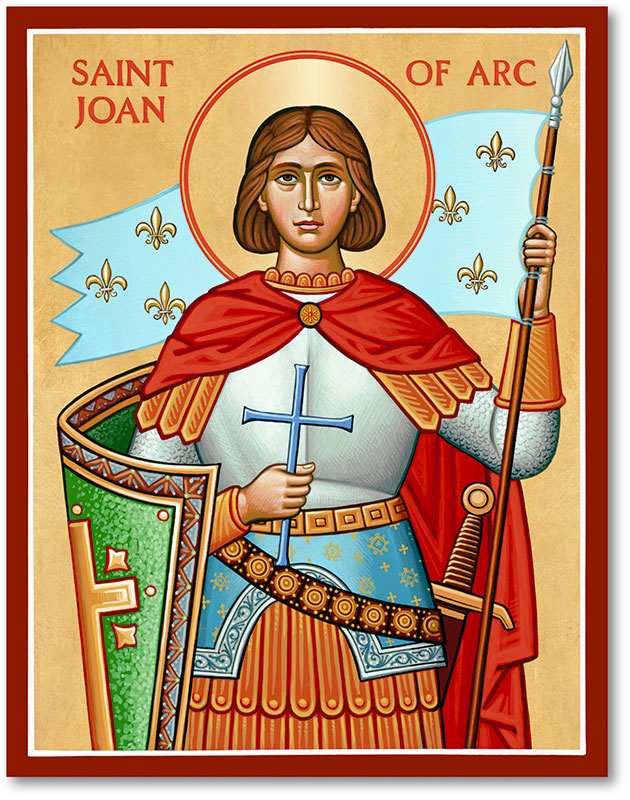
How many of us know the story of St. Joan of Arc? We have certainly heard her name. She is the patron saint of France and during the reign of Charles VII, she became a military leader who gained recognition as a savior of France. Though she led with strength in the military with many successful accomplishments it was St. Joan of Arc’s faith that gave her purpose, meaning and true virtuous strength. Yet, through the sinful pride and arrogance of enemy leaders, when she was captured, she was put on trial as a blasphemer, heretic and witch. However, she refused to denounce her beliefs, because she stayed loyal to both God and the people, thus she was sentenced to burn at the stake. On May 30, 1431 St. Joan of Arc was tied to the pyre, and the flame was lite. Yet, she did not cry out and did not abandon her faith but rather from within the fire, with perhaps what was her final breath before she was martyred, she called out, “Hold the cross higher so I may see it through the flames!”

My dears, this is what St. Paul means when he says, we take pride, we boast or lift up nothing else but the Cross. It means that we as Christian’s live our life in such a way, that the Cross of Christ, through which the “world has been crucified to us and us to the world” is our direction, our symbol of hope in the flames of our life. I hope and pray, that we do not face the harsh persecutions of our saintly martyrs, yet, in the comforts that we live, in the difficulties we have in our own lives, regardless of our age, our profession, our language, gender, political viewpoints, skin color, successes and failures, accomplishments and goals, regardless of it all – do we take pride in the Cross?

Now we might ask well how are we supposed to do so? My dears, this is simple. We don’t need to be a priest, have a cross hang around our necks, or in our cars and homes, we don’t need to have it tattooed on our bodies, or have a bumper sticker for all to see. Christian boastfulness, Christian pride in the Cross my dears, is humble in nature in that it is our articulation and celebration that our identity, our core, who we are is founded in the Cross of Christ. Not because we are better, but because we recognize even in our brokenness God continues to love us. Our pride in the Cross is our response therefore to that love. How do we speak to one another? How do we look at others in the street? How do we talk about those whom we disagree with or don’t like? How do we treat our own minds, and bodies?

My dears, the world is a dark place, with flames encompassing around us, tearing us down, filled with tribulations and fear. Yet, as the Gospel says, that is when the sign of the Son of Man will appear and those who lived faithlessly will mourn. Meaning those who did not respond to the love of God, those who denied their faith, those who boasted and took pride sinfully in their material gains, finding their identity in the worldly, while disregarding the needs of those who do not have. To deny our faith isn’t dictated by how many times we come to Church or how much or little money we donate. To deny our faith is to make excuses of why we choose lives of sin, why we choose the worldly, over what God created for us, commands us and call us to be.

Yet, for those who live by faith, those who love, forgive, repent, are humble and serve, who give from their heart, who are empathetic, who feed the hungry, who don’t flip off or swear at someone who cuts them off in traffic or who doesn’t look down on the beggar or immigrant in the street as they walk past them; those who live with virtue, not poisoning their bodies with the lustful pleasures and passions; Those who do not deny their faith before people, before their friends and family, it is they who exult the Cross, they lift it up, pray and boast in it with their lives, and they will be gathered by the angels of God. The question is my dears, what do we take pride in? What do we boast, and exult? Sin or the Cross – our faith. Do we respond to God’s eternal love founded in the Cross, or the temporary passions of the world, founded on things that will decay and fail over time. The Prophet Joshua writes 24:14-15, “Now therefore fear the Lord, and serve him in sincerity and in faithfulness; put away the gods which your fathers served beyond the River, and in Egypt, and serve the Lord. And if you be unwilling to serve the Lord, choose this day whom you will serve, whether the gods your fathers served in the region beyond the River, or the gods of the Amorites in whose land you dwell; but as for me and my house, we will serve the Lord.” Joshua presents a clear choice: choose the living God or return to the idols of the past. Take pride in the Cross or take pride in yourself!

Our prayer is my dear brothers and sisters, that we take pride in the Cross, that we will serve the Lord. That we abandon the sins we have chosen to follow, whether they are pride, anger, envy or whatever we have chosen to put above our faith. Our prayer is that we come into Communion with our Lord, come to Church read our Scriptures and learn how to responds to all that God does, so that we will learn how to exult, and boast in the Cross of Christ not just in words or Sunday to Sunday – but with our every choice, our very life which by the grace of God has been gifted to us. Let us examine ourselves and ask, when the flames gather around us, when we face darkness, do we seek our own way, do we look down on others and get lost in the pit of despair or will we call out as St. Joan of Arc did, “hold the cross higher so I may see it through the flames!” Glory to God the Father, Son and Holy Spirit, glory be forever, Amen!

Broken Telephone of Faith

Scripture Readings: Is. 14:3-17; 2 Corinth. 10:18-11:10; Mark 10:1-12
Ընթերցուածքներ`Եսայ. ԺԴ 3-17; Բ Կորնց. Ժ 18 – ԺԱ 10; Մկ. Ժ 1-12

In the Name of the Father, Son and Holy Spirit, Amen!

How many of us growing up played the game telephone or broken telephone? Essentially, one person would whisper a statement into the ear of the person next to them and one by one, that statement was passed down until the last person would vocally proclaim what was said. The game was humorous because almost undoubtedly, the original message was changed where at times the message that reached the end had some variation, or a completely different statement was made. When playing the game, I remember there was always a person who deliberately would change a word, or emphasis making a huge impact on what was delivered at the end. Though this game is a great ice breaker or party game for a group, it does hold a truth to our lives. So often we form opinions about people, places, or institution by word of mouth. We ask each other’s thoughts on food, on travel, on brands of clothing or electronics, but also on people and even places. If we aren’t careful, the information we share can often be skewed or incomplete and sadly, there are those who maliciously change information, spread lies and misrepresent the truth. My dears, the Church is not immune to this reality.

Back in the first century, as St. Paul is sharing the Gospel of Christ, we read of how we warns, repeatedly in the Churches of Corinth and Galatia that we need to be careful of those who “teach” a different gospel. That there is One Lord Jesus Christ, One Gospel, One Holy Church, One Spirit and anything different is likened to the deception of Satan to Eve in the garden. Further then this, St. Paul reminds us, that as children of God, as the Church, we are the bride and we are betrothed to Christ and anything else we attach ourselves to is a misrepresentation, is a lie and causes hurt. It is for this reason that as Orthodox Christian’s we often speak about Apostolic Succession. For many, Apostolic Succession is often misunderstood as one priest, from one Bishop and ordinations that can be traced all the way back to the original Apostles of Christ. While yes, this is true as a historical and theological understanding yet, Apostolic Succession is much deeper than this. It is a recognition that not just authority is pasted down to a priest, but that the teaching and faith, the One Gospel of Christ has continued from Christ to the Apostles, until today. It is continuity and reassurance, that each priest that gives a sermon, each Bishop that leads, that teaches Holy Scripture is not making things up, maliciously changing the Word to meet their own agendas or playing “broken telephone.” Whether a priest, Bishop or anyone of us, if we misrepresent, change the Gospel, if we use the Scriptures to justify what we want, how we feel, from politics to family, from history to science, if we preach a different Spirit, we separate us and others from God; we create a divorce in each other from Christ our Bridegroom.

In the Gospel today the Pharisees are asking Jesus about divorce and Christ tells them, “from the beginning of creation, ‘God made them male and female.’‘For this reason a man shall leave his father and mother and be joined to his wife, and the two shall become one flesh.’ So they are no longer two but one flesh. What therefore God has joined together, let no man separate.” On the surface, Christ is teaching us that marriage is not merely a contract between a man and woman who love each other but a deeper union between husband and wife. This union symbolizes our union to God; that as Christian’s through the Holy Scriptures we recognize that what Christ Jesus is teaching us is that from the very beginning God joined us, all humanity to Him. Though through sin, that relationship was severed and made opaque, through Christ Jesus our communion is healed, and that what God has joined, no man, meaning nothing in this life, whether it is opinions, desires, material wealth, education, culture, language, etc. nothing must separate us.

However, in order not to be separated, we are called to remain in Communion, come and be a part of the Church, where one Lord Jesus Christ, one Gospel is shared. Or else, what we hear outside the Holy Church about our Church, the Bride of Christ, is often a “broken telephone” game – susceptible to lies, slander and misinformation. This is because of malicious intent to hurt the Church but also because we just don’t know. So often, when someone tells me they don’t believe in God, or don’t agree with Church teaching, what they don’t believe or agree with is not actually what the Church believes and teaches either. This my dears, is because of the “broken telephone” and why it is so important for us, Christian’s to not just come to Church regularly as a building, but to come with humility and repentance – a desire to learn and grow, to be a witness to others.

If we ask each other opinions about iphone or android, where to travel during our vacations, stocks and investments, people around us, books to read, etc. these are great ways to share information, share our likes and dislikes; share because if we had a bad experience, we want others to be cautious whereas if we have a positive experience, we want others to also share in that positivity. What about our Christian faith? What about the Gospel? What do people see and experience through us about our faith? If someone were to ask us about the Armenian Church, about St. Gregory, what would we share? We have great food; a priest with a nice voice; a 100-year history; etc. or would we share that we have a love for God as taught in the Gospel, we have joy in prayer, we have a family of believers and all are welcome even if they are different.

My dear brothers and sisters, regardless of the address or name on the Church, as Orthodox Christian’s, our Apostolic Succession is the Apostolic faith, the Holy Spirit, the One Gospel, One Communion with our One Lord Jesus Christ, which is what we are called to share, to witness to. That is why Tertullian tells us, “Therefore the churches, although they are so many and so great, comprise but the one primitive Church, [founded] by the apostles, from which they all [spring]. In this way, all are primitive, and all are apostolic, while they are all proved to be one in unity.” It is our faith in Christ Jesus that unites us, and it is that faith we must share with others through the life we live. Our faith is who we are and as long as we remain in the Church, in Communion, in prayer, humble before our Lord, than young or old, priest or laity, the message of our faith will not succumb to the game of “broken telephone”, but will reach the ears, minds and hearts of all those who seek the love and mercy of God. Our faith, by which we are in Communion with God here and must be lived through those doors, out there because it is through us, our lives and choices, by which we will be a witness, we share with others what God has taught us and calls us to. The life we live, now and throughout all times, is the message of the compassion, mercy and love of our Lord, for which this world hungers for; the message of the Gospel. May we live a life that witnesses truthfully to our One God, the Father, Son and Holy Spirit to whom is befitting glory and praise now and always, Amen!