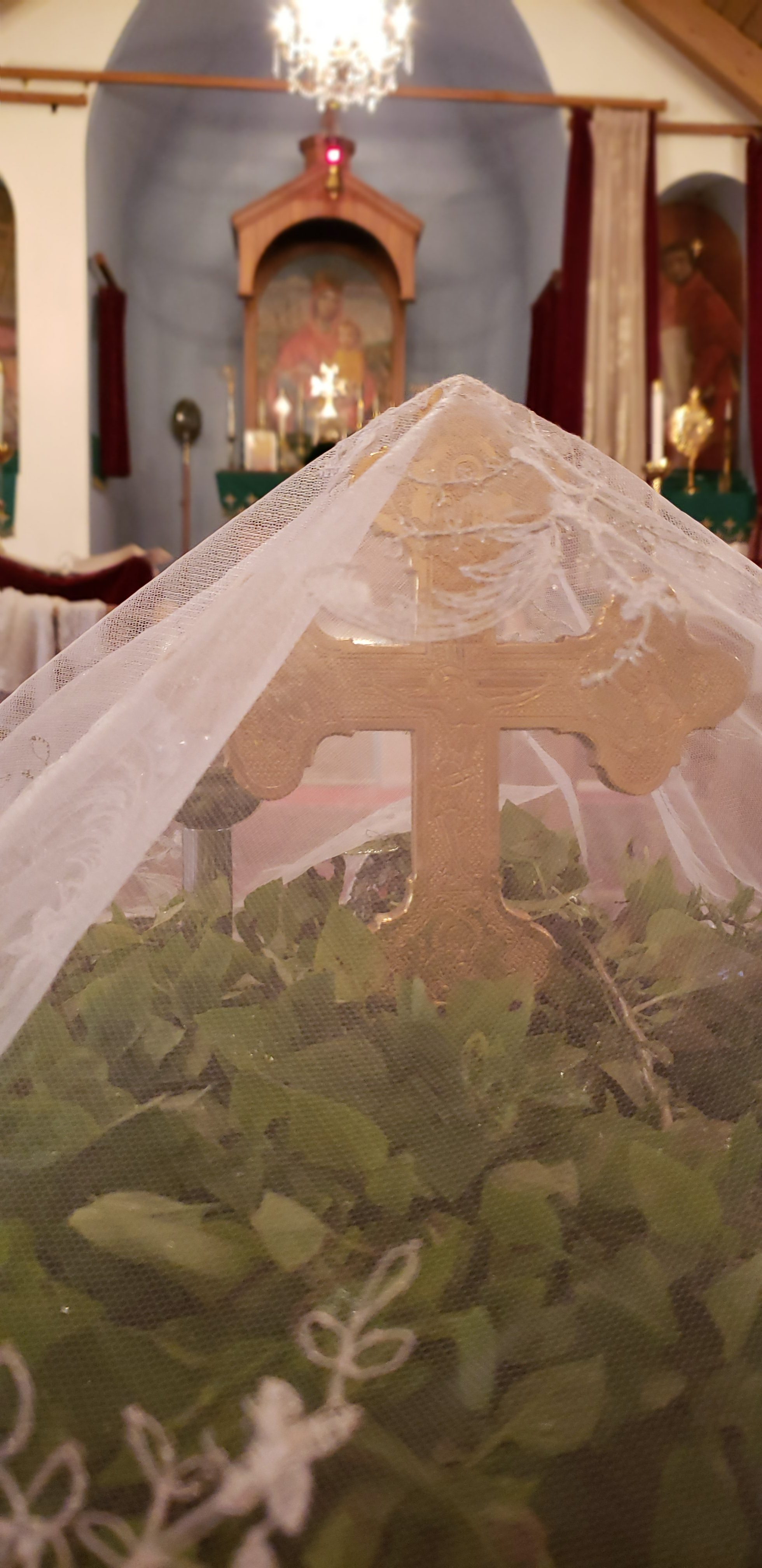
Looking Towards Christ!

Sermon for Sunday December 1, 2019

Passages: Isaiah 36:22-37:11; 1 Thessalonians 4:1-11; Luke 13:1-9

In the name of the Father, Son and Holy Spirit. Amen!

As the year comes to a close and we gather in prayer,
Many of us this past Thanksgiving came together and shared.
We shared of what joys, blessings and grace,
About a year that’s gone by, at what seems a fast pace.

Yet, what strikes me the most as we look over time
Is that we seem to be looking, at what we’ve left behind.
Phrases we utter such as How great it has been,
remember the days and I remember when.

Yet, looking forwards to the future we’ll often say,
There is too much uncertainty, it’s too early to praise.
All around us this world, is changing and fast,
Medicine and technology, quicker than we can grasp.

Overwhelmed and unsure yet, we do out best,
To embrace it all and quickly,
for great things may come next.

What’s strangest for certain is that for life we look on,
Yet, when it comes to our faith – we sing the same song.
We’ve all said it in part,
For our Churches and faith,
Remember when it flourished,
Now that’s something to praise.

Yet, we must not forget that our faith is not stuck,
and by only looking to the past – we place ourselves in a rut.
Why is it that, we look only behind?
When Christ is within us,
Moving us forward,
Teaching us all,
Where to look and how to find.

How to find His peace and love,
Where to find His divine hope,
Where prayers are not merely words
used in hard times to cope.

Rather, prayers are communion, of becoming one,
Understanding God’s will for us,
“On earth, as it is in Heaven, thy will be done.”

No, my dears, we must confess,
that when push come to shove,
Our faith is not growing,
Rather it’s in distress.

But there is hope, I promise,
That our faith can still grow,
Christ calls us to repentance,
Christ Jesus invites us to show.

He shows us that our faith is a revelation by Him,
And this revelation helps us see,
Only looking forward towards Christ Jesus,
Are we truly set free.

For our faith is a light,
that shines our way,
it guides us to an understanding,
That in Christ we are strong come what may.
And the Gospel today
teaches us to see,
That we are not better then those who are not here
but in the streets.

Our faith is not greater because we sit here and they don’t.
Unless we all repent, we’re all in the same boat. (vv. 2-5)
To repent, means to turn, to place our gaze upon Christ,
For faith to bear fruit, for that fruit to be right.

That is why St. Paul praises, only those who do live,
According what is pleasing to God, only a faithful heart that is filled.
For God’s will for us all, is equal and same,
That we repent and be sanctified, (vv.1-4)
That we call out His name.

That what we have, we give to others,
We show love in the face of pain,
That we bring light in this world,
That our light shines like a flame.

Because to repent is not words,
That we utter and leave,
To repent, to have faith,
We live and with breathe.

Therefore, my dears as we gather and pray,
As we give thanks for the blessings, joys and of grace.
Let us remember to turn our gaze from the past,

To look towards Jesus, to follow His path.
For His love is unending, His will is our Hope,
Facing uncertainty and pain, with Christ we are bold.
When our faith becomes action, our wills will be the same.
And all of us together, Here and out there, will glorify to His Holy name. Amen!

More than a favor!

Sermon for Sunday November 24, 2019
Passages: Isaiah 36:1-9; 1 Thessalonians 1:1-10; Luke 12:13-31

In the name of the Father, Son and Holy Spirit, Amen

The other day while I was listening to the radio, an ad began with the sound of jingle bells. And the announcer asked, “when you hear that sound you know what time of the year it is?” What would we answer? Thanksgivings or maybe Christmas? Yet, the announcer immediately began yelling “its the season for shopping…” It’s no big secret that once summer vacations wrap up and schools begin, the majority of us begin preparing for the expenses of the Thanksgiving and Christmas seasons, which can be anything from extravagant dinner tables and parties to far more expensive gift exchanges, travel, splurging on items we want for ourselves, etc. As the humorous yet, painful statement reads, “the day after we express what we are thankful for, we go crazy to buy the things we want.” Tis the season!

The Gospel today begins with a man who comes to Christ and asks that Jesus become a mediator or a judge, in a dispute between his brother and him. As Christians we all know that Jesus is a just judge and so who better to make your case to. But I want to take a step back and ask, what do we know about the background to today’s Gospel? Today’s reading of Luke begins with a man from the multitude, “from the crowds.” And this is important to understand because we see that Jesus was not sitting alone. He wasn’t having coffee with the Disciples or chatting with someone. We read from the start of this chapter that in this moment, Christ Jesus is surrounded by thousands of people. He is teaching and speaking to everyone equally – not privately. And what really strikes me is what he is teaching in the verses prior to this: “And I tell you, everyone who acknowledges me before others, the Son of Man also will acknowledge before the angels of God; but whoever denies me before others will be denied before the angels of God…” (vv. 8-9) Now, a question to ponder for all of us for a moment, why were their thousands of people listening to Jesus speak? His reputation preceded him as a wise healer, teacher, prophet, etc. 

Repeatedly we see how the disciples, the Pharisees and the people at large witnessed, observed, heard the miracles Jesus did, the teachings he gave and the life that he lived. Perhaps none of these people had a full grasp of who Jesus Christ was – the Son of God who has come to bring salvation to the world. Perhaps this was not understood but everyone openly had seen the works of Christ. That is why Jesus was constantly surrounded, that is why people took time off work, packed up their belongings and followed Jesus. That is why this man, out of all these thousands of other people seized the opportunity to ask Jesus Christ for a favor.

My dears, this man represents each one of us. We are each part of the multitude, one out of the thousands and millions who hear Jesus Christ teach every Sunday. We have learned his teachings, we have observed his healings, we have each in our lives somehow witnessed to the greatness and the love of our faith in Christ. Yet, like this man, how many of us go to Christ merely for a favor? We seize our opportunity to communicate with God and stepping forward from the multitude, we stop short of asking for greatness and merely ask for something small. Thus our faith in God remains only surface level in as much that “we believe because we get.”

Perhaps the multitude did not know who Christ truly was, because it had not been revealed to them yet. But we know who Jesus Christ is. The Only begotten Son of our Father in Heaven – God in flesh, revealed to us, who came out of the love of the Father to die for our sins, so that we may live. And yet, when Christ becomes for us a magician or a friend to whom we go to for “favors” we are in fact committing the one act that Jesus speaks about earlier – we deny God in front of others because we deny who He really is. We don’t only deny God with words – we do so by our lives. Lives that have seen all those great things God has blessed us with and yet, still we go to Him for the simple, mundane and ultimately that which is not going to strengthen our communion with him or each other. 

Our God is not a God of favors – He is Love. Our God is not a God of tricks – He is Action. Our God is not a God of means – He is Life. So when we go to God, when we pray, why do we limit our prayers to mere simple desires or favors, limited in the material. Rather, if we seek righteousness, if we seek wisdom, if we seek communion with God, as we read in the Gospel of Matthew, God will bless us with these and more (6:33).

My dears, the radio ad began with the sounds of Christmas and drew the listeners attention to shopping and material gain. So I ask us, when we hear the teachings of Christ Jesus, when we read and listen to scripture, to the Divine Liturgy, when we attend Church and are consumed by the sights and smells of the Holiness, where does our attention draw to? A bearded man who we go to for favors? Or an all loving, all powerful, compassionate God and all His blessings of love, hope and resurrection, of communion? Tis the season, yes my dears. And for us, this season serves as an opportunity to turn back to, repent and renew our communion with God in order to truly understanding of who Christ Jesus in our lives, a life that is called to glorify Him eternally, Amen!

Measure of Greatness

Sermon for Sunday November 17, 2019
Passages: Isaiah 25:9-26:7; Philippians 1:1-11; Luke 9:44-50

In the name of the Father, Son and Holy Spirit. Amen!

What is the measure of ultimate success? What is the measure of being the greatest? The world around us has set forth measurements and ideas of what constitutes being successful, what dictates greatness, what it means to be number one. And many of us, if not all, define our life’s achievements based on these arbitrarily defined categories. A student is the greatest when they graduate with the top marks. An athlete is successful when they get the win. A parent feels successful when they raise a child healthy and educated academically and or either wise. A businessman or women feels they are the greatest when they’ve hit their mark, achieved their goal, maybe made a good product and now they are making the money.

Yes, success and greatness are defined in very different ways, depending on what you are trying to accomplish. Yet, a question remains, is there a measurement or scale that can be used to check who is the ultimate success or the absolute greatest? Even the Apostles began arguing this point, who was the greatest among them? In fact this argument continued in much of Church history. Who was greater Peter or Paul, John or James etc. (This is a topic for another sermon) But looking at this discussion, in one Gospel account we read that they came to Christ and asked him to settle this matter.

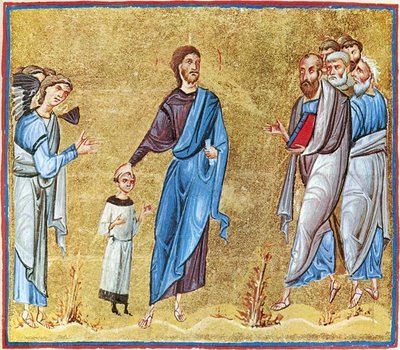
In today’s Gospel we read that Christ Jesus became “aware of their inner thoughts…”(v.47). Yet, what I find very important here is that Jesus did not rebuke them, he didn’t argue that as children of God you must all be equal nor did he say none of you are great. Rather, Christ Jesus took a child and said “Whoever welcomes this child in my name welcomes me, and whoever welcomes me welcomes the one who sent me; for the least among all of you is the greatest.” (v.48) In other words, the measure by which the disciples were attempting to live up to as the “greatest” – that mentality had to change, because having a desire to be successful or great is not a bad thing. Working hard, being dedicated, doing what others are not willing to do in order to achieve a set goal is commendable even in a Christian faith context. Even St. Paul speaks about having run the race – having finished and having succeeded. However, my dears what Christ Jesus is inviting us to do is change our perception of what “success” or “greatness” is.

If a student from the south side of Chicago, growing up in low income housing, surrounded by gangs and drugs is able to graduate high school and find a steady job to provide for his or her family – are they the greatest? vs. A student who grew up with the best education and opportunities, who had food on the table and two loving parents that guided and nurtured them to a corporate position in this world – are they the greatest? What about an Armenian orphan who comes to the United States, after witnessing the atrocities of death and imprisonment, and through extremely hard work becomes a multi-millionaire – are they successful? vs. A parishioner of St. Gregory Armenian Church, who has had a peaceful life, and decides to open up a business and runs it successfully – are they successful?

My dears, greatness and success are not defined by the vastness or the limitation of physical achievements that we may or may not have accomplished. Rather, to be the greatest is the one who is understands in their heart the humanity and humility of serving others. To be great is to act out of love – to act through Christ JesusSt. Paul succeeded and achieved his “goals” through Christ.

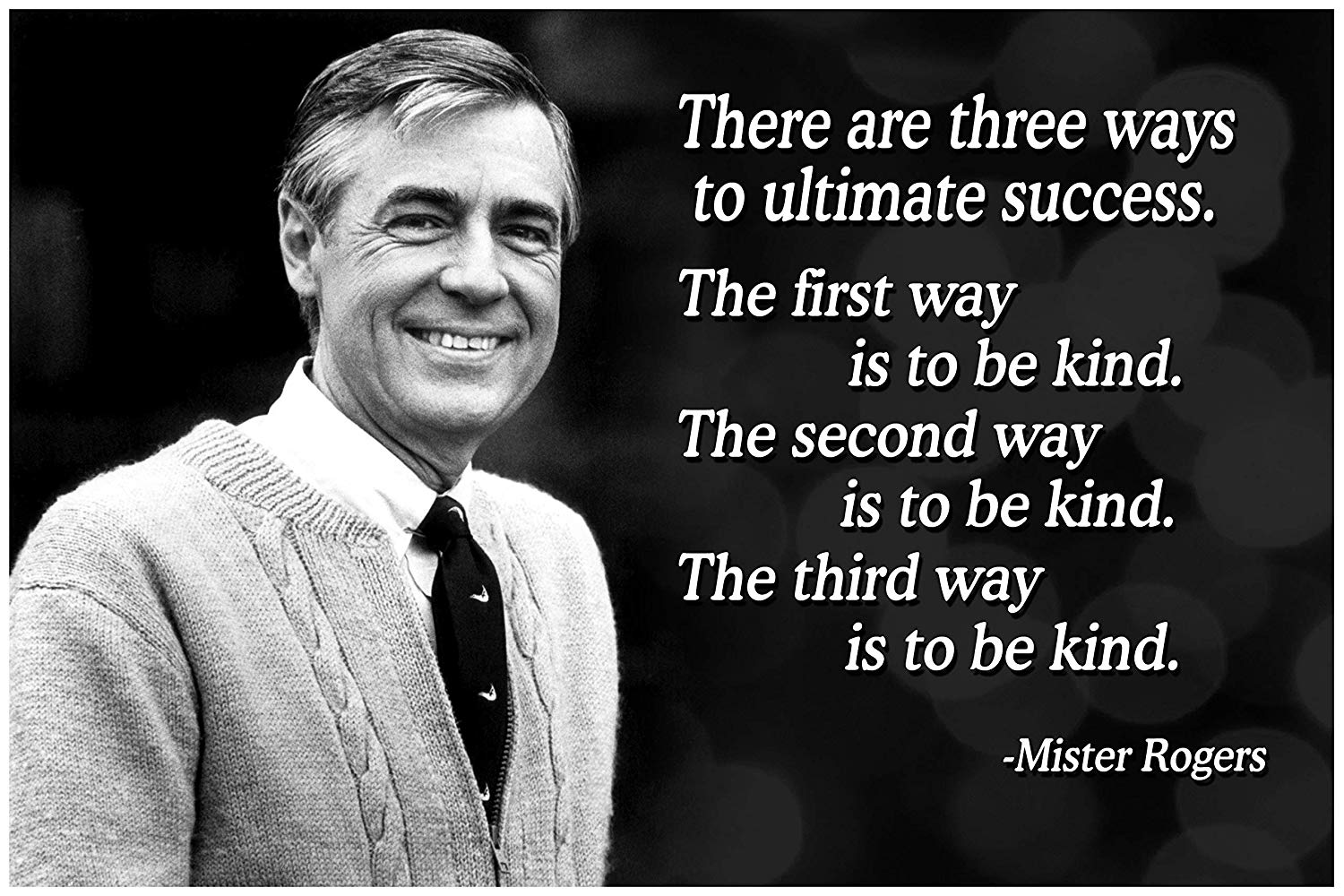
One of my childhood role model’s on TV, and one I am sure many of us have also watched, is Mr. Fred Rogers. A brilliant man with a great heart. If you get a chance read his biography (in fact I think there is a movie coming out about him soon). When asked about success he answered: “There are three ways to ultimate success: The first way is to be kind. The second way is to be kind. The third way is to be kind.” My dear brothers and sisters, to be kind does not mean to not work hard. To be kind does not mean to allow others to run you over or take advantage of you. To be kind means to love all equally, to care for all unequivocally and to hope undoubtedly. To understand that others do not define our greatness or success because our greatness, our ultimate success is defined in how we treat others, how we treat the child – ultimately in extension how we treat Christ Jesus. For Christ is in each one of us – in all humanity. A humanity, for whom Jesus Christ came into this world, was crucified and resurrected – so that all who believe are saved and receive eternal life. An eternal life given to the greatest and the least. From the corporate giants and superstar athletes to the beggar in the street and the child holding a parents hand.

Because success and greatness are not defined for us Christians by the standards of this world. Success and greatness must be defined through us by how we treat ourselves, each other and by glorifying God for all He does through us. To be the greatest – treat everyone else as if they were the greatest. To be successful – see the success of those around us.

I challenge us my dears, as the year comes to a close and we look back on our resolutions and prepare to make new ones soon, I challenge us all – allow our measurement of success to not be defined by titles or material but by the communion and relationships our have created and continue to foster through Christ Jesus. When Jesus is saying “Whoever welcomes this child…,” he is saying “whoever welcomes [blank] in my name welcomes me, and whoever welcomes me welcomes the one who sent me…” Therefore, my dear brothers and sisters, what is the measure of greatness? What is the measure ultimate success? Our humility. Our love. Our kindness. How we welcome Christ by welcoming others, by which we break all measurements this world has to offer because what God offers us is much more fulfilling, much more desirable and truly is the greatest. Given to us freely through Christ Jesus – and strengthened through how we treat each other and this world. And God seeing our humility will raise us up to true greatness. Amen!

The Pollution in our Hearts

Sermon for Sunday November 10, 2019

Passages: Isaiah 24:1-12; Ephesians 5:15-33; Luke 8:49-56

In the name of the Father, Son and Holy Spirit Amen!

“The earth dries up and withers, the world languishes and withers; the heavens languish together with the earth. The earth lies polluted under its inhabitants;” (Is. 24:4-5)

Whether we are politically fueled or genuinely intrigued – we have all heard arguments for or against climate change. Green house gases, emissions and pollutants have destroyed the earth; It’s all fake science, it is all about business and we are over exaggerating it all – two of the prevailing arguments when it comes to the environment and climate change. As the Church we should not argue one way or the other, because as children of God we ultimately believe One truth – that God, having created humanity in His Divine Image, placed us on this earth and gave us dominion, gave us stewardship to tend and take care of all creation. From the smallest animals to the largest trees – the calling of each one of us is to take care and strengthen this world. However, as we read repeatedly throughout scriptures, humanity has continually broken communion with God by not remaining faithful to what humans were called to and rather lived in a sin. Thus not taking care of this world, breaking communion and filling the earth with “sin”– we have filled it with pollution. We have clear-cut forests and dumped garbage into the seas. We have raged war in the fields and spilled blood over hills and valley’s. We have not taken care of creation. Yet, it should not come as a surprise to us that we have done this and continue to pollute this world.

In the Gospel of Luke, we read of how Christ Jesus came into the home of Jairus, a man whose daughter had just died and approaching her directly, Jesus took her hand and raised her to life. Just this act alone was so powerful because according to Jewish tradition and law, if any person touched or came in contact with a corpse they were automatically deemed unclean and polluted. The unclean were shunned and people did not associate with them. The unclean were the isolated, the mocked and the outcasts. And unless they went through a ritualistic cleansing and were deemed cleaned, they remained outcasts.

Yet, Christ not only approached, not only entered, not only held – but in doing so, Christ took her pollution, her impurity and cleansed her by giving back life. Christ’s love and compassion transformed the pollution and corruption into life. Christ Jesus is the cleansing of our uncleanliness and of the pollution of the world. So when I state that it does not amaze me that our actions and attitudes of polluting and corrupting our environment continue, it stems from the reality that we do worse to us, we deliberately make ourselves unclean.

What do we pollute our lives and ourselves with? What about our communities, our work places, our families, our Church? What kind of pollutants do we bring in? How do we make ourselves unclean? My dears, we actively pollute our lives with negativity, anger, gossip and we actively pursue uncleanliness by our actions, our thoughts and words. We create pollution in our lives and in the lives of those around us by not recognizing the child of God in others. We sit in Church, we pray, we sing – then we go into the hall downstairs and judge each others behavior, dress and livelihood. We receive the precious body and blood of our Lord and Savior Jesus Christ as forgiveness, as a cleansing of our uncleanliness then we spend the rest of our days in the week putting faith and hope in idols, in manifestations of our mind – in everything and anything that is not God. We pollute ourselves my dear brothers and sisters, by not pursuing and deepening our Communion with God and with each other.

As St. Paul teaches us, “Be careful then how you live, not as unwise people but as wise, making the most of the time, because the days are evil. So do not be foolish, but understand what the will of the Lord is. Do not get drunk with wine, for that is debauchery;” To understand the will of the Lord, to be filled with the Holy Spirit as St. Paul continues, to be cleansed from “sin” that is the pollutant of our life requires of us communion with God. And this union is done through the Holy Cup, and also through repentance and confession. Not the confession we quickly do before Holy Communion, but genuine private confession, where we sit and ponder and speak directly to God through the guidance of the priest. Then having risen from confession and having received the Body and Blood, communion is continued by how we then extend our faith to the rest of our surroundings. The people we love and the people we don’t agree with. The people in Church and the people in the workplace. Because to have Communion, to have community, we do not need to have conformity. We, are not the same and we do not need to be the same but we are each created equally in the divine image and we are each born into a world that is polluted and sinful and we are each equally called to be stewards, to be healers of that world. A world that desperately needs a cleaning, a cleaning that can only happen in the person of Christ Jesus who takes our pollution and gives us life. Through Holy Baptism, we not only are physically washed, but having died in Christ – we are reborn and resurrecting through Him.

My dear brothers and sisters, what are we polluting our lives with? What are we allowing, what are we doing, what are we filling our time with in this world that is breaking our union with God, that is drying us up, that is making us unclean and unapproachable?

We must pray that God our Father, through the Holy Spirit gives us direction and illuminates our hearts and minds to understand what those things are and to learn to embrace and to accept that the communion with God in Church must continue to be communion with God through each other out there – through our actions, thoughts, words, desires, hopes and dreams. Let us pray that by attaining the Holy Communion, which is given to us freely for the cleansing, forgiveness and remission of our sins – we will continually strive to remain in Holy Communion with Christ Jesus everywhere. Because as Christ Jesus taught us – we cannot love others, if we do not love ourselves; we cannot love the world, if we do not love ourselves. God loves us unconditionally and desires Communion with us – in order to teach us how to love ourselves and to love the rest of this world. So that having been cleansed and healed, we will begin cleaning and healing this world – not because of politics or climate change but because of our communion with God, one another and all creation. A communion which glorifies our Father, the Son and the Holy Spirit eternally Amen!

In the moment with God

Sermon for Sunday November 3, 2019 – 94th Anniversary of St. Gregory Armenian Church

Passages: Isaiah 22:15-24; Ephesians 1:1-14; Luke 8:17-21

In the name of the Father, Son and Holy Spirit, Amen!

Life is defined by moments. These moments can be personal or corporeal. They can be uplifting, but they can also be painful. We can recall many moments in life like a first kiss, a first dance, first crush. We can reminisce about the moment of the thrill of the Cubs winning the World Series. We can reflect on where we were in the moment of 9-11. Perhaps we can remember the moment we heard about the crushing news of illness. Perhaps we can remember the moment we heard about the news of healing and prayer. I remember the moment of when the people of Armenia celebrated with the news of the successful velvet revolution. I remember the moment my bestfriend told me they were getting married. I’m sure many of us can likewise remember moments like these. Because life is defined by moments, which we must seize or let go astray.

This past week, once again we had such a moment over the joyful news that the U.S. House of Representatives recognizing the Armenian Genocide of 1915 for what it was. And as I pondered of the emotions that many of us, our parents, grandparents have felt over this news, I couldn’t help but connect and reflect on this moment, where our beautiful parish is celebrating 94 years.

Where were we in that moment? I know that many of us were not even alive to be honest, when this community was formed. But we are the children and grandchildren of those people and of that moment, which ultimately paved who we are and what we are celebrating.

The prophet Isaiah today speaks about Eliakim – a man who was Godly and faithful and for which God made him into “a peg in a secure place, and he will become a throne of honor to his ancestral house. And they will hang on him the whole weight of his ancestral house…” (vv.23-34) God seeing the faithfulness of Eliakim made him a foundation for all his descendants to build upon and grow from and towards God. Much like the founder’s of this community, God seeing their faithfulness to build a communion, build a home – God blessed their work and made them “a peg in a secure place.” I wonder what that moment was like for them. Did they envision fully this family and where it would ultimately go, what that moment created? Perhaps not. Yet, as children of God, they faithfully created and laid the foundation, which we celebrate and enjoy today. So what about us? What foundations are we laying forth, what vision of communion, of faith, of family are we envisioning and creating for the next 94 years in this moment?

Perhaps some of us are saying “Der Hayr, this message is not for us in the Church today – we’re here after all.” Perhaps this message is better shared with our families and community members who are not here? No, my dear brothers and sisters. This message is for all of us because each one of us, no matter how dedicated, how successful, how blessed; no matter how sinful and frail and broken; no matter what committees we have served on in the past or will serve on in the future; regardless of it all, if we are here or not, whether we have 100% Armenian blood or not, each one of us must create first within our hearts an understanding that God blesses those whom are faithful always – because God is the God of ALL!

Eliakim was already faithful, but his continued faithfulness made him the tool that God blessed others with. Our forefathers, our founding fathers, created and built a community by coming together. Driven by love of family, faith and community they remained faithful, much like Eliakim, even in the face of death, they remained focused on the vision of what could be, for which God continued to bless them and those who followed. Likewise, us, whether we are here now or if we are at home – when we remain faithful, when we make Christ Jesus our foundation, as St. Paul teaches – God will bless us and our vision of going forward. What vision? Not one founded on our own agenda or on our own desires of leaving a “legacy” but on the real gift of faith given to us through Christ Jesus. A vision of acceptance, of love, of communion and of family. A vision that could be realized in every corner of the world. The same vision that our ancestors had in the deserts of Der Zhor, the same vision of St. Gregory the Illuminator and ancestors of our people, the same vision of the founders of this St. Gregory the Illuminator Armenian Church parish. A vision of life after death, of hope in hopelessness, of light in darkness, a vision that can only be realized in Christ Jesus – who is faith, hope, resurrection and life – as I say every Sunday.

That is what we are celebrating today – that is what we celebrate in this moment and every Sunday as we gather in communion with each other. My dear brothers and sisters – how will we answer that vision? How will we remember this moment? Will we rekindle that faith, that vision, that hope found in Christ Jesus alone or will we let this moment pass us by like many other moments? What will we leave behind? What are we creating for the future? If we truly are the children of God, then as Christ says in today’s Gospel, we must hear the word of God and do it. (v.21)

Because the 94th anniversary of St. Gregory, this moment we are celebrating today is not about this building or the building on Hoyne Avenue. It is not about our festivals or the past leaders of this Church. It is not about whether we preach from the pulpit, sing in the choir or the Altar, whether we are Parish Council, Women’s Guild or ACYOA because that vision is the very real presence of God in our lives and of us living those lives in the presence of God. Where our gaze is on Him and we pray, as the psalmist says, that His gaze remains upon us and that he does not turn his face from us.

Therefore, my beloved brothers, sisters, fathers, mothers, grandfathers and grandmothers – let us focus our gaze, our vision on Christ. Let us continually and faithfully serve not for what we can gain – but for what God can create through us. Let us celebrate not simple milestones of material wealth but the treasure of faith we received from our elders and what we pray we can pass on to our children. Let us pray for this moment. Today is our moment, how will we answer?

Amen!

Halloween…?

Sermon for Sunday October 27, 2019 – Discovery of the Holy Cross
Passages: Isaiah 33:22-34:1; 1 Corinthians 1:18-24; Matthew 24:27-36

In the name of the Father, Son and Holy Spirit, Amen

“You can hunt us and fry us, you can turn every way, ghosts, witches and goblins are coming your way. Try as you might you can’t stop us, you’re scared. For in this night all types of monsters in your soul they will stare. Witches and vampires, mummies and ghouls, in the dark everywhere, tonight will be seen, for together this night we celebrate frightful Halloween!”

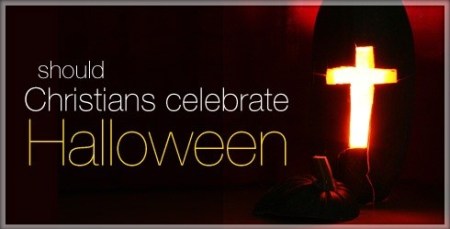
In a few short days, either our children, grandchildren or maybe even us, will dress up in various costumes of fictional characters and go out trick or treating, drinking, partying in celebration of this fall season of Halloween. Maybe we won’t be the ones who dress up and go out, but certainly either children of our neighbors will come to our doors or we will see children in the streets going out door to door asking for candy. A time honored tradition which those of us especially living in North America seem to naively commemorate or celebrate without question. And we may ask ourselves, what is the Church’s stance regarding the Halloween season? Undoubtedly, our social media pages or our email’s have been filled with images of how Halloween is not a Christian holiday or it is a pagan ritual etc. There are some, who are very strict and conservative and absolutely avoid if not condemn others who might celebrate it. Then there is the opposite side of the argument that it has nothing to do with the Church, because it is merely the childhood experience. Regardless which side of the argument you fall on, and regardless of which historical tale you read, that either Halloween was a pagan celebration or that it was a Christian celebration that was twisted and perverted overtime, regardless of these, one thing does strike me about our celebration of Halloween, our attitudes.

The childish poem which I began the sermon with, with its clever rhyme, seemed innocent – yet, by examining the words – the poem is promoting an idea that we don’t pay much attention too. Here is that poem again, “You can hunt us and fry us, you can turn every way, ghosts, witches and goblins are coming your way. Try as you might you can’t stop us, you’re scared. For in the night all types of monsters in your soul they will stare. Witches and vampires, mummies and ghouls, in the dark everywhere, tonight will be seen, for together this night we celebrate frightful Halloween!” What this poem is teaching is that no matter what you do, no matter how far you run away, no matter how hard you try – ghosts, witches, goblins, ghouls and vampires, mummies and all sorts of monsters are going to get you. Now this may seem childish, because we all know ghosts, witches, goblins, ghouls and vampires, mummies are not real, they are made up in the movies. They are fictional. But even if they are not part of reality, what they represent is. “Try as you might you can’t stop us, you’re scared…”

These fictional characters are there to scare us – meaning they are not tools of education, growth, love, hope and light. They are in and of themselves representations of evil, of darkness, of pain and suffering, of momentary satisfaction and pleasure, of lust and of cruelty. And what this childish poem is saying is – try as you might you can’t stop us. We cannot stop evil – especially when we are celebrating evil by diminishing its impact to merely a childish festival to gather candy. Again regardless of the history, have we thought about the fact that as parents, teachers, as Christian’s who identify in Christ – we all actively are celebrating, lifting up and boasting about fictional and fake characters that promote evil and yet, when it comes to our faith – “oh Der Hayr, Sunday is my one day off, I’d like to rest.”

We spend hundreds of dollars on this festival and make efforts and spend time, to go to parties and plays, yet, we make excuses when it comes to donating time, money and effort to our Church and ultimately to God? Remember what I said, it is about our attitudes, our thinking that troubles me most. In today’s society it is okay to dress up as a vampire, which is a blood thirsty creature, that is often in movies displayed as an overly sexual creature that hunts and get what it desires, yet, it is not okay to openly wear your cross around your neck and speak about your faith. We are surprised when atrocities happen, when shootings take place, when society looks for a way out through opioids and other numbing methods – and yet, we celebrate a day dedicated to monstrosities because it is an innocent children’s holiday?
My dear brothers and sisters, it is the children that are the most vulnerable. And it is us, all of humanity, we are the children – who do not see that every action, from the most important decisions of our lives all the way down to the smallest and most insignificant fictional displays of joy that we may celebrate – they all impact our lives, they leave in imprint. This does not mean that if you celebrate or dress up, or hand out candy or even have your children go out for Halloween that you are evil or promoting evil – but, what I want each one of us to think about is – how much time and effort do we take to think about these actions, reflect on our decisions, and place an importance on our small choices. How much time and effort do we dedicate to our own faith in the real person of Christ Jesus vs. some fictional monsters?

We can say happy Halloween – but in a few short weeks, we can’t say Merry Christmas. We can say Trick or Treat – but we can’t say God bless you. We can decorate our public spaces with fictional graves and corpses and all sorts of evil – yet, we can not display public manger scenes, public displays of Christian faith, we can’t even call it a Christmas tree. What are we promoting? 

As Christians, it is Christ, it is our faith that we must be promoting through the way we love, forgive, help, raise, educate and respect others. From the smallest to the greatest decisions, choices and actions. We are not in the season of Halloween, my dears, we are in the season of the Cross. And we are preparing soon to be in the season of Advent – of Christ Jesus coming into this world to fill it with love, with hope, with light, with healing – not fear, not evil, not fictional displays of joy but real joy. “For the Lord is our judge, the Lord is our ruler,  the Lord is our king; he will save us.” (Is. 13:33)

I am not saying do not celebrate Halloween, but I urge us to firstly pray, to humble ourselves, to turn to God and to grow in our faith. To come to Church and bring our children to Church as easily and as willfully as we celebrate and make time for these fake celebrations. To not settle by handing out candy to strangers but by our life’s example, to hand out our faith to all those around us, whether they are knocking on our doors or not. Because on Halloween, yes children come knocking – but Christ is knocking everyday. Not fictional and dressed up to scare us. But the real and resurrected Christ Jesus – to come into our homes, to fill our lives with hope and faith.

Therefore, my dears if we want to, let us celebrate Halloween, but let us also continually examine ourselves and the choices we make. Praying to God our Father for clarity of mind, heart and spirit. Placing our hope in the real person of Christ Jesus by whom we will conquer all evil, fictional and real, by whom the Divine power of life has been gifted to us freely in order for us to bless others as we have been blessed. And through which we continually glorify the Father, Son and Holy Spirit, eternally, Amen!

What do I owe God?

Sermon for Sunday October 13, 2019
Passages: Isaiah 19:1-11; Galatians 2:1-10; Mark 12:35-44

In the name of the Father, Son and Holy Spirit, Amen!

When I began to reflect and think about what message I could share with you all today, reflecting upon the Gospel – as I do every week, my first thought was where can I find a story or illustration to grasp our attentions and make this sermon relevant. Many of us know today’s Gospel story, about the women who gives out of nothing more than others give out of their abundance. So I began looking for stories about giving, sacrifice and debt. As with the majority of us in today’s technological world, one of the first places I looked was Google. Yet, as I searched for a story about giving, sacrifice and debt, all I found online was information about paying off loans and mortgages, credit card debt, etc. And as I quickly made my way through the online pages, a thought came to me, who among us doesn’t have debt? Who hasn’t had student loans to pay off, credit cards, financial hardship? Who doesn’t know what it’s like to owe someone something? Arguably all of us if not majority.  And so what could be more relevant than knowing what it feels like to be in debt? No story is necessary, because we all have our own.

Debt is one of those things, that try as you might, we all fall into. Some greater than others. Some of us for short term, some of us for long term. Yet, debt comes in many other forms than just financial. The idea of debt to society – doing good to others because of what good we have received. A debt to our parents – for the life they gave us. A debt of gratitude – to all those who stood by us. When a friend helps another – what do we often say? I owe you. What about a debt to God – for all his blessings and guidance? What do we owe to God?

Whenever we speak about the relationship of God and humanity, we often start our story in Genesis, and many of us get lost in the narrative of how God gave us life and then we sinned – we fell, we broke our promise to God. And as a result, in the Old Testament, sacrifices had to be made to pay for our “debt of sin.” We owed God for what we had been blessed with such as health, life, family, crops, etc. and as well for our sins. All throughout scripture we read our our debt had to be paid through sacrifice, of how the “wages of sin is death” as St. Paul writes in Romans (6:23) And the Israelite’s offered sacrifices to God. As a part of the sacrifices, tithing was also practiced – where families and individuals would also financially sacrifice and pay a monetary amount, a tenth of their income, towards the temple and God. In fact, that is what we are reading about in the Gospel today – “Many rich people put in large sums. A poor widow came and put in two small copper coins, which are worth a penny.” This is an example of the worshipers tithing, after having made their physical sacrifice. And in their minds, they had paid their debt to God. They paid what they owed for all the blessings they had for that year.

Yet, as Christian’s how do we think about our debt to God? What do each of us owe to God? After all we believe that Christ Jesus, came into this world, died and “paid” for our sins on the cross – correct? Jesus made the ultimate sacrifice after which no other sacrifices are necessary, as we read in Hebrews chapter 10 – Jesus was the One true sacrifice. So what else do we owe God if our debt has been paid?

My dear brothers and sisters, going back to the story of Genesis – when God created everything – what did He command or require from humanity vs. all other creatures? To take care of creation, to watch over, to tend – in one word to be stewards. When we act in faith, when we follow God’s commandments – how many of us think of it as a purpose rather than a means? What I mean by this is, how many of us give, forgive, love, repent, pray, fast, “act Christian” because we think and believe that by doing so, I am paying my debt, I am doing my part and God will keep giving me as long as I keep doing so? I am making a sacrifice, I am paying my debt off in sorts.

Reality is too many of us. That is why many people believe that being a good person is good enough. If I’m a good person, if I am nice, forgiving and I give to charity then I have paid my debt to God or society or whatever subject matter you want to place there. However, my dears God is not a subject to which we owe anything. God doesn’t need us to pay anything off.

Being Christian – is a communion with the Person of Christ Jesus. A relationship and communion with God – not a tally, spreadsheet or invoice, where God says, “I’ve done x, y and z so you owe me blank.” Or “if you do these things, then I will continue to bless you” Our faith in God, our relationship with God is the same way our relationship is with our loved ones, our friends, our families. We act and care for thea because we love them. We do not act out of self-interest (I hope). Even if my friends never help me move, I will always help when I am called upon. Even though my child could realistically never pay me in full for giving them life, and guiding them through it, as a parent, I still sacrifice my sleep and leisure for them becaase I love them.

It is likewise with God. God loved us so much that He gave us life, knowing we would fail and sin and make mistakes. And his love continued so much He gave his one and only Son Christ Jesus to die on the Cross. He guides and directs us. He wants to be our God not so we can owe him anything but because He loves us. And for us to realize our true calling as Christians, as children of God, as heirs is seen through our actions, our trust in Him, our love shown to all creation, as he did for us.

After God had created Adam and Eve, had breathed life into humanity and made us stewards of creation, it was not because we owed him for the life we had. Rather, as stewards, as creatures made in His Divine Image, by doing as God did we begin our own journey towards becoming one with God.

My dear brothers and sisters, what could we possibly do to pay God? Nothing. For Christ Jesus was the ultimate sacrifice for our sins. And what we do out of faith is not out of some idea of debt to God but is fundamentally, rooted and grown out of love. A Love for God, love for humanity, love for self and love for all creation. Therefore, let us pray to God our Father to illumine our minds and hearts, to empty our thoughts from vain ideas of being in debt to God and rather let us ask that our actions, hopes, aspirations and goals be founded in love and in the Person of Christ Jesus. And when we do this, we each will not only have stories of debt that we can relate to, but real experiences of faith which we can share with this world, spreading light in darkness and giving hope to the hopeless – and thereby glorifying our Father, the Son and Holy Spirit eternally, Amen!

Why?

Sermon for Sunday October 6, 2019
Passages: Isaiah 17:7-14; 2 Corinthians 13:5-14; Mark 11:27-33

In the name of the Father, Son and Holy Spirit, Amen!

Why? Inchu? Pourquoi? Por qué? Lesh? Lama? Why? A simple word. A single syllable that when uttered, when heard, when thought of, can have a wide range of reactions. A police officer asking, “why were you driving so fast?” A parent asking a child, “why aren’t you listening?” A priest asking, “why don’t you come to Church?” A parent asking, “why did my child get sick?” A friend asking, “why didn’t you hurt me?” Or an inquiring 2 year old repeatedly and incessantly asking why, why, why, why… to everyone and about everything. A single syllable word, which can have many reactions and just as many answers.

There is a beautiful saying which teaches us that “a person can have a million reasons not to do one thing, or they can have one reason to do a million things.” And this perfectly sums up and reflects on the idea of our “why’s” In the 17th century a philosophical ideology was created by Blaise Pascal which was known as Pascals’ Wager. His basic argument was, we as humans should believe in God regardless of His existence, because we have more to gain (eternal life) vs. lose (eternal damnation). This became much more popular in the 20th century and to this day impacts many of us, because “what have you got to lose by believing in God – so why not?” And it is unfortunate that this mentality continues to fuel why many of us, our friends and our family members “attend” Church or “believe” in God. For too many of us our “why” to coming to Church, believing in God or even being kind towards others is based in fear. Countless times I am asked, “Der Hayr if I do “x” does that mean I go to hell or that God will punish me?” We fear God and therefore, we act according to “his commandments.”

Let us take this one step further, many of us do not believe in God or do not express our faith because of fear of what will people say. “What would people think of me if they knew I believed in God or that I prayed?” The Pharisees asked Jesus, by what authority he was teaching, were in response asked a question about John’s baptism.  And we read how they were afraid of the people. “If we say from heaven, he [Jesus] will say Why then did you not believe him?…” But if we say from men – the people might revolt because John was seen as a prophet. Regardless which they chose, they were afraid of how others would react to them. The “why” of our life, therefore I ask, which impacts all facets of our life, all our decisions, all our choices from how we raise our children to how we act with our friends, how we treat ourselves and others – is based in fear? The inquiring 2 year old in me therefore is asking, “why?” Why do I believe and act and live out of fear?

The prophet Isaiah reminds us, “for you have forgotten the God of your salvation, and have not remembered the Rock of your refuge;” (v.10) My dear brothers and sisters, our why for our actions and belief should be transformed from fear to trust. Trusting God who is our salvation, who is our rock and our refuge. I trust God that is why I follow His commandments. I trust God that is why I use His teachings to live my life. I trust in God that is why I love, why I hope, why I repent.

Last week, I shared a video (found below) on social media, which I am sure many of you saw or heard of on television, where a young woman, Amber Guyger, was found guilty of murder. And the brother of the victim, Brandt Jean, fighting back tears and emotion in court said, “I forgive you. I don’t even want you to go to jail. But if you really are sorry for what you’ve done, than I want for you to give your life over to Christ…because that’s what God would want from me.” This young man, who has just lost his brother, seeing that even the courts found this person guilty, turned and said I forgive you, I love you. His why? Because that is what God would want.

My dear brothers and sisters, as St. Paul begins today’s reading, “we must examine ourselves” (v.5) to understand clearly where our why lies. Is it in the fear or in the trust? Is it God or is it people? No, we cannot forget that every action has a reaction – the godliness will bring blessings and sin will bring punishment. However, why should we act godly, believe in the right, if not for the love and hope we find by placing our trust in Christ Jesus – who led by example, forgave and served us calling us to do likewise. Here is the key why  our trust must lay in God. Once we have figured out our why – which is founded in our trust and love in God, next we have to focus on therefore, how.

For this, today’s Gospel and the letter of St. Paul clearly teaches us, in verses 11-13 “mend your ways [meaning first repent by examining yourself and understanding your why], heed my appeal [listen and read the Holy Scriptures, the teachings of God and the Church], agree with one another [come to Church and pray together], live in peace [gather in fellowship] and the God of love and peace will be with you. Greet one another with a holy kiss. All the saints greet you.” My dear brothers and sisters, it is all right here plainly written. Do we believe in God? Great. Do we believe in what Christ Jesus, the Son of God, the second person of the Trinity, did for us by coming down and being crucified. Being buried and raised again on the third day? Great. Do we believe that through baptism, through the Holy Spirit, we receive that same life – love, light and hope given to all humanity and creation? Wonderful. And do we want for that light and love to spread to all corners of the world? Even better. Then we must be the ones to do so. We must be the light we so desperately desire to see in this world. John F. Kennedy beautifully once stated, “Here on earth, God’s work must surely be our own.” Yes my dears, God’s work must be through our hands, feet, mouth and ears. Because we are created in His Divine image – full of the potential to create, build up, light up and fill this world with His eternal love through the way we treat ourselves and each other.

Why? Because God did it for me. Why? Because that is what God desires for me and from me. Why? Because I fully trust and love God as he has loved me. Therefore my dears, let us begin by examining ourselves, our actions, thoughts and words. Let us examine whether we fear God or fear people? Then begin changing that to trusting God and taking His trust, hope, love and light to all peoples of this world. Let us greet one another with a holy kiss – voghchuyn – not just here in Badarak but truly and with deep affection out in the streets. For Christ is revealed in amongst us – Christ is revealed in us – Christ is revealed through us. Amen!

Video of Forgiveness…

https://www.youtube.com/watch?v=NkoE_GQsbNA

All Matter matters

Passages: Isaiah 65:22-25; Galatians 6:14-18; Matthew 24:30-36

In the name of the Father, Son and Holy Spirit, Amen!

The flames rise and touch the sky. A power force that could melt gold and silver to liquid. A refreshing splash, a cleansing and soaking from head to toe. Bells and smells, blessing of fields, sights and sounds from nature to the man made. Often times the Armenian Church and generally the Orthodox Church is criticized because of how many practices found within it come either from pagan or Judaic celebrations. Whether it is the splashing of the water during Vartavar or jumping over the flames on Diaruntarach. The icons and symbols in the Church, the smell of incense and even the rituals of blessing fields and grapes.

The argument that we often hear is that, Christ never asked us or even instructed us to do so. And whatever was in the Old Testament is no longer necessary because through Christ it changed. And as the Church we would absolutely agree, that in the New Testament nowhere does it say to jump over fires, to splash each other with water, to bless the fields and etc. However, all throughout scripture, both Old Testament and New Testament, we read about how God used nature and symbols to bless and instruct us. Look at the tree in the story of Jonah. As Jonah prayed for shade, which was provided by God and later taken away, Jonah understood of how he had to forgive and love the Ninevites. Moses spoke to God, who appeared to Him as a burning bush. A tree, engulfed in fire – which showed Gods power and his love. St. Paul when teaching the Romans did not rebuke them and say immediately destroy all these pagan temples and statues but rather spoke to them about the “unknown God.” And Christ Jesus in today’s Gospel, when speaking about the final days instructs us to look to the Fig tree and observe.

The reason for all of this, the reason for the Holy Church using water, flame, incense, grapes, and other symbols is because the Orthodox Church is adoptive and adaptive, to its surroundings and we believe that everything in this created and observable world has been given to us as a tool to fully experience the One True God. All matter matters. St. Justin Martyr, a 2nd century saint who was well trained in Greek Pagan Philosophy, when he became a Christian understood and taught that before Christ, all knowledge, all wisdom and all faith practices ultimately were about Christ Jesus but because of our limited understanding, because Jesus had not yet been revealed to us, we fell into misunderstandings. But now that we have been given Christ – all knowledge, wisdom and faith must be directed towards the One Logos – the Word – Christ Jesus.

Each one of us is on a different point on the same path towards God. And the Church recognizing that does not turn us away, but rather is there to direct us, using the tools we have been given through scripture, through Holy Tradition, to continually remind us and help us along our path towards God. And the greatest symbol out of all is the Holy Cross of Christ. For this reason St. Paul teaches us to boast or take pride in nothing but the Cross through which we have been saved.

The cross, which was originally a tool of death, made of wood. Yet, just like all the other symbols found in Christianity, through the sacrifice of Christ Jesus, it has become a symbol of triumph over death, a tool to lift us up towards God. And for us Armenian’s today is the feast of the Holy Cross of Varak. Of how a piece of the Cross of Christ was rediscovered in the 7th century in Armenia on Mount Varak.

My dear brothers and sister, I will not go into the history right now but what we understand from this feast, what we must learn and what we are all ultimately being invited to is to witness of how out of a mountain, out of nature, out of dirty and rock, out of what would be seemingly nothing and worthless – comes out the very cross of our Salvation. Out of stone, wood, dirt, and mud was lifted up the Cross of “Christ, by which the world has been crucified to me, and I to the world.” (Gal. v. 14) And on that place, using the same dirt, wood and stone a Church was built. A temple to worship and connect with God. The same dirt that we all have been created from.

My dears, I ask us here today, what will come out of us? Are we not each temples? Just like the wood, dirt and stone, are we each not also merely a physical material? If the fires and waters of paganism, if the trees and leaves in nature, if the wood, dirt, stones and mud which all seem to have no value unless lifted up and used as tools to connect to God – how much more are we invited to be tools and a source for lifting each other up, we who are created in the Divine Image?

Everyone, whether they are a member of this Church or not, whether they are Armenian or not, whether they are tall, short, black or white, big or small, whether they have good voices or not – each one of us, every human, is called, is invited to become a tool, a sword, a shield, a source of life and light, a symbol of God to each other. Even if we are down and hurt. If we are isolated and feel that we have no value or worth – through Christ – just like all those other symbols, just like all matter, all wisdom, all knowledge – through Christ Jesus – we are valuable, we are loved.

Therefore, my dear brothers and sisters, yes, the Church has adapted and adopted many practices and expressions, many symbols and tools all which through guidance and care can lead us to a more full experience of our relationship with God. And out of nature, out of stone, we have built Churches and homes in which we gather to strengthen that relationship. Yet, I leave us with this question, what about us? What purpose will we serve? Will we be light in darkness, hope in hopelessness, love in the face of hate? Will we become temples? Will we serve as tools to bring Christ into this world? Each one of us, who are baptized children of God, bear that sign of the Holy Cross upon us.  And I pray that we will continually pray to discover our own cross, so that as we carry our crosses, as we move forward on our own journey’s towards God, we will bring love and light into this world – and doing so we continually glorify the Holy Trinity forever and ever Amen!

Lifting Up Our Cross (Children’s Sermon for Feast of Exultation of Holy Cross)

Children’s Sermon

Passages: Isaiah 49:13-23; Galatians 6:14-18; John 3:13-21

In the name of the Father, Son and holy Spirit, Amen!

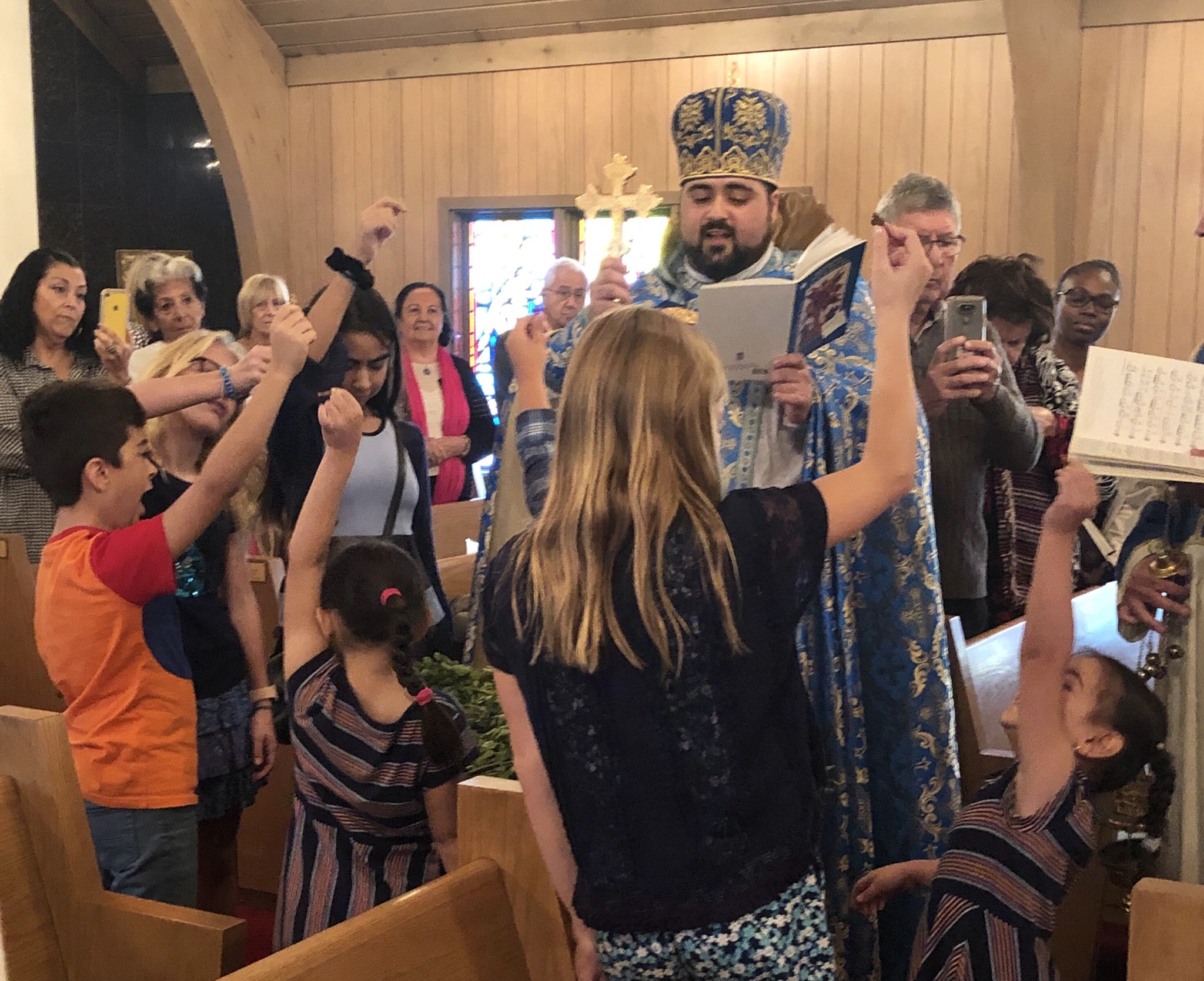
 Who can tell me what cross is in Armenian? And who can tell me what this is? (Basil) Bonus points if you can tell me what it is in Armenian? (Ռեհան) Today we are celebrating the Feast of the Exultation of the Holy Cross. It is a very important feast and one that all Churches around the world celebrate together. But who can tell me what exulting means? Glorifying, raising up, celebrating. Right after the sermon today, you will see me lift up the cross and I ask God to bless the Basil, everyone here, each one of you, our families and friends, and even all the people in the four corners of the world.

There are many types of crosses right; some bigger, some smaller. How many of us have seen maybe a cross at home? Or in Church? There are a lot right? Maybe we have a cross that we wear around our necks? As a priest I get to carry a cross in my hand as a tool. I use it to bless people, to help people. Is this a cross? (show knife) And if it was bigger it would be a sword right? Knives, daggers and swords are used more for fighting, or hurting. They are weapons right? But what happens if I turn this knife upside down? It looks like a cross. When we think about a cross, just like the ones at home, the ones on the priest’s clothes or hand, we always look at it like this. Yet, the cross needs to be seen from every angle in order for all of us to understand what it is used for and why it is important for us Christians.

This looks like 2 sticks together right? But the cross that we are exulting, raising up, is a more than just two sticks put together. The cross that we use to bless and have in our homes and maybe even around our necks is a shield that we use to protect ourselves but it is also a sword that we use to protect others.

But that’s not what the cross was always. Who can tell me what the cross was? Where do we see the cross the first time, what is it used for? When Jesus was crucified, when Jesus was killed for our sins. That sounds horrible, right? But Christ Jesus did that because of his love for all of us. Me, you, your families and friends. God’s love iss so powerful, his compassion iss so deep that, in order to free us from our sinfulness, He came and died for us. And when Jesus did that, He picked up his very heavy cross and carried it with him. But he taught us something very important, He commanded each one of us to also lift up, to raise up our own crosses and to follow Him through our actions.

Is this cross heavy to carry? (give my hand cross to someone) No, its pretty light. What about this cross? (The processional cross) It’s a bit heavier. See being a Christian, as Christ says, is we have to carry our own crosses. And sometimes those crosses can be very heavy, sometimes they are lighter. Some are small, some are large. Sometimes they feel like shields that we use to protect ourselves and our loved ones. Sometimes they feel like swords and knives that we have to use to defend and fight evil. Because to be a Christian, to follow Jesus and carry our cross isn’t always easy. It takes a lot of work and sometimes we don’t want to do what it takes to be a Christian – we don’t want to carry our cross.

Who can tell me an example of something that is hard to do but Jesus teaches us that we have to? Being kind and loving to someone who doesn’t love us back. Forgiving someone who has hurt us, even when they don’t say they’re sorry. Listening to mom and dad when they tell us to do our homework or that we can’t go out with friends even when we really want to. Standing up against a bully and helping someone in need, even when it’s not the popular or cool thing to do.

These things can be very hard, but these are examples of how Jesus Christ is teaching us to lift up our crosses, to follow His example, and as St. Paul teaches us today, to take pride in our crosses. Jesus carried his cross to death because he loved us. And to show him we love him also, we must lift up our cross and ask him to be our strength when it becomes too heavy to carry.

So my dears, I want us to remember what the cross is every time we see it. Anytime we see the cross in Church, at home, every time we cross ourselves before we pray, we cross ourselves when we pray and ask for God’s protection and help. And when we cross ourselves what do we say Hanoon, Hor yev Vortvo, yev Hokvouyn Srpo Amen – every time we do this, we should remember that God loved us so much that His Son Jesus Christ came down and took up His cross and died on it. And we love God so much that we as Christian’s also are called to take up our crosses and to love everyone the same way he loved us. No matter who it is. Because being a Christian, being a follower of Jesus is not always easy but it is always filled with blessings and love.

Now as we get ready to bless everyone with the cross for this feast, I have a small gift for you each. These are small crosses that were made and blessed in Jerusalem and Bethlehem, where Jesus was born and lived and died. And every time I lift up the cross to bless the world, I want you all to also lift your cross up and help me bless the world too. And then when we finish today, take these crosses home with you, keep them in your pockets, backpacks, purses or wallets, and every time you see it, or every time life demands from you something difficult, I want you to remember that as Christian’s we are called to be different, to be a light in this dark world – to protect and defend. To be love in the face of hate and hope to those who don’t have hope. And every time each of us do that, we begin by lifting up our crosses and following Jesus, whom we glorify and exult with the Father and Holy Spirit, Amen!