Daily Readings: Is. 7:10-16; Gal. 3:29-4:7; Lk. 2:1-7
Ընթերցուածքներ` Եսայ. Է 10-16; Գաղ. Գ 29- Դ 7; Ղկ. Բ 1-7
In the Name of the Father, Son and Holy Spirit, Amen!
Within the Church, we have many symbols, images and icons which tell us a story. Initially that is why icons were so popular in Churches, because they teach, remind us of important lessons and so forth. In the same way, when we look or share pictures from our past, we need to often tell a back story, explain what is going on, so people can understand what is happening. Today as Armenian Orthodox, and yesterday all other Orthodox Churches, celebrate the Feast of the Assumption of the Holy Virgin Mary. When we look at the icon of this feast day, what do we see? When St. Mary entered dormition, the Apostles and other Christians naturally held a funeral. The story of how St. Mary passed, and her assumption by Christ which comes to us from the early Church, tells us of how angelic prayers and singing was heard around her tomb and that when her tomb was reopened, her body was no longer there but had been assumed into Heaven. That is what we see in this image. Yet, in this icon we see something strange; A man, who appears to be in pain, with both his hands cut off. Why and what is this?
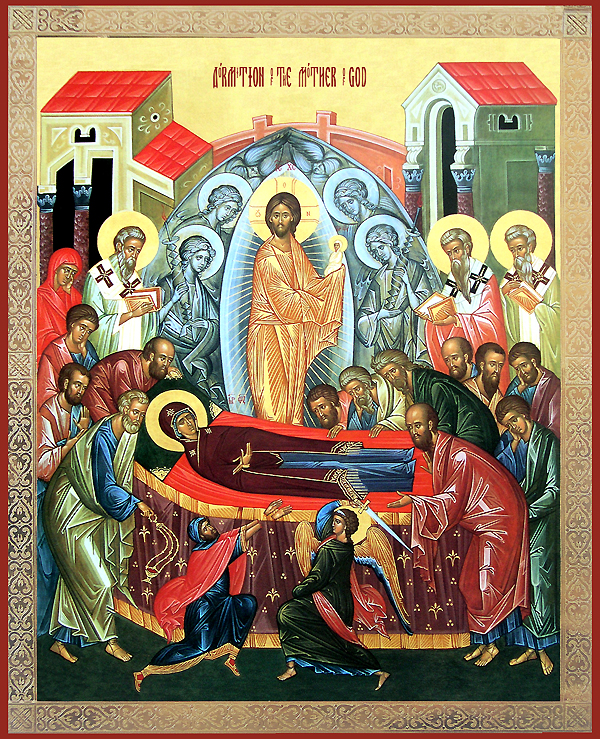
According to Holy Tradition of the Church which dates all the way back to the 5th-6th century, a Jewish priest named Jephonias, who was hostile to Christ and His followers, attempted to disturb the procession of the Apostles carrying the Theotokos to Gethsemane. And so he tried to overturn the bier, the place St. Mary’s body lay, and at that moment the Archangel Michael appeared and struck with his sword, severing his hands. Confronted by this terrible wonder, Jephonias immediately repents and confesses his faith in Christ, and prays asking for forgiveness from St. Mary. Through the intercession of the Theotokos, his hands were miraculously restored, and he stood up and joined the procession as a believer. And so, in this scene, in this icon of St. Mary what can we learn? What does this picture teach us? And more importantly, apart from a story, what can we learn to take with us in our walk of faith?
A couple of days ago while having coffee, I had an interesting conversation with a man who had grown up in the Evangelical Church but had since become an atheist. He remarked that one of the issues he had was that when he had spoken to pastors in the past asking questions, every answer they gave was baseless or far-fetched; they seemed to want to answer even if it made no sense. It had annoyed him that they just couldn’t say, “I don’t know.” And this is true for many of us. We all want to have the answers; and we want to be right. We want our opinions to matter and for us to be heard. Yet, one of the greatest virtues and qualities that we learn from Holy Scriptures is humility. The recognition to say, “I don’t know.” We don’t have all the answers, yet, because of pridefulness, arrogance and ego, we insist on our way, we think we have the truth, the whole truth and nothing but the truth and while our intensions may be pure, we cause hurt to ourselves and perhaps to others. We begin to become careless and hopeless.
You see this Jewish priest in the icon who did not know Christ. And rather than be humble and say, “I don’t know”, he insisted on his own way, for which he was punished. Yet, the story does not stop there because ultimately, he did repent, he did humble himself and recognize, he didn’t know and he was wrong. And this is the virtue my dears, we need not just in our day to day but especially in our faith. As Christian’s yes, we know and believe in God, the Father, Son and Holy Spirit; we know and believe that God the Father is the author of all life and creation, we know and believe that Christ Jesus, God the Son, came and died on the Cross for our sins and was resurrected on the third day; we know and believe in the Holy Spirit that breathes life into us, guiding us forever and that by faith, which we live daily we respond to all that God does.
Yes, we know and believe that Christianity in the Orthodox Church is the fullness of faith, yet, we also know and believe that we still know nothing. As Socrates says, “I know that I know nothing.” That just because we believe in God, it doesn’t make us better than those who do not. Just because we come to Church, light a candle, say a prayer, leave a donation, volunteer at soup kitchens, etc. doesn’t make us greater than the beggar in the street, or the atheist at the coffee shop. My dears, that is why St. Mary the Mother of God is so beloved. Not for external knowledge, not for stature, or some arbitrary characteristic; not because she had all the answers. Clearly she didn’t which is why in the Gospel she questions the angel. Yet, her humility, even when she wasn’t sure is why look to her. Humility in trusting God above her own abilities and limitations; Humility to remain faithful, even if she wasn’t theologically trained. Therefore, in life and even in death, St. Mary ultimately points us to this virtue of Christlike humility.
Today’s feast, therefore, and this icon is a lesson for us of humility and reverence especially when it comes to our faith. Humility to say, “I don’t know” and reverence to say, “I want to learn.” Learn to love as Christ calls us to love, even those who don’t love us back. Learn to forgive and pray for, even those who have hurt us. Learn to trust that God cares for us, lifts us out even from the grave, even when the world says we have not value, we have no voice, we have nothing to offer. Like Jephonias, we are called to repent, humble ourselves, and approach God with faith. Learn from the lives of the saints my dears, learn to read the icons, and symbols in the Church as tools that guide us to Christ. Ask questions and say, “I don’t know.”
Pray for wisdom and God our Heavenly Father will teach us, illuminate our hearts and minds to know the truth, to know His love, to know Him. And God will make us into icons for others to learn from about faith. Not with our answers but with the stories of our lives. And with humility and reverence we will approach His Holiness and be washed by His grace to live a life that brings glory to Him, with the Son and Holy Spirit, Amen.

